Payment service providers · Digital marketing
Spend where merchants who go live come from, and stop where they do not.
Digital marketing for a payment service provider covers search, social, email and chat aimed at merchants and developers, with results read at the level of merchants who transact. GullySales plans the channels, builds the tracking and reports the cost of a live merchant by source.
Scope, fee, reporting and term are agreed in writing after we have read your brief and spoken to you.
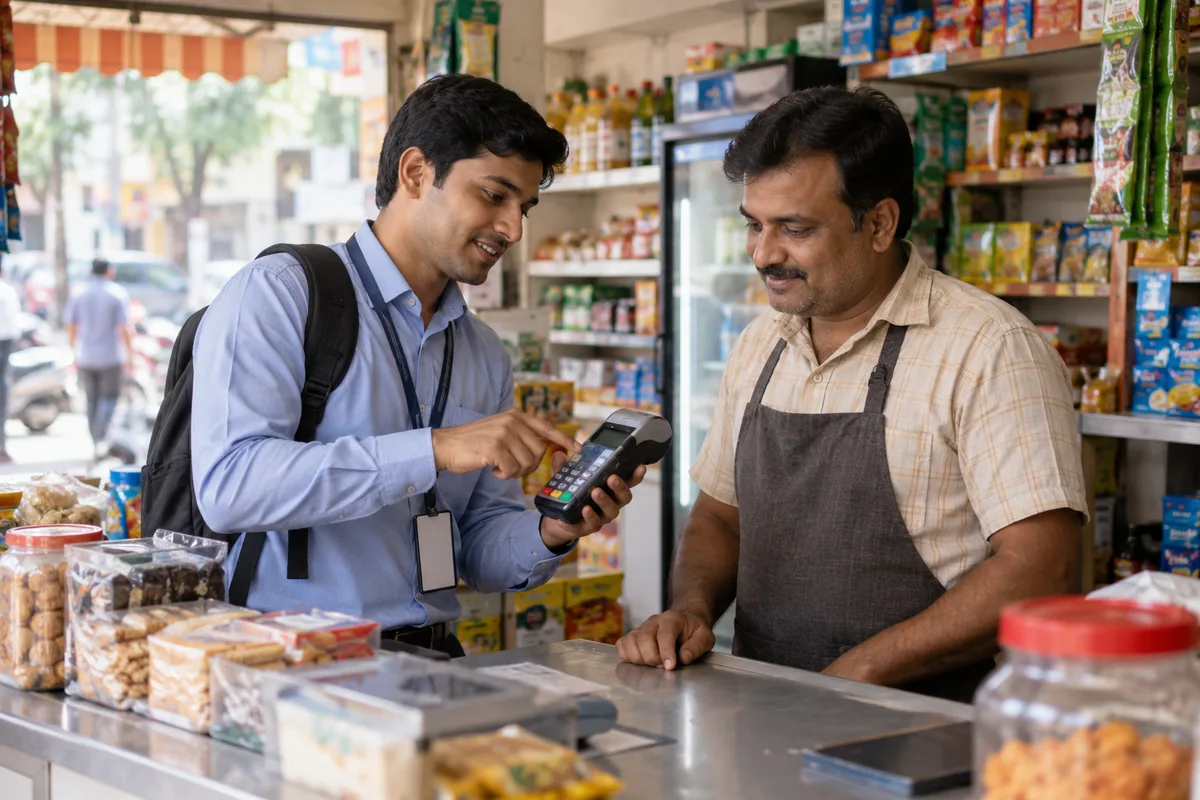
What digital marketing means
Digital marketing is the combined work of search, social media, advertising and website channels running together rather than as separate projects with separate people. GullySales runs these as one connected system so a change in one channel, such as a new offer, is reflected everywhere at once.
Also for payment service providers
- Buyer personas for payment service providers
- Lead generation for payment service providers
- SEO for payment service providers
- Social media marketing for payment service providers
- Content marketing for payment service providers
- CRM for payment service providers
- Follow-up systems for payment service providers
- WhatsApp marketing for payment service providers
Sales and marketing for payment service providers, the overview.
Last updated 14 Nov 2026. Rules for this trade differ by state and professional body, and they change. We describe restrictions in general terms, so check the current position with your own council or adviser before you publish anything.
For payment service providers
Where it usually goes wrong, and what we would do.
“Clicks are cheap and live merchants are not”
A campaign can bring a flood of signups from visitors who never complete documents. Reading results at click or form level makes a weak channel look strong.
“Search ads for payments are expensive and contested”
Competitors bid on the same words, so a broad campaign drains budget and attracts the curious. Narrow, intent-led searches and clear landing pages are where the money should go.
“Each audience needs its own route”
A shop owner, an online seller and a developer should not share a page or an offer. A shared campaign page serves none of them, and the advertisement ends up general.
“Advertising rules are strict in finance”
Ads about money, charges and approvals face platform and regulator scrutiny. Check each platform's current rules, and keep claims to those your compliance head has approved.
What we do
What we deliver for payment service providers.
The work available for this need. We agree the deliverables and responsibilities for your engagement in writing.
Channel plan by audience
A plan naming the channels for shop owners, online sellers and developers, and the role of each.
Result: Every channel has a stated audience and purpose.
Tracking from click to first payment
Source tags that stay attached to a merchant through documents, activation and first transaction.
Result: Each live merchant can be traced to its source.
Search campaigns on narrow intent
Campaigns built around specific searches, such as accepting UPI on a website, with matching landing pages.
Result: Search spend is tied to a stated search intent.
Cost per live merchant report
A report of spend and effort against merchants who transacted, by channel and by campaign.
Result: You can compare channels on cost per live merchant.
Approved claims list
A list of statements about charges, safety and approvals that advertising may use.
Result: Every advertisement draws on an approved statement.
How the result is measured
- Enquiries across channels
- Cost per enquiry overall
- Channel mix by contribution
Recorded as a baseline before work starts, so every later report has an honest comparison.
Searches your buyers type
Searches that bring a merchant to a payment provider and the page each needs.
- payment gateway India
- A crowded search with large rivals. Bid on narrower phrases, such as a platform or a selling mode, with a page for each.
- accept payments without website
- A search by a small seller. Send it to a payment link page with a very short signup.
- best payment gateway for startups
- A comparison search. Offer a page that sets out what to compare and where you fit, without disparaging a rival.
- QR code payment for shop
- A shopkeeper search. A page with a local field contact suits that buyer better than a developer page.
- [competitor name] alternative
- A search by someone unhappy elsewhere. Read the platform's current rules on competitor names in keywords before you bid.
- international payments for freelancers
- A cross-border search. State the currencies and limits you support and what you do not.
Who it is for
This is written for these payment service providers.
- Payment aggregators and gateways for online sellers and platforms
- UPI QR, soundbox and card machine providers for shops and restaurants
- Payment link and invoice collection providers for small sellers
- Merchant acquiring resellers and sales partners
- Payout and vendor payment platforms for marketplaces and businesses
- Bill payment and recurring collection providers for fees and subscriptions
- Cross-border payment providers for exporters and freelancers
- Providers that serve a single sector, such as schools, clinics or logistics
Before you decide
When this may not be the right fit.
- You cannot link an ad click to a live merchant, so budgets would follow cheap signups.
- Your approved claims list is empty, and finance ads are strictly reviewed by platforms.
- Your field team already fills capacity, and new online leads could not be onboarded.
Before you decide
Agree the work. Know how to judge it.
Digital marketing for payment service providers: use these checks to prepare, choose the scope, and review what changes.
Bring the right evidence
Bring a recent won order and an enquiry that went nowhere. Trace how each buyer found you, what they asked, and who handled the next step. A channel list alone will not explain the difference.
Make the scope clear
Choose one offer and one buyer group first. Agree which part needs attention: being found, getting a useful enquiry, or turning an enquiry into an order. Separate recommendations from the work required to carry them out.
Check the work in use
A useful plan names the first change, its owner, the evidence behind it, and the number that will show whether it worked. Ask what has deliberately been left out and why.
Know when to change course
If your team cannot answer the enquiries it already receives, improve that handover before buying more traffic. If the offer itself is unclear, test it with buyers before adding channels.
These are discussion points, not a fixed package. GullySales confirms the deliverables, responsibilities, fee, and term in writing after reading your brief and speaking with you.
Before we start
What to have ready before the work starts.
The records, access and decisions this work needs from payment service providers. Anything missing is noted in the written scope, with who will supply it.
- Ad account access with billing control
- We need to be added as users in your own ad accounts, with you holding billing. If an agency owns the account, tell us now. Without access we cannot read history, and the plan cannot learn from what you already spent. Tell us also which pixels or tags are already placed on your site, since duplicate tracking inflates results and hides which click was real.
- A claims list your reviewer has approved
- Advertising rules for finance are strict. Your compliance reviewer or adviser must say what may be claimed about speed, safety and authorisation. A list in plain words is enough. If it is missing, ads carry only plain descriptions of the service.
- Engineer time to place tracking
- Tracking to first payment needs a small change on the signup and the payment event. One engineer for a short sitting is acceptable. Without it, results stop at the signup and the cost per live merchant cannot be shown. We also agree who confirms in the sandbox that the event fires after the change, so a silent failure does not hide for the whole run of the campaign.
- The budget you can lose on a test
- Only you can say how much to risk before a channel has proven itself. A figure agreed in conversation will do. If the budget is left open, campaigns are either starved or run past the point where we can judge them.
- Merchant types you do not want
- Some businesses are refused by your risk team. Give us that list. Without it, ads attract merchants who will be rejected, and the cost per live merchant looks worse than the channel deserves. If certain sectors need extra review or are barred, mention them as well, so the keywords chosen do not attract them.
How it works
How the digital marketing work runs
The work itself, in order. How an engagement starts, from your brief to a written scope, is set out on our method page.
- 1
Decide which merchants the budget is for
You tell us the merchants you want to add first, whether online sellers, shops or platform businesses. We write the answer into a short plan that names one audience per channel. What exists is a decision about where money does not go. The same decision records the audiences paused for now, so nobody reopens them informally later.
- 2
Build tracking to the first payment
Together with your engineers we link each click to the register so the first live payment can be traced back to its source. Tests are made with fake signups. You approve what personal data may travel between systems, and nothing sensitive is passed. We also decide with your risk head which signup events count as a lead, so rejected businesses are not counted as wins in the report.
- 3
Write ads on narrow intent only
We choose search terms where a seller states a need, such as taking payments for a store on a given platform. Broad terms are left out. Your finance head approves any statement about charges, and the claims list is built here.
- 4
Prepare landing pages per audience
Each campaign sends to a page for that audience: a shopkeeper page, a seller page, a developer page. Your web team places them. The production handoff includes copy, forms and the check that the tracking fires. We write a different headline for the shopkeeper page, which talks about a QR on the counter, and the developer page, which talks about the sandbox and keys.
- 5
Release small and watch the register
We launch with a limited budget you set and watch the leads arrive in the register, not the ad dashboard. Your regulatory reviewer sees every ad before release. If an advertising platform rejects wording, we revise it with you.
- 6
Reconcile spend against live merchants
We join spend with the register and calculate cost per live merchant by channel against the starting figures. Channels that bring signups but no first payment are listed. You decide which to continue, change or stop. We also list the signups the risk team rejected from each channel, so a cheap channel that sends unsuitable businesses is seen for what it is.
Where this fits
Three pieces of sales work, in this order.
This work sits inside sales process design, at stage 0, foundation. The audit comes before it, and sales management keeps it running.
Step 1
Sales audit
Find where deals are being lost and what to fix first.
Start here if you cannot say where orders are lost.
Step 2 · you are here
Sales process design
One written way to sell, from first enquiry to repeat order.
Start here if every salesperson sells differently.
Step 3
Sales management
A target, a review routine and someone who owns the number.
Start here if the team has targets and no routine.
FAQ
Questions owners ask before they call.
Not here? More answers, or ask on WhatsApp.
How do we know which channel works?
Where should a new budget go first?
Can you promise leads or merchants?
Is search or social better for a payment provider?
Which channel should a new budget start with?
Will you promise merchants or lower costs?
How long is the contract?
How soon will we see results?
Who will actually do the work?
What do you need from us?
More for payment service providers
Related work to consider.
Closest to this: strategy and research
Also for payment service providers
Or start from the overview: sales and marketing for payment service providers.
Your next practical step
Tell us what you are trying to grow, and we will read it before we call.
Eight short steps, mostly taps. Skip anything you would rather answer on the call.