Ambulance services · Local SEO
Appear on the map at the moment a family needs the nearest vehicle.
Local SEO for an ambulance service is the work of showing correctly on the map and in nearby searches for each base you run from. GullySales works on your profile, listings, reviews and the sameness of your name, address and number across the web.
Scope, fee, reporting and term are agreed in writing after we have read your brief and spoken to you.
What local SEO means
Local SEO is the work of making your business show up for searches that name your town or locality, such as a service plus an area name. GullySales sets up locality pages, local citations and map listings so nearby customers find you before a competitor across town.
Last updated 14 Nov 2026. Rules for this trade differ by state and professional body, and they change. We describe restrictions in general terms, so check the current position with your own council or adviser before you publish anything.
For ambulance services
Where it usually goes wrong, and what we would do.
“The map shows the nearest, not the best”
A family sees three listings and a distance. A base whose pin sits on the wrong lane loses to an operator whose pin is correct. Placing the pin where the vehicle really stands matters more than any line of description.
“One number must be answered at every hour”
The call button on the map dials whatever number the profile lists. If that is an office line that rings out after dark, the profile advertises a number that fails exactly when it is needed. List the number your dispatcher answers.
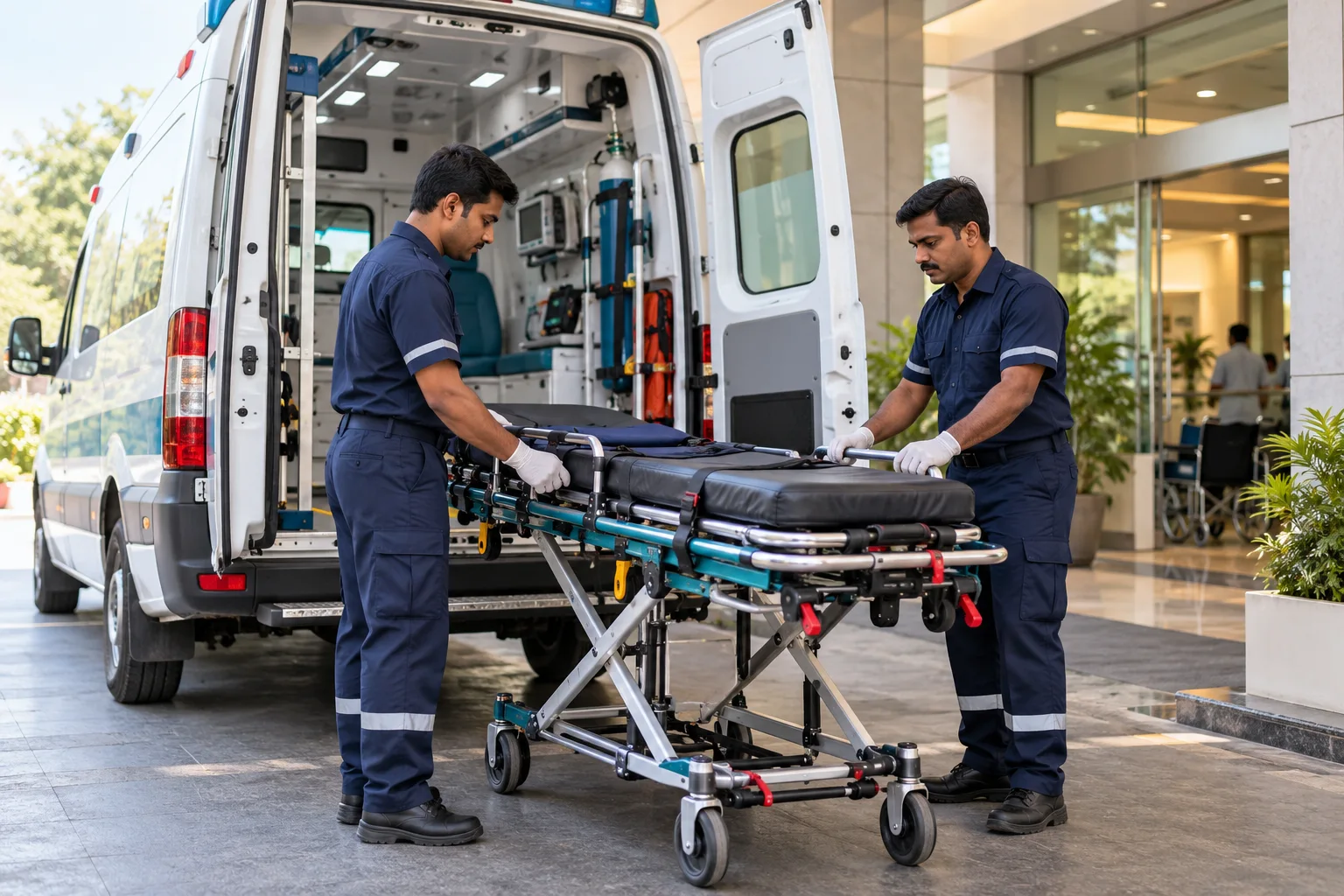
“A photograph of the real vehicle persuades”
Families want to see a clean vehicle with the stretcher and oxygen fitted, matching the type described. A stock image, or a photograph of a vehicle you sold, undermines the profile for the family and for the hospital desk.
“Reviews after distress need care”
A review request sent after a death is wrong. Ask after planned trips, discharges and dialysis runs, and answer every review in a calm voice that never argues the fare in public.
What we do
What we deliver for ambulance services.
The work available for this need. We agree the deliverables and responsibilities for your engagement in writing.
A profile for each base
Name, pin, service area, hours, number and ambulance types entered correctly for every base you operate from.
Result: A profile per base that shows your staffed number.
Photograph set
Photographs of each vehicle, the interior equipment and the crew in uniform, taken at your premises.
Result: A set uploaded and labelled by vehicle type.
Listing match
The same business name, address and number on the directories and hospital listing sites that carry your details.
Result: A sheet of listings brought to one spelling.
Review request and reply notes
A kind message the dispatcher sends after a suitable trip, and short replies for the common review situations.
Result: A message and reply set kept on the dispatcher's phone.
Questions and answers on the profile
Answers to what families ask, such as oxygen on board, a paramedic with the patient and advance booking.
Result: Each question on the profile answered.
How the result is measured
- Map pack ranking
- Local search visibility
- Enquiries by locality
Recorded as a baseline before work starts, so every later report has an honest comparison.
Searches your buyers type
The map result must tell a family the nearest vehicle and the number that answers.
- ambulance near me
- The profile for the base nearest the searcher, with the number answered at every hour that the profile lists.
- ICU ambulance in your area
- A services entry naming the ICU ambulance, matching the vehicle page on the website word for word.
- ambulance number at night
- Hours set exactly as staffed, with the night number and a note on who answers it.
- mortuary van near me
- A separate entry for the freezer van service with a gentle description and a number that is answered.
- ambulance service reviews
- A calm reply to each review that names no patient and no trip, and states only what the service can say.
Who it is for
This is written for these ambulance services.
- Basic patient transport ambulance operators
- ICU and ventilator ambulance providers
- Neonatal and paediatric transfer ambulance services
- Freezer box and mortuary van operators
- Long-distance and inter-city patient transport providers
- Dialysis and chemotherapy regular-run ambulance services
- Event and industrial standby ambulance providers
- Air ambulance coordinators who arrange charter transfers
Before you decide
When this may not be the right fit.
- Vehicles are not stationed at the address you want to list, and a profile for an empty address misleads families.
- No one is named to reply to reviews, so complaints would sit unanswered beside the listing.
- The night number rings on a driver's own phone, which is switched off while the vehicle is on a trip.
Before you decide
Agree the work. Know how to judge it.
Local SEO for ambulance services: use these checks to prepare, choose the scope, and review what changes.
Bring the right evidence
Confirm the real business address, service area, contact details, and who controls the business listings. Keep examples of calls that came from the wrong location or asked for a service you do not provide.
Make the scope clear
Choose the locations you actually serve and the information each needs. Agree who approves listing changes, responds to enquiries, and keeps opening hours accurate.
Check the work in use
Check the journey from a local search to a call or enquiry on a phone. The address, service area, and description should agree across your website and listings.
Know when to change course
Do not create an office claim for a place where you only serve customers remotely. Clear service coverage is more useful than a misleading local presence.
These are discussion points, not a fixed package. GullySales confirms the deliverables, responsibilities, fee, and term in writing after reading your brief and speaking with you.
Before we start
What to have ready before the work starts.
The records, access and decisions this work needs from ambulance services. Anything missing is noted in the written scope, with who will supply it.
- An address that can receive a verification code
- Each base needs a way to receive the platform's code, by post, phone or video, and a person present to act on it. A vehicle parked on a roadside cannot be verified. Without it, the profile cannot be claimed and stays uncontrolled. Tell us who is at the base on the day it arrives, since a missed code means a wait for another.
- One phone that rings at every base
- Name the phone that is answered at each base and who answers it at night. A number that rings out is worse than none on a map. Where a base shares a phone with the main office, tell us so and we plan around it.
- Owner access to the existing map profile
- If a profile already exists, you need to be the owner or have the owner's email. If a former employee or agency holds it, recovering it comes first, because a profile you do not control cannot be corrected or kept truthful. If the account email belongs to someone who has left, tell us now and we plan the request to the platform, which takes patience and proof of the business.
- A set of vehicle photographs at each base
- Photographs of each vehicle type taken at its own base, outside and inside. Phone pictures will do. If a base has none, that profile goes live with a text description and receives photographs later. They should show the vehicle in front of the real base, with the registration plate masked if you want, and no patient or hospital building behind it.
- Your rule on replying to reviews
- A written note of who replies to reviews, in what tone and what is never said, such as any detail about a patient or a trip. A short rule is enough. Without it, replies are left to whoever is free and can reveal a family's private matter.
How it works
How the local SEO work runs
The work itself, in order. How an engagement starts, from your brief to a written scope, is set out on our method page.
- 1
List every base and every number
We start with a sheet of each place your vehicles are kept or dispatched from, with its address, the phone that is answered there and who answers. You tell us which bases are real and which only appear on old listings. Each real base is a candidate for its own map profile.
- 2
Find the profiles that already exist
We search the map for your name, old names and addresses, and for profiles created by customers or former staff. You tell us which are yours. Duplicates and wrong pins are listed, and you decide which to claim, merge or ask to be removed. We also note any profile that has been marked closed.
- 3
Claim the profiles and set the basics
With your approval we claim each profile through its verification step, which needs someone at the base to receive a code. We set the business type, service area, phone and the hours you are prepared to state truthfully. The owner holds the logins, with us as managers.
- 4
Photograph each vehicle at its own base
We visit or ask each base to photograph the vehicle in front of the real premises, with its registration masked if you prefer. You decide what shows. A photograph of the actual vehicle persuades more than any line of text, and a picture of a hospital behind it is left out.
- 5
Match the name, address and number everywhere
We check that the business name, address and phone match across the map, directories and your website, correcting those you control and asking others to fix theirs. A list of what was changed goes to you, since a wrong number in one directory sends a family to a dead line.
- 6
Compare calls and direction requests with the start
We compare the calls, direction requests and website taps shown for each profile with the figures recorded before the work. You decide which base needs more attention and whether a review reply routine is working. No ranking or number of calls is promised. The review replies are read with the same care as the numbers.
Where this fits
Three pieces of sales work, in this order.
This work sits inside sales process design, at stage 1, prospecting and lead generation. The audit comes before it, and sales management keeps it running.
Step 1
Sales audit
Find where deals are being lost and what to fix first.
Start here if you cannot say where orders are lost.
Step 2 · you are here
Sales process design
One written way to sell, from first enquiry to repeat order.
Start here if every salesperson sells differently.
Step 3
Sales management
A target, a review routine and someone who owns the number.
Start here if the team has targets and no routine.
FAQ
Questions owners ask before they call.
Not here? More answers, or ask on WhatsApp.
Does each base need its own profile?
What do we do about fake reviews from a rival?
Can the listing say the service runs at every hour?
Can a listing photograph show a hospital behind the vehicle?
Can a hospital's name appear in our profile?
What if a customer reports our profile as fake or closed?
How much does it cost?
How long is the contract?
How soon will we see results?
Who will actually do the work?
More for ambulance services
Related work to consider.
Closest to this: search and visibility
Also for ambulance services
Or start from the overview: sales and marketing for ambulance services.
Your next practical step
Tell us what you are trying to grow, and we will read it before we call.
Eight short steps, mostly taps. Skip anything you would rather answer on the call.