Ambulance services · Social media
Post where neighbours talk, so your number is saved before the emergency.
Social media marketing for an ambulance service means posting where residents, societies and hospital staff will see your number before they need it. GullySales works on what to post, which groups and pages to use and how to keep the tone respectful.
Scope, fee, reporting and term are agreed in writing after we have read your brief and spoken to you.
What social media means
Social media is the ongoing posting your business does on platforms such as Instagram, Facebook and LinkedIn to stay visible to customers and prospects between purchases. GullySales plans a posting calendar, writes captions and designs the images so the page looks active and answers what a visitor would ask.
Last updated 14 Nov 2026. Rules for this trade differ by state and professional body, and they change. We describe restrictions in general terms, so check the current position with your own council or adviser before you publish anything.
For ambulance services
Where it usually goes wrong, and what we would do.
“Nobody follows an ambulance page for fun”
The audience is a resident who wants one trusted number saved. Posts should be useful and sparing: the vehicle types, the areas covered, a first-aid awareness reminder and the number. Chasing likes with jokes sits badly beside a trade built on distress.
“Neighbourhood groups carry more weight than a page”
A number forwarded in an apartment group or a school parents' group arrives with a neighbour's word behind it. A page with few followers has no such weight. Post a forwardable card where residents already talk, with the group admin's permission.
“Never post a patient”
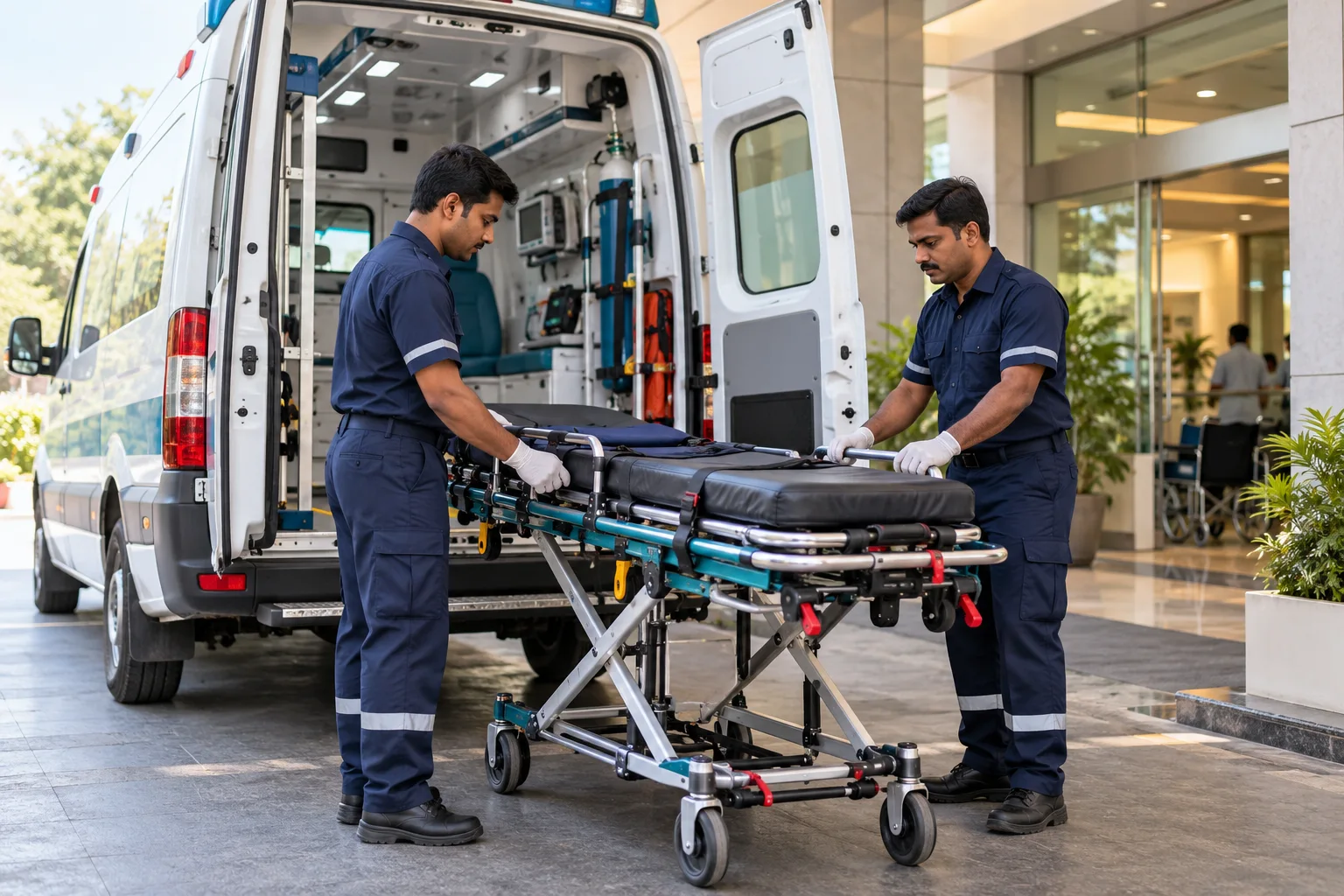
A photograph of a patient, a stretcher at a hospital door or a family's name breaks privacy and dignity. Show the vehicle, the crew and the equipment instead, and check with your own adviser how health advertising rules apply in your state.
“The crew is the face of the service”
A driver and a paramedic in uniform, introduced by first name with their consent, tell a worried reader that a trained person will arrive. That builds more trust than a stock picture of a row of vehicles.
What we do
What we deliver for ambulance services.
The work available for this need. We agree the deliverables and responsibilities for your engagement in writing.
Post types
A short set of post types, such as a vehicle walk-through, an equipment explanation and a reminder to save the number, each with one example written out.
Result: A list of post types with a finished example of each.
Forwardable number card
A single image with the number, the areas covered and the ambulance types, sized for sharing in groups.
Result: An image your team can forward from a phone.
Group posting list
The apartment, school, factory and market groups near each base, with the admin to ask for permission.
Result: A list of groups with a contact against each.
Page set-up
Profile photograph, short description, call button and WhatsApp button set correctly on the pages you choose to keep.
Result: Each page shows a staffed number on first view.
Comment and message guide
How to answer questions about fares, availability and complaints, moving each to a phone call.
Result: A reply guide the dispatcher keeps beside the phone.
How the result is measured
- Posts published
- Engagement rate
- Enquiries from social profiles
Recorded as a baseline before work starts, so every later report has an honest comparison.
Posts and pieces to plan
Plan the posts that put the number in a resident's phone before the night it is needed.
- Save this number before you need it
- A card with the number, the service types and the base, built to be forwarded in residents' and society groups.
- What is inside an ICU ambulance
- A phone walk-through filmed at your base with the crew in uniform and no patient in frame.
- What the dispatcher will ask when you call
- A plain list of the questions, so a frightened caller is ready; general information, never medical advice.
- Meet the crew
- The driver and the attendant with their roles, posted with their consent, to put faces to the number.
- Standby cover for events and factories
- A post for organisers and plant managers with a photograph of the vehicle and the booking contact.
Who it is for
This is written for these ambulance services.
- Basic patient transport ambulance operators
- ICU and ventilator ambulance providers
- Neonatal and paediatric transfer ambulance services
- Freezer box and mortuary van operators
- Long-distance and inter-city patient transport providers
- Dialysis and chemotherapy regular-run ambulance services
- Event and industrial standby ambulance providers
- Air ambulance coordinators who arrange charter transfers
Before you decide
When this may not be the right fit.
- Nobody answers comments or messages at night, so a post that brings a late question would leave it unanswered.
- You expect posts to bring emergency calls directly, but a family in distress calls the number it already knows.
- You have no photographs of your own vehicles and crew, and would be tempted to borrow images of someone else's.
Before you decide
Agree the work. Know how to judge it.
Social media marketing for ambulance services: use these checks to prepare, choose the scope, and review what changes.
Bring the right evidence
Review the posts that produced useful conversations, not only the ones with the most views. Gather buyer questions and decide which team member can contribute credible material.
Make the scope clear
Choose the audience and channel before setting a posting volume. Agree who supplies material, approves posts, and handles messages, including complaints or questions the agency cannot answer.
Check the work in use
Follow a post through to the profile, website, and response. A useful report explains the quality of conversations and enquiries, alongside reach and engagement.
Know when to change course
If publishing takes time away from unanswered buyer messages, fix the response routine first. Do not expand to another channel without a clear reason for being there.
These are discussion points, not a fixed package. GullySales confirms the deliverables, responsibilities, fee, and term in writing after reading your brief and speaking with you.
Before we start
What to have ready before the work starts.
The records, access and decisions this work needs from ambulance services. Anything missing is noted in the written scope, with who will supply it.
- A signed rule on what the crew may post
- A page agreed by the owner and crew that says what may and may not be shown or said about trips. Short is fine. Without it, a well-meant photograph of a patient could be posted, which harms a family and the service.
- Crew who agree to be photographed
- Names of the drivers and attendants willing to appear, with their written yes. Some will decline, and that is final. Without willing crew, posts show the vehicle and equipment only, which is quieter but safe. Say who the crew members are for each shift, so we can plan the days we film.
- Your number, areas and vehicle types
- The exact phone number that is answered, the areas you cover and the vehicle types, written once and checked by you. Every card and post uses this. If it changes after printing, forwarded cards give families the old number. The number should be tested by dialling it from a different phone before anything is printed or posted.
- Admin access to any existing page
- If the service already has a page or profile, you need the admin login in the company's name. A page made by a former driver on a personal profile must be recovered first. Without access, we begin with a new page and the old one lingers.
- A person to watch the page
- Someone must read comments and messages after each post and pass a booking enquiry to the dispatcher. That could be the dispatcher. If nobody watches, we advise fewer posts, since an unanswered message from a worried family does harm. They should also know when to pass a message to the dispatcher.
How it works
How the social media work runs
The work itself, in order. How an engagement starts, from your brief to a written scope, is set out on our method page.
- 1
Find the groups your neighbours already use
We list the residents' groups, society notice boards, hospital staff groups and local pages where an ambulance number would be welcome. You tell us where you have a contact. We do not join a group to sell, so each entry notes who could introduce you.
- 2
Agree what may be shown from a trip
Before any post, you and the crew agree the rule: no patient, no relative, no hospital ward, no plate that identifies a family. The vehicle, the equipment and the crew's training may be shown. We write the rule on one page and the crew sign it.
- 3
Make a number card people will forward
We design a plain card with your number, the vehicle types and the area you serve, readable on a phone screen. You approve every line. Residents forward it to family groups, so it must be correct before it travels. A card that arrives with a wrong digit does harm, so you read every number twice before the card is shared.
- 4
Photograph the crew and the vehicle at the base
We spend time at the base with a phone camera: the vehicle inside and out, the oxygen and equipment check, and the crew who have agreed to appear. You choose who appears. The folder that results is the only source for later posts.
- 5
Write the first posts and the replies
We draft a few posts that introduce the crew, explain a vehicle type and give the number, in calm language. We also write short replies for questions, and a rule that medical questions go to a call. You approve each before it appears.
- 6
Compare saved numbers and calls with the start
After the posts have run for a period you choose, we compare the calls that cite a group or page, the number of shares of the card and the booked calls with the figures recorded before. You decide which group to keep. Followers are shown only as context.
Where this fits
Three pieces of sales work, in this order.
This work sits inside sales process design, at stage 0, foundation. The audit comes before it, and sales management keeps it running.
Step 1
Sales audit
Find where deals are being lost and what to fix first.
Start here if you cannot say where orders are lost.
Step 2 · you are here
Sales process design
One written way to sell, from first enquiry to repeat order.
Start here if every salesperson sells differently.
Step 3
Sales management
A target, a review routine and someone who owns the number.
Start here if the team has targets and no routine.
FAQ
Questions owners ask before they call.
Not here? More answers, or ask on WhatsApp.
Which platform matters most for an ambulance service?
Can we post photographs of patients we carried?
Can a post tell people what to do for a patient before the ambulance arrives?
Should we post on the day of a major accident?
Should we advertise on the day of a major accident?
Do we need to boost posts with paid reach?
How much does it cost?
How long is the contract?
How soon will we see results?
Who will actually do the work?
More for ambulance services
Related work to consider.
Closest to this: content and social
Also for ambulance services
Or start from the overview: sales and marketing for ambulance services.
Your next practical step
Tell us what you are trying to grow, and we will read it before we call.
Eight short steps, mostly taps. Skip anything you would rather answer on the call.