Ambulance services · Buyer persona
Know who is dialling: a frightened relative, a desk supervisor or a safety officer.
A buyer persona for an ambulance service describes the people who call or book, what is going on for them and what they check before choosing. GullySales builds these profiles from your own call log and your dispatcher's memory, not from guesswork.
Scope, fee, reporting and term are agreed in writing after we have read your brief and spoken to you.
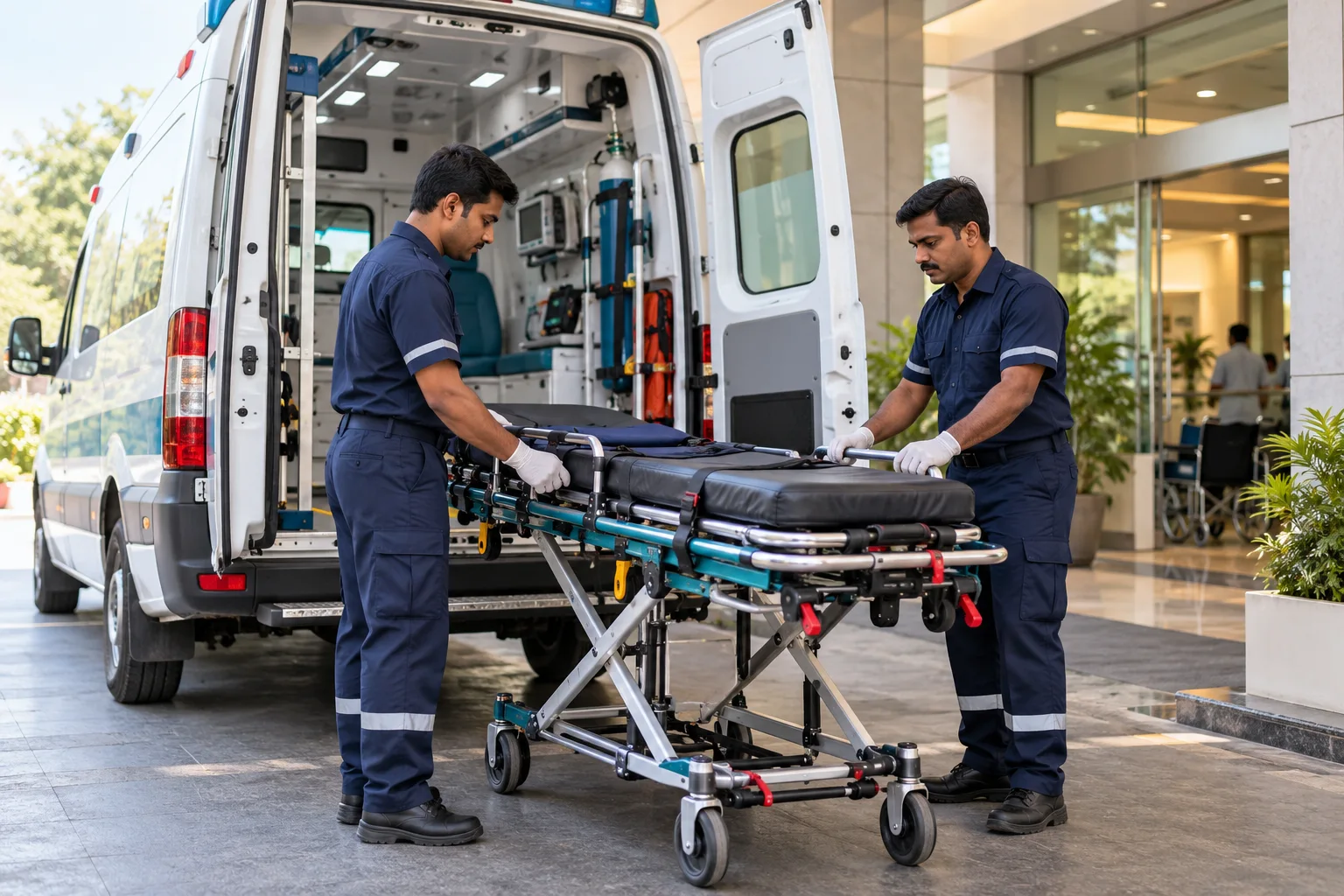
What buyer persona means
A buyer persona is a plain description of the kind of customer who actually buys from you. It includes what they search, what worries them and who else they ask before deciding. GullySales builds this from real enquiries and past sales rather than a generic template, then uses it to write every page and advert.
Last updated 14 Nov 2026. Rules for this trade differ by state and professional body, and they change. We describe restrictions in general terms, so check the current position with your own council or adviser before you publish anything.
For ambulance services
Where it usually goes wrong, and what we would do.
“The relative in an emergency”
Frightened, awake at night, holding a phone and a bundle of papers. They want a voice that answers, a clear vehicle type and a stated fare. They are not reading, so every word that reaches them has to be short enough to be spoken.
“The family planning a discharge or a long transfer”
Calmer and comparing. They ask about oxygen, a nurse on board, distance and waiting charges, and they ring relatives for names. A written quote and a named dispatcher persuade this buyer.
“The desk supervisor or ward in-charge”
Books for dozens of patients and wants an operator who turns up, behaves and bills as agreed. They carry a short list and change it only after a failure. Your record of reliability is the product they are buying.
“The site and event buyer”
A factory safety officer, school administrator or event organiser needs standby cover for compliance and peace of mind. They want a clear offer form, a named crew and a quote that their finance team can approve.
What we do
What we deliver for ambulance services.
The work available for this need. We agree the deliverables and responsibilities for your engagement in writing.
One persona sheet for each buyer
A page per buyer type with the situation, the questions asked, what is checked and what puts them off.
Result: Four sheets, each in plain words your dispatcher recognises.
Call-log interview
A sitting with the dispatcher and two drivers to record the questions each caller type asks.
Result: Notes from the sitting, filed against each persona.
Decision-step map
The order in which each buyer checks number, vehicle, fare and reputation before booking.
Result: A map per persona showing where bookings are lost.
Message set per persona
Wording for the phone greeting, the WhatsApp reply and the printed sheet, written for each buyer.
Result: A set of messages, one for each persona.
Fit review against the log
The sheets compared with later call entries, and corrected where the callers differ.
Result: Updated sheets with changes marked.
How the result is measured
- Enquiry match to persona
- Conversion rate by persona
- Content aligned to persona
Recorded as a baseline before work starts, so every later report has an honest comparison.
Who is asking
Five callers reach the same number with five different needs.
- Frightened relative at night
- Wants a voice that answers, a vehicle that fits the patient and a plain statement of the fare basis before the vehicle moves.
- Family planning a discharge
- Wants to know the vehicle, the crew and the cost before the hospital releases the patient.
- Ward in-charge or desk supervisor
- Wants a number that answers, a vehicle that matches the order and a dispatcher who confirms the booking.
- Factory safety officer
- Wants standby cover, the vehicle details and the papers to show at the site gate.
- Relative arranging a body transfer
- Wants a gentle voice, the route, the papers needed and a clear fare, with nothing sold.
Who it is for
This is written for these ambulance services.
- Basic patient transport ambulance operators
- ICU and ventilator ambulance providers
- Neonatal and paediatric transfer ambulance services
- Freezer box and mortuary van operators
- Long-distance and inter-city patient transport providers
- Dialysis and chemotherapy regular-run ambulance services
- Event and industrial standby ambulance providers
- Air ambulance coordinators who arrange charter transfers
Before you decide
When this may not be the right fit.
- You keep no call log, and personas written without records would be guesses.
- Dispatchers take each call in their own way with no shared script, so a persona would change nothing at the phone.
- You serve one hospital through a fixed arrangement, and there is no open buyer to write for.
Before you decide
Agree the work. Know how to judge it.
Buyer personas for ambulance services: use these checks to prepare, choose the scope, and review what changes.
Bring the right evidence
Write the decision the research must support, such as entering a market or choosing a buyer group. Separate what you know from sales records from what the team currently assumes.
Make the scope clear
Agree which buyers to speak to, which sources to review, and what access you can provide. Include lost enquiries and people who chose another supplier, where they are willing to take part.
Check the work in use
Look for source dates, sample limitations, and evidence that disagrees with the preferred answer. A recommendation should show how it follows from the findings.
Know when to change course
Do not treat a few positive conversations as proof of demand. Test the proposed offer with an actual buying decision before committing to a wider launch.
These are discussion points, not a fixed package. GullySales confirms the deliverables, responsibilities, fee, and term in writing after reading your brief and speaking with you.
Before we start
What to have ready before the work starts.
The records, access and decisions this work needs from ambulance services. Anything missing is noted in the written scope, with who will supply it.
- The call log with caller type noted
- A record of calls with a mark for who called and why. A dispatcher's notebook will do. Without caller types we group the calls ourselves from trip sheets, which is slower and less exact. Mark each row with the kind of caller if you know it, and do not worry about the gaps, which we fill in the interview.
- Time with the dispatcher away from the phone
- The dispatcher must be freed for a talk of reasonable length without the phone ringing, perhaps by a colleague covering. If they cannot be freed, the persona rests on thinner notes and is flagged accordingly. Arrange the cover in advance, so the dispatcher can talk freely and the phone is answered while we do.
- Two crew members who will speak candidly
- A driver and an attendant who agree to talk about the families they meet and the hospital staff they deal with. Choose people with some experience. Without them, the sheets lack what happens at the door and the discharge desk. They should be people who have done the job for some time and are willing to say what is hard about it.
- A decision on keeping patient details out
- A short written rule that no patient name, condition or hospital ward is kept in persona material. The owner and dispatcher should agree to it. Without it, we mention none of these anyway, but the interview notes may drift. Show it to the crew so they know the rule applies to them too.
- Notes on tie-ups with hospital desks
- A list of the desks and homes you serve, who books there and how. It shows the booking route of the planned buyer. Without it, the desk supervisor persona is drawn from the dispatcher's view alone. Tell us which account was won, which was lost and what you think made the difference.
How it works
How the buyer persona work runs
The work itself, in order. How an engagement starts, from your brief to a written scope, is set out on our method page.
- 1
Group last year's calls by who was calling
We take the call log and trip sheets and group the calls by caller: a relative in an emergency, a family planning a discharge, a hospital desk, a site or event organiser. You correct our grouping from memory. The groups tell us how many personas are worth writing. The groups are written on one sheet.
- 2
Interview the dispatcher about each caller
We ask the dispatcher to recall a few calls of each kind: how the caller sounded, what they asked first, what they feared and what made them book. We record notes in the dispatcher's own words. No patient names are written down. We start with the calls the dispatcher remembers best, then move on to unclear ones, writing only what the dispatcher says and never a patient's details.
- 3
Talk to a driver and an attendant
The crew meet the family at the door and see the hospital desk's side. We ask what families need on arrival and what hospital staff expect from a crew. The notes are read back to them for correction before we use them. We also ask which hospital desks treat a crew well, and which make life difficult, so the desk persona has a real picture of the other side of the counter.
- 4
Check the notes against the trip sheets
With you, we match what the dispatcher and crew said against the trip sheets, to see which claims the records support. Where the record disagrees, we mark the statement as untested. This stops the persona from repeating a single loud memory. Where trip sheets are incomplete, we ask the dispatcher to check a few against the call log, so the evidence is fair and not guessed.
- 5
Draft the persona sheets and the decision steps
We write one sheet for each caller type, with the order in which that person decides, what they check and what makes them hang up. You and the dispatcher correct them. Details that could identify a patient are left out. Each sheet is kept to a single page, with the caller's question, fear and decision step, so it can sit beside the phone.
- 6
Read the sheets against the next month's calls
After the dispatcher has used the sheets on live calls, we compare how well each persona matched the callers against the log kept from the start. You decide which sheet to revise. The sheets are used to improve answers, not to promise anything to the caller. The dispatcher's remarks go into a note for the next revision.
Where this fits
Three pieces of sales work, in this order.
This work sits inside sales process design, at stage 0, foundation. The audit comes before it, and sales management keeps it running.
Step 1
Sales audit
Find where deals are being lost and what to fix first.
Start here if you cannot say where orders are lost.
Step 2 · you are here
Sales process design
One written way to sell, from first enquiry to repeat order.
Start here if every salesperson sells differently.
Step 3
Sales management
A target, a review routine and someone who owns the number.
Start here if the team has targets and no routine.
FAQ
Questions owners ask before they call.
Not here? More answers, or ask on WhatsApp.
How can we build personas without data?
Is a persona the same as a customer list?
Is the patient one of the personas?
Can a persona name the patient's condition?
Who in the business should read the persona sheets?
How do we use a persona on a live call?
How much does it cost?
How long is the contract?
How soon will we see results?
Who will actually do the work?
More for ambulance services
Related work to consider.
Closest to this: strategy and research
Also for ambulance services
Or start from the overview: sales and marketing for ambulance services.
Your next practical step
Tell us what you are trying to grow, and we will read it before we call.
Eight short steps, mostly taps. Skip anything you would rather answer on the call.