Orthopaedic hospitals · Lead generation
Bring in joint, spine and trauma enquiries that match the surgeons you have.
Lead generation for an orthopaedic hospital means getting the right enquiry to the right surgeon: a knee or hip replacement, a disc problem, a fracture, a sports injury. GullySales works on procedure-wise sources, a clean record of each enquiry and the route from first call to consultation.
Scope, fee, reporting and term are agreed in writing after we have read your brief and spoken to you.
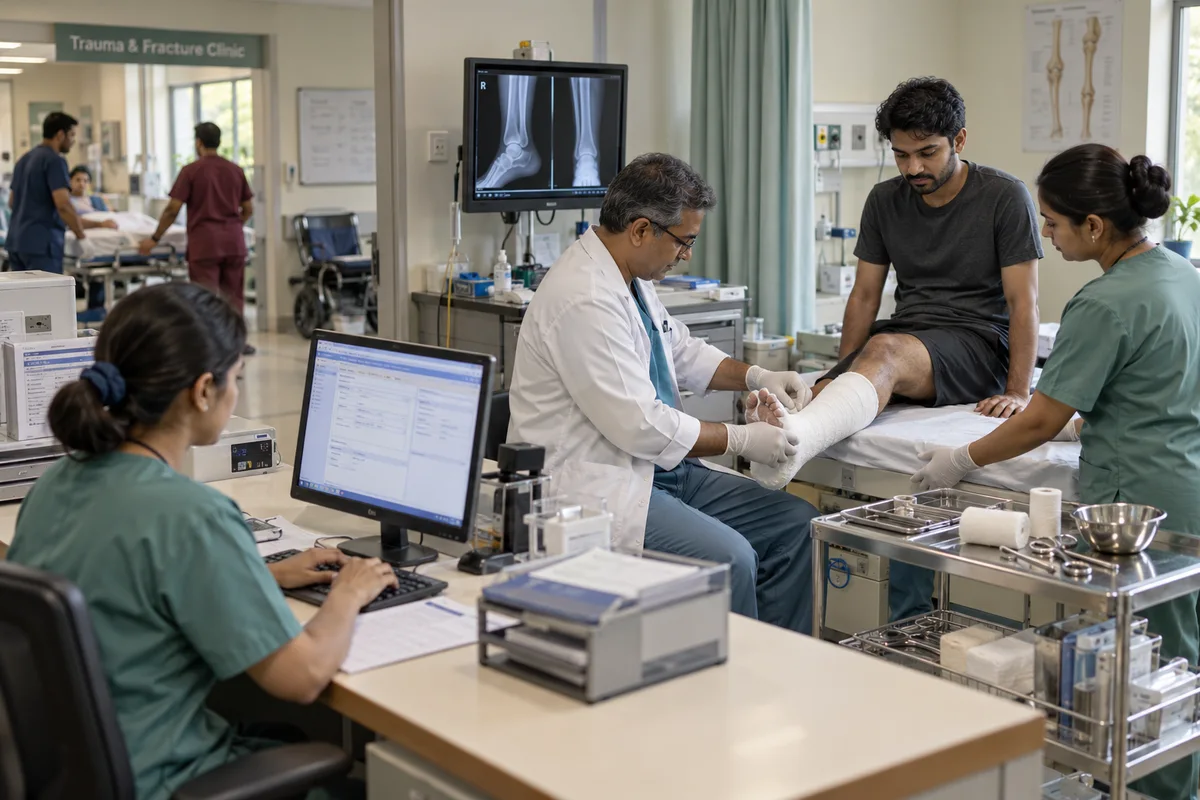
What lead generation means
Lead generation is the combined work of every channel that brings in a new enquiry, whether from search, adverts, referrals or a stall at an exhibition. GullySales runs these channels together and reports the number of enquiries each one produced, not the activity behind it.
Also for orthopaedic hospitals
- CRM for orthopaedic hospitals
- Follow-up systems for orthopaedic hospitals
- SEO for orthopaedic hospitals
- Local SEO for orthopaedic hospitals
- Social media marketing for orthopaedic hospitals
- Content marketing for orthopaedic hospitals
- Buyer persona for orthopaedic hospitals
- WhatsApp marketing for orthopaedic hospitals
Sales and marketing for orthopaedic hospitals, the overview.
Plan the next part of the work
Last updated 21 Nov 2026. Rules for this trade differ by state and professional body, and they change. We describe restrictions in general terms, so check the current position with your own council or adviser before you publish anything.
For orthopaedic hospitals
Where it usually goes wrong, and what we would do.
“A joint enquiry and a trauma call are different leads”
The family asking about a knee replacement compares estimates over weeks. The family in casualty decides in minutes. Treating both as one pool of calls gives the planned patient a rushed answer and the emergency a form. Each needs its own route and its own owner.
“Enquiries pile up for a procedure with no surgeon time”
Advertising knee replacement while the joint surgeon's theatre days are full produces calls nobody can book. Lead generation starts from the gaps in the theatre list, then points effort at those procedures instead of everything at once.
“Outside practices send patients too”
A physiotherapist whose client has worn cartilage, or a scan centre holding a report that shows a slipped disc, is a source that never appears as a search click. If nobody records who sent the patient, that source is neither thanked nor grown.
“A price question is a lead, not a nuisance”
The caller asking what a hip replacement costs is a patient weighing hospitals. A flat refusal sends them to the next one. A written explanation of what changes the bill keeps them talking to your counsellor.
What we do
What we deliver for orthopaedic hospitals.
The work available for this need. We agree the deliverables and responsibilities for your engagement in writing.
Enquiry sources by procedure
A sheet that records each enquiry against knee, hip, spine, trauma, sports or another procedure, and against the source that brought it.
Result: The owner can see which source feeds which procedure.
Procedure landing pages with a booking route
Pages for joint and spine problems that name the surgeon and offer a consultation or an estimate request.
Result: Each page leads to one form and one named coordinator.
Referral sheet for outside practices
A one-page way for physiotherapists, general physicians and scan centres to send a patient, with a promise of a letter back to the sender.
Result: Every outside referral is logged with the name of its sender.
A focus list agreed with the lead surgeon
Procedures to push and procedures to hold while theatre time is full, written down and reviewed with the administrator.
Result: Enquiry effort follows the days when a theatre is free.
Cost-question script
A script and written explanation the counsellor uses when a caller asks what a replacement costs, drawn from what the surgeons and billing head agree.
Result: Every cost question gets the same answer and is logged.
How the result is measured
- Relevant enquiries by source
- Duplicate and unsuitable enquiries
- Time to the first response
- Accepted enquiries reaching an agreed next step
Recorded as a baseline before work starts, so every later report has an honest comparison.
What to capture or send
What the desk records on the first call so the right surgeon's list gets the enquiry.
- Procedure the family named
- Knee, hip, spine, fracture or sports injury, in the caller's own words. It decides which surgeon's list the enquiry joins and which counsellor rings back.
- Mediclaim or self-pay
- Ask whether a policy exists and with which insurer. Cashless approval shapes the estimate and the date, so the counsellor needs it before the first conversation ends.
- Who sent the patient
- Physiotherapist, scan centre, general practitioner, ambulance driver or a friend. Without this line a referring practice is never thanked and never grown.
- Scan or X-ray already done
- A family holding a report can be booked straight to the surgeon, and one without is booked for imaging first. The note saves a wasted visit.
- Planned or emergency
- Mark a casualty call apart from a planned one on the first line, so the emergency goes to the duty route and the planned patient gets a considered callback.
Who it is for
This is written for these orthopaedic hospitals.
- Joint replacement and arthroscopy hospitals
- Spine surgery centres with inpatient beds
- Trauma and fracture hospitals on highways and ring roads
- Sports medicine hospitals with rehabilitation
- Orthopaedic hospitals run by a group of surgeons
- Orthopaedic and neuro hospitals with a combined spine unit
- Orthopaedic nursing homes expanding to larger hospitals
- Orthopaedic wings of multi-branch hospital groups
Before you decide
When this may not be the right fit.
- Your surgeons' theatre days for the procedure are already full, so more enquiries would only queue behind a closed list.
- No one on the desk is named to ring back a planned-surgery enquiry, so new calls would join the ones already lost.
Before you decide
Agree the work. Know how to judge it.
Lead generation for orthopaedic hospitals: use these checks to prepare, choose the scope, and review what changes.
Bring the right evidence
Define the organisations or buyers you can serve and the reasons they would consider a conversation. Bring examples of accepted and rejected prospects so the selection rule is visible.
Make the scope clear
Agree the research sources, contact approach, qualification rules, and handover. Clarify which meetings count as accepted and what happens to replies that are not ready to buy.
Check the work in use
Review why a prospect was selected and what was learned from the response. Count held, relevant conversations separately from contacts found, messages sent, or meetings booked.
Know when to change course
If the same objection appears repeatedly, adjust the offer or buyer group before increasing outreach. Respect a request to stop contact and keep the exclusion in the record.
These are discussion points, not a fixed package. GullySales confirms the deliverables, responsibilities, fee, and term in writing after reading your brief and speaking with you.
Before we start
What to have ready before the work starts.
The records, access and decisions this work needs from orthopaedic hospitals. Anything missing is noted in the written scope, with who will supply it.
- Theatre capacity by procedure from the surgeons
- A plain statement of which procedures have room in the theatre list and which are full. Without it, the first weeks of enquiries pile up for a surgeon with no free time and families go elsewhere. If the surgeons cannot say, we draw consultations only and do not target a named operation.
- Admission records for the last two quarters
- A list of planned admissions by procedure with the date and, where known, the referring source. It is the base for the starting figures. Where the source was never noted, the admissions desk asks each new patient for a period before the plan is finalised.
- A clear owner for each incoming enquiry
- One named coordinator, with a deputy, who takes a planned-surgery enquiry from first call to consultation. Trauma calls belong to casualty and are not mixed in. When nobody is named, calls are passed around and families tire of repeating themselves.
- The insurer and package list in writing
- Which insurers and schemes the hospital accepts and which packages exist for the commonest procedures. Families ask in the first call. If the list is not settled, replies do not quote a package or promise approval, and the cost question is answered by inviting the family to the counter.
How it works
How the lead generation work runs
The work itself, in order. How an engagement starts, from your brief to a written scope, is set out on our method page.
- 1
Agree the procedure focus with the lead surgeon
We start in a room with the lead surgeon, the medical director and the owner, and ask which procedures have theatre time and a surgeon free to take more cases. Knee and hip replacement, spine, arthroscopy and trauma are different enquiries with different capacity. You decide the focus list, and enquiries are drawn only towards procedures that can be booked.
- 2
Reconstruct where last season's patients came from
With the front office and the admissions desk we trace recent admissions back to their source: a surgeon in a clinic, a physiotherapist, an insurer's network list, a search, a friend, an ambulance. The sheet is approved by the administrator as the baseline, and every figure we report afterwards is read against it.
- 3
Write the cost-question reply and the capture form
Families ask about price on the first call. We write what the person on the phone says about estimates, packages and cashless approval, and the few questions the form or the call must capture: the procedure asked about, who is calling for whom, the insurer, the city. The medical director and your adviser read the wording.
- 4
Place a test enquiry as a distant relative
We call and message as a son abroad asking about a knee replacement for a parent, and as a bystander asking about a fracture at night. The coordinator and the casualty desk respond. You see where the route stalls, a surgeon in theatre or a number that rings out, and we repair it before real enquiries are invited.
- 5
Read sources against the baseline and decide
After enquiries begin, we compare each source by procedure against the baseline and follow them through consultation, estimate and admission. The coordinator tells us which families asked for a second opinion or a cheaper package. You and the lead surgeon decide which source to feed, which procedure to widen and which to stop.
Where this fits
Three pieces of sales work, in this order.
This work sits inside sales process design, at stage 1, prospecting and lead generation. The audit comes before it, and sales management keeps it running.
Step 1
Sales audit
Find where deals are being lost and what to fix first.
Start here if you cannot say where orders are lost.
Step 2 · you are here
Sales process design
One written way to sell, from first enquiry to repeat order.
Start here if every salesperson sells differently.
Step 3
Sales management
A target, a review routine and someone who owns the number.
Start here if the team has targets and no routine.
FAQ
Questions owners ask before they call.
Not here? More answers, or ask on WhatsApp.
Should we advertise trauma care to get more emergency cases?
Which procedure should we start with?
Do you buy contact lists for us?
What should a family hear when they call about a replacement and the surgeon is in theatre?
How do we avoid enquiries for a surgeon who cannot take them?
What should we measure to know the leads are real?
How much does it cost?
How long is the contract?
How soon will we see results?
Who will actually do the work?
More for orthopaedic hospitals
Related work to consider.
Closest to this: leads and follow-up
Also for orthopaedic hospitals
Or start from the overview: sales and marketing for orthopaedic hospitals.
Your next practical step
Tell us what you are trying to grow, and we will read it before we call.
Eight short steps, mostly taps. Skip anything you would rather answer on the call.