Orthopaedic hospitals · Buyer persona
Know who in the family searches, who pays and who decides on the surgeon.
A buyer persona for an orthopaedic hospital describes the real people in each decision: the patient in pain, the family member who searches, the person who holds the mediclaim and the doctor who referred. GullySales writes them from your enquiry records and conversations at the counter, not from guesses.
Scope, fee, reporting and term are agreed in writing after we have read your brief and spoken to you.
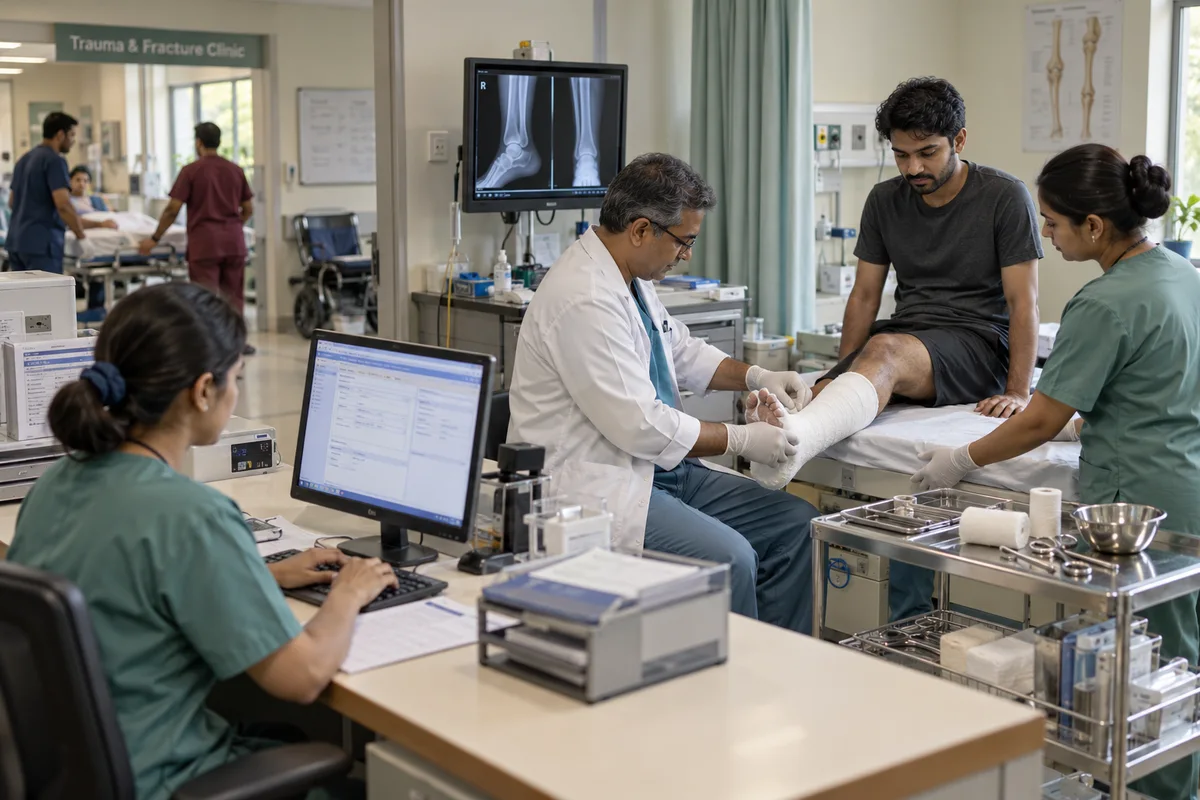
What buyer persona means
A buyer persona is a plain description of the kind of customer who actually buys from you. It includes what they search, what worries them and who else they ask before deciding. GullySales builds this from real enquiries and past sales rather than a generic template, then uses it to write every page and advert.
Also for orthopaedic hospitals
- Digital marketing for orthopaedic hospitals
- Lead generation for orthopaedic hospitals
- SEO for orthopaedic hospitals
- Local SEO for orthopaedic hospitals
- Social media marketing for orthopaedic hospitals
- Content marketing for orthopaedic hospitals
- CRM for orthopaedic hospitals
- Follow-up systems for orthopaedic hospitals
Sales and marketing for orthopaedic hospitals, the overview.
Last updated 14 Nov 2026. Rules for this trade differ by state and professional body, and they change. We describe restrictions in general terms, so check the current position with your own council or adviser before you publish anything.
For orthopaedic hospitals
Where it usually goes wrong, and what we would do.
“The patient is not the only buyer”
A retired patient in pain may leave the choice to a daughter living in another city. The daughter searches, reads estimates and calls. The page and the phone script have to answer the daughter's questions, not only the patient's.
“Planned surgery and trauma are two different people”
The family comparing hospitals for a spine operation has time and a list of questions. The family at casualty has neither. One persona sheet for both produces copy that suits neither.
“The insurance question comes before the surgeon question”
A patient with a cashless policy asks first whether the hospital is on the insurer's list and when approval arrives. A patient without cover asks about the package. The two conversations start differently.
“The referrer is a buyer too”
A physiotherapist, general physician or scan centre chooses the hospital to which they send a patient. Their persona asks whether the surgeon will explain things calmly and whether a letter comes back.
What we do
What we deliver for orthopaedic hospitals.
The work available for this need. We agree the deliverables and responsibilities for your engagement in writing.
Persona sheets for each decision
One sheet each for the planned-surgery patient, the searching family member, the trauma family and the referring practice.
Result: Four sheets in plain words, each with the questions that person asks.
Questions each persona asks
A list drawn from the counter, the phone log and the estimate desk, written in the words people use.
Result: A question list the front office can check against real calls.
Insurance and no-insurance paths
Two conversation paths, one for cashless patients and one for self-paying patients, with the documents each needs.
Result: The counsellor has a path for each case.
Persona-matched page and script changes
Changes to pages and call scripts so that each persona finds its own question answered early.
Result: A marked-up copy of the pages and scripts.
Review with the surgeons
A session in which the surgeons correct the personas from their own consulting rooms.
Result: Personas the surgeons have read and corrected.
How the result is measured
- Enquiry match to persona
- Conversion rate by persona
- Content aligned to persona
Recorded as a baseline before work starts, so every later report has an honest comparison.
Who is asking
The people who decide on an orthopaedic hospital, and what each wants answered first.
- Retired parent, advised a knee replacement
- Wants to know how long the stay is, whether walking is possible without help and who looks after the first week. Asks whether the children must be present.
- Adult child handling the paperwork
- Wants the estimate in writing, the insurer's steps and a single contact. Decides the hospital while the parent decides the surgeon.
- Family at a highway casualty
- Wants a free theatre, a bone surgeon on call and a person who explains the next hour. There is no time to compare hospitals.
- Working adult with a disc problem
- Wants to avoid surgery if possible, asks about time off work and wants a second opinion. Reads the surgeon page before the hospital page.
- Physiotherapist or general practitioner
- Wants to know the surgeon will take the case, report back and return the patient for rehabilitation. Judges the hospital on whether the referral is acknowledged.
Who it is for
This is written for these orthopaedic hospitals.
- Joint replacement and arthroscopy hospitals
- Spine surgery centres with inpatient beds
- Trauma and fracture hospitals on highways and ring roads
- Sports medicine hospitals with rehabilitation
- Orthopaedic hospitals run by a group of surgeons
- Orthopaedic and neuro hospitals with a combined spine unit
- Orthopaedic nursing homes expanding to larger hospitals
- Orthopaedic wings of multi-branch hospital groups
Before you decide
When this may not be the right fit.
- You have never recorded who sent a patient or who paid, so a persona would rest on guesses about your buyers.
- Your surgeons disagree on which cases the hospital wants more of, so the personas would describe a patient nobody has chosen.
Before you decide
Agree the work. Know how to judge it.
Buyer persona for orthopaedic hospitals: use these checks to prepare, choose the scope, and review what changes.
Bring the right evidence
Write the decision the research must support, such as entering a market or choosing a buyer group. Separate what you know from sales records from what the team currently assumes.
Make the scope clear
Agree which buyers to speak to, which sources to review, and what access you can provide. Include lost enquiries and people who chose another supplier, where they are willing to take part.
Check the work in use
Look for source dates, sample limitations, and evidence that disagrees with the preferred answer. A recommendation should show how it follows from the findings.
Know when to change course
Do not treat a few positive conversations as proof of demand. Test the proposed offer with an actual buying decision before committing to a wider launch.
These are discussion points, not a fixed package. GullySales confirms the deliverables, responsibilities, fee, and term in writing after reading your brief and speaking with you.
Before we start
What to have ready before the work starts.
The records, access and decisions this work needs from orthopaedic hospitals. Anything missing is noted in the written scope, with who will supply it.
- A spread of recent admissions by procedure
- Anonymised records or the admissions register showing planned and trauma cases, the insurer or self-pay status and the referring source. We use them to see who actually comes, by procedure, by insurer or self-pay status and by the person who made the first call. A register without sources is acceptable, though the sheets will be thinner.
- Time with the insurance and billing desks
- These staff hear the family's real worries about cost and approval before the surgeon does. We need their time away from the counter, and a chance to see the forms that families are asked to fill at the insurance desk. Without them, the personas will miss the insurance question that comes ahead of the surgeon question.
- The lead surgeon's view of who decides
- In joint and spine cases, who is in the room and who has the final say. A few notes from the surgeon's own observation. Where nothing has been recorded, we ask the counter to note who attends during several OPD sessions.
- A decision on which cases to grow
- Say whether the hospital wants more planned replacements, more spine cases, more sports injuries or more referrals from clinics. Personas for every decision weaken the plan. If the administrator and surgeon differ, we draw both and ask them to choose after reading.
- A rule on keeping patients anonymous
- Confirm that sheets carry no names, no real histories and no scan details. Health information is sensitive. If the hospital wants a patient quoted, written consent is needed, and we normally use the staff's paraphrase instead.
How it works
How the buyer persona work runs
The work itself, in order. How an engagement starts, from your brief to a written scope, is set out on our method page.
- 1
Decide which decisions the personas must cover
With the administrator and the lead surgeon we list the decisions that matter: a planned joint replacement, a spine operation, a trauma admission, a referral from a clinic. You choose the decisions the hospital wants to win more of. Each gets one persona sheet, and we cap the set at five so that it stays usable.
- 2
Choose the admission files and the people to hear
We ask the admissions desk for a spread of recent cases across the chosen decisions and name the staff to interview: the counter, billing, the insurance desk, the casualty nurse, a physiotherapist. You confirm what records we may read. Names of patients stay with the hospital.
- 3
Interview the counter and the insurance desk
We ask what each kind of family asks first, who is in the room, who pays, who holds the mediclaim, and why some leave without booking. We write what was said in the staff's words. The surgeon adds how the same families behave in the consulting room.
- 4
Check each finding against the enquiry and admission records
A statement such as that the daughter abroad decides is tested against the records and the staff's accounts. Findings we cannot support are marked as assumptions. You see which parts of a sheet are evidence and which are a guess to be tested, and the counter is asked to watch for the guesses over the next several weeks of enquiries.
- 5
Draw the insurance and no-insurance paths
For planned surgery we draw two paths: the cashless one, with the insurer's network list, the pre-authorisation and the documents it asks for, and the self-paying one, with an estimate, a package and an advance. You tell us where families drop out in each. The paths are checked by the insurance desk and corrected.
- 6
Review the sheets with the surgeons and apply them
We bring the written personas to the surgeons and the desk and they correct what does not sound like their patients. For each persona we list the page, script and reply that should change. You set the order, and we return later to compare real enquiries with the sheets.
Where this fits
Three pieces of sales work, in this order.
This work sits inside sales process design, at stage 0, foundation. The audit comes before it, and sales management keeps it running.
Step 1
Sales audit
Find where deals are being lost and what to fix first.
Start here if you cannot say where orders are lost.
Step 2 · you are here
Sales process design
One written way to sell, from first enquiry to repeat order.
Start here if every salesperson sells differently.
Step 3
Sales management
A target, a review routine and someone who owns the number.
Start here if the team has targets and no routine.
FAQ
Questions owners ask before they call.
Not here? More answers, or ask on WhatsApp.
Where do the personas come from?
How many personas does a hospital need?
Do we need patient data for this?
Should the persona include the insurer?
Who in the hospital should read the personas?
Do we need patient data to build the personas?
How much does it cost?
How long is the contract?
How soon will we see results?
Who will actually do the work?
More for orthopaedic hospitals
Related work to consider.
Closest to this: strategy and research
Also for orthopaedic hospitals
Or start from the overview: sales and marketing for orthopaedic hospitals.
Your next practical step
Tell us what you are trying to grow, and we will read it before we call.
Eight short steps, mostly taps. Skip anything you would rather answer on the call.