Dry cleaners and laundries · Branding
Your name travels on a cover, a bike and a board at the gate.
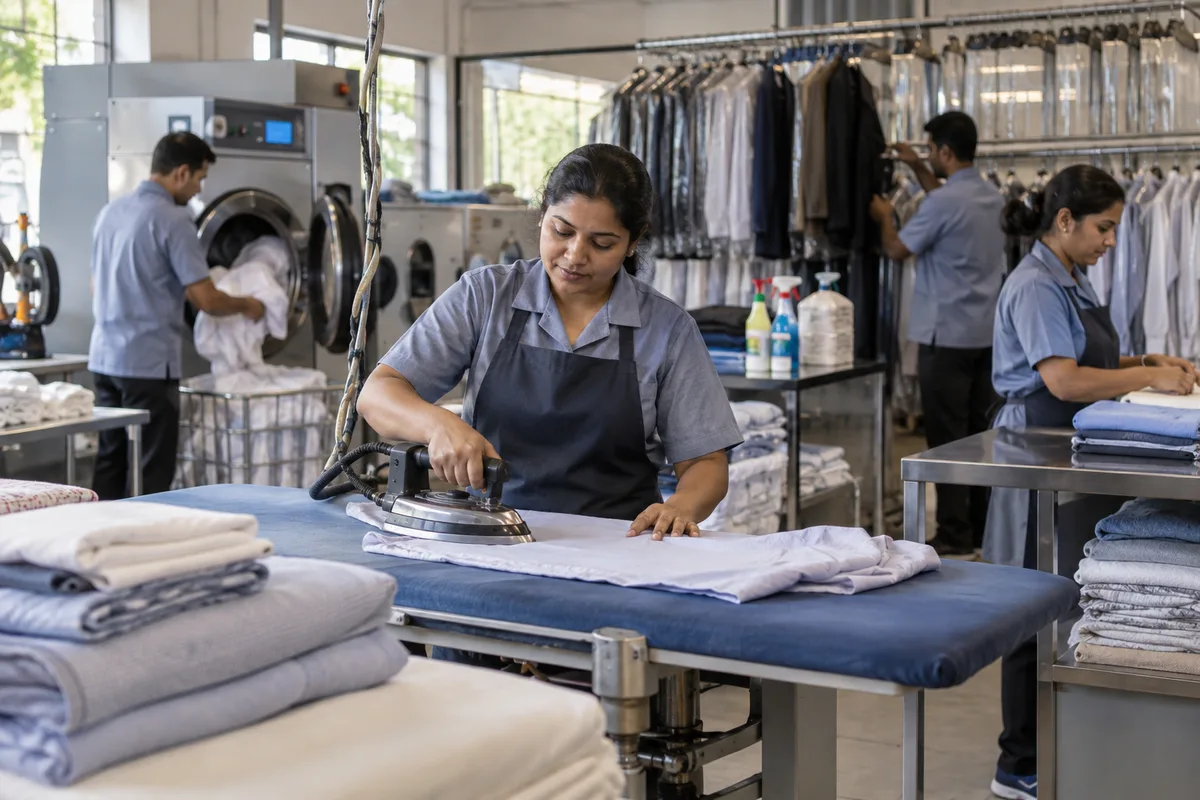
Branding for a laundry is the shop board, the packing cover on the delivery and the rider at the gate, because that is everything most households ever see of you. GullySales settles a name people can spell, a look that survives a plastic cover, and the tags and rate card your counter uses.
Scope, fee, reporting and term are agreed in writing after we have read your brief and spoken to you.
What branding means
Branding is what a customer remembers about your business beyond the product, including your name, colours, tone of voice and what you are known for locally. GullySales sets or corrects this once and applies it consistently across your website, signage and adverts so the business looks like one company everywhere.
Also for dry cleaners and laundries
- SEO for dry cleaners and laundries
- PPC for dry cleaners and laundries
- Lead generation for dry cleaners and laundries
- Digital marketing for dry cleaners and laundries
- Reputation management for dry cleaners and laundries
- Local SEO for dry cleaners and laundries
- Social media marketing for dry cleaners and laundries
- Content marketing for dry cleaners and laundries
Sales and marketing for dry cleaners and laundries, the overview.
Last updated 5 Oct 2026.
For dry cleaners and laundries
Where it usually goes wrong, and what we would do.
“The cover hangs in a wardrobe for a month”
Your packing cover is the only advert that lives inside a customer's house. A plain one is a month wasted.
“A name people can spell is a name they can search”
If the security guard at the gate cannot repeat it, the tower cannot recommend it, and nobody can type it into Maps.
“The rider is the shop for most customers”
Households who never visit the counter judge you on a bike, a bag and how the delivery boy speaks at the door.
“Careful work has to look different from the kilo wash”
A bridal lehenga handed over at the same counter, in the same tag and cover as a fifty-rupee kilo bag, gets priced like the kilo bag.
What we do
What we deliver for dry cleaners and laundries.
Every deliverable, what it covers for you, and the result it is there to produce. Nothing here is an extra.
A name and mark set in one form
The shop name written identically on the board, the bill, the listing and the cover, with a mark that stays readable printed on plastic.
Result: A resident can spell your name in the society group.
Covers, tags and bags designed as one set
Garment covers, piece tags, the delivery bag and the shoe box carrying the same name, number and WhatsApp line.
Result: Your number is inside the wardrobe when the next pile builds.
Rider kit and what is said at the door
Bike branding, a uniform shirt or cap, and the few lines the rider uses when collecting and when returning a bag.
Result: The household sees a business rather than a passing bike.
A printed rate card to leave behind
Per piece and per kilo rates, collection days and the minimum, printed to hand to a security desk, a PG manager or a salon owner.
Result: Something worth keeping stays after every visit.
A separate look for premium garment care
Different tags, covers and counter wording for bridal wear, silks and leather, so careful work is not sold at kilo rates.
Result: Expensive pieces are priced for the work they take.
How the result is measured
- Recognition in customer feedback
- Consistency across channels
- Repeat enquiries by name
Recorded as a baseline before work starts, so every later report has an honest comparison.
Positioning in one sentence
Fill this sentence in for the shop, and the board, the cover and the tag will say the same thing.
- Who it is for, down to the street
- Name the streets or the society group, not everyone. For example, working couples in three apartment blocks who want shirts pressed and covered, or families with silk sarees and bridal wear to clean.
- What you do, in the customer's words
- Use the words people say at the counter: dry cleaning, steam ironing, wash and fold by the kilo, shoe cleaning. Drop phrases like garment care experts, which nobody has ever asked a rider for.
- What a buyer gets that the corner shop and the laundry app do not
- Pick one thing your counter really does: pickup from the gate, a tag on every piece, a stain called out before cleaning. If you cannot do it on a rainy Monday, leave it out of the sentence.
- The proof you can show
- A photograph of a tagged and covered rack, a PG or hotel linen account you may name with permission, and the years you have run from this address. Do not post a customer's garment without asking.
- Words every laundry board uses and nobody believes
- Premium, hygienic and professional care are on every board in the lane. Swap one for something checkable, such as how you handle silk or how the cover is sealed.
- The name and tagline test
- Say the name on the phone to a stranger and ask them to spell it. If they get it wrong, or it sounds like three other shops nearby, fix the name before you write any tagline.
Who it is for
This is written for these dry cleaners and laundries.
- Neighbourhood dry cleaners with a single counter
- Laundry and ironing shops offering wash-and-fold by the kilo
- Pickup-and-delivery laundries serving apartments
- Premium garment care for bridal wear, silks and designer pieces
- Commercial laundries serving hotels, PGs and hospitals
- Shoe, bag and leather cleaning specialists
- Carpet, curtain and sofa cover cleaning services
- Multi-outlet or franchise laundry brands
- Self-service laundromats near colleges and hostels
How it works
From your first message to the first report.
No open-ended retainer. Every step gives you something in writing.
First
Your brief
You tell us what you need in a few short steps: your business, what you want, where enquiries come from and how they are handled.
After the brief
A conversation and a written scope
We read it, then talk with whoever handles your enquiries. If you want our help, the scope, the fee and the reporting come in writing, and nothing starts before you have read them.
Before work starts
Baseline recorded
The numbers this work is meant to move, such as enquiries, quotations, orders, visits or renewals, written down so every later report has an honest comparison.
After the baseline
The first fix goes live
The fix we agreed to start with is put in place and measured against the baseline, whether that is a reply, a follow-up, a page, a listing or the handover between marketing and sales.
As agreed
Report against the baseline
What moved, what did not, and what changes next, in plain words. How often you get it is set in writing before work starts.
At renewal
Renew on the numbers
The term ends and you decide whether to continue from the results. The length is agreed in writing before anything starts.
How the branding work runs
- 1
Interview customers and team
We talk to real buyers, won and lost, and to people inside the business who deal with customers daily.
- 2
Review the competitive field
We look at how the nearest competitors present themselves so the position is not accidentally identical.
- 3
Draft the position
A first version of the positioning statement and messaging pillars is written and checked against what customers actually said.
- 4
Test it against real conversations
The draft is tried out in a real sales call or two before it is finalised, since a position that does not survive a real conversation needs rework.
- 5
Hand over the rollout brief
The final position, pillars and not-for list are documented for your team and any agency to apply consistently.
Why us
Why owners pick GullySales over an agency.
Marketing and sales, as one job
Most agencies stop at the enquiry. We also fix what happens after it: the reply, the follow-up, the quote and the CRM.
The person on the first call does the work
No account managers in between. You are never handed to someone you have not met.
A baseline before anything starts
Your numbers are written down on day one, so every later report compares against something honest.
The fee in writing, split three ways
Our time, your media spend and production on separate lines. You always see what goes to us.
No guarantees we cannot keep
The term is agreed in writing and never a default twelve months. We never promise a ranking or a lead count, because nobody controls those.
One office, and we say so
Nagarbhavi, Bengaluru. We work across India by call and WhatsApp and travel when a session needs to be in person.
#257, 3rd floor, Sri Nanjundeshwara Complex, Nagarbhavi 8th Block, Outer Ring Road. How we work.
Your brief
Tell us what you need, and we will read it before we call.
Eight short steps about your business, what you want and who decides. Most questions are a tap, and you can skip any you would rather answer on the call.
FAQ
Questions owners ask before they call.
Not here? More answers, or ask on WhatsApp.
Is a logo worth spending on for a single shop?
Should we rename the shop to sound premium?
Should the shoe and bag cleaning have its own name?
Should the board carry the name in our local language as well as English?
How much does it cost?
How long is the contract?
How soon will we see results?
Who will actually do the work?
What do you need from us?
What if we are not happy with the work?
More for dry cleaners and laundries
Everything else we would do for you.
Or start from the overview: sales and marketing for dry cleaners and laundries.
Your next practical step
Tell us what you are trying to grow, and we will read it before we call.
Eight short steps, mostly taps. Skip anything you would rather answer on the call.