Garage door companies · Branding
A homeowner cannot tell you from the call centre three states away.
Branding here is proving you are local and real before the truck pulls up: the wrap, the uniform, the phone greeting, the name a neighbour repeats. GullySales settles those and puts the same company on the driveway, the invoice and the screen.
Scope, fee, reporting and term are agreed in writing after we have read your brief and spoken to you.
What branding means
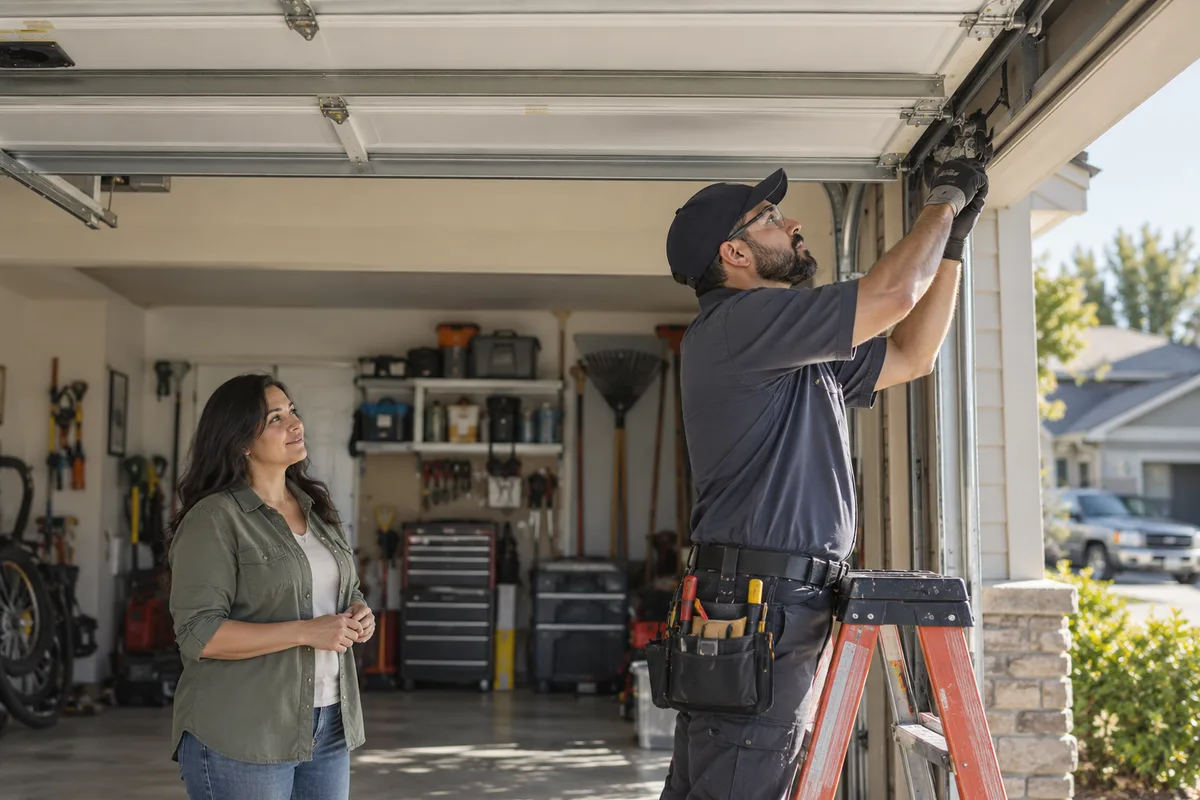
Branding is what a customer remembers about your business beyond the product, including your name, colours, tone of voice and what you are known for locally. GullySales sets or corrects this once and applies it consistently across your website, signage and adverts so the business looks like one company everywhere.
Also for garage door companies
- SEO for garage door companies
- PPC ads for garage door companies
- Lead generation for garage door companies
- Digital marketing for garage door companies
- Reputation management for garage door companies
- Local SEO for garage door companies
- Social media marketing for garage door companies
- Content marketing for garage door companies
Sales and marketing for garage door companies, the overview.
Last updated 5 Oct 2026.
For garage door companies
Where it usually goes wrong, and what we would do.
“The wrap is advertising that runs all day”
A truck sits in a driveway for two hours on a street where every house has the same doors. That does more than a billboard, and you have already paid for the truck.
“Every name in this trade sounds alike”
Half the companies in the county are a surname and the word door, and the call centres pick names that sound local. The owner's name on the phone and a face on the website separate you.
“The homeowner is half expecting to be cheated”
They have read about a spring quoted at one price and billed at five times it. Shoe covers, a written estimate before work starts and a printed price sheet answer that before anybody speaks.
“A yard sign lands in exactly the right street”
A sign left in the driveway of a door you have just replaced is read by the neighbours whose doors are the same age. Ask for it when the install is finished and the homeowner is pleased.
What we do
What we deliver for garage door companies.
Every deliverable, what it covers for you, and the result it is there to produce. Nothing here is an extra.
A truck wrap that reads at speed
Name, phone number and the towns covered at a size readable from a passing car, with the licence details your state requires.
Result: The parked truck advertises to the street.
A phone greeting worth hearing
The company name, a person's name and an offer to help, used by everybody who answers, including whoever takes the overflow.
Result: The caller knows they have reached a local company.
The crew turned out the same way every time
Shirts, shoe covers, a mat for the tools and a written estimate handed over before any work begins.
Result: The visit matches what the advertising promised.
Proof that you are local, on every page
The owner, the crew, the shop, the years in the county and the towns served, shown in photographs rather than claimed in a sentence.
Result: Homeowners can tell you from a booking service.
Yard signs used on replacement jobs
Signs left with permission after an installation, collected on a schedule, and placed where the street can read them.
Result: The next door on that street gets quoted by you.
One look across truck, invoice and screen
The same name, colours and typeface on the wrap, the estimate, the invoice, the profile and the website.
Result: Everything a customer touches is clearly one company.
How the result is measured
- Recognition in customer feedback
- Consistency across channels
- Repeat enquiries by name
Recorded as a baseline before work starts, so every later report has an honest comparison.
Positioning in one sentence
Fill this sentence in for the company, and the truck, the phone greeting and the quote will sound like one local firm.
- Who it is for, as a homeowner in trouble or a builder
- Write one line for the owner whose door is stuck with the car inside and one for the builder who needs doors fitted across a project. They look for different names.
- What you fix and fit, in the caller's words
- Use the words said on the call: broken spring, door off track, opener not working, roller shutter, sectional door. Name the towns you cover, because a caller will check the distance.
- What a caller gets that the national lead-seller does not
- Choose one that you can keep: a local technician with a name, a quote in writing before work, a repair that you stand behind. Make sure the person answering is part of your firm.
- The proof you can show
- Show photographs of finished doors on real houses, the brands of springs and openers you fit, and a licence or registration where your state requires it. Use only your own photographs.
- Words every door company uses
- Prompt response, best prices and trusted experts are on every truck. Replace them with the hours you answer, the parts you carry and the towns you cover.
- The name and tagline test
- Check the name does not look like a national lead-generation brand, because callers get wary of those. A local surname or town in the name helps, as long as it matches the Google listing.
Who it is for
This is written for these garage door companies.
- Residential repair and service companies running one to five trucks
- Garage door dealers with a showroom
- Opener and smart-opener specialists
- Commercial door companies working rolling steel and dock equipment
- New construction installers working for homebuilders
- Spring and cable repair specialists
- Custom carriage and wood door builders
- Franchise locations that need local work beyond the brand's leads
How it works
From your first message to the first report.
No open-ended retainer. Every step gives you something in writing.
First
Your brief
You tell us what you need in a few short steps: your business, what you want, where enquiries come from and how they are handled.
After the brief
A conversation and a written scope
We read it, then talk with whoever handles your enquiries. If you want our help, the scope, the fee and the reporting come in writing, and nothing starts before you have read them.
Before work starts
Baseline recorded
The numbers this work is meant to move, such as enquiries, quotations, orders, visits or renewals, written down so every later report has an honest comparison.
After the baseline
The first fix goes live
The fix we agreed to start with is put in place and measured against the baseline, whether that is a reply, a follow-up, a page, a listing or the handover between marketing and sales.
As agreed
Report against the baseline
What moved, what did not, and what changes next, in plain words. How often you get it is set in writing before work starts.
At renewal
Renew on the numbers
The term ends and you decide whether to continue from the results. The length is agreed in writing before anything starts.
How the branding work runs
- 1
Interview customers and team
We talk to real buyers, won and lost, and to people inside the business who deal with customers daily.
- 2
Review the competitive field
We look at how the nearest competitors present themselves so the position is not accidentally identical.
- 3
Draft the position
A first version of the positioning statement and messaging pillars is written and checked against what customers actually said.
- 4
Test it against real conversations
The draft is tried out in a real sales call or two before it is finalised, since a position that does not survive a real conversation needs rework.
- 5
Hand over the rollout brief
The final position, pillars and not-for list are documented for your team and any agency to apply consistently.
Why us
Why owners pick GullySales over an agency.
Marketing and sales, as one job
Most agencies stop at the enquiry. We also fix what happens after it: the reply, the follow-up, the quote and the CRM.
The person on the first call does the work
No account managers in between. You are never handed to someone you have not met.
A baseline before anything starts
Your numbers are written down on day one, so every later report compares against something honest.
The fee in writing, split three ways
Our time, your media spend and production on separate lines. You always see what goes to us.
No guarantees we cannot keep
The term is agreed in writing and never a default twelve months. We never promise a ranking or a lead count, because nobody controls those.
Hours that fit your day, agreed up front
Which hours we overlap with yours is settled before any work starts, so you know when a reply is coming and when it is not.
#257, 3rd floor, Sri Nanjundeshwara Complex, Nagarbhavi 8th Block, Outer Ring Road. How we work.
Your brief
Tell us what you need, and we will read it before we call.
Eight short steps about your business, what you want and who decides. Most questions are a tap, and you can skip any you would rather answer on the call.
FAQ
Questions owners ask before they call.
Not here? More answers, or ask on WhatsApp.
Does a truck wrap pay for itself?
Should we put the owner's face on the website?
Should we put our own number or a tracking number on the truck?
Should the company use a name with the owner's family name?
How much does it cost?
How long is the contract?
How soon will we see results?
Who will actually do the work?
What do you need from us?
What if we are not happy with the work?
More for garage door companies
Everything else we would do for you.
Or start from the overview: sales and marketing for garage door companies.
Your next practical step
Tell us what you are trying to grow, and we will read it before we call.
Eight short steps, mostly taps. Skip anything you would rather answer on the call.