Alteration shops · Search engine optimisation
Be the answer when someone searches for a tailor to fix a garment tonight.
SEO for an alteration shop is making your pages and listing match the words a customer types when a garment does not fit. GullySales works on those words, the pages that answer them and the proof that you do the work.
Scope, fee, reporting and term are agreed in writing after we have read your brief and spoken to you.
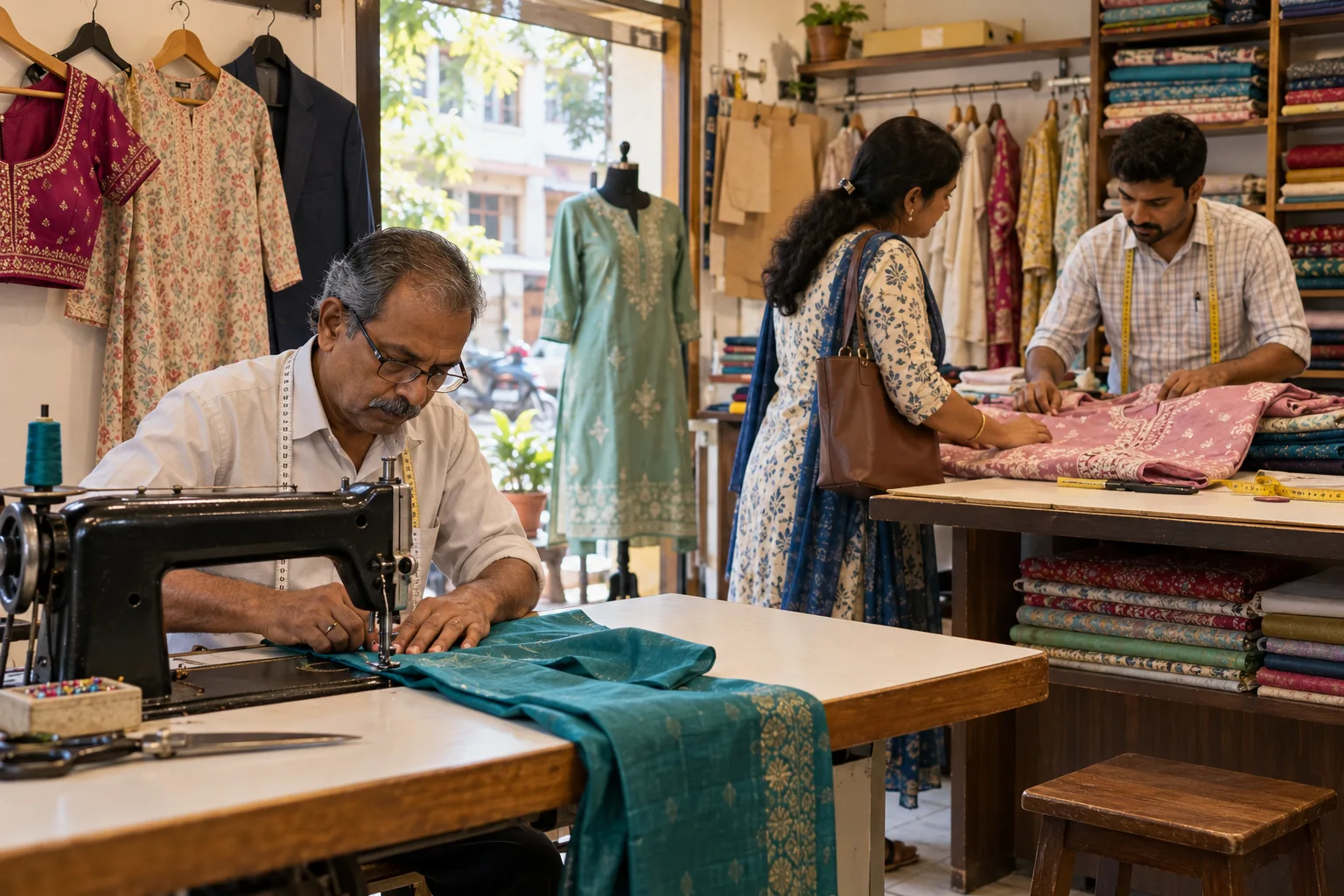
What search engine optimisation means
Search engine optimisation (SEO) is the work of getting your website to appear when a buyer searches Google for what you sell. GullySales builds pages around real search terms, fixes technical issues that block ranking, and tracks which searches actually bring enquiries.
Last updated 14 Nov 2026.
For alteration shops
Where it usually goes wrong, and what we would do.
“Customers search by garment and fault”
The words are blouse too tight, trouser hemming, kurta fitting, zip replacement and lehenga alteration. Nobody types tailoring services. A page built around a shop name and a generic heading never meets those searches. The mismatch costs you the customers who were ready to book.
“One page cannot hold every job”
A single services page listing twenty jobs ranks for none of them. A separate short page for blouse alterations, for suit fitting and for uniform let-outs lets each search land on a page that answers it.
“Photographs are your evidence”
A search result for a tailor is judged by pictures of finished work. A hem, a taken-in waist and a re-stitched lining shown before and after, in daylight, persuade better than a paragraph about experience.
“The area name belongs in the copy”
People search with a locality attached because they will not carry a garment across town. A page that names the roads, the apartments and the showrooms you serve answers the nearby searcher and tells Google where you work.
What we do
What we deliver for alteration shops.
The work available for this need. We agree the deliverables and responsibilities for your engagement in writing.
A list of the searches your jobs match
The garment-and-fault phrases a customer would type, grouped by job, drawn from your own job book and the questions asked at the counter.
Result: A written list of searches, each paired with the page that should answer it.
Short pages for each major job
One page each for blouse and lehenga work, suit and trouser fitting, uniform alterations and repairs, with your price guide and photographs.
Result: A page for every job that brings you regular work.
Before-and-after photographs
A set of finished jobs photographed in daylight with the customer's permission and without faces, labelled with the job done.
Result: Photographs on each page, named for the work shown.
Page titles and descriptions
Titles and descriptions that carry the job, the trade and the locality in the words a searcher uses.
Result: Each page has its own title that names the job.
A search report you can read
The searches that brought visitors, the pages they landed on and the calls and WhatsApp taps that followed.
Result: A plain sheet showing which pages brought enquiries.
How the result is measured
- Ranking positions
- Organic traffic
- Enquiries from organic search
Recorded as a baseline before work starts, so every later report has an honest comparison.
Searches your buyers type
Customers search by garment and fault, and each pairing is a short page.
Customers search the fault and the garment. The area name belongs in the copy, since the shop must be near.
- blouse alteration near me
- A blouse page with before and after photos, the areas served and a photo-quote button.
- lehenga alteration for wedding
- A bridal page that explains the fitting sequence and says how far ahead to book.
- trouser hemming and waist alteration
- A men's wear page listing the common changes and what each involves.
- school uniform alteration
- A page for parents with the start-of-term rush and drop-off options.
- zip replacement in a jacket
- A repair page with a photo of a finished zip and the garments you take.
Who it is for
This is written for these alteration shops.
- Saree blouse and lehenga alterations for weddings
- Men's suit and trouser fitting
- School and college uniform alterations
- Zip, lining and button repair
- Ethnic wear refitting for festivals
- Maternity and nursing wear alterations
- Showroom and boutique alteration partners
- Pickup and drop alteration services for apartments
Before you decide
When this may not be the right fit.
- You do not take photographs of finished work, and the pages would show nothing
- You have no one to reply to a photo quote the same day
- Your shop is known only to one lane and the customers come on foot, where a page adds little
Before you decide
Agree the work. Know how to judge it.
SEO for alteration shops: use these checks to prepare, choose the scope, and review what changes.
Bring the right evidence
Bring the pages for the products or services you want to sell, the search queries available in your reports, and examples of enquiries from search. Separate branded searches from buyers discovering you for the first time.
Make the scope clear
Agree which pages and technical fixes come first, who can publish changes, and who supplies subject knowledge. Link search work to a relevant enquiry route on each priority page.
Check the work in use
Follow the trail from a relevant query to its landing page and then to an enquiry. Review whether those enquiries fit your offer, alongside indexing and search visibility.
Know when to change course
A ranking movement alone is not a buying signal. If traffic grows but relevant enquiries do not, revisit page intent and the offer before producing more pages.
These are discussion points, not a fixed package. GullySales confirms the deliverables, responsibilities, fee, and term in writing after reading your brief and speaking with you.
Before we start
What to have ready before the work starts.
The records, access and decisions this work needs from alteration shops. Anything missing is noted in the written scope, with who will supply it.
- Owner access to the Maps listing
- We need the account that owns the listing, or the steps to claim it, since some shops find an old entry made by a former helper or a printing shop. Without access we cannot correct hours or job names, and the search work stays confined to the pages alone. Share the login in person, not by chat.
- Photographs of finished alterations
- Clear photographs of work you completed, taken with the customer's permission and without faces. Phone pictures are acceptable if the stitching is visible and the light is good. When none exist, the pages carry words only, and we plan a photograph routine at the machine first. A cloth-covered table and a plain wall are enough for a good picture.
- The list of jobs you actually accept
- A plain list of what you take and what you refuse, down to lining repair or maternity fitting. A handwritten sheet works well. If it is missing, we guess at the jobs, and a page may end up promising something the bench will not do for a customer. Mark the ones you want more of.
- Your service area in streets and landmarks
- The roads, apartment blocks and landmarks your customers come from, written as they say them at the counter. This lets us use the names people search with. Without it, the pages carry only the broad city name and miss the nearby searcher who wants a shop close by. Say them as customers do, not as the map does.
- Someone to read drafts for truth
- A person who knows the bench, ideally the head tailor, must read each page and strike out what is wrong. They need not be quick about it. If nobody reads the drafts, we hold the pages back, since a wrong promise costs the shop more than a late page. Ten minutes a page is plenty.
How it works
How the search engine optimisation work runs
The work itself, in order. How an engagement starts, from your brief to a written scope, is set out on our method page.
- 1
Collect the faults customers describe
We ask you and the helper to list the sentences customers say at the counter: waist too loose, sleeve too long, zip stuck. Those phrases, not trade words, are what people type into a phone. You mark the jobs you want more of and the ones you would rather not take at all.
- 2
Get access to the listing and any page
We ask for owner access to the Maps listing and to whichever page or site carries your number. If none exists we say so plainly and plan around that gap. We then record what the shop appears for today, as a baseline, before any change is made to a word. Nothing is changed without your word.
- 3
Match each job to a page
We lay the jobs against pages: one for hems, one for blouse fitting, one for suits, and so on down the list. You decide which jobs deserve their own page, based on what you want to be known for. We also settle who will write captions for the photographs. Smaller jobs share a page with a related one.
- 4
Draft pages from your own bench
We write each page from what you tell us about the job: how a garment is measured, what a trial involves, what is not possible on that cloth. Photographs from your finished work go in beside the words. You read the draft for anything untrue and correct it before anything is published.
- 5
Publish and check the titles on a phone
After approval the pages go live with their titles and descriptions. We open each one on a phone, as a customer would, and test the call and WhatsApp buttons from the search result. Anything that reads badly or fails to open is fixed before we move on to the next page. Fixes come before the next page.
- 6
Read searches against the first record
We compare what the shop now appears for with the baseline taken at the start, and we read the calls and WhatsApp messages that came from search. You see which pages brought garments and decide which job gets the next page. No ranking is promised at any point in this work. The next page follows the evidence.
Where this fits
Three pieces of sales work, in this order.
This work sits inside sales process design, at stage 1, prospecting and lead generation. The audit comes before it, and sales management keeps it running.
Step 1
Sales audit
Find where deals are being lost and what to fix first.
Start here if you cannot say where orders are lost.
Step 2 · you are here
Sales process design
One written way to sell, from first enquiry to repeat order.
Start here if every salesperson sells differently.
Step 3
Sales management
A target, a review routine and someone who owns the number.
Start here if the team has targets and no routine.
FAQ
Questions owners ask before they call.
Not here? More answers, or ask on WhatsApp.
Will I reach the top of Google?
Do I need a website if I have a Maps listing?
Can I use photographs of customers' garments?
Can the pages name my customers' garments?
Who writes the pages, you or me?
What if I already have a Facebook page?
How much does it cost?
How long is the contract?
How soon will we see results?
Who will actually do the work?
More for alteration shops
Related work to consider.
Closest to this: search and visibility
Also for alteration shops
Or start from the overview: sales and marketing for alteration shops.
Your next practical step
Tell us what you are trying to grow, and we will read it before we call.
Eight short steps, mostly taps. Skip anything you would rather answer on the call.