Alteration shops · Social media
Let a finished blouse on the mannequin do the selling on Instagram.
Social media marketing for an alteration shop is showing finished work where nearby customers already spend their time. GullySales works on what to photograph, what to post and how to turn a comment or a message into a booked garment.
Scope, fee, reporting and term are agreed in writing after we have read your brief and spoken to you.
What social media means
Social media is the ongoing posting your business does on platforms such as Instagram, Facebook and LinkedIn to stay visible to customers and prospects between purchases. GullySales plans a posting calendar, writes captions and designs the images so the page looks active and answers what a visitor would ask.
Last updated 14 Nov 2026.
For alteration shops
Where it usually goes wrong, and what we would do.
“The work is visual and the master has no time”
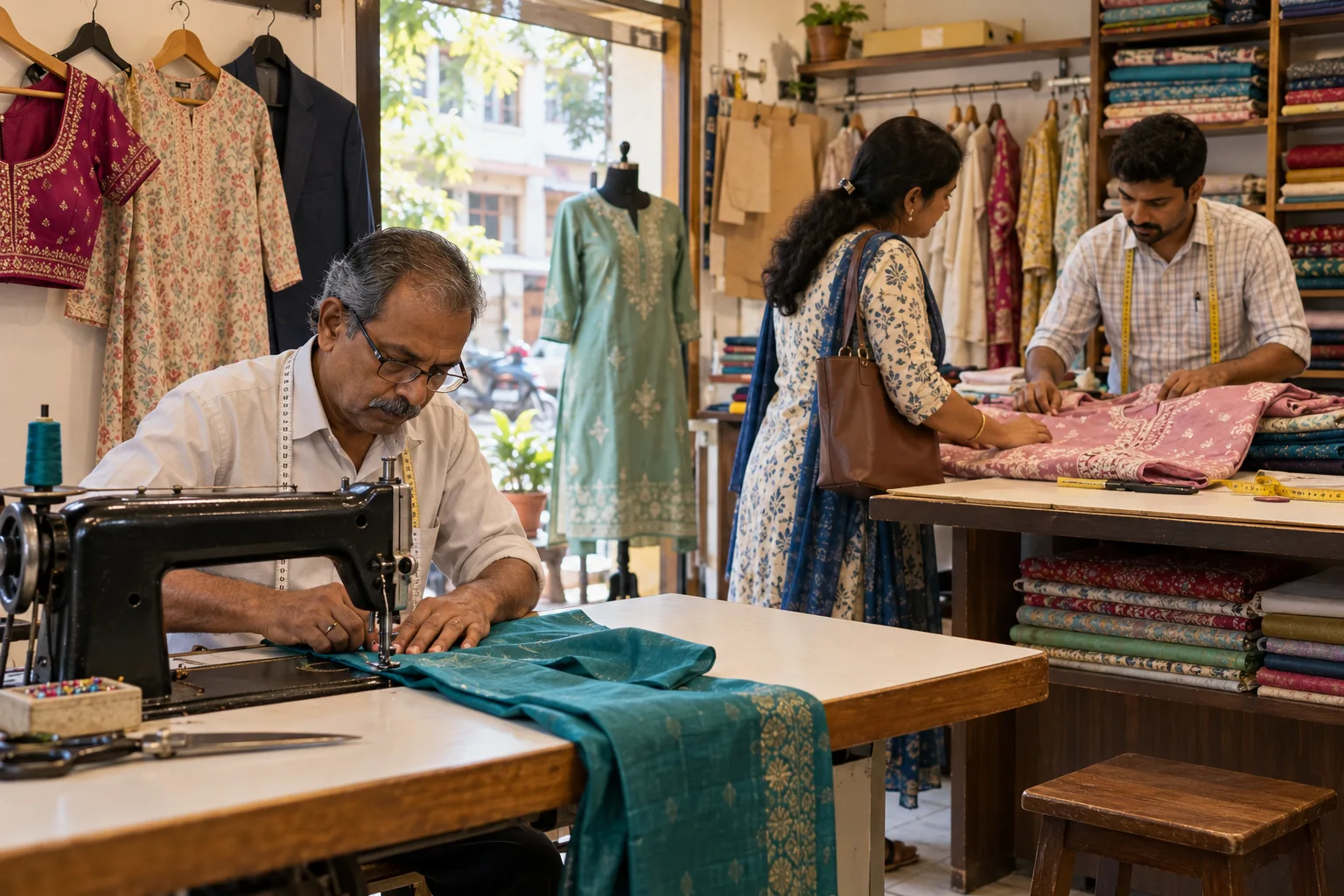
A taken-in lehenga or a re-cut suit is easy to show and hard to describe. The difficulty is that the master is at the machine, so a posting routine has to fit into the few minutes when a garment comes off it.
“Followers are neighbours, not the world”
A reel that travels beyond the city brings praise and no customers. The audience that books is within a short ride, so pages should name the locality and the roads, and speak to people who might collect the garment next week.
“A before-and-after is the only post that sells”
Pictures of the shop front or a festival greeting get a like. A garment shown loose and then fitted, with the job named, gets a message asking the price. Shared with the owner's permission, it also gets forwarded to a sister or a friend.
“Reels do not replace the WhatsApp reply”
A comment that asks the price and waits three days is a lost customer. The page needs one person and one habit for answering, or the posts raise questions that nobody is there to answer.
What we do
What we deliver for alteration shops.
The work available for this need. We agree the deliverables and responsibilities for your engagement in writing.
A page set up to show the jobs
A profile with the shop name, the locality, the list of jobs and a button to the WhatsApp number.
Result: A profile that tells a stranger what you alter and where.
A photograph routine at the machine
A short routine for taking before-and-after pictures of finished garments in the same light and the same corner, with the customer's permission.
Result: A folder of finished work filled as the jobs leave the shop.
A set of reusable post formats
Templates for a before-and-after, a festival-week reminder, a price-guide card and a how-to-measure note.
Result: A handful of formats the helper can fill without the master.
Local tags and groups
Locality tags, the apartment groups and nearby showroom pages where your posts can sit, within each group's rules.
Result: A list of places where your posts are seen by the nearby audience.
A reply routine for comments and messages
A saved answer for price and ready-date questions, and a named person who sends it.
Result: Every comment and message has someone who answers it.
How the result is measured
- Posts published
- Engagement rate
- Enquiries from social profiles
Recorded as a baseline before work starts, so every later report has an honest comparison.
Posts and pieces to plan
A finished garment on the mannequin is the post that sells the next job.
Followers are neighbours, not the world. A reel does not replace the WhatsApp reply.
- A blouse before and after taking in
- Two photos with the same background, the seam shown and the customer's agreement noted.
- A lehenga let out at the waist
- A close shot of the inside margin used, with a line on how much was available.
- A hem finished by hand
- A short clip at the machine showing the stitch, with no faces.
- A showroom partner's garment fitted
- A post that credits the showroom, shared only with its agreement.
- The festival rush notice
- A card saying when you take last orders for the occasion.
Who it is for
This is written for these alteration shops.
- Saree blouse and lehenga alterations for weddings
- Men's suit and trouser fitting
- School and college uniform alterations
- Zip, lining and button repair
- Ethnic wear refitting for festivals
- Maternity and nursing wear alterations
- Showroom and boutique alteration partners
- Pickup and drop alteration services for apartments
Before you decide
When this may not be the right fit.
- The master has no time to photograph the work, and nobody else can
- You have no way to answer comments and messages the same day
- The customers who matter come by walking past and never look at the page
Before you decide
Agree the work. Know how to judge it.
Social media marketing for alteration shops: use these checks to prepare, choose the scope, and review what changes.
Bring the right evidence
Review the posts that produced useful conversations, not only the ones with the most views. Gather buyer questions and decide which team member can contribute credible material.
Make the scope clear
Choose the audience and channel before setting a posting volume. Agree who supplies material, approves posts, and handles messages, including complaints or questions the agency cannot answer.
Check the work in use
Follow a post through to the profile, website, and response. A useful report explains the quality of conversations and enquiries, alongside reach and engagement.
Know when to change course
If publishing takes time away from unanswered buyer messages, fix the response routine first. Do not expand to another channel without a clear reason for being there.
These are discussion points, not a fixed package. GullySales confirms the deliverables, responsibilities, fee, and term in writing after reading your brief and speaking with you.
Before we start
What to have ready before the work starts.
The records, access and decisions this work needs from alteration shops. Anything missing is noted in the written scope, with who will supply it.
- A phone with room for photographs
- A phone that stays at the bench and has space to store pictures. An older phone is fine if the camera lens is clean. Without one, photographs are taken at the close of a tiring day, and they are either blurred or skipped altogether, which stalls the whole plan. Wipe the lens before each session.
- The login for your shop page
- The account details or owner role for any page you already have, or your decision about who will open a new one. Keep it in your name, not the helper's. If access is missing, we cannot post, and a former helper may be holding your page without your knowing. Share it with us in person.
- A list of garments never to show
- Your own rule on what is private: bridal pieces before the wedding, school uniforms with names sewn in, anything a customer asked to keep quiet. A spoken rule is fine and we record it. Without a rule, one careless post can end a customer's trust in the shop. Update it whenever a new case arises.
- Permission lines for customers
- A short sentence your helper says or sends when taking a photograph of finished work, asking if it can be shown. We write the wording for you. If this step is skipped, we cannot use the photograph, and the page falls back to your own trial garments only. Customers appreciate being asked first, and it costs nothing.
- Time set aside to approve posts
- A moment, chosen by you, when someone reads the drafts and says yes or no. A phone message counts as approval. Without it, posts wait unread and the page goes quiet, or worse, someone approves them without reading and a mistake reaches the neighbourhood. Tell us who that person is, and who covers when they are away from the shop.
How it works
How the social media work runs
The work itself, in order. How an engagement starts, from your brief to a written scope, is set out on our method page.
- 1
Choose the one platform to feed
We look at where your neighbours and showroom contacts already spend time, then pick one platform to start with. You decide who will hold the login and who will reply to comments. We do not open pages nobody will look after, since a page that stops posting works against the shop. Fewer, better-kept pages beat a scatter.
- 2
Walk the bench and pick photograph spots
We visit the shop and find the places where a before-and-after can be taken without stopping the head tailor at the machine: the trial mirror, the pinned garment, the pressed finish. You approve the spots and tell us which garments are never to be photographed. Ten steps from the machine is the limit we set for any photograph spot.
- 3
Sort the jobs into post formats
We list the jobs that make good posts, such as a lehenga taken in or a suit refitted, and set a format for each: the pair of photographs, the line beneath and the contact button. You choose the jobs you want to be known for in the neighbourhood. Each format is a pattern the helper can repeat.
- 4
Draft posts from the helper's photographs
The helper sends photographs through a shared chat and we draft the captions around them. You read each one for anything false, and the post goes out only after you say yes. Faces and names stay out unless the customer has clearly agreed to be shown. If a caption sounds like an advert, we cut it down to plain facts.
- 5
Hand comments and messages to the counter
We write short replies for the questions that arrive under a post, and a rule for moving them across to WhatsApp. You name who replies. We then send a test message from a second phone, so you see exactly how an enquiry arrives at the counter. Replies stay short and polite, and anything about price waits for the chat.
- 6
Count which posts led to garments
We compare the enquiries marked as social with the figures noted at the start. You see which formats brought garments to the counter and which brought only likes, then decide what to keep. We make no promise about reach, followers or the number of jobs. Posts with no enquiry behind them are dropped from the plan without regret.
Where this fits
Three pieces of sales work, in this order.
This work sits inside sales process design, at stage 0, foundation. The audit comes before it, and sales management keeps it running.
Step 1
Sales audit
Find where deals are being lost and what to fix first.
Start here if you cannot say where orders are lost.
Step 2 · you are here
Sales process design
One written way to sell, from first enquiry to repeat order.
Start here if every salesperson sells differently.
Step 3
Sales management
A target, a review routine and someone who owns the number.
Start here if the team has targets and no routine.
FAQ
Questions owners ask before they call.
Not here? More answers, or ask on WhatsApp.
Which platform should a tailoring shop use?
Do I need to show customers' faces?
How much should I post?
Can I post a bride's garment before the wedding?
Who takes the photographs when the head tailor is busy?
Will GullySales post on my page for me?
How long is the contract?
How soon will we see results?
Who will actually do the work?
What do you need from us?
More for alteration shops
Related work to consider.
Closest to this: content and social
Also for alteration shops
Or start from the overview: sales and marketing for alteration shops.
Your next practical step
Tell us what you are trying to grow, and we will read it before we call.
Eight short steps, mostly taps. Skip anything you would rather answer on the call.