Dry cleaners and laundries · Pay per click advertising
Buy clicks only inside the streets your rider can actually reach.
Pay per click advertising for a laundry buys the searches that arrive with a pile of clothes, from blanket cleaning before winter to a lehenga after the wedding dates. GullySales sets a radius the rider can serve, blocks the wasted searches and tracks which click became a pickup.
Scope, fee, reporting and term are agreed in writing after we have read your brief and spoken to you.
What pay per click advertising means
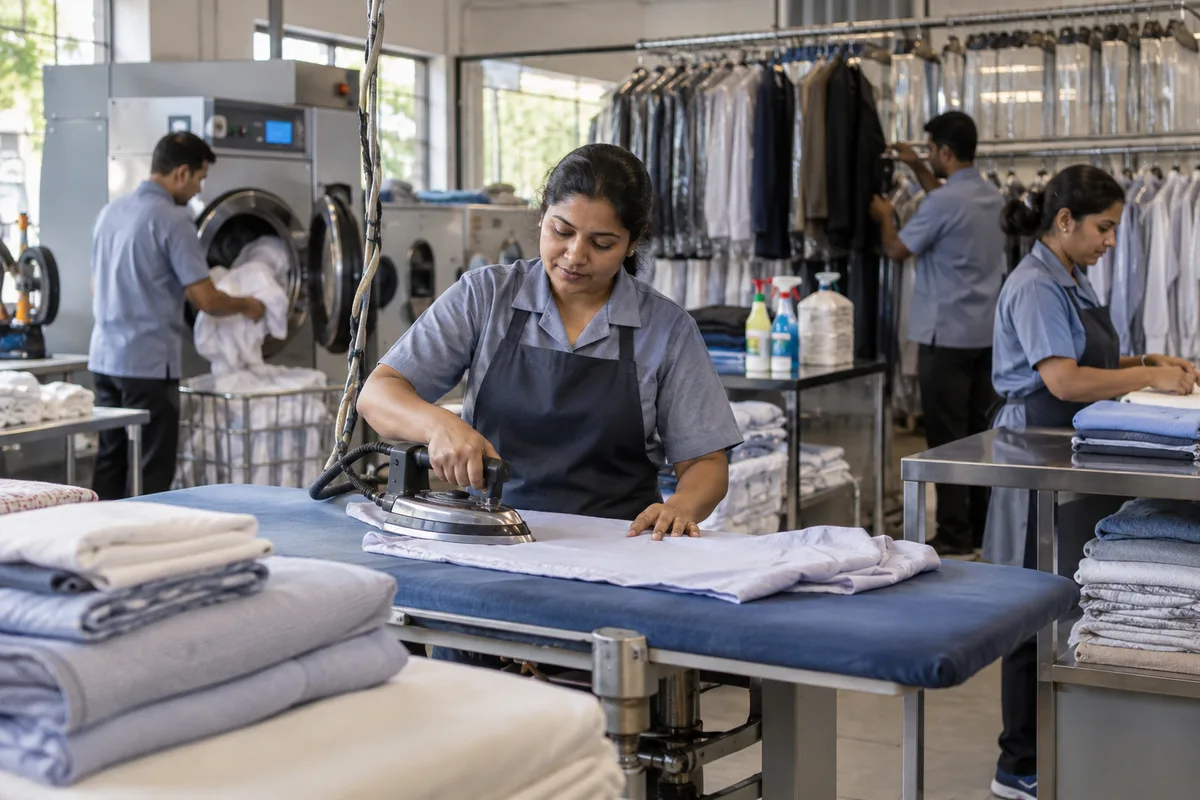
Pay per click advertising (PPC) is paying a fee each time someone clicks your advert on Google or another platform. It puts you at the top of a search page immediately, instead of waiting for ranking to build. GullySales sets the targeting, writes the ad text and checks spend against enquiries received.
Also for dry cleaners and laundries
- SEO for dry cleaners and laundries
- Lead generation for dry cleaners and laundries
- Digital marketing for dry cleaners and laundries
- Reputation management for dry cleaners and laundries
- Local SEO for dry cleaners and laundries
- Branding for dry cleaners and laundries
- Social media marketing for dry cleaners and laundries
- Content marketing for dry cleaners and laundries
Sales and marketing for dry cleaners and laundries, the overview.
Last updated 14 Nov 2026.
For dry cleaners and laundries
Where it usually goes wrong, and what we would do.
“Three kilometres, not a city campaign”
A pickup twelve kilometres away costs more in rider time than the bag is worth. The radius is set by the route, not by ambition.
“The order is small, so the click must be cheap”
A wash-and-fold bag is a few hundred rupees. Heavy items, bridal wear and monthly households are the only searches that justify paying for a click.
“Sunday morning and the first cold week”
Demand comes in bursts: the weekend pile, the fortnight before winter, the weeks after the wedding dates. Spread the spend flat and most of it goes nowhere.
“Half these searches want a franchise or a job”
Laundry business plan, franchise cost, machine price, dhobi vacancy. Those clicks come off the same keywords and have to be blocked by hand.
What we do
What we deliver for dry cleaners and laundries.
The work available for this need. We agree the deliverables and responsibilities for your engagement in writing.
Campaigns split by garment and by season
Separate campaigns for bridal and heavy wear, blankets and quilts, curtains, and monthly wash-and-fold, each switched on when its season starts.
Result: Budget follows what people are searching for this month.
A radius drawn on the rider's route
Adverts held to the streets and towers your pickup actually covers, with the far edges excluded rather than quietly bid down.
Result: Every enquiry is one you can collect from.
Negative keywords for franchise and job searches
Franchise, business plan, machine and detergent supplier, training and vacancy searches blocked before they take a single click.
Result: The budget stops paying for people who want to open a laundry.
Click-to-WhatsApp as the main action
Adverts that open a chat carrying the rate card and a pickup slot, instead of a form that nobody on a phone fills in.
Result: The enquiry lands where your counter already works.
Day and hour scheduling
Spend concentrated on weekend mornings and weekday evenings, when households look at the pile and decide to send it out.
Result: You pay when somebody is ready to hand over a bag.
Cost per pickup in the report
Spend, clicks, chats, pickups booked and what those orders were worth, compared with what the shop was taking before the adverts ran.
Result: You can see what a new household costs to buy.
How the result is measured
- Cost per click
- Cost per enquiry
- Enquiries from paid search
Recorded as a baseline before work starts, so every later report has an honest comparison.
Searches to bid on and block
The searches worth paying for at a dry cleaner, and the ones to keep out.
- Garment and service plus area, such as saree dry cleaning near me
- Bid. The searcher has clothes in a bag. Run one ad group for sarees and silks, one for suits and blazers, and one for blankets, each inside the streets your rider reaches.
- Pickup and delivery laundry for apartments
- Bid. Apartment residents search by society and area. Name the societies you already serve in the advertisement, so a neighbour sees the rider is already on their street.
- Blanket, curtain and sofa cleaning before the cold or festive weeks
- Bid, switched on just before the season and paused after. These are bigger orders than a shirt, so they can carry a higher click cost than daily wear.
- Franchise, machine, job and course searches
- Block. Laundry franchise, dry cleaning machine price, laundry job and dry cleaning course come from people starting a business or looking for work. Add all of them as negatives.
- Where the click lands
- A WhatsApp chat with the pickup message ready, or a short page with the rate card and the pickup area. Do not send a click to a homepage.
- Counting a real enquiry
- Count a pickup booked, not a chat opened. Note the pin code of each pickup, so you can see which streets are worth the rider's trip and which are not.
Who it is for
This is written for these dry cleaners and laundries.
- Neighbourhood dry cleaners with a single counter
- Laundry and ironing shops offering wash-and-fold by the kilo
- Pickup-and-delivery laundries serving apartments
- Premium garment care for bridal wear, silks and designer pieces
- Commercial laundries serving hotels, PGs and hospitals
- Shoe, bag and leather cleaning specialists
- Carpet, curtain and sofa cover cleaning services
- Multi-outlet or franchise laundry brands
- Self-service laundromats near colleges and hostels
Before you decide
When this may not be the right fit.
- Your counter cannot answer the pickup chat during the Sunday rush, so paid clicks would pay for unanswered messages.
- You have no way to tell whether an advertised customer came back for a second order, so spend could not be judged.
- Your rider cannot reach the area the advert would cover, and the click would end in a refusal.
Before you decide
Agree the work. Know how to judge it.
PPC for dry cleaners and laundries: use these checks to prepare, choose the scope, and review what changes.
Bring the right evidence
Bring search-term reports, conversion definitions, and the sales outcome of past enquiries where available. Identify products, locations, and enquiries you cannot serve.
Make the scope clear
Choose the offer and landing page before setting a media budget. Agree who pays the platform, which actions count as conversions, and how unsuitable searches will be reviewed.
Check the work in use
Trace a test enquiry from the advert to the sales record. Review qualified enquiries and orders alongside spend, and separate duplicates or spam from genuine buyer demand.
Know when to change course
If the advert generates enquiries that do not fit, revise targeting and qualification before increasing spend. If suitable enquiries are lost after contact, work on the sales process.
These are discussion points, not a fixed package. GullySales confirms the deliverables, responsibilities, fee, and term in writing after reading your brief and speaking with you.
Before we start
What to have ready before the work starts.
The records, access and decisions this work needs from dry cleaners and laundries. Anything missing is noted in the written scope, with who will supply it.
- A map of the rider's real route
- Mark the colonies and towers where pickups already happen, and those you decline. The radius is drawn from it. Without a route map, the area is set by distance alone and brings calls from streets your rider never reaches.
- An ad account in the owner's name
- The advertising account and its payment method must belong to the shop, not to us or a relative, so you see every charge and keep the account if we part. Without it, the work cannot start. If an old account exists, we read its history before opening another.
- A staffed WhatsApp number for replies
- The click lands on a number that must be answered during advert hours by a named person. A chat left unread wastes the spend. If the counter cannot cover those hours, the advert runs fewer hours or the budget waits.
- The rate card with prices you stand behind
- Bring the printed card, checked for the current prices. Adverts and the chat replies quote only what appears on it. If prices are changing, hold the campaign until the card is final, or the advert will promise something the counter must then correct.
How it works
How the pay per click advertising work runs
The work itself, in order. How an engagement starts, from your brief to a written scope, is set out on our method page.
- 1
Sit with the rider and draw the radius
We spread out a map with the person who does the pickup and mark the streets the rider can reach without losing the day to traffic. You tell us the farthest place you would happily serve and the places you decline. The advert reaches only that shape, so every click comes from a household you can actually collect from, and what exists afterwards is a drawn area agreed by the owner.
- 2
Split the garments into separate campaigns
A search for blanket cleaning in winter and a search for a lehenga after a wedding are different buyers, so we give each its own campaign and its own words. You decide which garments you want more of and which are a nuisance for your press. Searches for franchise, job openings and shop equipment are blocked at this stage.
- 3
Write the advert around the WhatsApp tap
The advert is written to send the household to a WhatsApp message with the garment already named, because that is how an order starts. You read each line and strike out any promise your counter cannot keep. We say nothing about prices unless you approve a figure. A test message is sent from the advert to be sure it arrives on the right phone.
- 4
Switch on for the hours you can answer
We set the advert to run when someone is free to reply, such as Sunday morning and the first cold weeks, and to pause when the counter is shut for the day off. You confirm the hours. A click that arrives when nobody can reply is wasted, so the schedule follows your staff and not an assumption.
- 5
Read cost per pickup against your starting figure
Before spending, we noted how many pickups came from search and calls. Afterwards we set the spend beside the pickups that began as an advert click, using the label your counter adds to the chat. You see the cost of a collected bag, not a cost per click. If an advert does not pay for itself, you decide whether to change it or stop.
Where this fits
Three pieces of sales work, in this order.
This work sits inside sales process design, at stage 1, prospecting and lead generation. The audit comes before it, and sales management keeps it running.
Step 1
Sales audit
Find where deals are being lost and what to fix first.
Start here if you cannot say where orders are lost.
Step 2 · you are here
Sales process design
One written way to sell, from first enquiry to repeat order.
Start here if every salesperson sells differently.
Step 3
Sales management
A target, a review routine and someone who owns the number.
Start here if the team has targets and no routine.
FAQ
Questions owners ask before they call.
Not here? More answers, or ask on WhatsApp.
Is advertising worth it when an order is a few hundred rupees?
Should we advertise against the laundry apps?
Should we bid on our own shop name?
Should the advertisement quote our rates?
How much should the first test cost?
Can the advert say we offer free pickup?
How long is the contract?
How soon will we see results?
Who will actually do the work?
What do you need from us?
From the blog
Further reading for dry cleaners and laundries.
More for dry cleaners and laundries
Related work to consider.
Or start from the overview: sales and marketing for dry cleaners and laundries.
Your next practical step
Tell us what you are trying to grow, and we will read it before we call.
Eight short steps, mostly taps. Skip anything you would rather answer on the call.