Handyman and home maintenance services · Local SEO
Show up on Maps in the areas where your team can reach a customer on the same day.
Local SEO for a handyman or home maintenance business is getting your Google Business Profile shown when someone nearby searches for a plumber, electrician or carpenter. GullySales sets up the profile for the way you work, even when there is no shop, and keeps the details the same across every listing.
Scope, fee, reporting and term are agreed in writing after we have read your brief and spoken to you.

What local SEO means
Local SEO is the work of making your business show up for searches that name your town or locality, such as a service plus an area name. GullySales sets up locality pages, local citations and map listings so nearby customers find you before a competitor across town.
Also for handyman and home maintenance services
- SEO for handyman and home maintenance services
- Website for handyman services
- Pay per click advertising for handyman and home maintenance services
- Reputation management for handyman and home maintenance services
- Content marketing for handyman and home maintenance services
- Social media marketing for handyman and home maintenance services
- WhatsApp marketing for handyman and home maintenance services
- Referral marketing for handyman and home maintenance services
Sales and marketing for handyman and home maintenance services, the overview.
Last updated 14 Nov 2026.
For handyman and home maintenance services
Where it usually goes wrong, and what we would do.
“A service-area business that behaves like a shop”
The owner works from home or a small godown, shows that address, and Google suspends the profile. A service-area setup avoids it.
“Technicians' mobile numbers on different listings”
JustDial shows one number, Google another, and the old website a third. A customer calls the one that no longer rings.
“Reviews mention a technician who has left”
The best review praises a man who now works elsewhere. The next customer asks for that person by name and is disappointed.
What we do
What we deliver for handyman and home maintenance services.
The work available for this need. We agree the deliverables and responsibilities for your engagement in writing.
Business Profile set up as a service-area business
The profile with the right category, the areas served, hours that match who picks up the phone, and a hidden address if you work from home.
Result: The profile stays live and does not draw a suspension for showing a home address.
A list of services with plain descriptions
Each job added as a service, such as drain cleaning or fan installation, with a line on what the visit covers.
Result: A customer sees that you do the job they searched for.
Photographs of real work
Photographs of finished work, with permission, and of your team in uniform with their tools, taken in good light.
Result: A visitor sees a real team, not a stock picture.
Consistent name, address and number
A check of the profile, JustDial, Sulekha, IndiaMART where relevant and your own site, so the same number and business name appear on each.
Result: Callers reach a number that is answered.
Calls tracked by listing
A way of recording which calls came from Maps, which from JustDial and which from the website.
Result: You know which listing is worth the effort.
How the result is measured
- Map pack ranking
- Local search visibility
- Enquiries by locality
Recorded as a baseline before work starts, so every later report has an honest comparison.
What Google weighs here
Google weighs relevance, distance and how well known you are, and each means something particular for a repair business.
- Relevance
- Choose the main category that matches most of your work, such as plumber or electrician, and add the others as secondary. List each job as a service. Check Google's current guidelines on names and categories.
- Distance
- Google favours a business near the person searching. You have no shop, so set the areas you serve and keep to those. A claim of fifty areas on a small team looks untrue.
- Prominence
- Reviews, mentions on other sites and a steady record matter here. Ask each happy customer for a review as the job closes, and reply to each one in the same plain language.
- Listings worth keeping accurate
- Google, JustDial, Sulekha and, if you sell to businesses, IndiaMART. Claim each and keep the number and name identical. Close duplicates you do not control.
- Name, address and phone consistency
- Write the business name exactly as it appears on your invoice and the vehicle. Use one number that is always answered, with the WhatsApp link on the same one.
- Hours that match the phone
- Show the hours when someone actually picks up. A profile that says open at nine and a phone that rings out until eleven loses the customer to the next listing.
Who it is for
This is written for these handyman and home maintenance services.
- Single-trade plumbers and electricians
- Carpenters and furniture fixers
- Painters and waterproofing teams
- Multi-skill handyman firms
- AC and appliance repair teams
- Home AMC providers for flats and villas
- Property maintenance for landlords and PGs
- Pre-move-in and post-handover snagging teams
Before you decide
When this may not be the right fit.
- The owner works from home and has not decided to hide the address, so a public listing could be suspended.
- Technicians cannot reach most of the areas named on the profile within a working day, so the listing would invite calls you cannot serve.
- The old listings on other directories still show a dead number, and nobody has claimed them.
Before you decide
Agree the work. Know how to judge it.
Local SEO for handyman and home maintenance services: use these checks to prepare, choose the scope, and review what changes.
Bring the right evidence
Confirm the real business address, service area, contact details, and who controls the business listings. Keep examples of calls that came from the wrong location or asked for a service you do not provide.
Make the scope clear
Choose the locations you actually serve and the information each needs. Agree who approves listing changes, responds to enquiries, and keeps opening hours accurate.
Check the work in use
Check the journey from a local search to a call or enquiry on a phone. The address, service area, and description should agree across your website and listings.
Know when to change course
Do not create an office claim for a place where you only serve customers remotely. Clear service coverage is more useful than a misleading local presence.
These are discussion points, not a fixed package. GullySales confirms the deliverables, responsibilities, fee, and term in writing after reading your brief and speaking with you.
Before we start
What to have ready before the work starts.
The records, access and decisions this work needs from handyman and home maintenance services. Anything missing is noted in the written scope, with who will supply it.
- The login for the Maps profile
- We need the Google account that owns the profile, or the owner's help in claiming it. If a past employee holds it, that conversation has to happen first. Without access we cannot edit services or photographs, and the plan stalls on step one.
- A phone number that is always answered
- The profile shows one number. It should ring at a desk or a phone someone carries all working hours. If it rings out, the listing may win calls that you then lose, and reviews will mention that nobody picked up.
- A home address decision
- If you work from home, you must decide whether the address may appear. A service-area setup can hide it. Tell us your preference before we start, because changing it later can trigger a fresh verification and a short period when the profile does not display properly.
- Phone photographs of recent jobs
- Gather the best photographs from the technicians' phones, taken with the customer's permission. Clear before-and-after shots suit best. If there are none, we will ask the crew to start taking them, and the profile will show fewer pictures at first.
- Names of old listings and apps
- List every directory, app or social page that ever carried your name, even forgotten ones. Old listings with a former number send callers to dead ends. If you cannot recall them, we will search and show you what we find to confirm.
How it works
How the local SEO work runs
The work itself, in order. How an engagement starts, from your brief to a written scope, is set out on our method page.
- 1
Search for your trade from the van's route
We search on a phone for plumber, electrician and carpenter from three or four spots along the areas you serve, and note who appears, with what rating and photographs. You tell us which of those names you already lose jobs to. This gives us a fair picture of what a customer sees before calling you, and where your profile stands against it.
- 2
Confirm ownership of the Maps profile
We find out who holds the Google Business Profile login: you, a former employee, a cousin who set it up. If it is unclaimed or duplicated, we sort that out first, since nothing else on the profile can change without it. You may need to receive a verification call or postcard at a number or address you control.
- 3
Set the service area and job list
Because you visit customers instead of receiving them, the profile is set to show the areas you serve and hide a street address if you work from home. We write the list of services in plain words, such as tap leak repair or fan installation, with a short line on what each visit covers. You approve each line, and remove any job you do not want calls for.
- 4
Photograph finished jobs and the team
Technicians take photographs on a phone of completed work, the van with the name on it, and themselves in uniform, always with the customer's permission and without house numbers or faces in view. We pick which ones suit the profile. A stranger deciding whether to let someone in sees real hands and real work, not stock pictures.
- 5
Match name and number across listings
We list every place your business appears: directories, app listings, social pages. Where the name or number differs, we correct it to one version. The number on the profile must be a phone the office answers, not a technician's mobile that goes quiet when the technician is up a ladder. You decide which number that is.
- 6
Compare calls by listing with the baseline
Before changes, we note how many calls and direction requests the profile receives. Afterwards we read the same figures against it, along with which services people tap. Calls are tracked by listing so you can tell Maps calls from site calls. You then choose whether to add more photographs, services or areas.
Where this fits
Three pieces of sales work, in this order.
This work sits inside sales process design, at stage 1, prospecting and lead generation. The audit comes before it, and sales management keeps it running.
Step 1
Sales audit
Find where deals are being lost and what to fix first.
Start here if you cannot say where orders are lost.
Step 2 · you are here
Sales process design
One written way to sell, from first enquiry to repeat order.
Start here if every salesperson sells differently.
Step 3
Sales management
A target, a review routine and someone who owns the number.
Start here if the team has targets and no routine.
FAQ
Questions owners ask before they call.
Not here? More answers, or ask on WhatsApp.
Can I list a profile if I work from home?
What if a competitor keeps posting fake reviews or a fake listing?
Should every technician have a profile?
Two branches in different cities, what then?
Should the profile show my home address?
Can we ask a competitor's fake listing to be removed?
How much does it cost?
How long is the contract?
How soon will we see results?
Who will actually do the work?
From the blog
Further reading for handyman and home maintenance services.
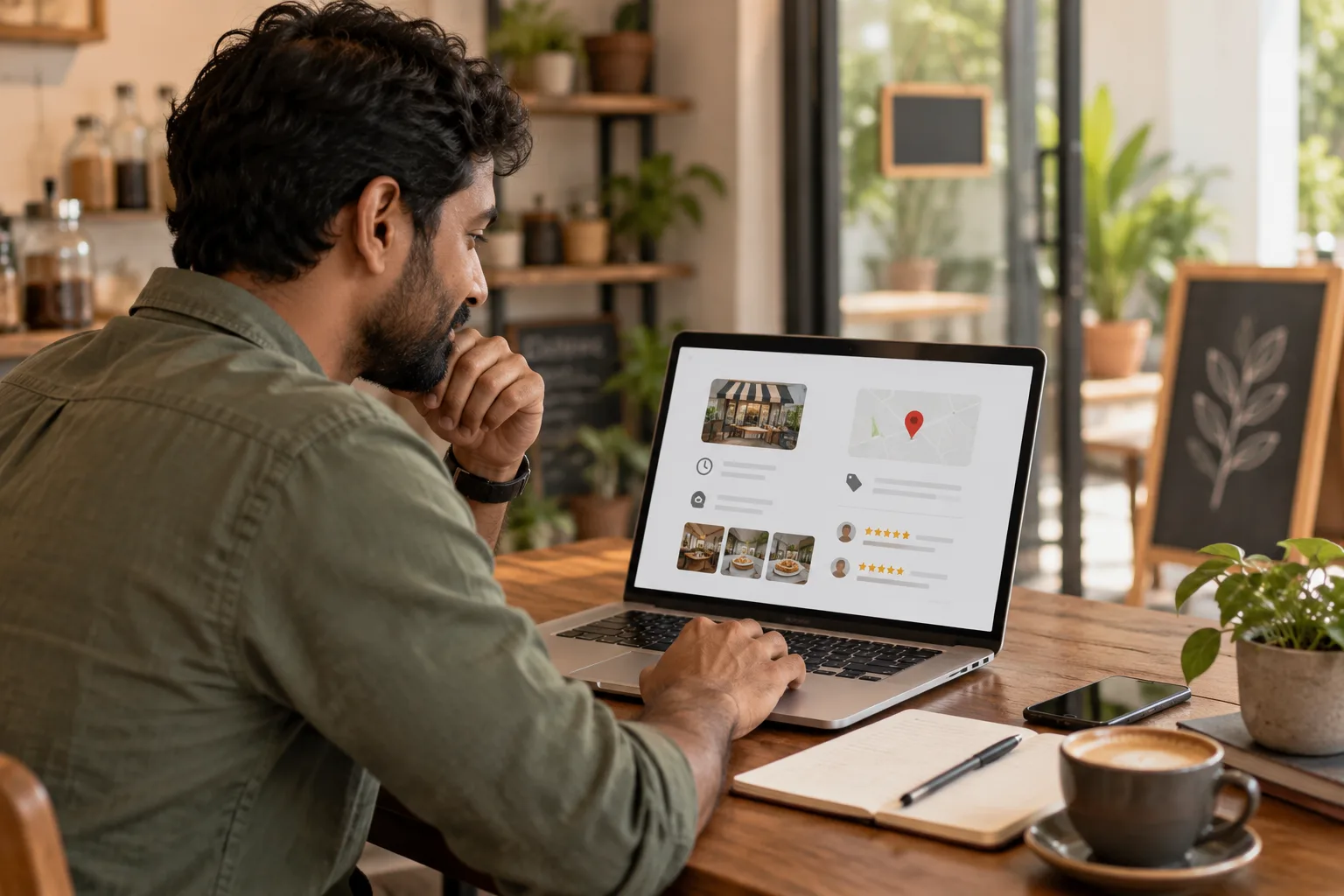 6 min read · 6 Nov 2025Setting up Google Business Profile for a business that travels to the customerPlumbers, cleaners and electricians have no shop to find. Set up a Google Business Profile around service areas, photos of work and replies.
 5 min read · 18 Aug 2026Getting steady work from apartments and resident associationsHow a home service contractor wins steady work from apartments and resident associations: a one-page profile, a trial job, a named escalation contact.
 5 min read · 17 Jul 2026Wording a warranty or guarantee that the customer believes and you can keepA plain-words home service warranty template: what is covered, for how long, what is not and how to claim, so customers trust it and crews can honour it.
More for handyman and home maintenance services
Related work to consider.
Closest to this: search and visibility
Also for handyman and home maintenance services
- Pay per click advertising for handyman and home maintenance services
- Reputation management for handyman and home maintenance services
- Content marketing for handyman and home maintenance services
- Social media marketing for handyman and home maintenance services
- WhatsApp marketing for handyman and home maintenance services
- Referral marketing for handyman and home maintenance services
Or start from the overview: sales and marketing for handyman and home maintenance services.
Your next practical step
Tell us what you are trying to grow, and we will read it before we call.
Eight short steps, mostly taps. Skip anything you would rather answer on the call.