Handyman and home maintenance services · Reputation management
Let the reviews show who comes on time, cleans up and charges what was quoted.
Reputation management for a handyman business means asking every customer for a review, replying to each one and fixing whatever the bad ones point to. GullySales sets up the ask at job close, writes replies in the reviewer's own language, and tracks what the complaints say about your work.
Scope, fee, reporting and term are agreed in writing after we have read your brief and spoken to you.
What reputation management means
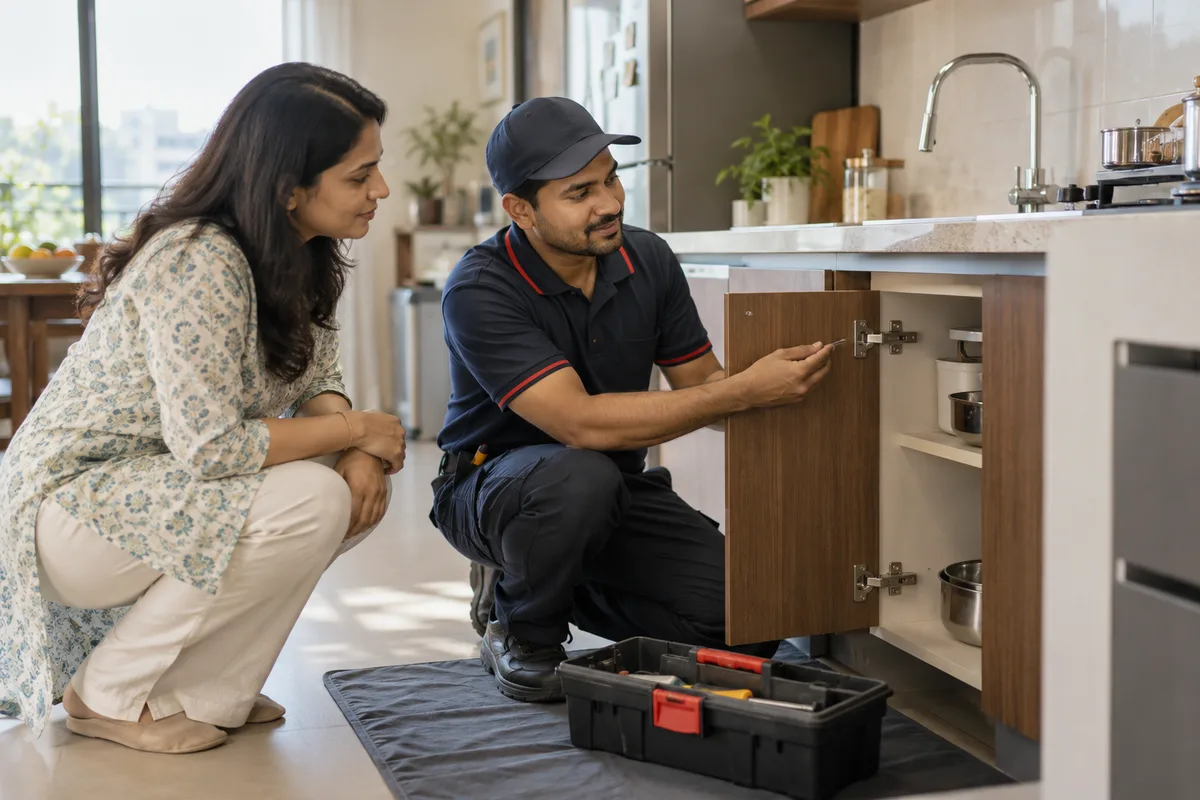
Reputation management is watching what is said about your business across Google, social media and review sites, and responding to it before it changes a buyer's mind. GullySales monitors mentions, drafts responses to negative reviews and flags recurring complaints back to your team.
Also for handyman and home maintenance services
- SEO for handyman and home maintenance services
- Local SEO for handyman and home maintenance services
- Pay per click advertising for handyman and home maintenance services
- Content marketing for handyman and home maintenance services
- Social media marketing for handyman and home maintenance services
- WhatsApp marketing for handyman and home maintenance services
- Referral marketing for handyman and home maintenance services
- Follow-up systems for handyman and home maintenance services
Sales and marketing for handyman and home maintenance services, the overview.
Last updated 14 Nov 2026.
For handyman and home maintenance services
Where it usually goes wrong, and what we would do.
“The review is a complaint about the visit, not the repair”
A flat owner writes that the technician was two hours late and left shoe marks. The repair held, but the review reads as a warning.
“Price disputes appear as one star”
The final bill was higher than the phone quote because the pipe needed replacing. The customer feels cheated and says so in public.
“A review praises one technician by name”
When that man leaves or is booked out, new customers ask for that person and are given someone else.
What we do
What we deliver for handyman and home maintenance services.
The work available for this need. We agree the deliverables and responsibilities for your engagement in writing.
A review ask at job close
A message sent the same evening, with the review link and a thank you, written in the language the customer used.
Result: Customers are asked while the repair is fresh in their mind.
Replies to every review
A reply to each, in plain words, naming the job and the technician, with an offer to look at any problem.
Result: A future customer sees how you treat a complaint.
A record of what complaints say
A sheet recording late arrival, price change, cleaning, repeat fault and rude behaviour, by technician and by job.
Result: Complaints become a list of things to fix, not a mood.
A written quote and revision rule
A standard form where the quote and the reason for any change are written and shared on WhatsApp before work continues.
Result: The customer knows what the bill will be before the work is done.
Review count and rating against the baseline
Reviews and their content reported against what the profile showed before work started.
Result: You can see whether the fixes show up in what customers write.
How the result is measured
- Average rating
- Response time to reviews
- Negative mentions resolved
Recorded as a baseline before work starts, so every later report has an honest comparison.
What to do with each review
A repair business gets a handful of kinds of review, and each needs its own reply and its own fix inside the firm.
- Praise for the repair and the technician
- Thank them by name for the job and say the technician has been told. Add a line that you are available for the next fault. Do not copy the same reply to every review.
- Complaint about lateness
- Apologise once and say what happened without excuse. Invite the customer to call a named person. Inside, check how the visit slots are given and who tells the customer when a job runs long.
- Complaint that the bill was higher than the phone quote
- Do not argue the price in public. Say that a written estimate is shared before work and offer to review the bill by phone. Inside, change the rule so a revised quote is sent in writing first.
- Repeat fault after a repair
- Offer a free re-visit within what you have promised on the job, and keep to it. Record the job and the cause. Do not promise a warranty you do not give.
- A suspect or fake review
- Report it to Google with the reason. Reply politely that you cannot find the job and ask for details. Never threaten the reviewer, and do not promise removal to your team.
- Never gate or pay for reviews
- Do not offer a discount or gift for a good review, do not ask only the happy customers, and do not write reviews for yourself. Check Google's current policy.
Who it is for
This is written for these handyman and home maintenance services.
- Single-trade plumbers and electricians
- Carpenters and furniture fixers
- Painters and waterproofing teams
- Multi-skill handyman firms
- AC and appliance repair teams
- Home AMC providers for flats and villas
- Property maintenance for landlords and PGs
- Pre-move-in and post-handover snagging teams
Before you decide
When this may not be the right fit.
- Quotes still change at the end of the job, so new reviews would keep naming the bill.
- Technicians are not told what to do after a complaint, so a reply would promise a visit that nobody makes.
- A reviewer praised a technician who has left, and the owner has not decided how to answer customers who ask for that person.
Before you decide
Agree the work. Know how to judge it.
Reputation management for handyman and home maintenance services: use these checks to prepare, choose the scope, and review what changes.
Bring the right evidence
Collect recurring public feedback and the internal record of how the issue was handled. Separate factual corrections from genuine complaints that need a response.
Make the scope clear
Agree who checks facts, approves replies, and resolves problems outside marketing. Any request for reviews or testimonials must fit the trade's rules and the customer's permission.
Check the work in use
Read the response from the customer's point of view. It should address the issue without exposing private information or promising an outcome the team cannot provide.
Know when to change course
Do not buy or invent reviews. If the same complaint keeps returning, resolve its cause before publishing more positive material.
These are discussion points, not a fixed package. GullySales confirms the deliverables, responsibilities, fee, and term in writing after reading your brief and speaking with you.
Before we start
What to have ready before the work starts.
The records, access and decisions this work needs from handyman and home maintenance services. Anything missing is noted in the written scope, with who will supply it.
- Login to every review listing
- To reply to reviews you must be the verified owner of each profile. Bring the login, or tell us where the access is lost. Without it we can draft replies but cannot post them, and old reviews stay unanswered.
- A record of last season's complaints
- Gather messages, calls or notes where customers complained, even if they never wrote a review. They show what the reviews will point to. If you have none, we begin from the reviews alone and the pattern will be less complete.
- Customer phone numbers for sending the ask
- The review ask goes by message to the number the customer gave. Keep numbers on the job card or sheet, with permission to message. Without them, the ask has to be made at the door, which is harder to remember.
- A rule on revisits and refunds
- Replies to bad reviews promise a next step, so you must decide what you offer: a free revisit, a partial refund, a call from you. Tell us in advance. Without it, replies stay vague and customers read them as brush-offs.
- Names of technicians who may be mentioned
- Praise sometimes names a technician. Tell us who is happy to be named in a reply and who has left the firm. Replying warmly to a review of someone who quit awkwardly would draw questions, so we avoid it.
How it works
How the reputation management work runs
The work itself, in order. How an engagement starts, from your brief to a written scope, is set out on our method page.
- 1
Read every review you already have
We read all the reviews on Maps and any other listing, and sort them by what they praise or blame: the repair, the visit, the price, the technician's manners, the wait. You tell us which complaints are fair and which are about something else. This gives a plain picture of what customers say about you, before any change.
- 2
Record the rating and count as they stand
We note the star rating and the number of reviews on each listing, so progress is measured against something written down. You also tell us how many jobs the crew completes in a normal stretch, since the ask has to reach those customers. Without these figures, a few new reviews would feel like progress and prove nothing.
- 3
Place the review ask at job close
The technician or desk sends a short message with the review link right after the customer has paid and the work is checked. We write the message in the language the customer used on the call. You decide who sends it, so it never goes to someone who has complained and not been answered.
- 4
Write the reply voice with the owner
We draft replies for good and bad reviews in your voice, in English, Kannada, Hindi or whatever the reviewer wrote. For a complaint, the reply states what you will check, and who will call. You read and approve the pattern, and a single person posts each reply so the tone stays steady.
- 5
Fix what the complaints point to
When three reviews mention a missed appointment or a bill higher than the quote, we raise it with you as an operations fix and not as a review problem. That may mean a written quote rule or a call before arrival. We write the rule with you and the crew, and brief the technicians.
- 6
Compare new reviews with the baseline
We set the current rating and review count beside the starting figures, and note which complaints reduced. We do not promise a star rating. You see whether more customers are now leaving reviews and whether the replies are being read, then decide what the crew should change next.
Where this fits
Three pieces of sales work, in this order.
This work sits inside sales management. A target, a review routine and someone who owns the number.
Step 1
Sales audit
Find where deals are being lost and what to fix first.
Start here if you cannot say where orders are lost.
Step 2
Sales process design
One written way to sell, from first enquiry to repeat order.
Start here if every salesperson sells differently.
Step 3 · you are here
Sales management
A target, a review routine and someone who owns the number.
Start here if the team has targets and no routine.
FAQ
Questions owners ask before they call.
Not here? More answers, or ask on WhatsApp.
Can we ask customers to remove a bad review?
Should we reply in Kannada, Hindi or English?
What if a customer names a technician in a bad review?
Is it wrong to ask every customer for a review?
Can we offer a discount for a five-star review?
What do we do about an unfair one-star review?
How much does it cost?
How long is the contract?
How soon will we see results?
Who will actually do the work?
From the blog
Further reading for handyman and home maintenance services.
 5 min read · 18 Aug 2026Getting steady work from apartments and resident associationsHow a home service contractor wins steady work from apartments and resident associations: a one-page profile, a trial job, a named escalation contact.
 5 min read · 17 Jul 2026Wording a warranty or guarantee that the customer believes and you can keepA plain-words home service warranty template: what is covered, for how long, what is not and how to claim, so customers trust it and crews can honour it.
 5 min read · 4 Jul 2026A job register that turns completed work into repeat workA job register for a home service firm: the columns that matter, how to fill it on the day and how a next-due date becomes a reason to call.
More for handyman and home maintenance services
Related work to consider.
- SEO for handyman and home maintenance services
- Local SEO for handyman and home maintenance services
- Pay per click advertising for handyman and home maintenance services
- Content marketing for handyman and home maintenance services
- Social media marketing for handyman and home maintenance services
- WhatsApp marketing for handyman and home maintenance services
Or start from the overview: sales and marketing for handyman and home maintenance services.
Your next practical step
Tell us what you are trying to grow, and we will read it before we call.
Eight short steps, mostly taps. Skip anything you would rather answer on the call.