Handyman and home maintenance services · Pay per click advertising
Pay for the searches that become a visit booked, and keep out the ones that only become an enquiry about a job.
Pay per click (PPC) advertising for a handyman business means paying Google when someone clicks an ad for a job like pipe repair or fan installation near them. GullySales builds the ads, blocks job seekers and tutorial searches, and counts only calls and bookings that became a site visit.
Scope, fee, reporting and term are agreed in writing after we have read your brief and spoken to you.
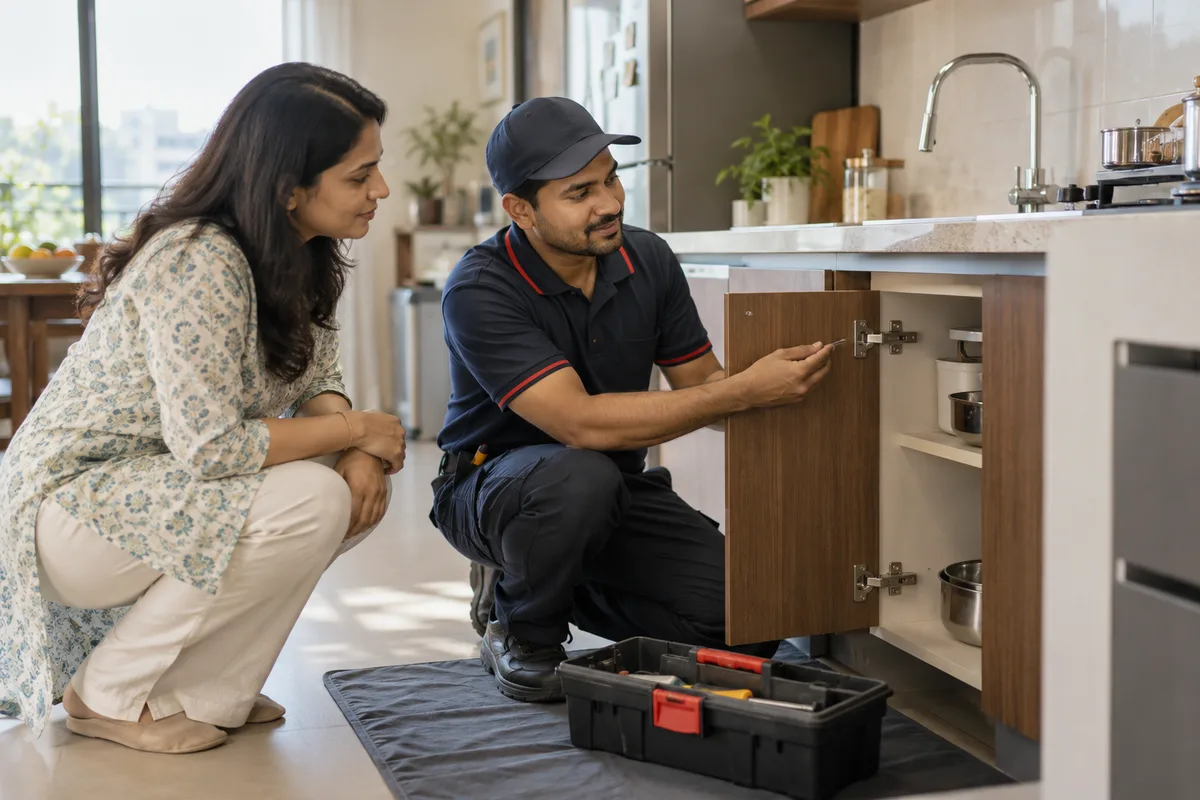
What pay per click advertising means
Pay per click advertising (PPC) is paying a fee each time someone clicks your advert on Google or another platform. It puts you at the top of a search page immediately, instead of waiting for ranking to build. GullySales sets the targeting, writes the ad text and checks spend against enquiries received.
Also for handyman and home maintenance services
- SEO for handyman and home maintenance services
- Local SEO for handyman and home maintenance services
- Reputation management for handyman and home maintenance services
- Content marketing for handyman and home maintenance services
- Social media marketing for handyman and home maintenance services
- WhatsApp marketing for handyman and home maintenance services
- Referral marketing for handyman and home maintenance services
- Follow-up systems for handyman and home maintenance services
Sales and marketing for handyman and home maintenance services, the overview.
Last updated 14 Nov 2026.
For handyman and home maintenance services
Where it usually goes wrong, and what we would do.
“Job seekers click as much as customers”
Searches like plumber job or electrician vacancy cost the same click as a customer search. Without blocks, a good share of the spend goes on people who want work, not repairs.
“Ads run when the team is on another job”
A call at four in the afternoon rings out because both technicians are inside a flat. The click is paid for and the customer has moved on.
“The ad promises a service the team does not do”
A click for AC gas refill reaches a firm that does only plumbing and carpentry, and the enquiry is a waste of both sides.
What we do
What we deliver for handyman and home maintenance services.
The work available for this need. We agree the deliverables and responsibilities for your engagement in writing.
Campaigns split by job
Separate campaigns for plumbing, electrical, carpentry and painting, each with its own ads and its own page.
Result: Spend follows the job you have capacity for.
A list of searches to block
Words such as job, vacancy, salary, course, training, how to, DIY and free, added from the start and kept growing from the real search report.
Result: Spend stops going on searches that never become a customer.
Call times matched to the team
Ads switched on for the hours someone picks up and for the areas the team can reach on that day.
Result: Callers reach a person, not a ringing phone.
A landing page for each job
A page for the job clicked, with the area, the call button and a short form with a photo upload.
Result: A customer who clicked for geyser repair lands on geyser repair.
Call and booking tracking
Call tracking and a record of each enquiry through to a visit booked and a job done.
Result: You see what each rupee of spend produced in visits, not clicks.
How the result is measured
- Cost per click
- Cost per enquiry
- Enquiries from paid search
Recorded as a baseline before work starts, so every later report has an honest comparison.
Searches to bid on and block
The searches worth paying for at a repair business, and the ones to keep out.
- Urgent searches, such as plumber near me or electrician urgent
- Bid, with a call button, and only in hours when the phone is answered. This customer calls the first number that answers, so a missed call costs the lead.
- Job and area searches, such as geyser repair in Indiranagar
- Bid on the job with the area. Send the click to a page about that job and that area. These are the steadiest searches for a team that works near its base.
- Planned work, such as bathroom waterproofing or wardrobe fixing
- Bid on a separate campaign. The customer compares two or three quotes, so the page should say what the visit includes and offer to send a technician to measure.
- Job seekers, trainers and shops
- Block plumber job, electrician vacancy, ITI, course, training, wholesale, spare parts and shop. These clicks cost money and cannot become a repair booking.
- Where the click lands
- Send it to a page for that job with a call button and a WhatsApp link. Do not send it to the home page, which lists everything and answers nothing.
- Counting a real enquiry
- Count an answered call or a message that names a job and an area. Then count a visit made and a job done. Mark the calls from outside your area as lost, not as leads.
Who it is for
This is written for these handyman and home maintenance services.
- Single-trade plumbers and electricians
- Carpenters and furniture fixers
- Painters and waterproofing teams
- Multi-skill handyman firms
- AC and appliance repair teams
- Home AMC providers for flats and villas
- Property maintenance for landlords and PGs
- Pre-move-in and post-handover snagging teams
Before you decide
When this may not be the right fit.
- Nobody answers the phone while both technicians are inside a flat, so paid calls would ring out.
- The firm has not decided which jobs it refuses, such as AC gas refills or tiny repairs, so the ads would bring them.
- The team is fully booked for the coming days, so a paid click would turn into a refusal.
Before you decide
Agree the work. Know how to judge it.
Pay per click advertising for handyman and home maintenance services: use these checks to prepare, choose the scope, and review what changes.
Bring the right evidence
Bring search-term reports, conversion definitions, and the sales outcome of past enquiries where available. Identify products, locations, and enquiries you cannot serve.
Make the scope clear
Choose the offer and landing page before setting a media budget. Agree who pays the platform, which actions count as conversions, and how unsuitable searches will be reviewed.
Check the work in use
Trace a test enquiry from the advert to the sales record. Review qualified enquiries and orders alongside spend, and separate duplicates or spam from genuine buyer demand.
Know when to change course
If the advert generates enquiries that do not fit, revise targeting and qualification before increasing spend. If suitable enquiries are lost after contact, work on the sales process.
These are discussion points, not a fixed package. GullySales confirms the deliverables, responsibilities, fee, and term in writing after reading your brief and speaking with you.
Before we start
What to have ready before the work starts.
The records, access and decisions this work needs from handyman and home maintenance services. Anything missing is noted in the written scope, with who will supply it.
- A timetable of technician availability
- The ads should run when somebody can take the job. Give us the days and hours your crew is out and the hours the desk is staffed. Without this, ads run into a silent phone, and the money buys unanswered calls.
- A price range for each paid job
- You need to know what a typical bill is for each job so we can judge what a click is worth. Rough ranges are enough. If you cannot say, we begin with one job and learn the numbers from the first bookings.
- Access to the ad account or card
- Ads need a payment method and an account that you own. Set the account up in your name so you keep it if we part. If you already have an account, share access; we do not run campaigns inside one we hold for you.
- The jobs you never want calls for
- Name the work you refuse, such as borewell, welding or anything needing a licence you lack. We use the list to exclude searches. Missing this, a wasted call arrives on day one and a technician spends time declining it.
- A person who logs call outcomes
- Somebody in the office must mark each ad call as booked, lost or wrong number on the enquiry sheet. Without it the ad count stays a count of clicks, and we cannot tell you which job pays.
How it works
How the pay per click advertising work runs
The work itself, in order. How an engagement starts, from your brief to a written scope, is set out on our method page.
- 1
Agree the jobs worth paying for
We sit with you and the person who answers the phone and list jobs by how well they pay against how far the van must travel. Some jobs, such as an urgent pipe burst, justify a paid click; others do not. You choose a small first set, the jobs where a booked visit turns into a profitable bill, and we leave the rest for later.
- 2
Check who answers when the phone rings
Before any ad is paid for, we test your number at the hours the ad would run. We call it, send a WhatsApp message and note what happens. If calls ring out when the crew is on a job, you decide whether to hire a call taker, forward to a partner, or let the ads run only when somebody is at the desk.
- 3
Write one ad group for each job
Each job gets its own small group of ads and its own landing page. A search for geyser repair meets an ad about geysers, not a list of everything you fix. We write the words, you check they promise only what the team does, and we remove anything you cannot deliver at the price a customer expects.
- 4
Block the searches that cost money for nothing
Before launch we list words that bring job seekers, tutorial watchers and DIY readers, such as plumber vacancy or how to fix tap, and exclude them. Once ads run, we read the actual searches that triggered clicks and add more exclusions. You see the list and may add words from calls you took that went nowhere.
- 5
Set up call and booking counting
We add call tracking and a booking marker so a call from an ad is counted separately from other calls. A visit that was booked counts; a wrong-number call does not. Your office staff note on the enquiry sheet which calls turned into a visit, so the count rests on the work and not just on clicks.
- 6
Read spend against visits booked
We lay the money spent on ads beside the visits booked and jobs completed, as recorded before the ads began. You decide whether to raise, hold or stop each job's ads. If a job's calls do not become visits, we look at the page and the phone answering before blaming the ad.
Where this fits
Three pieces of sales work, in this order.
This work sits inside sales process design, at stage 1, prospecting and lead generation. The audit comes before it, and sales management keeps it running.
Step 1
Sales audit
Find where deals are being lost and what to fix first.
Start here if you cannot say where orders are lost.
Step 2 · you are here
Sales process design
One written way to sell, from first enquiry to repeat order.
Start here if every salesperson sells differently.
Step 3
Sales management
A target, a review routine and someone who owns the number.
Start here if the team has targets and no routine.
FAQ
Questions owners ask before they call.
Not here? More answers, or ask on WhatsApp.
Is it worth paying for clicks on the business name itself?
Is a call-only ad better than a form for repairs?
How do we count calls that came from the ad?
Do ads help a team that is already fully booked?
Do we pay when someone clicks but does not call?
Who owns the ad account afterwards?
How much does it cost?
How long is the contract?
How soon will we see results?
Who will actually do the work?
From the blog
Further reading for handyman and home maintenance services.
 5 min read · 18 Aug 2026Getting steady work from apartments and resident associationsHow a home service contractor wins steady work from apartments and resident associations: a one-page profile, a trial job, a named escalation contact.
 5 min read · 17 Jul 2026Wording a warranty or guarantee that the customer believes and you can keepA plain-words home service warranty template: what is covered, for how long, what is not and how to claim, so customers trust it and crews can honour it.
 5 min read · 4 Jul 2026A job register that turns completed work into repeat workA job register for a home service firm: the columns that matter, how to fill it on the day and how a next-due date becomes a reason to call.
More for handyman and home maintenance services
Related work to consider.
- SEO for handyman and home maintenance services
- Local SEO for handyman and home maintenance services
- Reputation management for handyman and home maintenance services
- Content marketing for handyman and home maintenance services
- Social media marketing for handyman and home maintenance services
- WhatsApp marketing for handyman and home maintenance services
Or start from the overview: sales and marketing for handyman and home maintenance services.
Your next practical step
Tell us what you are trying to grow, and we will read it before we call.
Eight short steps, mostly taps. Skip anything you would rather answer on the call.