Ironing services · Social media
Show the folded shirt and the tagged bundle where the neighbours are scrolling.
Social media marketing for an ironing service means showing the work, the route and the care taken to the people in your localities, on the apps they already use. GullySales works on what the shop posts, where it posts and how the account points residents to a message rather than a feed.
Scope, fee, reporting and term are agreed in writing after we have read your brief and spoken to you.
What social media means
Social media is the ongoing posting your business does on platforms such as Instagram, Facebook and LinkedIn to stay visible to customers and prospects between purchases. GullySales plans a posting calendar, writes captions and designs the images so the page looks active and answers what a visitor would ask.
Last updated 14 Nov 2026.
For ironing services
Where it usually goes wrong, and what we would do.
“The product is a crisp shirt, and it photographs well”
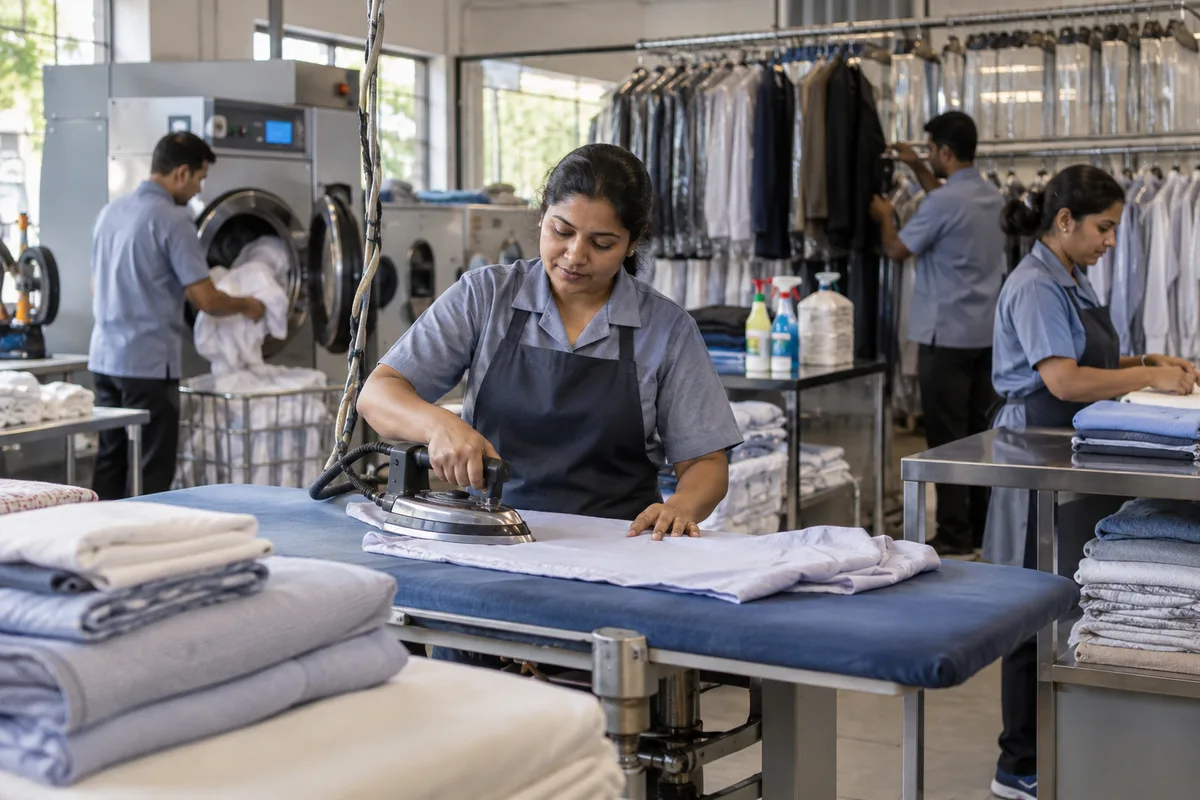
A rack of pressed shirts in even rows, a saree rolled and tagged, a school uniform folded flat: the result of the work is visible in one picture. No shop near you is posting it.
“Neighbourhood groups matter more than followers”
Residents ask in apartment and locality groups who irons nearby. A shop that has a presence in those groups, with the owner's permission to post, meets the question when it is asked.
“Customers' clothes are private”
A photograph with a name tag, a visible flat number or a resident's face is a risk. Posts show finished garments in neutral settings and never a customer's bundle or door.
“Seasons make the account worth following”
Wedding months, festivals and reopening of schools bring the garments that need the greatest care. An account that prepares for those weeks has something to say, while one that posts a rate card all year does not.
What we do
What we deliver for ironing services.
The work available for this need. We agree the deliverables and responsibilities for your engagement in writing.
A plan of what the shop posts and what it leaves out
A short list of post types such as the finished rack, the steam press at work and the tagged bundle, with a list of things never shown.
Result: The person posting knows what is allowed before taking the picture.
Photograph guidance for a phone at the counter
Simple instructions on light, angle and background for the shirts, sarees and uniforms the shop handles.
Result: Pictures from the counter look clean and consistent.
Festival and term-start post sets
Ready posts and captions timed to the wedding months, festivals and the weeks before school reopens.
Result: The shop is ready with an offer before the rush starts.
A routine for locality group posts
Wording for introducing the shop in apartment groups, with respect for each group's rules on vendors.
Result: The shop is present in the groups where neighbours ask.
A message button on every profile
Each account points to the shop's business WhatsApp so a resident can ask for a pickup in one tap.
Result: A resident who likes a post can reach the shop at once.
How the result is measured
- Posts published
- Engagement rate
- Enquiries from social profiles
Recorded as a baseline before work starts, so every later report has an honest comparison.
Posts and pieces to plan
Posts that suit a press shop, and the proof each one needs.
- Before and after of a creased shirt
- A short clip or two photographs of the shop's own cloth, taken at the counter. The proof is the crisp collar and the tag, with no customer's garment in the frame.
- How we count a bundle
- A photo of the slip and the counted pile with a caption on the process. It answers the fear of missing pieces and shows the resident the count is written down.
- Saree rolling for the wedding week
- A post a few days before the wedding season, showing a rolled saree from the shop's own stock and a message button for booking a place in the schedule.
- School uniform pressing before term
- A seasonal post with the school colours drawn as a plain picture, and the pickup spot. Do not show children or named school badges without permission.
- Meet the boy who brings your clothes
- A post introducing the press boy by first name, with the boy's consent, so residents learn the shop's name along with a face. Ask first, and keep it short.
Who it is for
This is written for these ironing services.
- Roadside and gate-side press operators with a cart
- Steam press shops with a collection and delivery boy
- Ironing counters inside dry cleaners and laundries
- Doorstep ironing operators serving gated communities
- Shirt and uniform pressing for offices, showrooms and clinics
- School uniform pressing before term starts
- Saree rolling, pleating and starching specialists
- Ironing franchise kiosks in malls and tech parks
Before you decide
When this may not be the right fit.
- You have no one who can take a clean photograph at the counter, so the account would fill with blurred images that hurt trust.
- Nobody watches the messages on the profile, so a resident who writes after a post would wait without a reply.
- You only want customers inside one building, and a public account would reach neighbours you cannot serve.
Before you decide
Agree the work. Know how to judge it.
Social media marketing for ironing services: use these checks to prepare, choose the scope, and review what changes.
Bring the right evidence
Review the posts that produced useful conversations, not only the ones with the most views. Gather buyer questions and decide which team member can contribute credible material.
Make the scope clear
Choose the audience and channel before setting a posting volume. Agree who supplies material, approves posts, and handles messages, including complaints or questions the agency cannot answer.
Check the work in use
Follow a post through to the profile, website, and response. A useful report explains the quality of conversations and enquiries, alongside reach and engagement.
Know when to change course
If publishing takes time away from unanswered buyer messages, fix the response routine first. Do not expand to another channel without a clear reason for being there.
These are discussion points, not a fixed package. GullySales confirms the deliverables, responsibilities, fee, and term in writing after reading your brief and speaking with you.
Before we start
What to have ready before the work starts.
The records, access and decisions this work needs from ironing services. Anything missing is noted in the written scope, with who will supply it.
- Logins to the shop's accounts
- Bring the logins to any page or profile already made. If a helper created them, recover them first. Without access, we begin with fresh accounts and lose the followers. Add the name of the person at the shop who will be the account owner.
- A phone that can take clear photographs
- Any recent phone will do if the lens is clean, and a person at the shop must be free for a short session at the counter and the press. If nobody can be spared, the session is moved to a quiet hour, because photographs taken in a rush during collection show clutter and not the finish.
- A list of locality groups you belong to
- Name the building and locality groups on messaging apps where you are a member or have a contact. Posting there needs the admin's permission. If you have none, we start with your own profile. Ask each group admin whether a vendor may post, and write the answer down against the group name.
- A person to answer messages
- Posts bring messages asking for rates and collection. Name who replies and how soon the shop can commit. A message left unanswered reads as a closed shop. Say also whether the shop will reply in the language the resident writes in.
How it works
How the social media work runs
The work itself, in order. How an engagement starts, from your brief to a written scope, is set out on our method page.
- 1
Pick the apps your customers use
We ask who your customers are and where they spend time: the building groups on a messaging app, a photo app or a neighbourhood page. We look at the accounts you hold and who has the logins. You decide which one or two to use, because a small shop cannot feed every platform. We also ask which locality groups the delivery person is already a member of, because a post there carries more weight than one from a new account.
- 2
Photograph the press, the rack and the finish
We spend a session at the shop with a phone, photographing a pressed shirt on a hanger, the rack at the end of a collection and the counter. You choose what is shown and what is not. The pictures become the stock for the first posts, and none shows a customer's name tag or private item.
- 3
Agree what the account will not post
We write a short rule: no customers' clothes with names, no complaints argued in public, no price promises you cannot keep. You approve it. The rule protects the shop and the customers, and whoever posts reads it before they begin. We also write a plain line for what is said when a customer asks for a discount in public, so a reply does not set a rate by accident.
- 4
Prepare seasonal posts and the building routine
We draft a small set of posts for festival weeks and for the start of term, and a routine for posting in locality groups where the admin allows. You approve each draft. We check the rules of each group before any post is made. Each locality group has its own rule, so the routine lists which groups allow vendor posts and which allow only a reply to a question.
- 5
Set the message button and read what follows
Every profile gets a button that opens a chat with the shop number. After a period you set, we compare messages and new bundles that came from the posts with the count taken at the start. You tell us which posts brought households within your route. We also place the button in the profile, the posts and the pinned note, so a resident can reach the shop from wherever they land.
Where this fits
Three pieces of sales work, in this order.
This work sits inside sales process design, at stage 0, foundation. The audit comes before it, and sales management keeps it running.
Step 1
Sales audit
Find where deals are being lost and what to fix first.
Start here if you cannot say where orders are lost.
Step 2 · you are here
Sales process design
One written way to sell, from first enquiry to repeat order.
Start here if every salesperson sells differently.
Step 3
Sales management
A target, a review routine and someone who owns the number.
Start here if the team has targets and no routine.
FAQ
Questions owners ask before they call.
Not here? More answers, or ask on WhatsApp.
Which platform should an ironing shop use first?
Should we show customers' clothes?
Is paid promotion on social media worth it?
Can we post photographs of a customer's garments?
Who takes the photographs?
How do we handle a complaint posted in public?
How much does it cost?
How long is the contract?
How soon will we see results?
Who will actually do the work?
More for ironing services
Related work to consider.
Closest to this: content and social
Also for ironing services
Or start from the overview: sales and marketing for ironing services.
Your next practical step
Tell us what you are trying to grow, and we will read it before we call.
Eight short steps, mostly taps. Skip anything you would rather answer on the call.