Pest control companies · Local SEO
Win the map for the pest and the area your technician can reach.
Local search decides which pest control company appears when a household searches from their own street, and for this trade it is the biggest source of enquiries there is. GullySales builds the Business Profile around your treatments and service areas, and keeps the reviews recent enough to matter.
Scope, fee, reporting and term are agreed in writing after we have read your brief and spoken to you.
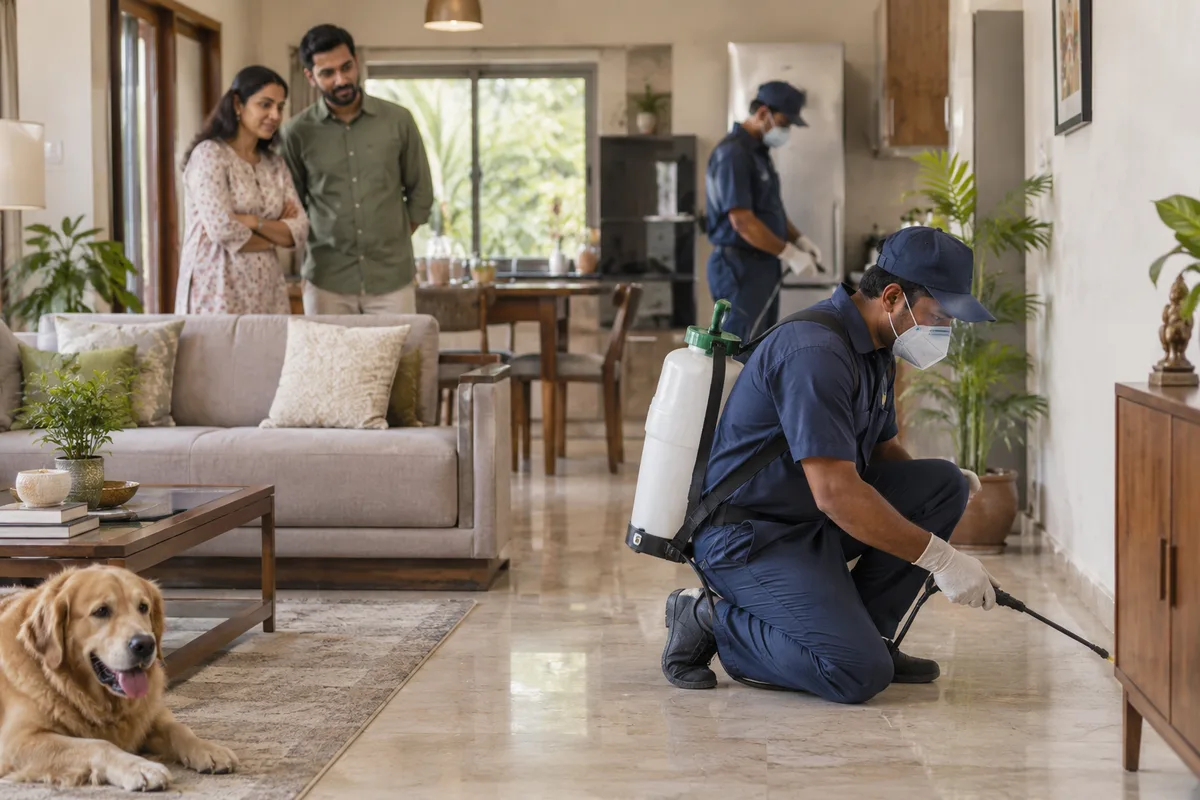
What local SEO means
Local SEO is the work of making your business show up for searches that name your town or locality, such as a service plus an area name. GullySales sets up locality pages, local citations and map listings so nearby customers find you before a competitor across town.
Also for pest control companies
- SEO for pest control companies
- Website for pest control companies
- Apartment advertising for pest control companies
- PPC advertising for pest control companies
- Lead generation for pest control companies
- Digital marketing for pest control companies
- Reputation management for pest control companies
- Branding and identity for pest control companies
Sales and marketing for pest control companies, the overview.
Last updated 14 Nov 2026.
For pest control companies
Where it usually goes wrong, and what we would do.
“Every treatment is a separate service on the profile”
Termite control, bed bug treatment, rodent control and fogging listed one by one, because the map matches the words in the search.
“Distance beats almost everything else in this trade”
A household will take the operator two kilometres away over a better one across the city. The profile has to be right for the areas you can reach today.
“Photographs of your technicians do the work here”
Not a stock image of a cockroach. A uniformed technician, the ID card, the vehicle and the equipment tell a family who is going to arrive.
“The questions section saves your office an hour a day”
How long to stay out of the room, what happens to the aquarium, whether a pregnant woman should leave. Answer those where they are asked.
What we do
What we deliver for pest control companies.
The work available for this need. We agree the deliverables and responsibilities for your engagement in writing.
A profile listing every treatment separately
Each pest and treatment added as its own service with a plain description, instead of one line saying pest control services.
Result: The profile matches the search a household types.
Service areas set to a technician's real day
The localities your team covers without a two-hour ride, entered properly rather than the whole city in one go.
Result: Enquiries come from places you can reach the same day.
Photographs of technicians, vehicles and equipment
Your own team in uniform with ID cards, the fogging machine and the vehicle, refreshed so the profile does not look abandoned.
Result: A household can picture who is coming.
Safety questions answered on the profile itself
The re-entry wait, pets, aquariums, food in the kitchen, children and pregnancy, written into the questions section in plain words.
Result: Half the objections are settled before the call.
A review routine that keeps the profile fresh
Requests after each completed treatment so the newest review is never months old, with a reply written to every one.
Result: The profile reads as a working business.
Map position tracked by pest and locality
Where you rank for each treatment in each area you serve, reported against the starting position.
Result: You can see the localities you are invisible in.
How the result is measured
- Map pack ranking
- Local search visibility
- Enquiries by locality
Recorded as a baseline before work starts, so every later report has an honest comparison.
What Google weighs here
How a household or a restaurant finds a pest operator nearby, and what to fix first.
- Pest control for homes or trade
- Choose pest control service as primary and add termite control or fumigation service only if you do that work. A restaurant manager searches a different phrase from a homeowner.
- Treatments entered one by one
- List cockroach, termite, bed bug, rodent and mosquito control as separate services. A household searches the pest it can see.
- Licence in the description
- State your operator licence as your certificate shows it, if you hold one. Rules differ by state, so check with your local authority before adding claims about chemicals.
- Commercial against home work
- Say whether you handle restaurant, hotel and warehouse contracts. A facility manager wants proof of regular visits, not a house treatment.
- Justdial and Sulekha
- Households use both for pest calls. Keep name, number and service list the same as the profile.
Who it is for
This is written for these pest control companies.
- Residential pest control operators
- Termite treatment specialists
- Commercial AMC providers for restaurants and hotels
- Warehouse and industrial pest control contractors
- Mosquito fogging and municipal contract operators
- Multi-technician city-wide pest control companies
Before you decide
When this may not be the right fit.
- You have no fixed service area, so the profile cannot name the localities a technician reaches in a working day.
- You are unwilling to show your business name and service areas publicly, and the profile cannot work without them.
Before you decide
Agree the work. Know how to judge it.
Local SEO for pest control companies: use these checks to prepare, choose the scope, and review what changes.
Bring the right evidence
Confirm the real business address, service area, contact details, and who controls the business listings. Keep examples of calls that came from the wrong location or asked for a service you do not provide.
Make the scope clear
Choose the locations you actually serve and the information each needs. Agree who approves listing changes, responds to enquiries, and keeps opening hours accurate.
Check the work in use
Check the journey from a local search to a call or enquiry on a phone. The address, service area, and description should agree across your website and listings.
Know when to change course
Do not create an office claim for a place where you only serve customers remotely. Clear service coverage is more useful than a misleading local presence.
These are discussion points, not a fixed package. GullySales confirms the deliverables, responsibilities, fee, and term in writing after reading your brief and speaking with you.
Before we start
What to have ready before the work starts.
The records, access and decisions this work needs from pest control companies. Anything missing is noted in the written scope, with who will supply it.
- Owner access to the Maps listing
- Edits, photographs and replies all run through the owner's account. A login or a manager invitation is acceptable. If the listing was created by a former vendor, the plan starts with a recovery request and nothing else moves until it is settled.
- The dispatcher's list of reachable areas
- The service area must match what a technician can really reach on one round. A written list of areas from the dispatcher is acceptable. Without it, the listing claims the whole city and draws calls you decline. A dispatcher who knows the traffic in monsoon weeks can mark the areas that fall off the list when roads flood.
- A decision on showing your address
- A firm run from a home may not want the address public. Tell us whether you will hide it and use a service area instead. Check the platform's current rules on hidden addresses; the verification step may need a different approach.
- Photographs of uniformed technicians and vehicles
- The pictures on the listing show who will come to the door. Phone photographs outdoors are acceptable. Without them, the listing shows stock images or none, and a household chooses the operator whose pictures show people.
- The label sheets for the products you use
- Safety answers must match the product label. Photographs of the labels and the supplier's safety sheets are acceptable. If they are missing, the answers say only what is certain and send the caller to the office.
How it works
How the local SEO work runs
The work itself, in order. How an engagement starts, from your brief to a written scope, is set out on our method page.
- 1
Sit with the owner and open the listing
We open the Maps listing together with the owner, or create it where none exists, and check that the owner's account controls it. You keep the verification step in your hands. We record the name, address, phone and service fields as they stand, so the later comparison has a fixed starting point.
- 2
Split the services into one line for each treatment
We list each treatment the firm performs, termite, cockroach, bed bug, rodent, mosquito, and add each as its own service on the listing with a short plain description. You approve each description and cut any claim beyond the label. A treatment you do not perform does not appear.
- 3
Draw the service area from the dispatcher's day
We ask the dispatcher how far a technician reaches on one round and mark that range as the service area. You approve it. Localities beyond it are left off, since a caller who is refused after calling counts against the listing in the reviews.
- 4
Photograph the technicians, vehicles and equipment
We photograph the technicians in uniform with ID cards, the vehicles with the firm's name and the equipment cases, never inside a customer's home. You approve each photograph and choose the one that opens the gallery. The pictures are uploaded together, so a household comparing three operators sees people and vans before it reads a word.
- 5
Answer the safety questions on the listing itself
We write short answers to the questions households ask about children, pets and re-entry to a room, using the label and your technicians' account. You read them against the label. The answers are posted in the questions section so the office need not repeat them on every call.
- 6
Read map calls and directions against the start
We read calls, direction requests and website clicks from the listing beside the starting figures, by pest and locality as far as the data allows. You tell us which calls turned into jobs. We decide with you which service line to describe better and which locality to add.
Where this fits
Three pieces of sales work, in this order.
This work sits inside sales process design, at stage 1, prospecting and lead generation. The audit comes before it, and sales management keeps it running.
Step 1
Sales audit
Find where deals are being lost and what to fix first.
Start here if you cannot say where orders are lost.
Step 2 · you are here
Sales process design
One written way to sell, from first enquiry to repeat order.
Start here if every salesperson sells differently.
Step 3
Sales management
A target, a review routine and someone who owns the number.
Start here if the team has targets and no routine.
FAQ
Questions owners ask before they call.
Not here? More answers, or ask on WhatsApp.
We work from home and do not want the address public.
Why does an operator with worse work rank above us?
Should we list chemical names on the profile?
Should residential and commercial work have separate profiles?
Should each technician have their own listing?
Why do directories appear above our listing?
How much does it cost?
How long is the contract?
How soon will we see results?
Who will actually do the work?
From the blog
Further reading for pest control companies.
 7 min read · 22 May 2026How to get security contracts, and win cleaning and facility tendersSecurity, cleaning, pest control, painting and water treatment contracts are won on compliance papers, site references and renewals, not rate alone.
 6 min read · 6 May 2026AMC renewal: how to sell and renew annual maintenance contractsAMCs lapse because nobody asks in time, not because customers refuse. Keep an end-date list, start early, show the service record, sell at installation.
 7 min read · 20 Jan 2026What is answer engine optimisation?Answer engine optimisation means being the source quoted at the top of the page, by putting the question in a heading and answering it straight away.
More for pest control companies
Related work to consider.
Closest to this: search and visibility
Also for pest control companies
Or start from the overview: sales and marketing for pest control companies.
Your next practical step
Tell us what you are trying to grow, and we will read it before we call.
Eight short steps, mostly taps. Skip anything you would rather answer on the call.