Pest control companies · Website
Build a website that answers the worried household and the cautious restaurant buyer.
A website for a pest control company is the page a household or a facility manager opens after seeing your name on Google, to judge whether to trust you and to book. GullySales builds the pages, the safety information and the booking routes that decision needs.
Scope, fee, reporting and term are agreed in writing after we have read your brief and spoken to you.
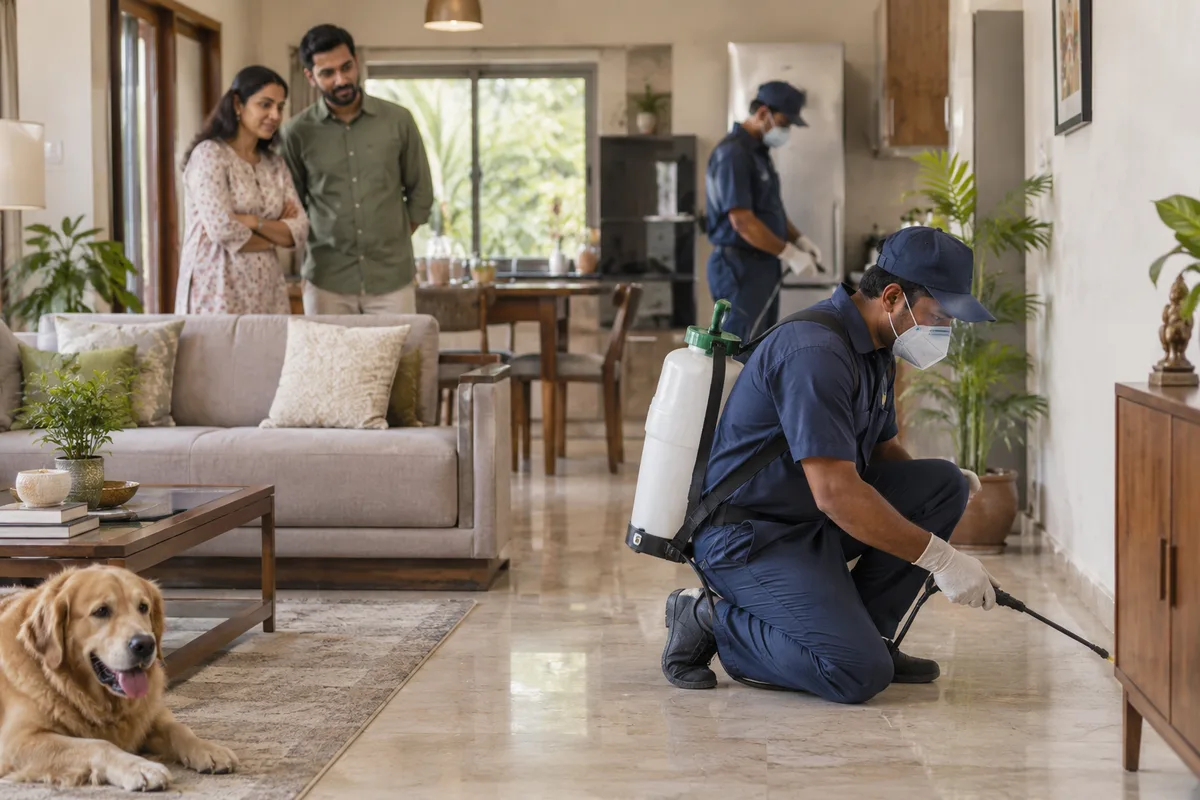
What website means
A website is the page a customer lands on after searching, clicking an advert or scanning a code, and it decides whether they call or leave. GullySales builds and maintains sites that load quickly, explain the offer plainly and make the enquiry form or phone number easy to find.
Also for pest control companies
- SEO for pest control companies
- Local SEO for pest control companies
- Apartment advertising for pest control companies
- PPC advertising for pest control companies
- Lead generation for pest control companies
- Digital marketing for pest control companies
- Reputation management for pest control companies
- Branding and identity for pest control companies
Sales and marketing for pest control companies, the overview.
Last updated 14 Nov 2026.
For pest control companies
Where it usually goes wrong, and what we would do.
“The phone button must be the first thing on a phone”
A visitor in a pest emergency reaches the site on a mobile. If the call button sits below three paragraphs, the visitor goes back to the search results and picks the next number.
“A general services page fits no one”
A visitor with termites wants termite treatment in their locality, not a list of ten pests. One page per pest and area shows the visitor you have dealt with exactly this.
“Safety information is missing from the operator sites a parent finds”
A parent or pet owner scans for what is sprayed, where and how long to stay out. A page that answers this plainly removes the single biggest reason a household hesitates to book.
“A restaurant buyer looks for proof of process”
A commercial buyer wants to see the contract format, the visit log and how a failed inspection is handled. A page that shows these tells the buyer the operator is organised before any meeting.
What we do
What we deliver for pest control companies.
The work available for this need. We agree the deliverables and responsibilities for your engagement in writing.
Pest and locality pages
Pages for each treatment and each locality you serve, each with its own description, photographs and call button.
Result: A visitor lands on the page written for their problem.
A clear safety page
Plain information on the methods, product registration, precautions for children, pets and food, and what the customer should do before and after.
Result: A worried household finds its answers before it calls.
A commercial AMC page
A page for restaurants, hotels and warehouses covering the contract, the service log, certificates and how the visits are recorded.
Result: A commercial buyer sees the process before the first meeting.
Call, WhatsApp and booking buttons
A call button and a WhatsApp button fixed on screen, plus a short booking form that asks only for pest, locality and number.
Result: Every visitor has an easy route to contact you.
Photographs of your own team and work
Real photographs of uniformed technicians, vehicles and equipment replacing stock images.
Result: A household knows who will arrive at the door.
Basic tracking of enquiries
Calls, WhatsApp clicks and form submissions recorded by page, so you see which pest and locality produce enquiries.
Result: You can name the page that brought each enquiry.
How the result is measured
- Page load time
- Bounce rate
- Enquiries from the website
Recorded as a baseline before work starts, so every later report has an honest comparison.
Searches your buyers type
What a household or a kitchen manager types before calling a pest operator, and the page that answers it.
- termite treatment cost for 2bhk flat
- A termite page explaining how price follows floor area and treatment type, with a form that asks for the area. Do not print a price you cannot honour.
- child safe pest control for flat
- A safety page. State the method, how long to keep the room empty and what the label says. Link it from every treatment page.
- pest control certificate for restaurant audit
- A commercial page. Describe the records left after each visit and the document handed over. Offer a sample report for download.
- emergency bed bug treatment near me
- A bed bug page. Put the call button above the text, name the areas a technician reaches and say a second visit may be needed.
- pest control AMC for apartment society
- A society page. List the common areas covered, how the committee approves and how completion is confirmed to residents.
Who it is for
This is written for these pest control companies.
- Residential pest control operators
- Termite treatment specialists
- Commercial AMC providers for restaurants and hotels
- Warehouse and industrial pest control contractors
- Mosquito fogging and municipal contract operators
- Multi-technician city-wide pest control companies
Before you decide
When this may not be the right fit.
- Your calls and WhatsApp go unanswered in the evening, so a better site would send visitors to a phone that rings out.
- You have no photographs of your own technicians or work, and stock images on a pest site read as an operator with nothing to show.
Before you decide
Agree the work. Know how to judge it.
Website for pest control companies: use these checks to prepare, choose the scope, and review what changes.
Bring the right evidence
List the pages that support a buying decision and the actions visitors must complete. Keep examples of failed forms, unclear product information, and questions your team answers repeatedly.
Make the scope clear
Agree the page list, content ownership, integrations, and who controls the domain and hosting. Include redirects and existing search traffic in a redesign brief, before changing addresses.
Check the work in use
Complete a real enquiry journey on a phone and a laptop. Check that the confirmation appears, the enquiry reaches the right person, and tracking records the action once.
Know when to change course
If visitors can enquire but the team does not follow up, start with the sales handover. A larger website will not resolve that delay.
These are discussion points, not a fixed package. GullySales confirms the deliverables, responsibilities, fee, and term in writing after reading your brief and speaking with you.
Before we start
What to have ready before the work starts.
The records, access and decisions this work needs from pest control companies. Anything missing is noted in the written scope, with who will supply it.
- Domain and hosting logins
- Going live depends on holding the web address and the hosting account. The owner's account is acceptable. If a former vendor holds either, the launch waits for the transfer, and we note the renewal date so the address does not lapse.
- Photographs of your own team
- Households trust faces and uniforms, so we need photographs of the technicians and the vehicles. Phone photographs taken outdoors are acceptable. Without them, the site uses drawings, and the operator with real photographs wins the household. A morning at the yard, with the technicians lined up beside the vans before the first call goes out, gives enough frames for the whole site.
- Label sheets and registration papers
- The safety and licence statements on the site must match your papers, so bring the product labels and the registration as they stand. Scans are acceptable. Without them, the pages say less and send the visitor to the phone.
- A decision on showing prices
- Decide whether any price or range appears on the site. A written yes or no from the owner is acceptable. Left open, the pages explain what decides the price and invite a photograph, which works but gives a comparing household nothing to hold. If you choose to show a range, tell us which jobs it covers, since a termite treatment and a single room cannot share one figure.
- A list of commercial clients you may name
- Naming a client needs that client's permission. A list of those who agreed, with the wording they accept, is acceptable. Without it, no client appears and the commercial page relies on process alone.
How it works
How the website work runs
The work itself, in order. How an engagement starts, from your brief to a written scope, is set out on our method page.
- 1
Photograph the team and the vehicles first
We visit the office and photograph the technicians in uniform with their ID cards, the vehicles, the equipment cases and the drums on the shelf. You approve each picture. The pages are drafted around real people and real equipment, because a household decides on who will come to the door.
- 2
Write the pest and locality pages with a technician
A senior technician describes each pest and its treatment, and we write the page in plain language. You read each page against the label. Locality pages follow the dispatcher's service area, so no page names an area your technicians do not reach.
- 3
Draft the safety page from the product label
We write the safety page from the labels and the supplier sheets, covering re-entry, food, utensils and pets. You strike anything stronger than the label. The page sits one tap away from every treatment page, because a parent looks for it before anything else.
- 4
Build the commercial page around proof
For restaurants, hotels and warehouses, we list what the firm can show: visit schedules, service reports and certificates. You decide what may be displayed and what is shown only on request. The page has its own enquiry form, separate from the household route.
- 5
Test the call button on an ordinary phone
We open the site on an ordinary phone and test the call, WhatsApp and booking buttons, including a late-evening call to see who answers. You see what we fixed. The site is made public only after the phone button is the first thing a visitor sees.
- 6
Read enquiries by page against the start
After launch, we read the enquiries by page against the figures taken at the start: calls, WhatsApp messages and form entries. You tell us which pages callers mention. We decide what to rewrite, what to add and what to leave alone.
Where this fits
Three pieces of sales work, in this order.
This work sits inside sales process design, at stage 1, prospecting and lead generation. The audit comes before it, and sales management keeps it running.
Step 1
Sales audit
Find where deals are being lost and what to fix first.
Start here if you cannot say where orders are lost.
Step 2 · you are here
Sales process design
One written way to sell, from first enquiry to repeat order.
Start here if every salesperson sells differently.
Step 3
Sales management
A target, a review routine and someone who owns the number.
Start here if the team has targets and no routine.
FAQ
Questions owners ask before they call.
Not here? More answers, or ask on WhatsApp.
Should the old site be repaired or replaced?
Should the site list prices?
Can the site hold customer reviews?
Can the site show a technician's photograph and name?
Do we publish a price range or only invite a photograph?
Can the site show customer reviews?
How long is the contract?
How soon will we see results?
Who will actually do the work?
What do you need from us?
From the blog
Further reading for pest control companies.
 7 min read · 22 May 2026How to get security contracts, and win cleaning and facility tendersSecurity, cleaning, pest control, painting and water treatment contracts are won on compliance papers, site references and renewals, not rate alone.
 6 min read · 6 May 2026AMC renewal: how to sell and renew annual maintenance contractsAMCs lapse because nobody asks in time, not because customers refuse. Keep an end-date list, start early, show the service record, sell at installation.
 7 min read · 20 Jan 2026What is answer engine optimisation?Answer engine optimisation means being the source quoted at the top of the page, by putting the question in a heading and answering it straight away.
More for pest control companies
Related work to consider.
Closest to this: search and visibility
Also for pest control companies
Or start from the overview: sales and marketing for pest control companies.
Your next practical step
Tell us what you are trying to grow, and we will read it before we call.
Eight short steps, mostly taps. Skip anything you would rather answer on the call.