Pet boarding services · Website
Give the owner one page that shows the place, the rules and the next step.
A website for a pet boarding business is the page an owner reads after the Maps listing and before the message, showing the place, the rules and how to book. GullySales works on what goes on the page, how it is organised and how it connects to your WhatsApp number.
Scope, fee, reporting and term are agreed in writing after we have read your brief and spoken to you.
What website means
A website is the page a customer lands on after searching, clicking an advert or scanning a code, and it decides whether they call or leave. GullySales builds and maintains sites that load quickly, explain the offer plainly and make the enquiry form or phone number easy to find.
Last updated 14 Nov 2026.
For pet boarding services
Where it usually goes wrong, and what we would do.
“The visit is replaced by the page”
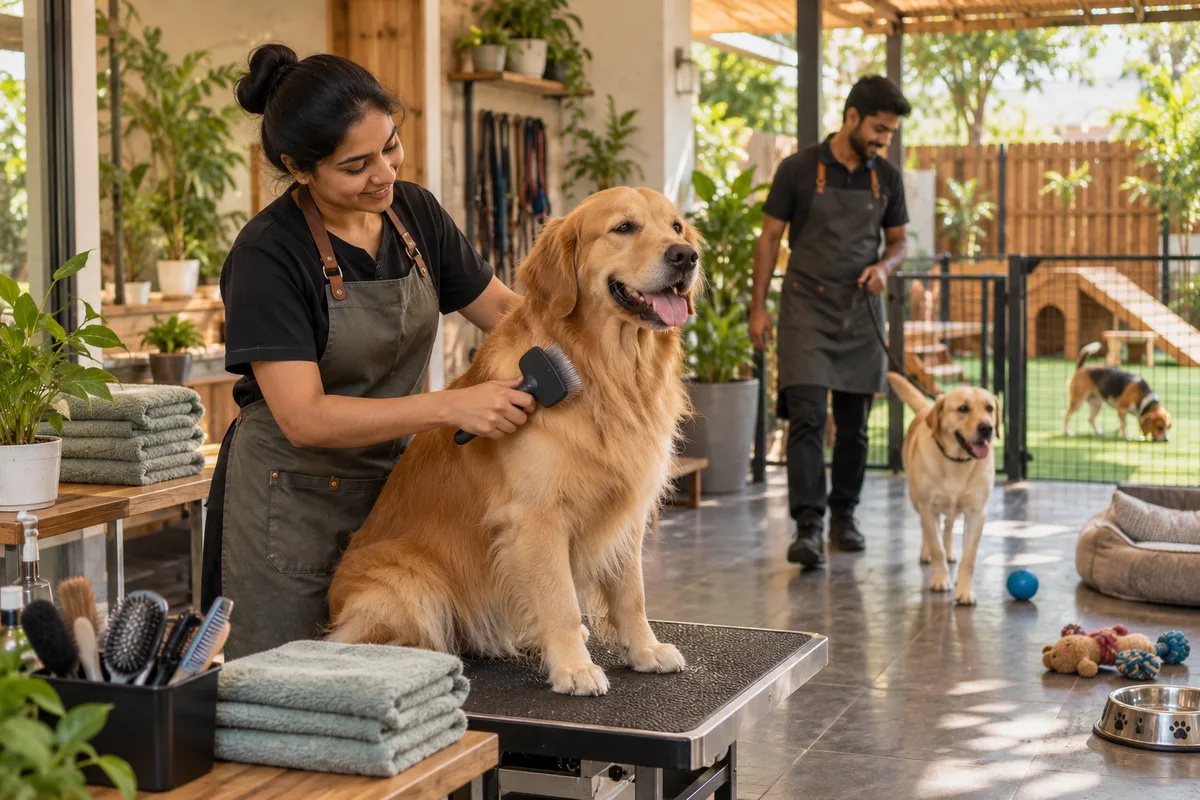
Owners who cannot drop in look at the site to judge the place. Photographs of the run, sleeping area and staff, with a short video, do the work of a walk round.
“House rules belong on the page”
Vaccination requirements, advance, cancellation, pickup times and what to bring save repeated questions. A clear page shows professionalism and protects you from arguments at admission.
“Built for the phone, one hand”
Owners read on a phone, between other tasks. The page needs a big tap-to-call and WhatsApp button, short paragraphs and photographs that load without waiting.
“A site that is never updated looks closed”
Dates for Diwali that passed two years ago, or a rate that is out of date, make owners wonder whether anyone is there. Keep the seasonal notice current.
What we do
What we deliver for pet boarding services.
The work available for this need. We agree the deliverables and responsibilities for your engagement in writing.
A front page that settles the owner's first doubts
What you board, where you are, how many animals share a space, and how to book.
Result: An owner understands the place from the first screen.
A page for house rules and papers
Vaccination, advance, cancellation, medication and what to bring, written plainly.
Result: Owners know the rules before they message.
A gallery with consent
Photographs and a video of the run, play area, sleeping area and staff, with permission for any guest animal shown.
Result: The place can be judged without a visit.
A booking button that opens WhatsApp
A tap that starts a message with the dates, species and breed already asked for.
Result: The enquiry arrives with the details you need.
A seasonal notice you can edit
A box on the home page for holiday availability and booking dates.
Result: The page tells the truth about the coming weeks.
How the result is measured
- Page load time
- Bounce rate
- Enquiries from the website
Recorded as a baseline before work starts, so every later report has an honest comparison.
Searches your buyers type
What an owner types before trusting a boarding place, and the page that answers it.
- dog boarding near me with photos
- A home page that opens on the yard, the sleeping area and the staff, not on a logo.
- pet boarding house rules
- A rules page. Hours for drop and pick-up, what the owner brings and what the place does not accept.
- vaccination needed for dog boarding
- A papers page stating what you ask owners to show, with a line to confirm the schedule with their vet.
- cat boarding space
- A cat page describing the room, the visits and how cats are kept from dogs.
- book pet boarding on whatsapp
- A booking button that opens a message with dates and species already asked for.
Who it is for
This is written for these pet boarding services.
- Kennel-style boarding centres in towns and city outskirts
- Home boarders who keep a few dogs in their own house
- Boarding attached to a grooming salon or pet shop
- Veterinary clinics with a boarding ward
- Cat boarding rooms and catteries
- Farmhouse boarding with open runs
- Long-stay boarding for owners relocating or on postings
- Boarding that includes pickup and drop in the city
Before you decide
When this may not be the right fit.
- You cannot update the holiday notice when places fill, and a stale page would take bookings you cannot honour.
- You have no clear house rules yet, so the page would have nothing firm to tell the owner.
Before you decide
Agree the work. Know how to judge it.
Website for pet boarding services: use these checks to prepare, choose the scope, and review what changes.
Bring the right evidence
List the pages that support a buying decision and the actions visitors must complete. Keep examples of failed forms, unclear product information, and questions your team answers repeatedly.
Make the scope clear
Agree the page list, content ownership, integrations, and who controls the domain and hosting. Include redirects and existing search traffic in a redesign brief, before changing addresses.
Check the work in use
Complete a real enquiry journey on a phone and a laptop. Check that the confirmation appears, the enquiry reaches the right person, and tracking records the action once.
Know when to change course
If visitors can enquire but the team does not follow up, start with the sales handover. A larger website will not resolve that delay.
These are discussion points, not a fixed package. GullySales confirms the deliverables, responsibilities, fee, and term in writing after reading your brief and speaking with you.
Before we start
What to have ready before the work starts.
The records, access and decisions this work needs from pet boarding services. Anything missing is noted in the written scope, with who will supply it.
- Domain and hosting logins
- The site cannot go live until we can reach the domain and the hosting account. The owner's account is acceptable. If a former developer holds them, the launch waits for the transfer. We also note when the web address expires and who receives the renewal notice, so the site does not go dark in the middle of a peak week because a bill went to an old email.
- Photographs of the spaces, taken in daylight
- The owner will judge the place from the page. Phone photographs of empty rooms and runs taken in daylight are acceptable. Without them, the page is text and the owner has no reason to trust it. Include a few of the gate, the reception and the staff, and any sign that tells an owner what to bring, since the first picture on the page should look like the first thing the owner will see on arrival.
- Your house rules and papers list in writing
- The rules page repeats what you ask at admission, so bring the list and the rule on cancellations. A note from the owner is acceptable. Without it, the page leaves out the questions owners ask first. Add the opening and pick-up hours, the days you are closed and the notice you need for a booking, so the page does not make a promise that the gate cannot keep.
- A decision on the rate being shown
- Decide whether the rate card appears on the page or only in a reply. A yes or no is acceptable. Left open, the page shows nothing to compare, and the owner moves on. If you show a rate, tell us which stays it covers and how it changes in a festival week, since a single figure for the whole year misleads the owner and starts an argument at pick-up.
- Someone who will change the seasonal notice
- A site that is never updated looks closed. Name the person who changes the notice before each holiday. Without a name, the page shows last year's dates. This person need not be technical. A simple page that lets them change one line and press save is enough, and we show them how at handover, using a real notice from last Diwali.
How it works
How the website work runs
The work itself, in order. How an engagement starts, from your brief to a written scope, is set out on our method page.
- 1
Walk through the place with a phone camera
We visit during a normal morning and photograph the gate, the reception, the sleeping area, the runs, the play space and the separation between small and large dogs. You tell us which areas an owner may see on a visit. The pictures replace the visit that owners who cannot travel across town will never make.
- 2
Write the house rules page with the owner
We sit with you and write the rules in plain words: the papers you ask for, the food, medicine, the pick-up hours, what happens with a cancellation. You decide each rule. The page replaces the same conversation held fifty times by message.
- 3
Draw the front page around the first doubts
We draft the front page so the owner's first doubts are settled on one screen: where the animal sleeps, who looks after it, how the owner will hear. You approve the order. The booking button sits on the same screen, opening WhatsApp with the dates question ready.
- 4
Build the gallery with consent in mind
We place only the photographs that are cleared: your own animals, the empty spaces and the staff. You approve each frame. Guest animals appear only with the signed note, and a removal request is handled the same day it is received.
- 5
Test the page with one thumb on a phone
We open the site on an ordinary phone, as an owner does on the way home, and tap through with one hand. You see what we fixed. The site is made public only after the booking button works on your phone and ours.
- 6
Hand over the seasonal notice and read the start
We show you how to change the seasonal notice, such as the Diwali dates and the closed days, in a few taps. We then read the enquiries that came through the page against the figures from the old diary. You tell us which pages owners mention, and we revise those.
Where this fits
Three pieces of sales work, in this order.
This work sits inside sales process design, at stage 1, prospecting and lead generation. The audit comes before it, and sales management keeps it running.
Step 1
Sales audit
Find where deals are being lost and what to fix first.
Start here if you cannot say where orders are lost.
Step 2 · you are here
Sales process design
One written way to sell, from first enquiry to repeat order.
Start here if every salesperson sells differently.
Step 3
Sales management
A target, a review routine and someone who owns the number.
Start here if the team has targets and no routine.
FAQ
Questions owners ask before they call.
Not here? More answers, or ask on WhatsApp.
Do I need a website if I have a Maps profile?
What should be on the page?
How do I keep it updated?
Should the site show live availability?
Do we need a website if the Maps profile is active?
Should the booking button show a calendar?
How much does it cost?
How long is the contract?
How soon will we see results?
Who will actually do the work?
More for pet boarding services
Related work to consider.
Closest to this: search and visibility
Also for pet boarding services
Or start from the overview: sales and marketing for pet boarding services.
Your next practical step
Tell us what you are trying to grow, and we will read it before we call.
Eight short steps, mostly taps. Skip anything you would rather answer on the call.