Pet breeders and kennels · Content marketing
Publish the guides a first-time owner reads before choosing a kennel.
Content marketing for a breeder or kennel means writing the guides, answers and notes that a family reads while deciding where to get a puppy or kitten. GullySales plans and edits content that explains papers, care and the visit in plain words.
Scope, fee, reporting and term are agreed in writing after we have read your brief and spoken to you.
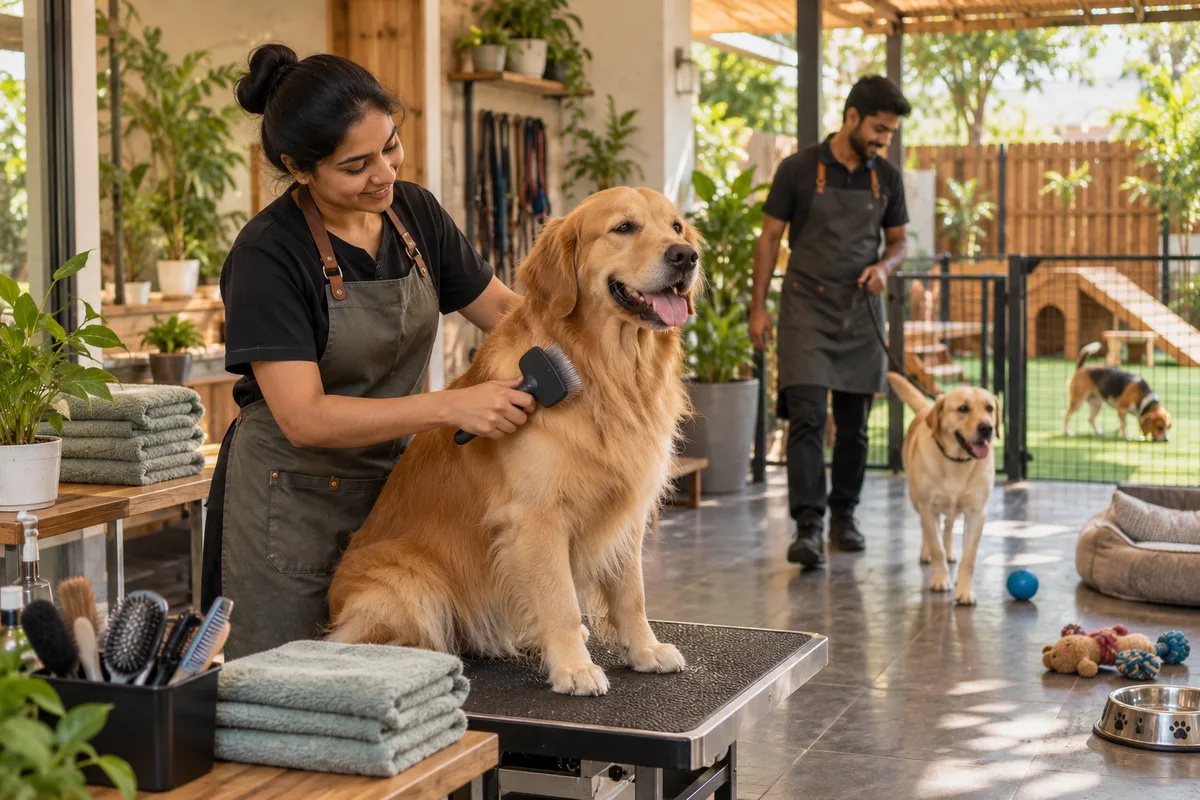
What content marketing means
Content marketing is writing articles, guides and pages that answer the questions buyers search before they are ready to enquire. This makes your business visible and trusted before the first call. GullySales plans this content from the first conversation onward, choosing topics that match real search demand rather than guesses.
Also for pet breeders and kennels
- Social media marketing for pet breeders and kennels
- Lead generation for pet breeders and kennels
- SEO for pet breeders and kennels
- Local SEO for pet breeders and kennels
- Buyer persona for pet breeders and kennels
- CRM for pet breeders and kennels
- Follow-up systems for pet breeders and kennels
- WhatsApp marketing for pet breeders and kennels
Sales and marketing for pet breeders and kennels, the overview.
Last updated 14 Nov 2026.
For pet breeders and kennels
Where it usually goes wrong, and what we would do.
“First-time owners do not know the vocabulary”
Words such as pedigree, vaccination card and microchip mean little to a family buying its first dog. A guide that explains each paper in a sentence and tells the family what to ask for protects both the family and the kennel.
“A guide to the first week builds the relationship”
Families worry about the first nights, feeding and the vet visit. A short guide on settling a puppy in, written by the kennel, shows care after the sale and gives the family a reason to message you rather than a stranger.
“Breed notes must be honest”
A page praising a breed without mentioning exercise, grooming and temperament attracts families who will return the animal. Honest notes on what the breed needs reduce unsuitable enquiries and build the kennel's name. A family that knows what the breed needs is a family that keeps the animal.
“Content about health must stay within bounds”
A kennel should not make claims about disease or health outcomes. Describe what you do, such as vet checks you arrange, and send the family to a qualified veterinarian for medical advice. Veterinary rules differ by state, so check with your own adviser.
What we do
What we deliver for pet breeders and kennels.
The work available for this need. We agree the deliverables and responsibilities for your engagement in writing.
A topic list from owner questions
A list of the questions families ask before and after buying, turned into guides.
Result: The content answers what families already ask you.
A guide to papers and records
A plain page explaining pedigree papers, vaccination records and microchipping, and what a family should receive.
Result: A new owner knows what to ask any breeder for.
Breed notes
Honest notes for each breed you raise, covering exercise, grooming, temperament and the home it suits.
Result: Unsuitable enquiries are reduced.
A first-week settling guide
A practical guide for new owners that points to the vet for medical questions.
Result: Families have a reason to stay in touch.
A page on how bookings and visits work
A page that explains how to reserve, when to visit and what the kennel asks for and does not ask for.
Result: Families recognise a genuine booking.
How the result is measured
- Pages published
- Organic traffic
- Enquiries from content pages
Recorded as a baseline before work starts, so every later report has an honest comparison.
Posts and pieces to plan
These guides answer what a first-time owner asks before choosing a kennel.
- What papers come with a puppy
- A guide listing the registration, vaccination and microchip records the kennel holds, with a sample page the family can look at.
- The first week at home
- A settling guide for food, sleep and handling, written by the kennel, with a line sending medical questions to the family's vet.
- Choosing a large or a small breed
- A comparison of space, exercise and shedding for flat and house owners, using the kennel's own breeds as examples.
- Indian breeds explained
- A piece on the Indian breeds the kennel raises, covering temperament and exercise needs, with photographs of its own dogs.
- How a visit works
- A page with the booking steps, what the family sees and what to bring, so the first meeting is calm.
- Why we ask about your home
- A note explaining the questions put to a family before a puppy is placed, so they read as care and not as suspicion.
Who it is for
This is written for these pet breeders and kennels.
- Dog breeders of Labrador, Golden Retriever, German Shepherd, Beagle and Pug litters
- Breeders of Indian breeds such as Rajapalayam, Mudhol Hound, Kombai and Chippiparai
- Cat breeders of Persian and other pedigree kittens
- Small-scale home breeders with one or two females
- Registered kennels with a boarding or training side
- Aviary and exotic bird breeders, within the rules for each species
- Aquarium and fish breeders supplying shops and hobbyists
- Kennels placing adult dogs and retired breeding animals
Before you decide
When this may not be the right fit.
- You have no first-hand notes on the papers, the first week or the breeds, so guides would repeat what every site says
- Nobody at the kennel can check a guide before it goes out, and a wrong line on health or papers misleads a family
- You place a puppy or two a year among friends, so long guides would be read by no one who is buying
Before you decide
Agree the work. Know how to judge it.
Content marketing for pet breeders and kennels: use these checks to prepare, choose the scope, and review what changes.
Bring the right evidence
Bring questions from sales calls and examples of objections that delay a decision. Choose a subject expert who can check the substance, and identify evidence that can be published.
Make the scope clear
Agree the reader, buying question, format, and distribution route for each piece. Set the approval process and distinguish new research from rewriting material you already have.
Check the work in use
Ask a colleague to use the draft in a real buyer conversation. It should answer the question, support its claims, and make the next step clear without requiring a sales pitch to explain it.
Know when to change course
If the same unanswered question appears in several articles, improve the strongest page before commissioning another. More words are not a substitute for missing evidence.
These are discussion points, not a fixed package. GullySales confirms the deliverables, responsibilities, fee, and term in writing after reading your brief and speaking with you.
Before we start
What to have ready before the work starts.
The records, access and decisions this work needs from pet breeders and kennels. Anything missing is noted in the written scope, with who will supply it.
- Notes of the questions asked at visits
- Gather the messages, voice notes and your own memory of what families ask at the gate. Write them in the family's own words. If this is missing, the guides are written from our guesses, which is where the vocabulary problem for first-time owners starts.
- A vet who will read health wording
- Name the vet who looks after your dogs and agree that they will read anything touching vaccination, deworming or the first week. If no vet is willing, health topics are left out of the guides and only care and routine are covered.
- Sample copies of your sale papers
- Bring a blank or marked copy of the sale agreement, the vaccination card and the registration papers you provide. The papers guide must match what a family receives. Where a paper does not exist, the guide says nothing about it.
- A list of breed traits you have seen
- Write what you have truly observed in your own litters: the energy, the shedding, the noise, the way the breed copes with an apartment. Breed notes without this become copies of other sites, and the honest note that puts some families off will not get written.
- Homes the kennel will not sell to
- Decide the sort of home you would turn away, such as a flat with nobody home all day. The guide to how bookings work states your conditions plainly, and this has to be your decision, since we cannot guess it.
How it works
How the content marketing work runs
The work itself, in order. How an engagement starts, from your brief to a written scope, is set out on our method page.
- 1
Collect the questions families already ask
We go through the chats, calls and visit notes of the last litters and list every question a first-time family put to you, in their words. You add the ones you wish they would ask. The list is the source of every guide, so nothing is invented from a search tool or taken from another breeder's site.
- 2
Sort the questions by what stops a booking
With you we mark which questions are asked before a visit, which come at the gate and which return after the puppy is home. Questions about papers and the first week come ahead of questions about colour. You decide which topics you are comfortable explaining, and which belong to the vet.
- 3
Agree who checks each page for facts
Breed notes and health talk need a name against them. We settle that you check the breed notes, your vet reads anything about vaccination or deworming, and we do not write advice for a medical condition. Pages wait for that person, and none go live on our reading alone.
- 4
Write the papers and records guide first
We draft the page that explains what a family should see before paying: the registration where the breed and kennel have it, the vaccination card, the vet's name, the sale terms. You supply copies or blank samples. This page is written first because it answers the doubt that stops honest sales.
- 5
Draft the first week and the breed notes
Next come the first-week settling guide and one honest note for each breed you raise, including what makes it a poor fit for some homes. You read them against your own experience with the litter. Where you disagree with a line, the line is changed, never defended.
- 6
Read which guides families opened before booking
After the guides have been live, we ask each new family which page they read and compare that with the enquiry record kept from the beginning. You tell us which guide a visiting family mentioned. We note what to rewrite or fold together, and no number of bookings is promised.
Where this fits
Three pieces of sales work, in this order.
This work sits inside sales process design, at stage 0, foundation. The audit comes before it, and sales management keeps it running.
Step 1
Sales audit
Find where deals are being lost and what to fix first.
Start here if you cannot say where orders are lost.
Step 2 · you are here
Sales process design
One written way to sell, from first enquiry to repeat order.
Start here if every salesperson sells differently.
Step 3
Sales management
A target, a review routine and someone who owns the number.
Start here if the team has targets and no routine.
FAQ
Questions owners ask before they call.
Not here? More answers, or ask on WhatsApp.
Can we give health advice in our posts?
Will long guides really be read?
Who should write our content?
Should we write about breed health problems?
Can the guides mention how much a puppy costs?
How do we avoid sounding like every other breeder's site?
How long is the contract?
How soon will we see results?
Who will actually do the work?
What do you need from us?
More for pet breeders and kennels
Related work to consider.
Closest to this: content and social
Also for pet breeders and kennels
Or start from the overview: sales and marketing for pet breeders and kennels.
Your next practical step
Tell us what you are trying to grow, and we will read it before we call.
Eight short steps, mostly taps. Skip anything you would rather answer on the call.