Plumbing contractors · Branding
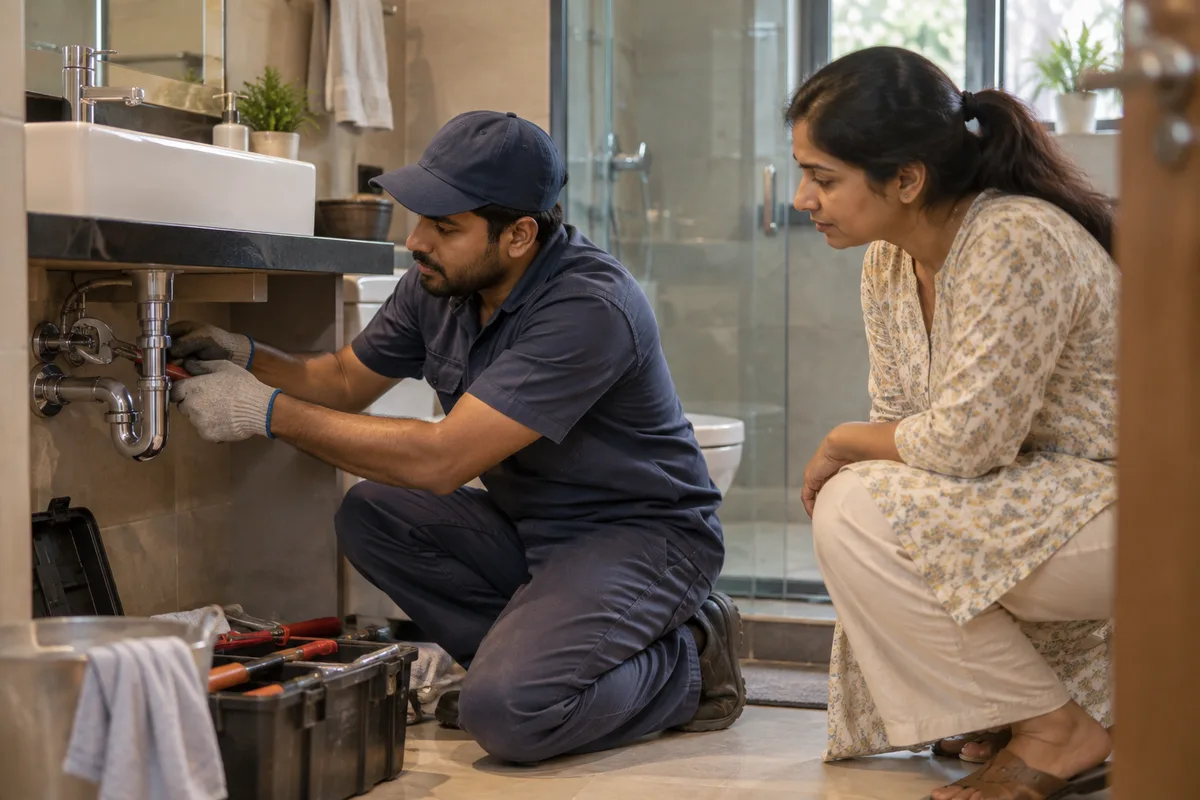
Your brand walks into a marble bathroom in work shoes.
Branding for a plumbing contractor is the van, the uniform, the shoe cover and the estimate format, because that is all a customer sees before deciding. GullySales settles whether you trade as a contractor or a service, and makes both look the part.
Scope, fee, reporting and term are agreed in writing after we have read your brief and spoken to you.
What branding means
Branding is what a customer remembers about your business beyond the product, including your name, colours, tone of voice and what you are known for locally. GullySales sets or corrects this once and applies it consistently across your website, signage and adverts so the business looks like one company everywhere.
Also for plumbing contractors
- SEO for plumbing contractors
- PPC ads for plumbing contractors
- Lead generation for plumbing contractors
- Digital marketing for plumbing contractors
- Reputation management for plumbing contractors
- Local SEO for plumbing contractors
- Social media marketing for plumbing contractors
- Content marketing for plumbing contractors
Sales and marketing for plumbing contractors, the overview.
Last updated 14 Nov 2026.
For plumbing contractors
Where it usually goes wrong, and what we would do.
“Floor protection is the first impression”
A designer decides about you in the first two minutes, watching whether your man covers the tiles before opening a bag.
“The word on the van decides who rings you”
A builder does not call a plumbing service for a tower, and a flat owner does not call a contractor about a tap.
“An estimate typed into a chat is your brand where it counts”
It is the document a customer puts beside two others, and yours reads like a message from a friend.
What we do
What we deliver for plumbing contractors.
The work available for this need. We agree the deliverables and responsibilities for your engagement in writing.
A decision on what you call yourself
Contractor, plumbing services or a combined identity, with the words that follow on the van, the site and the visiting card.
Result: The kind of work you want starts ringing.
A van, uniform and identity card standard
One decal design, a shirt carrying the company name, and a photo identity card for every man who enters a home.
Result: Customers let your team in without hesitating.
A floor and fitting protection kit
Shoe covers, floor sheets and tape carried as standard on every visit, and listed in the estimate so customers expect it.
Result: Designers trust you inside expensive bathrooms.
One estimate and invoice format
A numbered document with scope, materials, exclusions, validity and GST details, in a layout everybody in the office uses.
Result: Your quotation looks like the professional bid.
A project profile document for builders
Towers plumbed, scope handled, the test process, the licence and the team size, in a document a purchase officer can file.
Result: You are shortlisted on paper before a meeting.
A WhatsApp business profile that matches
Business name, hours, service areas, a catalogue of services and the same mark, since this is where most customers meet you.
Result: Your main channel stops looking personal.
How the result is measured
- Recognition in customer feedback
- Consistency across channels
- Repeat enquiries by name
Recorded as a baseline before work starts, so every later report has an honest comparison.
Positioning in one sentence
The sentence a plumbing contractor can fill in so a builder and a homeowner each find their page.
We do [water supply, drainage or sanitary work] for [builders, consultants or homeowners] in [area], and unlike [a plumber who takes calls only] we hand over [a tested system and a written record].
- Who it is for
- A builder's project manager, an MEP consultant, an apartment association or a homeowner with a leak. Decide which you want most, since each reads a different set of proof.
- What you do
- Separate new-construction piping, sanitary fitting, drainage and repair. A person searching for bathroom leak repair and a builder searching for a tower plumbing contractor need different pages.
- What a buyer gets that the next plumber does not
- A written estimate naming pipe and fitting brands, a pressure test before the wall is closed, or a named supervisor. Pick what you do every time.
- The proof you can show
- A list of finished projects with year and scope, photographs of concealed piping before it is covered, and a builder or consultant ready to take a call.
- Words buyers ignore
- 'Quality plumbing', 'expert team' and 'reasonable rates' say nothing. Write pipe types, test methods and the scope of each package.
- The name and tagline test
- A name using 'Sanitary' or 'Enterprises' is generic. Add 'plumbing contractors' to the display name and check how it reads on a BOQ cover page and a van door.
Who it is for
This is written for these plumbing contractors.
- Plumbing contractors for apartment and villa projects
- Commercial, hospital and hotel plumbing contractors
- Sanitary and bathroom installation specialists
- Drainage, sewer line and STP contractors
- Rainwater harvesting and borewell recharge specialists
- Pump, tank and pressure system installers
- Emergency and repair plumbing services
- Apartment and building maintenance contract providers
Before you decide
When this may not be the right fit.
- Your crew changes from job to job, so a uniform and card standard would not be kept on site.
- You have not decided whether you sell project work or repairs, so a brand would say both and persuade neither.
- You do not yet have an estimate format, so a new look would sit on a quote that still reads as a message.
Before you decide
Agree the work. Know how to judge it.
Branding and identity for plumbing contractors: use these checks to prepare, choose the scope, and review what changes.
Bring the right evidence
Collect the sales presentation, website, quotations, and other material buyers actually see. Mark where the description of the business changes or where a claim has no supporting evidence.
Make the scope clear
Agree whether the work concerns the offer, the words, the visual identity, or all of them. List the formats that need updating and who owns the final approval.
Check the work in use
Test the proposed direction on a real sales page or proposal. A buyer should be able to tell who the offer is for, what is different, and what evidence supports it.
Know when to change course
A new identity will not fix an unresolved service problem. Put the delivery issue right before making a stronger public promise about it.
These are discussion points, not a fixed package. GullySales confirms the deliverables, responsibilities, fee, and term in writing after reading your brief and speaking with you.
Before we start
What to have ready before the work starts.
The records, access and decisions this work needs from plumbing contractors. Anything missing is noted in the written scope, with who will supply it.
- Photographs of the van and the crew
- We need the vehicle as it stands, the uniform worn and a technician at a door. Phone photographs are fine. Without them, the standard is written from description alone, and you will not see the gap between what is described and what customers meet.
- Two or three estimates and an invoice
- The estimate is the document customers keep and forward. Bring real ones, with the customer's details covered. If estimates are only sent as messages, send screenshots. Without them we design the format blind, and it may not survive your actual way of working. We also compare the wording on them with the van, since a mismatch between the estimate and the vehicle is the first thing a careful customer notices.
- Your licence and registration papers
- The identity card, the van and the project profile all state what the business is licensed to do. Bring the papers as issued. If a registration is pending, we leave that line out until it arrives, since a claim that is not yet true damages trust.
- A decision on past projects shown
- Only you can decide which towers appear in the project profile and whether the builder has agreed. Bring a list with a yes or no against each. Where the answer is unknown, the profile describes the work by type and locality and omits the name.
How it works
How the branding work runs
The work itself, in order. How an engagement starts, from your brief to a written scope, is set out on our method page.
- 1
Decide what to call the business
Before any design, we sit with you and settle whether the board, the van and the card say contractor or service. The word changes who rings you. We show you three real examples from your own enquiries. You choose, and we write the name down as the single wording used everywhere.
- 2
Gather the van, uniform and cards you use
We photograph the van, the uniform, the identity cards, the estimate and an invoice as they are today, and lay them side by side. You mark what you are proud of and what embarrasses you. That gives us the evidence for what needs to change and what is already fine.
- 3
Choose what a customer should see first
For repair work the first sight is a uniform and shoe covers at the door. For a builder it is the project profile. We set the order of impression with you and fix the standard for each. You decide the standard the whole crew must follow, including helpers. We also note which of these touches the owner pays for directly, such as shoe covers and floor sheets, and which the crew supplies from its own pocket, so the standard names who buys what.
- 4
Test the estimate in a chat window
We send the new estimate and invoice format through WhatsApp to a phone with a small screen and read whether the scope, the licence line and the total are still clear. You try it on an actual customer message. Anything that breaks in the chat is redrawn.
- 5
Roll out the standard to the crew
We hand over the uniform spec, the floor protection kit list, the van lettering wording and the project profile file, with a short note for supervisors. You choose who is responsible for each. The result is read against the enquiries recorded before the change.
Where this fits
Three pieces of sales work, in this order.
This work sits inside sales process design, at stage 1, prospecting and lead generation. The audit comes before it, and sales management keeps it running.
Step 1
Sales audit
Find where deals are being lost and what to fix first.
Start here if you cannot say where orders are lost.
Step 2 · you are here
Sales process design
One written way to sell, from first enquiry to repeat order.
Start here if every salesperson sells differently.
Step 3
Sales management
A target, a review routine and someone who owns the number.
Start here if the team has targets and no routine.
FAQ
Questions owners ask before they call.
Not here? More answers, or ask on WhatsApp.
Should we call ourselves a plumbing contractor or a plumbing service?
Is a uniform worth it for four men?
Should we put past tower projects on the site if the builder has not agreed?
Which phone number goes on the van, the card and the estimate?
Do we need to repaint the van to follow this?
Who orders the uniforms and the floor protection kit?
How much does it cost?
How soon will we see results?
Who will actually do the work?
What do you need from us?
From the blog
Further reading for plumbing contractors.
 8 min read · 21 Sept 2026How to advertise to contractorsA contractor is on site, on a phone, with one hand free. Settle whether the contractor or the owner chooses your product, because that decides the plan.
 5 min read · 17 Jul 2026Wording a warranty or guarantee that the customer believes and you can keepA plain-words home service warranty template: what is covered, for how long, what is not and how to claim, so customers trust it and crews can honour it.
More for plumbing contractors
Related work to consider.
Or start from the overview: sales and marketing for plumbing contractors.
Your next practical step
Tell us what you are trying to grow, and we will read it before we call.
Eight short steps, mostly taps. Skip anything you would rather answer on the call.