Plumbing contractors · Pay per click advertising
Buy the leak call only in the hours a van can go.
Paid search for a plumbing contractor buys emergency calls, and it goes wrong the moment it buys them at hours nobody can attend. GullySales sets the campaign by locality and by crew hours, and turns the monsoon spend up before the rain arrives.
Scope, fee, reporting and term are agreed in writing after we have read your brief and spoken to you.
What pay per click advertising means
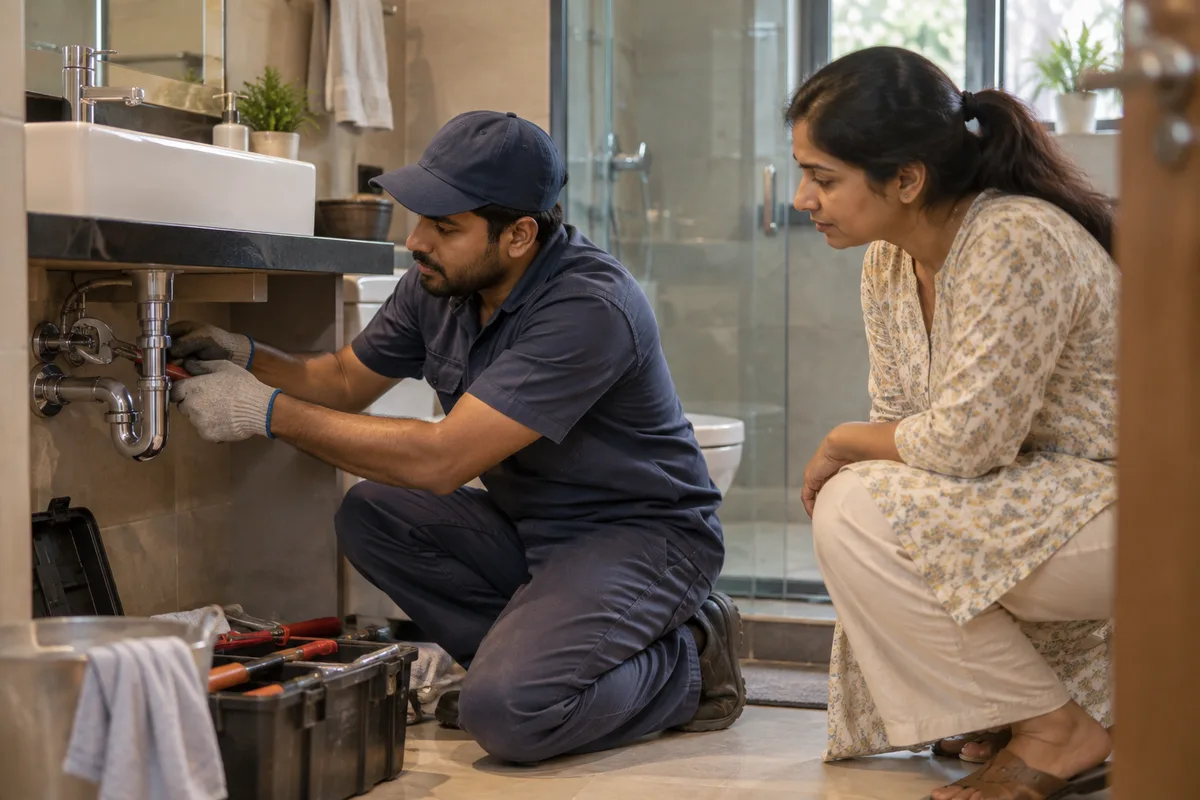
Pay per click advertising (PPC) is paying a fee each time someone clicks your advert on Google or another platform. It puts you at the top of a search page immediately, instead of waiting for ranking to build. GullySales sets the targeting, writes the ad text and checks spend against enquiries received.
Also for plumbing contractors
- Google search ad copywriting for plumbing contractors
- SEO for plumbing contractors
- Lead generation for plumbing contractors
- Digital marketing for plumbing contractors
- Reputation management for plumbing contractors
- Local SEO for plumbing contractors
- Branding and identity for plumbing contractors
- Social media marketing for plumbing contractors
Sales and marketing for plumbing contractors, the overview.
Last updated 14 Nov 2026.
For plumbing contractors
Where it usually goes wrong, and what we would do.
“The advert is only worth the van behind it”
An emergency click bought at nine at night, with the team asleep, is money handed to whoever the customer rings next.
“Pipe rates and plumber jobs sit on your keywords”
People looking for CPVC prices, an ITI course or a plumber's salary click the same advert a flat owner does.
“The first heavy rain fills the diary by noon”
Calls arrive faster than the crew can attend, so the budget needs a hand on it rather than a fixed daily figure.
What we do
What we deliver for plumbing contractors.
The work available for this need. We agree the deliverables and responsibilities for your engagement in writing.
Call-only campaigns set by locality
Adverts that dial your number directly, limited to the areas your team can reach inside the time you promise on the phone.
Result: You stop paying for calls from across the city.
An advert schedule matched to crew hours
Spend switched on when somebody can travel and off when nobody can, including Sundays and festival days.
Result: Every click bought has a van behind it.
A monsoon budget plan
Spend raised in the weeks before the rains, held through the seepage season, and pulled back when the diary is full.
Result: You buy calls you can still attend.
A negative list for rates, jobs and courses
Pipe price, CPVC rate, plumber job, vacancy, ITI, plumbing course and material dealer, removed at launch and reviewed as new terms appear.
Result: The budget stays on people with a leak.
A seepage page with a WhatsApp photograph step
A landing page asking for a photograph, the floor and the locality on WhatsApp before anybody promises a visit.
Result: The team knows what they are driving to.
Reporting in attended jobs, not clicks
Cost per call, per site visit and per job invoiced, campaign by campaign, against the figures taken before the first advert ran.
Result: You know what a leak call cost to win.
How the result is measured
- Cost per click
- Cost per enquiry
- Enquiries from paid search
Recorded as a baseline before work starts, so every later report has an honest comparison.
Searches to bid on and block
The searches from a household with a leak, and the ones from people buying pipes or looking for a job.
- Plumber near me and leak repair, plus the area
- Bid, in the hours someone answers. A leaking tap or pipe cannot wait. Put your service area and a call button in the advert, and switch it off when the van is away.
- Bathroom plumbing, fittings and sanitary installation
- Bid. A homeowner renovating wants an installer with a fitting plan. Ask the number of bathrooms and whether the tiles are already laid, and land on a page of finished bathrooms.
- Pipe price, CPVC pipe, PVC fittings and plumbing material
- Block. Add pipe, price, fittings, material, wholesale, dealer and buy as negatives. Material buyers type your words, and the budget goes on a shop's customers.
- Plumber jobs, plumbing course and ITI
- Block. Add job, vacancy, course, ITI, training, salary and apprentice as negatives. Job seekers type the same words as customers.
- Where the click lands
- Send it to a page for the job with your area, what a visit costs, a call button and a short form that asks the problem and the locality. A leak needs a number, not a brochure.
- Counting a real enquiry
- Count a call that reaches a person and names a locality and a fault, or a message with a photo of the leak. Log whether the van went, and the type of job, so you see which searches bring paid visits.
Who it is for
This is written for these plumbing contractors.
- Plumbing contractors for apartment and villa projects
- Commercial, hospital and hotel plumbing contractors
- Sanitary and bathroom installation specialists
- Drainage, sewer line and STP contractors
- Rainwater harvesting and borewell recharge specialists
- Pump, tank and pressure system installers
- Emergency and repair plumbing services
- Apartment and building maintenance contract providers
Before you decide
When this may not be the right fit.
- Nobody can attend a call when the crew is on a tower site, so you would pay for clicks that reach a ringing phone.
- You cannot name the localities your van reaches, so the advert would draw calls from places you decline.
- You have no seepage or leak page to send the click to, so the money would land on a home page that does not answer.
Before you decide
Agree the work. Know how to judge it.
PPC ads for plumbing contractors: use these checks to prepare, choose the scope, and review what changes.
Bring the right evidence
Bring search-term reports, conversion definitions, and the sales outcome of past enquiries where available. Identify products, locations, and enquiries you cannot serve.
Make the scope clear
Choose the offer and landing page before setting a media budget. Agree who pays the platform, which actions count as conversions, and how unsuitable searches will be reviewed.
Check the work in use
Trace a test enquiry from the advert to the sales record. Review qualified enquiries and orders alongside spend, and separate duplicates or spam from genuine buyer demand.
Know when to change course
If the advert generates enquiries that do not fit, revise targeting and qualification before increasing spend. If suitable enquiries are lost after contact, work on the sales process.
These are discussion points, not a fixed package. GullySales confirms the deliverables, responsibilities, fee, and term in writing after reading your brief and speaking with you.
Before we start
What to have ready before the work starts.
The records, access and decisions this work needs from plumbing contractors. Anything missing is noted in the written scope, with who will supply it.
- A van rota with named phone holders
- A call-only advert that rings an empty phone burns budget. We need to know which numbers are answered at which hours, and who covers when the supervisor is on a site. An informal rota written on a sheet is acceptable. If none exists, the schedule defaults to office hours only.
- The list of localities you will serve
- The campaign map comes from your own judgement of travel time to a flat in trouble. Bring the names of localities you will go to and those you refuse. If the list is vague, we begin with a narrow ring around the base and widen it as attended jobs prove the distance worth driving.
- Access to the advertising account
- We need owner-level access to the account that holds the campaign, or permission to create a new one in your business name. The account must be yours, since the call history belongs to you. If an earlier agency holds it, we ask for the history to be exported before we begin.
- A monsoon spending decision
- Only you can decide how much extra budget the first heavy rain justifies and what to do if the crew is full. Bring a view before the season begins. Without it, the campaign holds a flat budget through the rains, and the diary may fill before the spend catches up.
How it works
How the pay per click advertising work runs
The work itself, in order. How an engagement starts, from your brief to a written scope, is set out on our method page.
- 1
Agree who answers the call-only advert
Before anything is bought we sit with you and decide which phone rings, who picks it up and which hours a van can actually go out. A call-only campaign sends the call to a person, so the first record we make is the rota. You decide whether a late-night call goes to a mobile or stays unanswered and the advert stays off.
- 2
Draw the service map by locality
We take your list of localities the van can reach and mark the ones where a visit makes sense and the ones where it does not. Callers from outside that map are the expensive wrong calls. You approve the map, and the campaign is limited to it, with the border areas set aside for a trial.
- 3
Build the negative list from real calls
From last season's call history and the search terms of any earlier campaign, we list the phrases that bring pipe rate seekers, job seekers and course enquiries. You read the list and add the words your crew hears on the phone. Those terms are blocked before the first rupee of budget is spent.
- 4
Launch the seepage page and WhatsApp step
The advert lands on a seepage page that asks for a photograph on WhatsApp, which lets your supervisor judge the job before a van moves. We test the call, the form and the photograph step on your phone and the office phone together. Launch waits for your approval of the page wording and the monsoon plan.
- 5
Read attended jobs against the first record
We note your attended jobs and call count before the advert starts. Afterwards we read the call record locality by locality and sort the calls into attended, quoted and wasted, so the report speaks in jobs rather than clicks. You decide whether the spend should move to other localities or stop.
Where this fits
Three pieces of sales work, in this order.
This work sits inside sales process design, at stage 1, prospecting and lead generation. The audit comes before it, and sales management keeps it running.
Step 1
Sales audit
Find where deals are being lost and what to fix first.
Start here if you cannot say where orders are lost.
Step 2 · you are here
Sales process design
One written way to sell, from first enquiry to repeat order.
Start here if every salesperson sells differently.
Step 3
Sales management
A target, a review routine and someone who owns the number.
Start here if the team has targets and no routine.
FAQ
Questions owners ask before they call.
Not here? More answers, or ask on WhatsApp.
Should we advertise all year?
We get calls from areas we do not serve. How do we stop that?
Should we run adverts for apartment and builder work?
Can we show our van and uniform in the advert?
What if the first rains fill the diary and we cannot attend?
Do we pay GullySales or the advertising platform for the clicks?
How much does it cost?
How long is the contract?
How soon will we see results?
Who will actually do the work?
From the blog
Further reading for plumbing contractors.
 8 min read · 21 Sept 2026How to advertise to contractorsA contractor is on site, on a phone, with one hand free. Settle whether the contractor or the owner chooses your product, because that decides the plan.
 5 min read · 17 Jul 2026Wording a warranty or guarantee that the customer believes and you can keepA plain-words home service warranty template: what is covered, for how long, what is not and how to claim, so customers trust it and crews can honour it.
More for plumbing contractors
Related work to consider.
Closest to this: paid and media
Also for plumbing contractors
Or start from the overview: sales and marketing for plumbing contractors.
Your next practical step
Tell us what you are trying to grow, and we will read it before we call.
Eight short steps, mostly taps. Skip anything you would rather answer on the call.