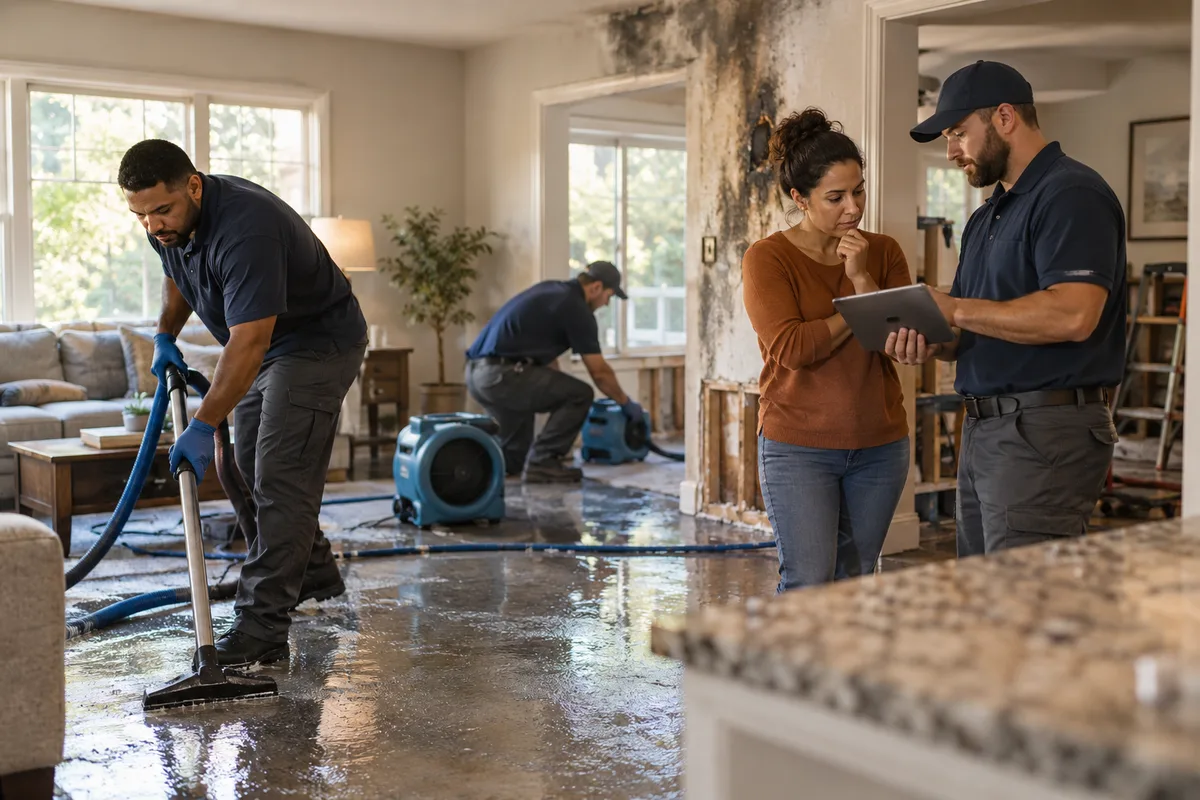
How people choose in this industry
In an emergency almost nobody compares companies. A homeowner with water crossing the hallway searches for water damage restoration near them and calls the first result that says a crew is coming. Paid search and the map pack matter more here than anything you write. The search happens once, and the decision takes a minute.
The steadier work is referred. Plumbers, roofers, insurance agents and apartment maintenance leads all get asked who to call. For example, a plumber in Tulsa who finds three burst pipes in a freeze week decides on the spot which restoration company gets all three. Carrier and third-party administrator programmes send work too, on their own terms and their own cycle-time rules.
The rebuild is decided separately, and the decision sits with other people. The adjuster has to agree the scope. The homeowner has to want you in the house for another three months, and somebody has to ask. Companies that ask while the drying equipment is still running win far more of it than companies that post a letter afterwards.
The decision before implementation
A direct-only business may not need a partner programme. Agree the channel role and conflict boundaries first.
Existing industry priorities to review
- Emergency water extraction and structural drying
- Frozen and burst pipe response
- Fire and smoke damage cleanup
- Mould inspection and remediation
- Storm and flood response
These describe the industry's wider priorities. The written scope identifies which this service will address.