Shoe cleaning services · Lead generation
Fill the studio with pairs worth cleaning, not with price checks.
Lead generation for a shoe cleaning studio is the work of getting the right pair, in the right material, from the right owner into the studio. A sneaker owner, a groom's family and a gym manager are three different leads. GullySales builds the routes that bring each one to a booking.
Scope, fee, reporting and term are agreed in writing after we have read your brief and spoken to you.
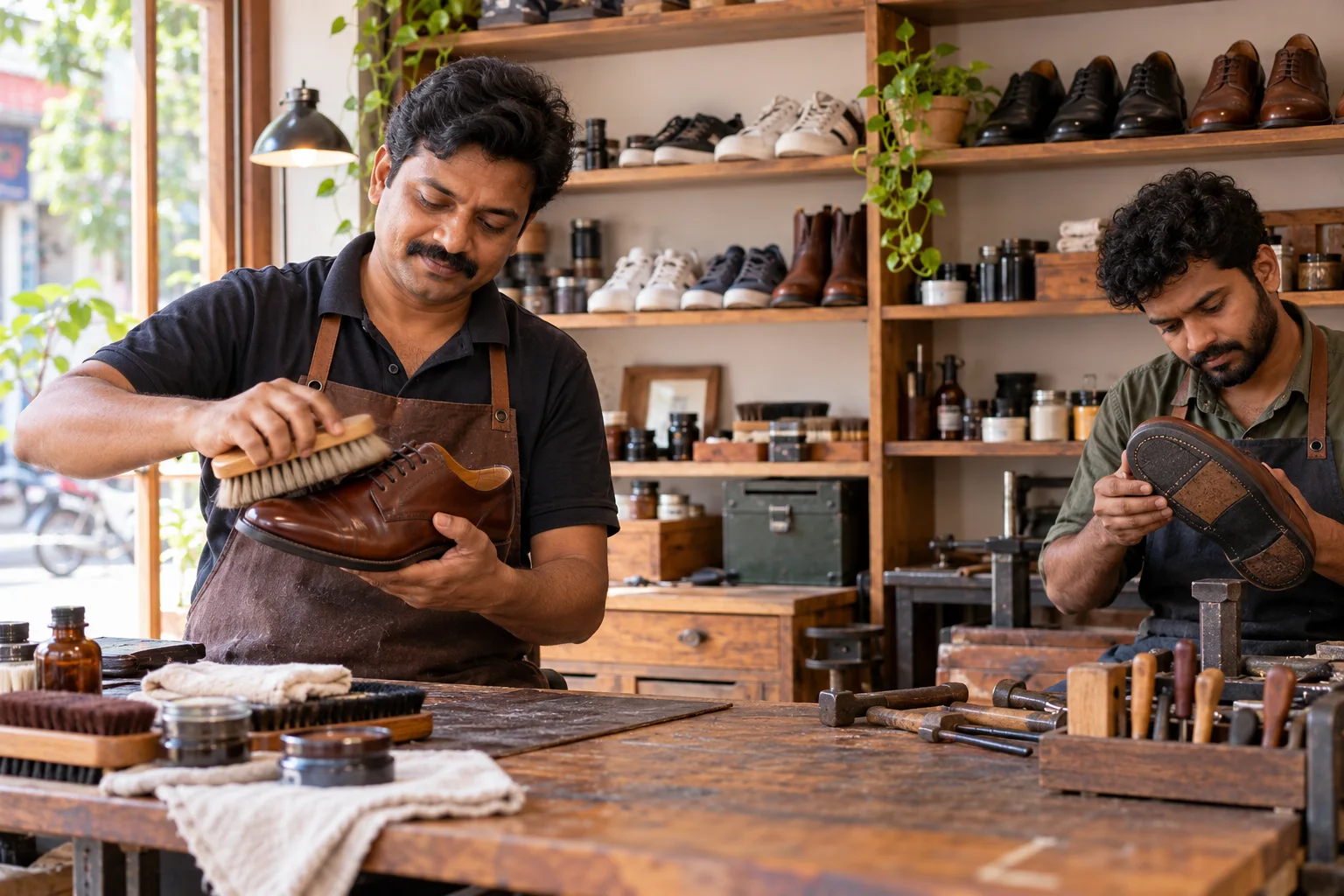
What lead generation means
Lead generation is the combined work of every channel that brings in a new enquiry, whether from search, adverts, referrals or a stall at an exhibition. GullySales runs these channels together and reports the number of enquiries each one produced, not the activity behind it.
Also for shoe cleaning services
- CRM for shoe cleaning studios
- Follow-up systems for shoe cleaning studios
- SEO for shoe cleaning services
- Local SEO for shoe cleaning studios
- Social media marketing for shoe cleaning studios
- Content marketing for shoe cleaning services
- Buyer personas for shoe cleaning studios
- WhatsApp marketing for shoe cleaning services
Sales and marketing for shoe cleaning services, the overview.
Plan the next part of the work
Last updated 21 Nov 2026.
For shoe cleaning services
Where it usually goes wrong, and what we would do.
“A price check is not a pair”
People message only to ask the rate for sneakers and vanish. The lead worth chasing arrives with a model, a material and a stain in the photograph, because that owner has already decided to hand the pair over.
“One store brings a shelf of pairs”
A sneaker shop with returns and display pairs sends a whole batch in one visit. A walk-in sends a single pair once. Counting both as one kind of lead hides where the studio's best work comes from.
“The courier lead lives in another city”
A collector in Pune or Hyderabad cannot walk in. This owner searches, compares studios on Instagram and sends a pair only when the packing and return steps are written plainly on a page.
“Wedding leads book before the date, not on it”
A groom's family looks for polished shoes while the hall and caterer are still being fixed. A studio that appears to planners and boutiques at that stage meets the lead before anyone else does.
What we do
What we deliver for shoe cleaning services.
The work available for this need. We agree the deliverables and responsibilities for your engagement in writing.
Lead routes by buyer
A list of the routes that reach sneaker owners, office-goers, wedding parties and trade buyers, each with its own entry page and message.
Result: Each buyer lands on a page written for them.
A photo-first enquiry form
A form that asks for the model, the material and photographs, plus a pickup locality.
Result: Every new enquiry already carries what the studio needs to quote.
A courier page and booking route
Steps for packing, sending and receiving a pair back, with a booking link at the end.
Result: An out-of-city owner books without a first message.
A trade buyer sheet
A single sheet for stores, gyms and planners with a batch rate, a collection day and an invoice note.
Result: A manager can forward one sheet to whoever approves the spend.
A lead log by source
A sheet that records where each lead came from and whether it became a pair received.
Result: You can see which route fills the shelf.
How the result is measured
- Relevant enquiries by source
- Duplicate and unsuitable enquiries
- Time to the first response
- Accepted enquiries reaching an agreed next step
Recorded as a baseline before work starts, so every later report has an honest comparison.
What to capture or send
What a studio should record when a cleaning enquiry arrives.
- Photo of the pair, both sides and the sole
- Ask for it in the first message. It lets the studio judge material and damage, and filters out the price check from the real pair.
- Material and brand
- Suede, knit, leather or canvas, as the owner names it. Decides which cleaner is used and whether the studio will accept the pair.
- What the owner wants fixed
- Yellowing, a stain, a smell or a scuff. Record it in their words so the quote and the finished photo answer the same complaint.
- Drop-off, pickup or courier
- Mark the route chosen. A courier lead from another city needs packing instructions, and a pickup needs a locality check.
- Occasion and date needed
- A wedding or interview date sets the order of work. Without it the studio books the pair in the wrong place in the queue.
- Where they found the studio
- Post, map, friend or store. Shows which source brings real pairs and which only brings price questions.
Who it is for
This is written for these shoe cleaning services.
- Sneaker cleaning and restoration studios
- Leather and formal shoe care counters
- Suede and nubuck specialists
- Pickup-and-drop shoe cleaning services for apartments and offices
- Shoe and bag cleaning kiosks in malls
- Dry cleaners with a shoe care corner
- Studios that take courier pairs from other cities
- Bulk shoe cleaning for stores, gyms and event teams
Before you decide
When this may not be the right fit.
- No one replies to a photo enquiry on the day it arrives, so more leads would only add to the unanswered ones
- The studio has not decided which materials it accepts, and new enquiries would bring pairs it cannot clean
- You have no courier route set up, so leads from other cities would find nothing to book
Before you decide
Agree the work. Know how to judge it.
Lead generation for shoe cleaning studios: use these checks to prepare, choose the scope, and review what changes.
Bring the right evidence
Define the organisations or buyers you can serve and the reasons they would consider a conversation. Bring examples of accepted and rejected prospects so the selection rule is visible.
Make the scope clear
Agree the research sources, contact approach, qualification rules, and handover. Clarify which meetings count as accepted and what happens to replies that are not ready to buy.
Check the work in use
Review why a prospect was selected and what was learned from the response. Count held, relevant conversations separately from contacts found, messages sent, or meetings booked.
Know when to change course
If the same objection appears repeatedly, adjust the offer or buyer group before increasing outreach. Respect a request to stop contact and keep the exclusion in the record.
These are discussion points, not a fixed package. GullySales confirms the deliverables, responsibilities, fee, and term in writing after reading your brief and speaking with you.
Before we start
What to have ready before the work starts.
The records, access and decisions this work needs from shoe cleaning services. Anything missing is noted in the written scope, with who will supply it.
- Photographs of recent pairs and job tags
- A phone gallery with the tags beside the pairs is enough. We use it to see which materials and faults you receive. If nothing was kept, we begin with the next week of pairs, and the plan rests on fewer facts at first.
- A list of the materials you accept
- Write down what the studio will clean and what it declines, such as damaged suede or glued soles. Only the person who handles the pairs can say. Missing this, the form invites pairs you cannot take, and an owner is let down at the counter.
- The pickup and courier arrangement
- If you collect from apartments or take courier pairs, name the areas, the partner and who is responsible for transit damage. Without these details, the courier page cannot be written, and the route stays closed.
- Names of stores, gyms and teams you want
- A short list of trade buyers you would like to serve, even a handful. They shape the trade sheet. If none comes to mind, the sheet is written and kept until you find the first buyer.
- A person who answers enquiries at once
- Someone must read the form and the messages when they arrive and reply with a question or a quote. When nobody is named, an owner who sent a photograph waits, and a rival studio answers first.
How it works
How the lead generation work runs
The work itself, in order. How an engagement starts, from your brief to a written scope, is set out on our method page.
- 1
Read the job tags from the last pairs
We begin with the job tags, the order book or the phone gallery from recent weeks, and you tell us which pairs were sneakers, which were formal leather and which came from a courier. We note who brought each pair and how they first heard of the studio. What exists afterwards is a true picture of where your pairs come from today, which every new route is measured against.
- 2
Stand at the counter during drop-off
We spend a session at the counter watching what an owner asks while handing over a pair, and what staff reply. You point out which questions lead to a booking and which to a walk-out. We write down the words owners use, such as yellowing, sole separation or smell. The enquiry form is then built in their words and not in the studio's own.
- 3
Split the routes by who is asking
A sneaker owner, a groom's family and a store buying fifty pairs need different first steps. Together we decide which route each takes, whether a photo form, a courier page or a call to the owner. You say which routes the studio can handle at its present capacity. Afterwards each buyer type has one clear door.
- 4
Build the photo form and test it
We draft the enquiry form so an owner can send a photograph, the material and the problem in one go. The team submits a few sample pairs, including a muddy suede and a scuffed formal shoe, and you check what arrives. Fields that confuse people are removed. The form you keep is one a customer finishes in a single sitting on a phone.
- 5
Write the trade sheet for stores and gyms
For bulk buyers we prepare a sheet that states what a batch needs: count, material, collection point and invoice details. You decide the terms you will discuss. The sheet goes to stores, gyms and gifting teams you name. A bulk enquiry then arrives with the facts the studio needs for a quote.
- 6
Log every lead with its source
Each enquiry is entered in one log with the route it used, the pair, the quote given and the result. The studio fills the log for several real days before we adjust it. We read it against the pairs received before the work began, and you decide which routes to keep.
Where this fits
Three pieces of sales work, in this order.
This work sits inside sales process design, at stage 1, prospecting and lead generation. The audit comes before it, and sales management keeps it running.
Step 1
Sales audit
Find where deals are being lost and what to fix first.
Start here if you cannot say where orders are lost.
Step 2 · you are here
Sales process design
One written way to sell, from first enquiry to repeat order.
Start here if every salesperson sells differently.
Step 3
Sales management
A target, a review routine and someone who owns the number.
Start here if the team has targets and no routine.
FAQ
Questions owners ask before they call.
Not here? More answers, or ask on WhatsApp.
Which lead should the studio chase first?
Do we pay for leads or build our own routes?
How do we know a lead was good?
Should we refuse a pair that is badly damaged?
Can we collect leads without a website?
What do we do with a lead from outside our pickup area?
How much does it cost?
How long is the contract?
How soon will we see results?
Who will actually do the work?
More for shoe cleaning services
Related work to consider.
Closest to this: leads and follow-up
Also for shoe cleaning services
Or start from the overview: sales and marketing for shoe cleaning services.
Your next practical step
Tell us what you are trying to grow, and we will read it before we call.
Eight short steps, mostly taps. Skip anything you would rather answer on the call.