Shoe cleaning services · Buyer persona
Know the sneaker owner, the groom's family and the store manager as three buyers.
A buyer persona for a shoe cleaning studio is a written description of who hands over a pair, what they worry about and what makes them choose one studio. The sneaker owner, the formal shoe wearer and the trade buyer decide differently. GullySales builds the personas from your own customers.
Scope, fee, reporting and term are agreed in writing after we have read your brief and spoken to you.
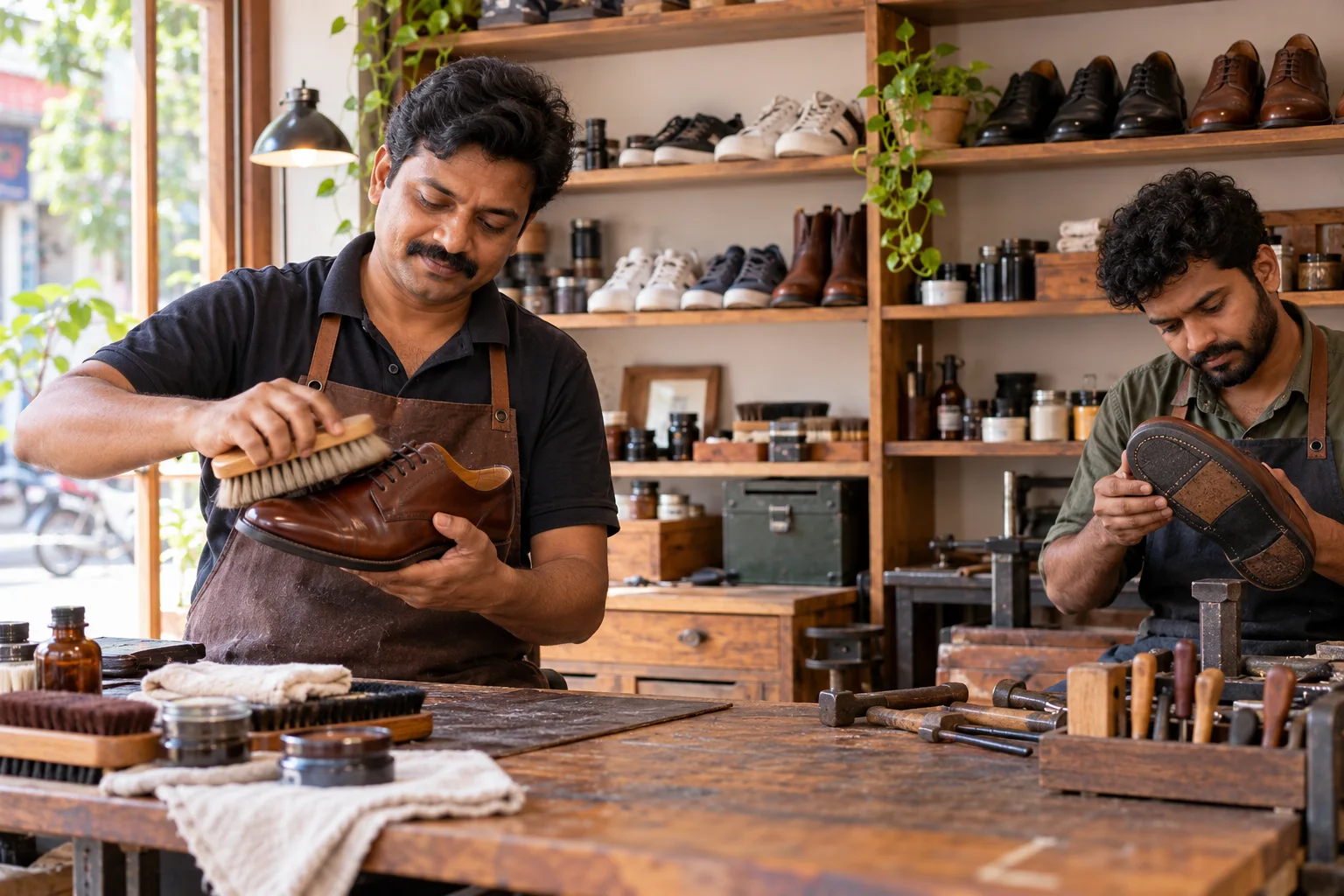
What buyer persona means
A buyer persona is a plain description of the kind of customer who actually buys from you. It includes what they search, what worries them and who else they ask before deciding. GullySales builds this from real enquiries and past sales rather than a generic template, then uses it to write every page and advert.
Also for shoe cleaning services
- Digital marketing for shoe cleaning services
- Lead generation for shoe cleaning studios
- SEO for shoe cleaning services
- Local SEO for shoe cleaning studios
- Social media marketing for shoe cleaning studios
- Content marketing for shoe cleaning services
- CRM for shoe cleaning studios
- Follow-up systems for shoe cleaning studios
Sales and marketing for shoe cleaning services, the overview.
Last updated 14 Nov 2026.
For shoe cleaning services
Where it usually goes wrong, and what we would do.
“The sneaker owner buys proof”
This buyer paid a lot for the pair and has watched cleaning videos. They want to see the same material cleaned, and they ask the model-specific question before anything about price.
“The office-goer buys convenience”
A person with leather formal shoes wants them collected from the office and returned polished. They compare on pickup times and clear quotes, not on gallery photographs.
“The wedding party buys certainty”
A groom's family has a date that cannot move. What decides the booking is the studio's plain promise on what will be attempted and a name to call if a shoe is not ready.
“The trade buyer buys a process”
A store or gym manager wants a batch rate, a collection day and an invoice. They judge the studio by how easily it fits their routine, and their pairs return as repeat work.
What we do
What we deliver for shoe cleaning services.
The work available for this need. We agree the deliverables and responsibilities for your engagement in writing.
Written personas
A page on each buyer: who they are, what they own, what they fear and where they look.
Result: Everyone in the team describes the buyer the same way.
A question list for each buyer
The first questions each buyer asks, with the answer the studio gives.
Result: Replies are consistent and match the buyer.
Message routes by persona
The channel and wording that suits each buyer, from Instagram to a store visit.
Result: Each buyer is reached where they already look.
An objection sheet
Common worries, such as ruined pairs or lost shoes, with an honest reply for each.
Result: Staff answer worries without improvising.
A persona check against bookings
A review of recent pairs received, sorted by persona.
Result: You see which buyer the studio really serves.
How the result is measured
- Enquiry match to persona
- Conversion rate by persona
- Content aligned to persona
Recorded as a baseline before work starts, so every later report has an honest comparison.
Who is asking
The people who hand a pair to a cleaning studio, and what each fears.
- Sneaker collector with a costly pair
- Wants to know that you have handled the exact material, and asks to see a finished pair before handing over.
- Office-goer with a leather formal
- Wants it done without effort, with pickup and drop, and a clear date for the pair to be back.
- Bride, groom or family member
- Has a fixed event date and fears a late return. Wants written confirmation of the date for the pair.
- Store owner with returned stock
- Wants a batch handled the same way each time and an invoice that fits the accounts.
- Gym or event team manager
- Wants cleaning of several pairs with a clear receipt for each, and a person to ask when one is missing.
- Owner in another city
- Wants to know that sending a pair by courier is safe and that the studio will confirm receipt.
Who it is for
This is written for these shoe cleaning services.
- Sneaker cleaning and restoration studios
- Leather and formal shoe care counters
- Suede and nubuck specialists
- Pickup-and-drop shoe cleaning services for apartments and offices
- Shoe and bag cleaning kiosks in malls
- Dry cleaners with a shoe care corner
- Studios that take courier pairs from other cities
- Bulk shoe cleaning for stores, gyms and event teams
Before you decide
When this may not be the right fit.
- You have not yet spoken to the people who booked last season, so the sheets would be assumptions
- The studio takes only walk-ins and has no plan for trade or courier buyers
- Quotes are written the same for every buyer, and a persona would change nothing in them
Before you decide
Agree the work. Know how to judge it.
Buyer personas for shoe cleaning studios: use these checks to prepare, choose the scope, and review what changes.
Bring the right evidence
Write the decision the research must support, such as entering a market or choosing a buyer group. Separate what you know from sales records from what the team currently assumes.
Make the scope clear
Agree which buyers to speak to, which sources to review, and what access you can provide. Include lost enquiries and people who chose another supplier, where they are willing to take part.
Check the work in use
Look for source dates, sample limitations, and evidence that disagrees with the preferred answer. A recommendation should show how it follows from the findings.
Know when to change course
Do not treat a few positive conversations as proof of demand. Test the proposed offer with an actual buying decision before committing to a wider launch.
These are discussion points, not a fixed package. GullySales confirms the deliverables, responsibilities, fee, and term in writing after reading your brief and speaking with you.
Before we start
What to have ready before the work starts.
The records, access and decisions this work needs from shoe cleaning services. Anything missing is noted in the written scope, with who will supply it.
- A list of customers from recent months
- Names or initials, what they brought and how they heard of you. Phone contacts are acceptable. Without a list, personas come from memory, and we say so in the draft. Add anything you remember about how each customer paid and whether they returned, since repeat behaviour defines a persona more than a first visit does.
- Three customers willing to speak
- Ask a sneaker owner, an office-goer and a store buyer if they will talk for a few minutes. Without these talks, the sheets are internal views only. Tell each of them beforehand that the call is about how the studio can serve owners better and not about selling them something.
- A view on the customers you want more of
- The studio may prefer collectors, trade accounts or wedding bookings. This is a choice for you. If it is open, the personas are given equal weight and the message routes lack focus. If the studio wants to grow trade accounts in particular, say so now, since that preference decides how much space the store buyer gets.
- Notes on customers who complained
- What the complaint was and how it ended. These show the fears that persona sheets should address. If none are written, staff can recall them in a talk. Even a rough memory of a complaint is useful, because the worry behind it shows what the owner needed to hear at drop-off.
- A place where staff will read the sheets
- A folder on the shared phone or a printed page at the counter. If sheets are not within reach, they are forgotten, and the work stops with the draft. Choose a place staff pass during the work, such as beside the intake form, so the sheets are seen during the work.
How it works
How the buyer persona work runs
The work itself, in order. How an engagement starts, from your brief to a written scope, is set out on our method page.
- 1
List recent owners by what they brought
We take the last pairs and write who brought each: a sneaker collector, an office-goer, a wedding party, a store. You add what you remember of how each paid and returned. Nothing is invented. The list is built from the studio's own record, and each persona rests on it. Pairs brought on behalf of someone else, such as a parent or a manager, are marked, since the person paying is not always the person who chose the studio.
- 2
Group them by what each fears
We sort the owners by the worry behind the drop-off: a collector fears damage, an office-goer wants the pair back for a meeting, a wedding party needs it for a date. You correct the groups. Personas are then made around the fear that decides the booking. A group that is too small to need its own sheet is merged with the nearest one, so staff are not asked to read a dozen sheets.
- 3
Ask a few owners why they chose you
With permission, we speak to a collector, an office-goer and a store buyer and ask what they checked and what almost put them off. You introduce us. Their words are written as spoken, and these replace our own guesses in the sheets. We listen for the moment the owner decided, such as a comment under a post or a friend's pair, because that moment tells us where the persona first meets the studio.
- 4
Write a sheet for each owner type
Each sheet states what the owner brings, what they ask first, the objection they raise and what makes them return. You read them and strike lines that do not sound like the people at your counter. The sheets are short enough for staff to read before a shift. The sheet also records the language the owner writes in and the hour they message, so replies reach them in a form they read.
- 5
Turn each sheet into a message route
For every persona we draft the first reply on WhatsApp and the points to emphasise or leave out. You approve each. A collector now hears about material care, and an office-goer hears about pickup times, in a studio voice. Where a persona raises a worry the studio cannot answer yet, such as a delay for a wedding date, the guide marks it as a gap to discuss with you.
- 6
Test the sheets against new bookings
As new pairs arrive, staff mark which persona the owner fitted. We read these against the bookings recorded before the work. You see whether the sheets describe real customers, and you rewrite any sheet that no longer fits. A sheet that fits few new bookings is merged or dropped, so the set stays short and every sheet earns a place at the counter.
Where this fits
Three pieces of sales work, in this order.
This work sits inside sales process design, at stage 0, foundation. The audit comes before it, and sales management keeps it running.
Step 1
Sales audit
Find where deals are being lost and what to fix first.
Start here if you cannot say where orders are lost.
Step 2 · you are here
Sales process design
One written way to sell, from first enquiry to repeat order.
Start here if every salesperson sells differently.
Step 3
Sales management
A target, a review routine and someone who owns the number.
Start here if the team has targets and no routine.
FAQ
Questions owners ask before they call.
Not here? More answers, or ask on WhatsApp.
How are personas built without surveys?
Do we need a persona for each shoe type?
Will personas change what we charge?
Should the collector and the office-goer get different quotes?
Do we need a persona for wedding shoes?
Can the same customer be two personas?
How long is the contract?
How soon will we see results?
Who will actually do the work?
What do you need from us?
More for shoe cleaning services
Related work to consider.
Closest to this: strategy and research
Also for shoe cleaning services
Or start from the overview: sales and marketing for shoe cleaning services.
Your next practical step
Tell us what you are trying to grow, and we will read it before we call.
Eight short steps, mostly taps. Skip anything you would rather answer on the call.