Shoe cleaning services · Local SEO
Be the studio that shows on the map when a pair needs cleaning nearby.
Local SEO for a shoe cleaning studio is the work of appearing in the map results for the localities where owners drop off or book a pickup. Distance, listing details and reviews decide who shows. GullySales sets up the listing, the service areas and the review habit behind it.
Scope, fee, reporting and term are agreed in writing after we have read your brief and spoken to you.
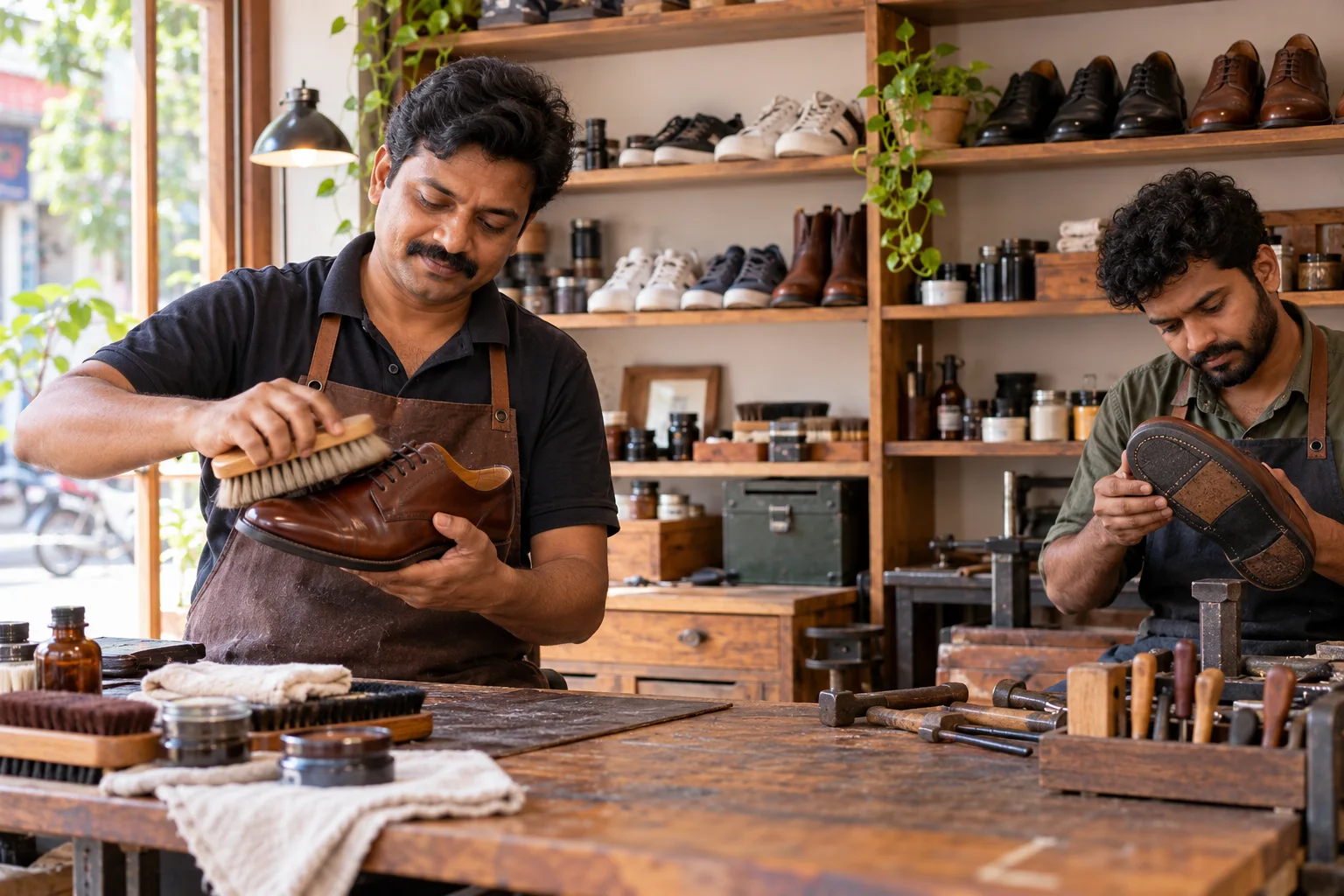
What local SEO means
Local SEO is the work of making your business show up for searches that name your town or locality, such as a service plus an area name. GullySales sets up locality pages, local citations and map listings so nearby customers find you before a competitor across town.
Also for shoe cleaning services
- SEO for shoe cleaning services
- Website for shoe cleaning services
- Lead generation for shoe cleaning studios
- Social media marketing for shoe cleaning studios
- Content marketing for shoe cleaning services
- Buyer personas for shoe cleaning studios
- CRM for shoe cleaning studios
- Follow-up systems for shoe cleaning studios
Sales and marketing for shoe cleaning services, the overview.
Last updated 14 Nov 2026.
For shoe cleaning services
Where it usually goes wrong, and what we would do.
“Walk-ins come from a handful of streets”
A drop-off customer chooses the studio on the way to work or near home. The listing should name those localities, because a vague address pulls in people who live too far to come back.
“A pickup service has its own area”
A studio that collects pairs from apartments and offices serves places beyond its door. The profile should list those localities, or the pickup customer sees a studio that appears not to travel.
“Reviews carry photographs of pairs”
A review that mentions a suede pair or a wedding shoe tells the next reader what the studio handles. Reviews that only say good service tell the next reader nothing about material.
“Mall kiosks and shop corners confuse the listing”
A kiosk inside a mall or a corner of a dry cleaner needs its own name, floor and timings on the profile. Without these, an owner walks to the wrong door and blames the studio.
What we do
What we deliver for shoe cleaning services.
The work available for this need. We agree the deliverables and responsibilities for your engagement in writing.
A Google Business Profile in full
The right business type, services listed one by one, hours, pickup localities and the studio's own photographs.
Result: The listing names every service and every pickup area.
Photographs of the work area
Pictures of the counter, the cleaning station and finished pairs ready for collection, taken in the studio.
Result: A cautious owner can see where the pair will be handled.
A review request at collection
A short ask, with the link ready, made when the owner collects a clean pair.
Result: Fresh reviews come from people who just saw the result.
Replies to reviews that mention a fault
Written replies that explain what was attempted on a pair and what the material allowed.
Result: A reader sees a complaint answered plainly.
Directions and call counts
The listing's own figures for calls and direction requests, set against the starting point.
Result: You can check whether the listing sends people to the door.
How the result is measured
- Map pack ranking
- Local search visibility
- Enquiries by locality
Recorded as a baseline before work starts, so every later report has an honest comparison.
Searches your buyers type
The nearby searches a shoe cleaning studio should be found for.
- shoe cleaning near me
- The profile shows a pin, hours and a phone that is answered. The business type should name shoe cleaning, not laundry.
- sneaker laundry in a named locality
- Add the locality to your pickup area and mention it in a post. Searchers with a pair to hand type the area first.
- shoe pickup and drop service
- A service entry that lists the areas you collect from, so a customer outside it is not disappointed.
- shoe cleaning inside a mall
- A clear note of the floor and landmark in the description. Mall kiosks are hard to find from the pin alone.
- leather shoe spa
- A separate service line if you offer polish and conditioning, with a photograph of the finished pair next to it.
- open now shoe cleaning
- Hours that are correct, including festival days. A wrong closing time earns a bad review before the customer arrives.
Who it is for
This is written for these shoe cleaning services.
- Sneaker cleaning and restoration studios
- Leather and formal shoe care counters
- Suede and nubuck specialists
- Pickup-and-drop shoe cleaning services for apartments and offices
- Shoe and bag cleaning kiosks in malls
- Dry cleaners with a shoe care corner
- Studios that take courier pairs from other cities
- Bulk shoe cleaning for stores, gyms and event teams
Before you decide
When this may not be the right fit.
- The studio is a home-based pickup service and has not checked the platform's rules on hiding its address
- Nobody asks for a review at collection, so the listing would show a few old ratings
- The kiosk is likely to move or close soon, and a listing with the wrong address does harm
Before you decide
Agree the work. Know how to judge it.
Local SEO for shoe cleaning studios: use these checks to prepare, choose the scope, and review what changes.
Bring the right evidence
Confirm the real business address, service area, contact details, and who controls the business listings. Keep examples of calls that came from the wrong location or asked for a service you do not provide.
Make the scope clear
Choose the locations you actually serve and the information each needs. Agree who approves listing changes, responds to enquiries, and keeps opening hours accurate.
Check the work in use
Check the journey from a local search to a call or enquiry on a phone. The address, service area, and description should agree across your website and listings.
Know when to change course
Do not create an office claim for a place where you only serve customers remotely. Clear service coverage is more useful than a misleading local presence.
These are discussion points, not a fixed package. GullySales confirms the deliverables, responsibilities, fee, and term in writing after reading your brief and speaking with you.
Before we start
What to have ready before the work starts.
The records, access and decisions this work needs from shoe cleaning services. Anything missing is noted in the written scope, with who will supply it.
- Owner access to the existing listing
- The email or phone that controls any profile already made. If an old worker created it, find them early. Without access, we cannot correct the details and the studio sits beside a duplicate. If the profile was made by a mall operator or a landlord, ask them to transfer it, or the studio will never control its own listing.
- Photographs of the counter and bench
- A set taken in good light, showing the real space. A mall kiosk or a shop corner is fine. If none exist, we take them on the first visit and the profile waits for those pictures.
- The localities you pick up from
- A list of colonies and apartment names the studio serves. Only you know where a rider can reach. Missing this, the profile may attract requests from areas you cannot visit. Add any locality where riders have failed to reach on time, so the profile never promises a pickup the studio has not managed before.
- Proof that the studio exists at the address
- A bill, a rent paper or a licence that the platform may ask for during verification. Mall studios may need a letter from the management. Without proof, the profile remains unverified and invisible.
- A rule for how reviews are answered
- Decide who replies and the tone, particularly for a review about a stain that remained. Reviews are public. If no rule exists, replies come late or sound defensive, and the next owner reads that. Include a line on what you will not say about a stain that remains, so a public reply never promises a second attempt the bench cannot make.
How it works
How the local SEO work runs
The work itself, in order. How an engagement starts, from your brief to a written scope, is set out on our method page.
- 1
Search the studio's name on the map
We look up the studio on the map as an owner would, from the lane outside, and also search for the old name, a former address or a duplicate. You tell us which listings are yours. What exists afterwards is a list of every entry that needs claiming, merging or removing, so the map shows one studio. A listing that still shows a closed shop or a former mall unit is marked for correction, because a wrong pin sends an owner to an empty floor.
- 2
Settle how the studio is described
We choose the business name, the main service and the extra services the profile will list, using the words owners type. If the studio is inside a mall or a dry cleaner's shop, we agree how to name the floor and the counter. You approve every line before it is entered. Services the studio declines are left off the list, so the profile does not draw searches for work the bench will not do.
- 3
Photograph the work area and the counter
We take photographs of the counter, the cleaning bench, the drying racks and the signboard from the street, with you choosing what can be shown. Customers' pairs appear only with consent. The profile then shows a real place, which matters to an owner deciding whom to trust with an expensive pair.
- 4
Write the pickup areas and hours
You name the localities the studio serves and the times a pair can be dropped or collected. We enter these on the profile and mention any days the counter is shut. An owner who plans a trip, or books a pickup, now reads times the studio keeps.
- 5
Set the review ask for collection day
We write a short message that staff give at the moment of collection, and a way for the owner to reach the review page easily. You decide which customers are asked. Replies to a review that mentions a fault are drafted with you, in a calm tone. A review that names a staff member is shown to that person first, so the reply is accurate and the team learns from the comment.
- 6
Read calls and directions against drop-offs
The profile reports calls, direction requests and views. We set these beside the pairs received at the counter and the pickups booked. You see whether the map visitors came in, and the figures taken before the profile was changed are the comparison.
Where this fits
Three pieces of sales work, in this order.
This work sits inside sales process design, at stage 1, prospecting and lead generation. The audit comes before it, and sales management keeps it running.
Step 1
Sales audit
Find where deals are being lost and what to fix first.
Start here if you cannot say where orders are lost.
Step 2 · you are here
Sales process design
One written way to sell, from first enquiry to repeat order.
Start here if every salesperson sells differently.
Step 3
Sales management
A target, a review routine and someone who owns the number.
Start here if the team has targets and no routine.
FAQ
Questions owners ask before they call.
Not here? More answers, or ask on WhatsApp.
Should the profile list the pickup areas?
We are inside a mall. How do we make the listing clear?
Do we need a separate profile for each outlet?
Can we show before and after photos on the profile?
Can the profile say we clean shoes at the owner's home?
What if another shop in the mall has the same name?
How much does it cost?
How long is the contract?
How soon will we see results?
Who will actually do the work?
More for shoe cleaning services
Related work to consider.
Closest to this: search and visibility
Also for shoe cleaning services
Or start from the overview: sales and marketing for shoe cleaning services.
Your next practical step
Tell us what you are trying to grow, and we will read it before we call.
Eight short steps, mostly taps. Skip anything you would rather answer on the call.