Washing machine repair services · Digital marketing
Put the pieces together so a stopped machine leads to a booked visit.
Digital marketing for a washing machine repair service is the combination of search, Maps, ads, social posts and messages that bring a stopped machine to your door. GullySales works on how these pieces fit together and which of them earn their cost.
Scope, fee, reporting and term are agreed in writing after we have read your brief and spoken to you.
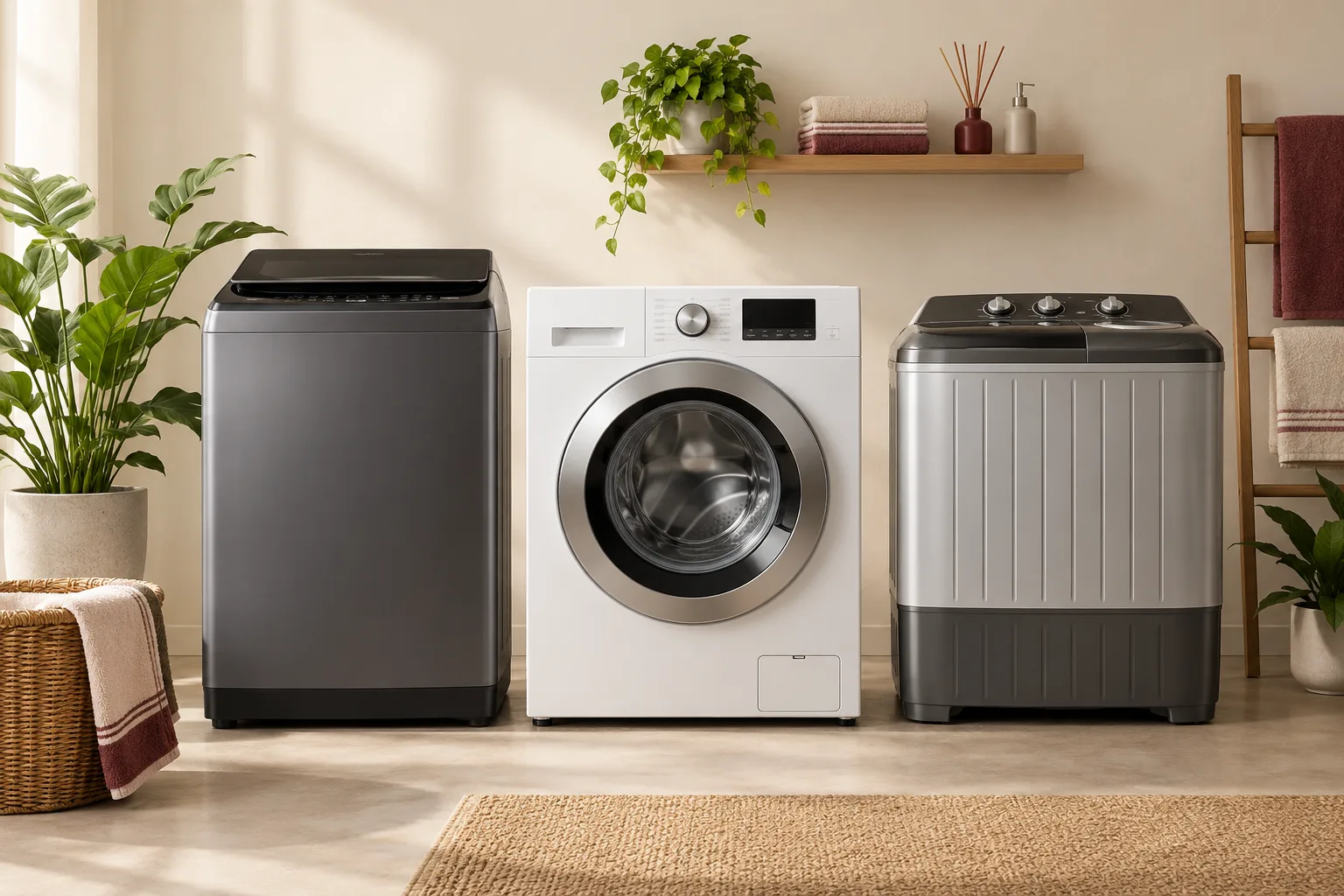
What digital marketing means
Digital marketing is the combined work of search, social media, advertising and website channels running together rather than as separate projects with separate people. GullySales runs these as one connected system so a change in one channel, such as a new offer, is reflected everywhere at once.
Also for washing machine repair services
- Buyer personas for washing machine repair
- Lead generation for washing machine repair
- SEO for washing machine repair
- Local SEO for washing machine repair
- Social media marketing for washing machine repair
- Content marketing for washing machine repair
- CRM for washing machine repair
- Follow-up systems for washing machine repair
Sales and marketing for washing machine repair services, the overview.
Last updated 14 Nov 2026.
For washing machine repair services
Where it usually goes wrong, and what we would do.
“The pieces only work when they point to one route”
Search brings a reader, Maps brings a caller and a post brings a neighbour. If each sends the customer to a different number or a different reply style, the trade loses bookings between them.
“Paid ads suit urgent searches, not browsing”
A stopped machine is an urgent need, and the ad appears at the moment of the search. The money is wasted when it sends the click to a page that does not match the fault or to a phone nobody answers.
“Spend should follow the jobs that finish”
A source that brings a lot of calls and few completed repairs is expensive. Choose between channels by comparing completed repairs against what each one cost.
What we do
What we deliver for washing machine repair services.
The work available for this need. We agree the deliverables and responsibilities for your engagement in writing.
A one-page marketing plan
A plan listing the channels you will use, who looks after each and how each leads to the booking route.
Result: Your team can say in a sentence what each channel is for.
Search ads for urgent faults
Ads aimed at the localities you cover and the faults you repair, with a landing page that matches the search.
Result: Each ad leads to a page about the fault searched.
A shared enquiry sheet
A sheet where every enquiry from every source is recorded with its source, outcome and cost where known.
Result: All channels are compared on the same sheet.
Seasonal timing
A calendar of the wet months and festival periods when laundry rises, with the posts and messages planned for each.
Result: Campaigns are planned before the busy periods, not during them.
Review of channels against jobs
A look at the sheet to decide which channel to keep, which to change and which to stop.
Result: Each channel is kept or stopped on evidence from the sheet.
How the result is measured
- Enquiries across channels
- Cost per enquiry overall
- Channel mix by contribution
Recorded as a baseline before work starts, so every later report has an honest comparison.
Searches that book visits
The searches a small repair service can afford to answer, and the page behind each one.
- washing machine repair near me
- The widest search. Answer with a Maps profile and a locality page before paying for clicks.
- washing machine not spinning
- A symptom page for an urgent search. Pair a search ad with a page that asks for the display photo.
- washing machine error code [brand]
- A code page by brand, tied to a booking button. It reaches customers already holding a manual or a photo.
- front load washing machine service
- A page and an ad group for front-loaders, kept apart from top-load so the visit is the right one.
- washing machine repair in [apartment name]
- A building search. A page naming the block asks neighbours to book the same visit and keeps the route short.
- washing machine technician for PG
- A page for hostel and PG managers, with a rate for several machines and a regular visit plan.
Who it is for
This is written for these washing machine repair services.
- Technicians who specialise in front-load machines of imported and premium brands
- Top-load and semi-automatic repairers serving middle-income households
- Multi-appliance repair firms with a washing machine desk
- Authorised service partners who take out-of-warranty calls
- Small teams working inside a single group of apartment complexes
- Repair businesses that also sell reconditioned machines
- Shops serving hostels, PGs and rental flats with several machines
- Laundrettes and dry-cleaners who need their commercial machines kept running
Before you decide
When this may not be the right fit.
- Technicians are fully booked for the busy period, so paid search would buy calls you cannot serve.
- You cannot say which channel an enquiry came from, so spending more would hide what works.
- Your Maps listing and reply routine are weak, and ads would send buyers to a poor first impression.
Before you decide
Agree the work. Know how to judge it.
Digital marketing for washing machine repair: use these checks to prepare, choose the scope, and review what changes.
Bring the right evidence
Bring a recent won order and an enquiry that went nowhere. Trace how each buyer found you, what they asked, and who handled the next step. A channel list alone will not explain the difference.
Make the scope clear
Choose one offer and one buyer group first. Agree which part needs attention: being found, getting a useful enquiry, or turning an enquiry into an order. Separate recommendations from the work required to carry them out.
Check the work in use
A useful plan names the first change, its owner, the evidence behind it, and the number that will show whether it worked. Ask what has deliberately been left out and why.
Know when to change course
If your team cannot answer the enquiries it already receives, improve that handover before buying more traffic. If the offer itself is unclear, test it with buyers before adding channels.
These are discussion points, not a fixed package. GullySales confirms the deliverables, responsibilities, fee, and term in writing after reading your brief and speaking with you.
Before we start
What to have ready before the work starts.
The records, access and decisions this work needs from washing machine repair services. Anything missing is noted in the written scope, with who will supply it.
- A choice of the repair line to push
- Only the owner knows which jobs pay best. Bring the choice and the reason. Without it, we split the plan across lines and weaken it. If two lines tie, bring the one with parts you can source without delay.
- Working phone lines and a WhatsApp number
- Every channel ends in a call or a message. Confirm both are answered. Without that, the plan starts with fixing the answering. Add the name of whoever answers after the technicians leave.
- Logins for the listing, site and ad account
- We need owner-level access or a named person who can act. Gather them before the start. Without them, those parts are left out. The ad account needs a payment method held by the business.
- A shared enquiry sheet kept by the office
- One sheet records each enquiry and its source. Name who keeps it. Without a sheet, channels cannot be compared. Add columns for brand, locality and whether a visit was booked.
- A ceiling on what you can spend
- Only you can set the limit for paid ads. Decide before the test starts. Without a limit, we recommend only the free channels. Say whether the figure includes the cost of someone's time.
How it works
How the digital marketing work runs
The work itself, in order. How an engagement starts, from your brief to a written scope, is set out on our method page.
- 1
Choose one repair line to push first
We begin by asking which repair brings the greatest number of completed jobs for the least trouble, such as front-load door locks or top-load drain faults. You choose the line. All channels then point at that one line, so their results can be compared fairly. If two lines tie, you pick the one whose parts are easiest to source, since a promoted fault with a long wait for parts disappoints the customer.
- 2
Check phones, listings and accounts are ready
Before any spend, we check that the phone is answered, the Maps listing is yours, the site opens on a mobile and someone owns each login. You fix what fails. A channel pointing at a number nobody answers is switched off. We also check that the Maps listing names the brands and that the website opens fast on a phone with weak signal.
- 3
Approve the message for urgent searches
We write the short ad and page lines for a customer whose machine has just stopped, using the error codes and brands you handle. You strike any claim you cannot meet. The lines are tested against the first questions your phone staff ask. Search lines name the brand and the symptom the customer typed, and never promise that a technician will arrive at a set time.
- 4
Give each task to a named person
Ad text, page edits, photographs and the enquiry sheet are each given to a named person. We list who does what and what is needed. You see the full list before work begins. The photographer, the page editor and the person who runs the ads need the same facts, so we put them in a single brief. The brief also says which phone number each ad shows, so every call lands with the person who is expecting it.
- 5
Release one channel at a time
Search ads, the Maps profile and the social posts are switched on in a planned order, and you approve each one. We check the enquiry sheet after each release. A channel that brings only wrong-machine calls is stopped. Social posts follow only when the booking route has already caught a few real enquiries without failing.
- 6
Reconcile enquiries with finished jobs
We compare the enquiry sheet with your completed job cards and the starting figures. You see which channel produced repairs and which only produced calls. Spending moves toward what finished jobs, and nothing is promised in advance. A call from a locality you do not serve is marked as wasted spend on the sheet, so the ad targeting can be narrowed.
Where this fits
Three pieces of sales work, in this order.
This work sits inside sales process design, at stage 0, foundation. The audit comes before it, and sales management keeps it running.
Step 1
Sales audit
Find where deals are being lost and what to fix first.
Start here if you cannot say where orders are lost.
Step 2 · you are here
Sales process design
One written way to sell, from first enquiry to repeat order.
Start here if every salesperson sells differently.
Step 3
Sales management
A target, a review routine and someone who owns the number.
Start here if the team has targets and no routine.
FAQ
Questions owners ask before they call.
Not here? More answers, or ask on WhatsApp.
Where should a small repairer spend first?
Can we measure what ads bring?
Where should a small repairer spend first?
Do seasons change the plan?
Is it better to advertise in the monsoon months?
Who should hold the ad account?
How much does it cost?
How long is the contract?
How soon will we see results?
Who will actually do the work?
More for washing machine repair services
Related work to consider.
Closest to this: strategy and research
Also for washing machine repair services
Or start from the overview: sales and marketing for washing machine repair services.
Your next practical step
Tell us what you are trying to grow, and we will read it before we call.
Eight short steps, mostly taps. Skip anything you would rather answer on the call.