Casual dining restaurants · Lead generation
Fill the tables that sit empty by finding groups before they pick a place.
Lead generation for a casual dining restaurant means collecting enquiries from groups, offices and celebrants who want a table, a booking or a quote for a party. GullySales works on where those enquiries come from, how soon they are noticed and which ones are worth a reply first.
Scope, fee, reporting and term are agreed in writing after we have read your brief and spoken to you.
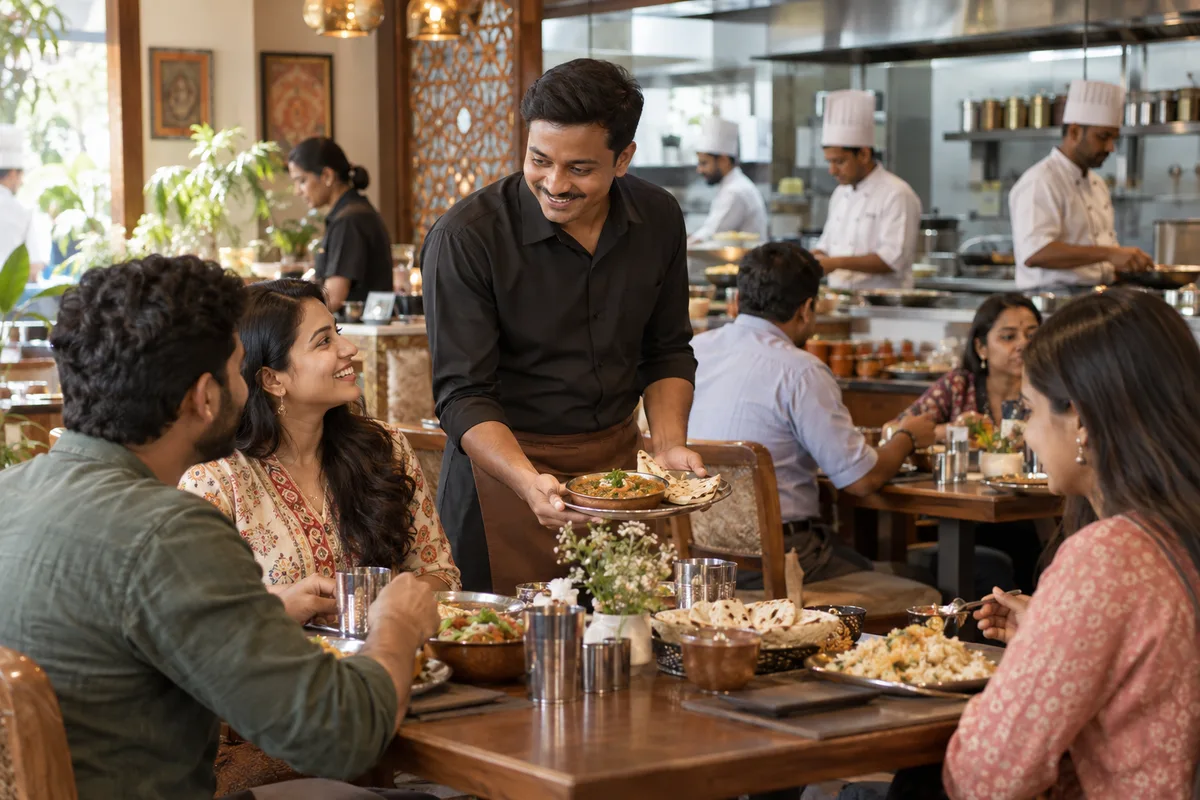
What lead generation means
Lead generation is the combined work of every channel that brings in a new enquiry, whether from search, adverts, referrals or a stall at an exhibition. GullySales runs these channels together and reports the number of enquiries each one produced, not the activity behind it.
Also for casual dining restaurants
- CRM for casual dining restaurants
- Follow-up systems for casual dining restaurants
- SEO for casual dining restaurants
- Local SEO for casual dining restaurants
- Social media marketing for casual dining restaurants
- Content marketing for casual dining restaurants
- Buyer personas for casual dining restaurants
- WhatsApp marketing for casual dining restaurants
Sales and marketing for casual dining restaurants, the overview.
Last updated 18 Oct 2026.
For casual dining restaurants
Where it usually goes wrong, and what we would do.
“The lead is a group, not a diner”
A table for two walks in. The valuable enquiry is the table for twelve, the farewell lunch or the birthday party, and it arrives as a message on Instagram or WhatsApp. Treat those as leads with a name and a date, not as chat.
“Slow nights need their own source”
Saturday fills without help. Tuesday needs a reason, and the reason has to reach people who have eaten with you before and the offices around you, because strangers on a slow night are the costliest to win.
“Dining apps send guests, not relationships”
A booking through an app arrives with a discount and leaves without a contact you own. Move the guest from the app to your own list at the table, with a plain reason to share a number.
“The enquiry dies in the inbox”
Group requests land in direct messages, calls during service and a form nobody reads. The group books where someone answered first, so every channel needs one owner and one note of what was asked.
What we do
What we deliver for casual dining restaurants.
Every deliverable, what it covers for you, and the result it is there to produce. Nothing here is an extra.
A group enquiry form and number
One page and one WhatsApp number for tables of eight or more, asking date, headcount and occasion.
Result: Every large-table request reaches one place with the details attached.
Office lunch contact list
A list of nearby offices and the person who books team meals, built by hand from the buildings around you.
Result: You hold names to send a set lunch to, not a general broadcast.
Guest list capture at the table
A short, honest ask for a WhatsApp number at billing, with the reason stated and consent noted.
Result: Repeat guests become a list the restaurant owns.
Source tagging on every booking
A one-line note for how each booking found you: Maps, app, Instagram, friend, office.
Result: You can see which source fills which night.
Lead sheet for the manager
A simple sheet listing each enquiry, who replied and whether the table was booked.
Result: Nobody has to guess what happened to a request.
How the result is measured
- Enquiries generated
- Cost per enquiry
- Enquiries by source
Recorded as a baseline before work starts, so every later report has an honest comparison.
Who it is for
This is written for these casual dining restaurants.
- Bar and kitchen restaurants
- Mall food court and mall-floor restaurants
- Standalone neighbourhood casual diners
- Pub-style and brewery restaurants
- Theme and concept restaurants
- Rooftop and lounge restaurants
- Regional chains with several outlets
- Casual dining attached to a multiplex or entertainment zone
How it works
How the lead generation work runs
The work itself, in order. How an engagement starts, from your brief to a written scope, is set out on our method page.
- 1
Understand your capacity
We agree how many enquiries your sales team can actually handle well, so the system is not built to overwhelm it.
- 2
Audit current sources
We check what already brings in enquiries today, even informally, before adding anything new.
- 3
Strategise the channel mix
Content, search and paid channels are chosen based on where your buyers already look.
- 4
Implement capture and follow-up
Pages, forms and a follow-up process are built and connected end to end.
- 5
Measure and optimise
We track enquiry volume and quality and adjust the channel mix to match.
Where this fits
Three pieces of sales work, in this order.
This work sits inside sales process design, at stage 1, prospecting and lead generation. The audit comes before it, and sales management keeps it running.
Step 1
Sales audit
Find where deals are being lost and what to fix first.
Start here if you cannot say where orders are lost.
Step 2 · you are here
Sales process design
One written way to sell, from first enquiry to repeat order.
Start here if every salesperson sells differently.
Step 3
Sales management
A target, a review routine and someone who owns the number.
Start here if the team has targets and no routine.
FAQ
Questions owners ask before they call.
Not here? More answers, or ask on WhatsApp.
What counts as a lead for a restaurant?
Do dining app bookings count?
How much does it cost?
How long is the contract?
How soon will we see results?
Who will actually do the work?
What do you need from us?
What if we are not happy with the work?
More for casual dining restaurants
Everything else we would do for you.
Closest to this: leads and follow-up
Also for casual dining restaurants
Or start from the overview: sales and marketing for casual dining restaurants.
Your next practical step
Tell us what you are trying to grow, and we will read it before we call.
Eight short steps, mostly taps. Skip anything you would rather answer on the call.