Casual dining restaurants · Buyer persona
Know who is choosing the table, who has a veto and what tips the decision.
A buyer persona for a casual dining restaurant describes the person who picks the place, the people who can veto it and what each of them looks at first. GullySales works on drawing these from your own bookings and bills, not from guesses.
Scope, fee, reporting and term are agreed in writing after we have read your brief and spoken to you.
What buyer persona means
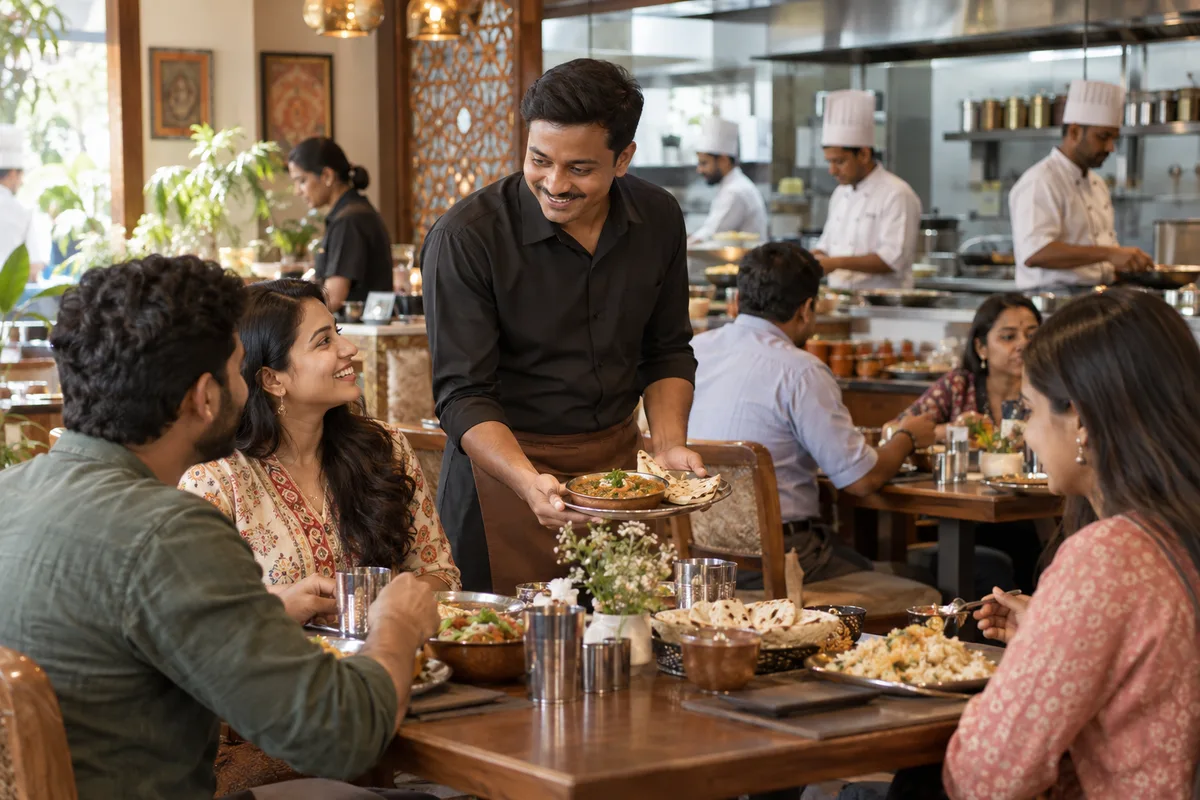
A buyer persona is a plain description of the kind of customer who actually buys from you. It includes what they search, what worries them and who else they ask before deciding. GullySales builds this from real enquiries and past sales rather than a generic template, then uses it to write every page and advert.
Also for casual dining restaurants
- Digital marketing for casual dining restaurants
- Lead generation for casual dining restaurants
- SEO for casual dining restaurants
- Local SEO for casual dining restaurants
- Social media marketing for casual dining restaurants
- Content marketing for casual dining restaurants
- CRM for casual dining restaurants
- Follow-up systems for casual dining restaurants
Sales and marketing for casual dining restaurants, the overview.
Last updated 18 Oct 2026.
For casual dining restaurants
Where it usually goes wrong, and what we would do.
“There is a chooser and a group with a veto”
One friend proposes, the others agree or object. Marketing aimed at the whole group misses the proposer, who needs a rating, a photograph and a menu they can forward in the chat in under a minute.
“The office booker acts for a team”
The person arranging a farewell lunch wants a price per head, a table plan and a quick written reply. They answer to a manager, so a clear quotation protects them as well as it wins the booking.
“The celebrant buys an occasion”
A birthday or anniversary booking is bought on the setup, the cake rules and whether a quiet corner exists. Price matters less than reassurance that the evening will not go wrong.
“The regular buys a habit”
A neighbour who eats twice a week wants a familiar table, a quick service and a reason not to try the new place down the road. Their loyalty is built by recognition, not by a banner.
What we do
What we deliver for casual dining restaurants.
The work available for this need. We agree the deliverables and responsibilities for your engagement in writing.
Four persona sheets
One page each for the friend group, office booker, celebrant and regular, built from your own bookings.
Result: Each audience has a plain description of what it looks at.
Booking record review
A read of recent bookings by group size, day and occasion to see who actually comes.
Result: Personas rest on what your tables show.
Question list per persona
The questions each persona asks before booking, mapped to the page or message that answers it.
Result: Every common question has a ready answer.
Message set per persona
Short messages for each audience in your own voice, using the words they use.
Result: The proposer can forward something that sells the place.
Persona check with the floor team
A conversation with the manager and waiting staff to correct anything the data misses.
Result: The people who serve the tables confirm the picture.
How the result is measured
- Enquiry match to persona
- Conversion rate by persona
- Content aligned to persona
Recorded as a baseline before work starts, so every later report has an honest comparison.
Who is asking
Name the person in the group and what they want to know before booking.
- The chooser in a friend group
- Wants photographs of the food and the seating, the price per head and proof the place is not too loud.
- The office booker for a team lunch
- Wants a set menu, a billing name for the company and a reply that confirms the table in writing.
- The celebrant planning a dinner
- Wants a table that feels special, an option for a cake and a clear policy on decoration.
- The regular who comes after work
- Wants a known table, a quick order and to be recognised, not a new offer every visit.
- The family with children
- Wants a menu children eat, seating that is not cramped and a quiet hour before the evening rush.
Who it is for
This is written for these casual dining restaurants.
- Bar and kitchen restaurants
- Mall food court and mall-floor restaurants
- Standalone neighbourhood casual diners
- Pub-style and brewery restaurants
- Theme and concept restaurants
- Rooftop and lounge restaurants
- Regional chains with several outlets
- Casual dining attached to a multiplex or entertainment zone
Not for
It is not the right fit if.
- The restaurant has few bookings recorded, and personas would be built from impressions.
- You plan to put the same offer in front of every persona, so the profiles would change nothing.
- The floor team has not been asked what guests say, which is where the profiles come from.
Before you decide
Agree the work. Know how to judge it.
Buyer personas for casual dining restaurants: use these checks to prepare, choose the scope, and review what changes.
Bring the right evidence
Write the decision the research must support, such as entering a market or choosing a buyer group. Separate what you know from sales records from what the team currently assumes.
Make the scope clear
Agree which buyers to speak to, which sources to review, and what access you can provide. Include lost enquiries and people who chose another supplier, where they are willing to take part.
Check the work in use
Look for source dates, sample limitations, and evidence that disagrees with the preferred answer. A recommendation should show how it follows from the findings.
Know when to change course
Do not treat a few positive conversations as proof of demand. Test the proposed offer with an actual buying decision before committing to a wider launch.
These are discussion points, not a fixed package. GullySales confirms the deliverables, responsibilities, fee, and term in writing after reading your brief and speaking with you.
How it works
How the buyer persona work runs
The work itself, in order. How an engagement starts, from your brief to a written scope, is set out on our method page.
- 1
Audience decision and scope approval
You send the requirements brief, then we discuss the decision these personas must support. The written scope identifies the audience groups and agreed outputs before work starts.
- 2
Record access and interview selection
Your team shares relevant purchase records and agrees which customers to approach. Customers agree before contact, and we identify gaps such as missing lost-deal notes.
- 3
Interview findings and evidence check
We ask buyers about their last purchase, including what happened before the enquiry and who else was involved. Staff conversations add objections and questions, with differences between accounts kept visible.
- 4
Persona review and corrections
Draft profiles go to the people who handle enquiries and close orders. We check disputed points against the available evidence rather than treating internal agreement as proof.
- 5
Application priorities and handover
You approve the profiles and decide which existing assets need attention first. The persona documents and application map pass to your marketing and sales owners, with implementation responsibilities recorded.
Where this fits
Three pieces of sales work, in this order.
This work sits inside sales process design, at stage 0, foundation. The audit comes before it, and sales management keeps it running.
Step 1
Sales audit
Find where deals are being lost and what to fix first.
Start here if you cannot say where orders are lost.
Step 2 · you are here
Sales process design
One written way to sell, from first enquiry to repeat order.
Start here if every salesperson sells differently.
Step 3
Sales management
A target, a review routine and someone who owns the number.
Start here if the team has targets and no routine.
FAQ
Questions owners ask before they call.
Not here? More answers, or ask on WhatsApp.
Do we need data to build a persona?
How many personas should a restaurant have?
What does a casual dining persona need beyond age and income?
Should a restaurant treat the chooser and the payer as different people?
How much does it cost?
How long is the contract?
How soon will we see results?
Who will actually do the work?
What do you need from us?
What if we are not happy with the work?
More for casual dining restaurants
Related work to consider.
Closest to this: strategy and research
Also for casual dining restaurants
Or start from the overview: sales and marketing for casual dining restaurants.
Your next practical step
Tell us what you are trying to grow, and we will read it before we call.
Eight short steps, mostly taps. Skip anything you would rather answer on the call.