Coffee shops · Follow up systems
Turn the first visit into a second one, and the sample cup into a standing order.
A follow-up system for a coffee shop is the set of small, planned contacts after a first visit, a bean purchase, a pantry enquiry or a workshop. GullySales works on the messages, the owners and the reminders so that no enquiry or first-timer is forgotten.
Scope, fee, reporting and term are agreed in writing after we have read your brief and spoken to you.
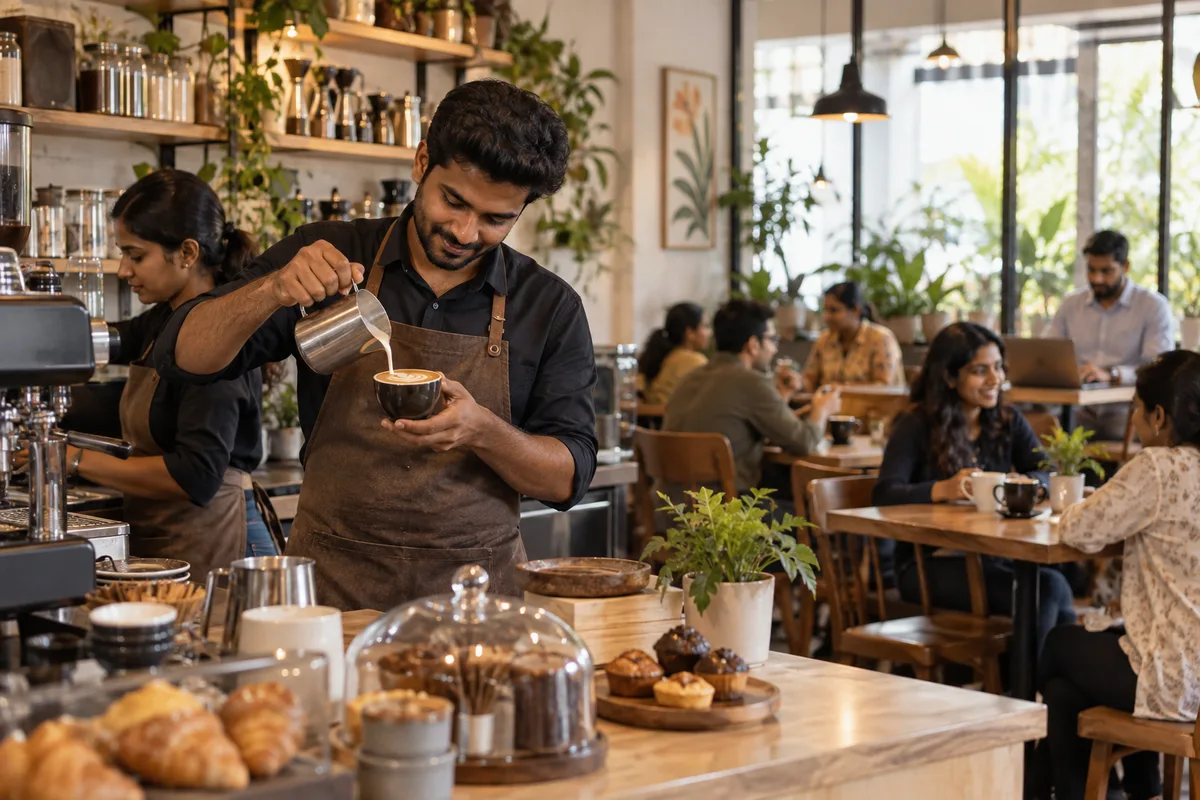
What follow up systems means
A follow-up system is the set routine for calling, messaging or emailing an enquiry more than once, since most buyers do not decide on the first conversation. GullySales sets the number and timing of follow-ups so an undecided buyer keeps hearing from you until they decide either way.
Last updated 14 Nov 2026.
For coffee shops
Where it usually goes wrong, and what we would do.
“The second visit is the one that matters”
A first-timer who liked the coffee still forgets the street name within days. A short message or a reason to return, sent with permission, decides whether the shop becomes a habit or stays a pleasant memory.
“A bag of beans runs out on a predictable day”
A bag lasts a few weeks for a home brewer. A reminder timed to that gap, offering the same bean or a new one, reaches the buyer at the moment they would otherwise search for another roaster.
“The office quote dies in silence”
A pantry proposal sent and never chased is lost not because the price was wrong but because the office manager got busy. A single polite check-in after the sample cup keeps the offer on the table and shows the shop is organised.
“Event guests are warm and then cold”
People who attended a tasting or a workshop are the warmest contacts the shop has. If nobody follows up with a thank you and the next date, the interest fades on its own and the shop pays for the event for nothing.
What we do
What we deliver for coffee shops.
The work available for this need. We agree the deliverables and responsibilities for your engagement in writing.
A follow-up map
A chart showing each trigger, such as first visit, bean purchase, pantry enquiry or workshop, with the message and the person who sends it.
Result: Every trigger has a named owner and a message.
Message templates in the shop's voice
Short WhatsApp and text messages for thanks, reorder, quote check-in and event invitation, written plainly.
Result: Staff send a message in under a minute without inventing wording.
A reorder reminder for beans
A reminder linked to the bag size and the buyer's last order, with a one-tap way to reorder.
Result: A buyer can reorder from the message itself.
An office quote tracker
A short list of proposals sent, the date of the last contact and the next step.
Result: No quote is left without a next action.
A pause and opt-out routine
A clear way for people to stop messages, honoured every time.
Result: Anyone who asks to stop is removed from the list.
How the result is measured
- Follow-up completion rate
- Average number of follow-ups before close
- Enquiries closed after repeat follow-up
Recorded as a baseline before work starts, so every later report has an honest comparison.
What to capture or send
The moments after a visit or a quote when a coffee shop's message matters.
- Thank-you after a first bag purchase
- A short message with the brew guide for the beans bought. Record that it was sent and any question the customer asked.
- Reorder note for a bag
- Sent when the bag should be near its end, to a customer who agreed to hear from the shop. Offers the same roast or a new lot.
- Quote to an office
- Send the beans, the price and the trial offered in writing. Record the date sent and the name of the person who will decide.
- After a sample cup
- A message to the admin or the owner who tasted. Asks what they thought, records the reply and the next step.
- Event guest follow-up
- A message to the host after an event, with thanks and the option to book the room again. Record any guest who asked about the shop.
- Pause and opt-out
- A message that confirms a customer's request to stop and records it, so the shop never writes to that number again.
Who it is for
This is written for these coffee shops.
- Specialty coffee shops with their own roast
- Independent neighbourhood coffee shops
- Coffee kiosks and carts near offices and metro stations
- Roaster-retailers selling beans online and in store
- Coffee shops inside co-working spaces and bookshops
- Chain coffee outlets opening in new cities
- Drive-through and highway coffee stops
- Cold-brew and brew-bar counters
Before you decide
When this may not be the right fit.
- The shop holds no contact with permission, so there is nobody to send a message to.
- Nobody owns the office quotes, so a reminder system would remind people of a quote that no one is chasing.
Before you decide
Agree the work. Know how to judge it.
Follow-up systems for coffee shops: use these checks to prepare, choose the scope, and review what changes.
Bring the right evidence
Trace recent enquiries from arrival to the last recorded action. Include a won enquiry, an unsuitable one, and one that went quiet, with personal details removed for the initial discussion.
Make the scope clear
Agree who accepts each enquiry, what makes it qualified, and how ownership changes. Include a rule for missed replies and a clear reason for closing an enquiry.
Check the work in use
Pick an enquiry at random and ask the team to find its owner, latest conversation, and next action. Check that the record agrees with what actually happened.
Know when to change course
If no one has capacity to respond, assign that responsibility before buying more leads. Automation can support the owner, but it cannot replace an unresolved handover.
These are discussion points, not a fixed package. GullySales confirms the deliverables, responsibilities, fee, and term in writing after reading your brief and speaking with you.
Before we start
What to have ready before the work starts.
The records, access and decisions this work needs from coffee shops. Anything missing is noted in the written scope, with who will supply it.
- Chats with open quotes and requests
- Screenshots or exports of conversations where an office quote, event enquiry or bean request went unanswered. They show how you ask and how people reply. Even a handful of old threads shows how people reply, and which answers the shop gave. We read them to learn your wording and to find contacts still worth a reply.
- Your rule for dropping a contact
- The owner's decision on how many tries an enquiry deserves before it moves to the closed list. This is a judgement about your time and the customer's patience. If the shop prefers two tries and then a pause, say so, and we write the rule that way. If you cannot choose, we suggest a rule for you to approve.
- Regulars who agreed to messages
- Names and numbers of customers who said yes to hearing from the shop, with how they agreed. Without agreement we do not message anyone. A customer who gave their number for a bag reminder is not agreeing to every offer, so we record what each person said yes to. Customers who have not agreed stay on a list for the counter team to ask in person.
- Bean sizes and usual run-out times
- The bag sizes you sell and your sense of how long a household takes to finish one. The reminder must come near the time a bag runs out. Different beans and pack sizes run out at different times, and we ask your baristas to estimate the gap so reminders land when the bag is nearly empty. If you are unsure, we watch reorders and adjust the reminder with you.
- Event dates and capacity
- Dates, seating and headcount for workshops, tastings and room bookings. Event follow-ups must not promise space you do not have. Dates, seating, a headcount limit and whether food is included. Follow-ups must not promise a table the shop cannot give, and a workshop held in the evening needs different timing from one held in the morning. Undecided dates hold the sequence back.
How it works
How the follow up systems work runs
The work itself, in order. How an engagement starts, from your brief to a written scope, is set out on our method page.
- 1
List the moments a customer goes quiet
We sit with you and the baristas and list when contact drops: after a first visit, after a bag of beans runs out, after an office quote, after a workshop or event. You rank them by what the shop loses. The shop loses sales where a warm contact never hears from it again. These moments decide which follow-ups are built first, and the others wait.
- 2
Count the open enquiries and quotes
We open your chats, notes and the order book and list every office quote, event enquiry and bean request that never reached an answer. You tell us which are dead and which are waiting on you. Quotes that were declined with a reason go on a separate list, because they are a source of learning. The count of unanswered contacts is the baseline we read results against.
- 3
Set when a contact is closed
You decide what counts as closed: an order placed, a clear no, or silence after a set number of tries. Without a rule, follow-ups either never stop or stop too soon. We also count how many arrived through the counter, since a barista may hold promises the owner never heard. We write the rule on one page, and put the date and reason into the record when a contact closes.
- 4
Write messages in the shop's own voice
We draft the thank-you after a first visit, the reminder when a bag is likely to be finished, the office quote check-in and the event thanks. You edit each until it sounds like the shop. We read each message aloud to a barista, and anything that sounds like a form letter is changed. A message that reads like a template is rewritten before it is used.
- 5
Give every message a named sender
Each follow-up is assigned to someone by name: a barista for the counter note, the owner for office quotes, a manager for event guests. We enter them as tasks with reminders. We also name a back-up person for each task, so a missed shift does not stall the customer. A step without a name is removed, since it is the step that gets forgotten.
- 6
Read replies and revise the routine
After the messages have run, we read the replies and the closed contacts against the baseline: second visits, bean reorders, quotes answered. You see which messages got replies and which were ignored. A customer who does not answer a single reminder is not chased again. You decide what to reword, what to stop and which customers to leave alone.
Where this fits
Three pieces of sales work, in this order.
This work sits inside sales process design, at stage 2, qualification. The audit comes before it, and sales management keeps it running.
Step 1
Sales audit
Find where deals are being lost and what to fix first.
Start here if you cannot say where orders are lost.
Step 2 · you are here
Sales process design
One written way to sell, from first enquiry to repeat order.
Start here if every salesperson sells differently.
Step 3
Sales management
A target, a review routine and someone who owns the number.
Start here if the team has targets and no routine.
FAQ
Questions owners ask before they call.
Not here? More answers, or ask on WhatsApp.
Will follow-up messages annoy customers?
Who sends the follow-ups in a busy shop?
Can this be automated?
When should an office quote be chased?
How do we follow up a guest who came to a workshop?
What do we do when a customer asks us to stop?
How much does it cost?
How long is the contract?
How soon will we see results?
Who will actually do the work?
More for coffee shops
Related work to consider.
Closest to this: leads and follow-up
Also for coffee shops
Or start from the overview: sales and marketing for coffee shops.
Your next practical step
Tell us what you are trying to grow, and we will read it before we call.
Eight short steps, mostly taps. Skip anything you would rather answer on the call.