Coffee shops · Lead generation
Find the office pantry, the bean buyer and the event host before another roaster does.
Lead generation for a coffee shop is the work of turning people who have not yet bought into named enquiries: an office wanting pantry coffee, a home brewer wanting a bag, a group wanting a room. GullySales works on where those enquiries start, who answers them and how each one is written down.
Scope, fee, reporting and term are agreed in writing after we have read your brief and spoken to you.
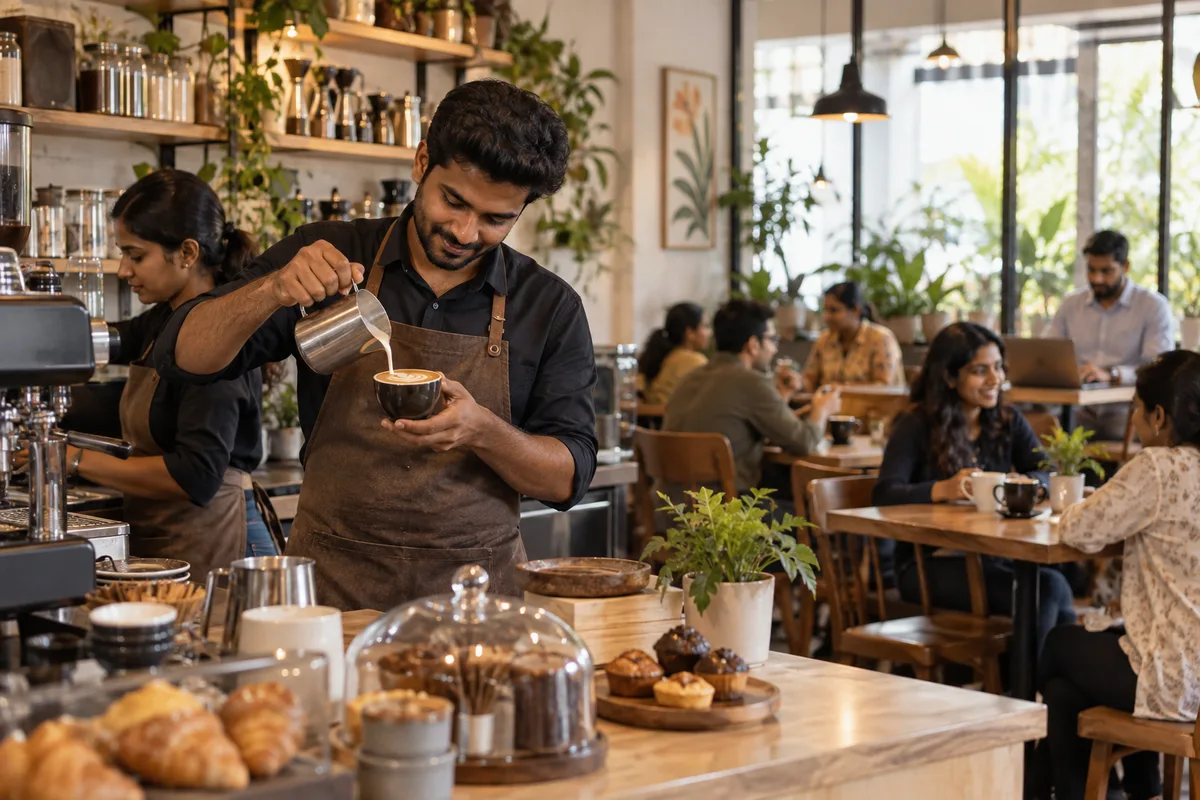
What lead generation means
Lead generation is the combined work of every channel that brings in a new enquiry, whether from search, adverts, referrals or a stall at an exhibition. GullySales runs these channels together and reports the number of enquiries each one produced, not the activity behind it.
Plan the next part of the work
Last updated 21 Nov 2026.
For coffee shops
Where it usually goes wrong, and what we would do.
“A walk-in is a sale, not a lead”
A person who buys one cup and leaves has paid once and told the shop nothing. Until the counter holds a name and a number given with permission, there is no way to reach that person again, however good the coffee tasted.
“The office enquiry arrives sideways”
A company wanting pantry coffee rarely walks in. The question comes as an Instagram DM, a call to the counter or a number passed along by a friend, and it lands with whoever is nearest the phone. That is the lead the shop is least ready to catch.
“Bean buyers raise a hand in search”
A home brewer typing an origin, a roast level or a brew method into search already wants a bag. If the shop has no page naming what it roasts, that buyer ends up on a marketplace listing and the shop never learns the search happened.
“A spare room is a lead source nobody advertises”
Book clubs, small meetups and photographers look for a quiet room with good coffee. A shop with an empty back table in the afternoon can host them, but only if somewhere a planner can find says so.
What we do
What we deliver for coffee shops.
The work available for this need. We agree the deliverables and responsibilities for your engagement in writing.
A lead sheet that records the source
A simple sheet with a column for how each enquiry arrived: counter, DM, call, form or Google profile. Staff add a line as the enquiry comes in.
Result: You can see which door the office and bean enquiries come through.
A counter capture line
One sentence the billing staff say and a QR code beside the machine, so a regular can give a number and agree to hear about new lots.
Result: Every yes at the till becomes a name, a number and a recorded consent.
A bean enquiry form
A short form on the bean page asking what the buyer brews with and how much they drink, so the reply can suggest a bag instead of a price list.
Result: The shop knows what each bean enquiry is about before replying.
An office enquiry owner
One named person on the shop's side who takes pantry questions, with a reply script and a sample-cup offer.
Result: No office enquiry sits in a DM with nobody assigned.
A room-hire note
A short description of the space, the hours it is free and what the shop provides, posted on the profile and the website.
Result: A planner searching for a venue finds the offer and the contact route.
How the result is measured
- Relevant enquiries by source
- Duplicate and unsuitable enquiries
- Time to the first response
- Accepted enquiries reaching an agreed next step
Recorded as a baseline before work starts, so every later report has an honest comparison.
What to capture or send
The moments a coffee shop can turn a visit into an enquiry it owns.
- Office pantry enquiry
- Record the company, the contact, the number of people and whether they want beans, a machine or a service. Name the person at the shop who quotes.
- Bean bag question at the counter
- Note the roast asked about, the brew method and the grind. Capture a number only if the customer agrees, and use it to offer the next bag.
- Event or room-hire request
- Record the date, the number of guests and the use of the room. Check the calendar before replying, and send a written price.
- Sample cup given to an office
- Write down who tasted, who liked it and who decides. A sample with no name written beside it is a free coffee.
- Wholesale request from another cafe
- Record the cafe, the beans wanted and the volume, and the owner who will quote. This buyer compares roasters on consistency.
- Source tag on every enquiry
- Mark whether it came from the counter, a post, a map profile or a recommendation, so the shop sees what is sending the enquiries.
Who it is for
This is written for these coffee shops.
- Specialty coffee shops with their own roast
- Independent neighbourhood coffee shops
- Coffee kiosks and carts near offices and metro stations
- Roaster-retailers selling beans online and in store
- Coffee shops inside co-working spaces and bookshops
- Chain coffee outlets opening in new cities
- Drive-through and highway coffee stops
- Cold-brew and brew-bar counters
Before you decide
When this may not be the right fit.
- Nobody at the counter is told who answers an office or bean enquiry, so a lead would sit in a chat with no owner.
- The shop cannot supply an office pantry or a large order at present, and enquiries for one would only be turned away.
Before you decide
Agree the work. Know how to judge it.
Lead generation for coffee shops: use these checks to prepare, choose the scope, and review what changes.
Bring the right evidence
Define the organisations or buyers you can serve and the reasons they would consider a conversation. Bring examples of accepted and rejected prospects so the selection rule is visible.
Make the scope clear
Agree the research sources, contact approach, qualification rules, and handover. Clarify which meetings count as accepted and what happens to replies that are not ready to buy.
Check the work in use
Review why a prospect was selected and what was learned from the response. Count held, relevant conversations separately from contacts found, messages sent, or meetings booked.
Know when to change course
If the same objection appears repeatedly, adjust the offer or buyer group before increasing outreach. Respect a request to stop contact and keep the exclusion in the record.
These are discussion points, not a fixed package. GullySales confirms the deliverables, responsibilities, fee, and term in writing after reading your brief and speaking with you.
Before we start
What to have ready before the work starts.
The records, access and decisions this work needs from coffee shops. Anything missing is noted in the written scope, with who will supply it.
- Till summary split by item type
- A report or screenshots from your billing system showing drinks, food, bean bags and any equipment for a recent stretch of trading. We need it to see where the money really comes from. It also shows which items carry the margin, so the offers we write protect them. If the system cannot split these, a rough count by the owner is acceptable and marked as rough.
- Notes of past office and group asks
- Any record of offices that asked about pantry coffee, groups that asked for a room, or hosts that asked about an event, even if it came to nothing. Chat screenshots will do. A page torn from an order book or a forwarded chat is fine, as long as a date and a name can be read. These show how enquiries actually arrive and what you replied, which sets our starting point.
- A named person for office enquiries
- One staff member or the owner who will answer any office or event enquiry and send quotes. Buyers like this want a person to call, and the counter team cannot take it during a rush. The owner can take the role, but it must be a person with phone and diary in hand, and not whoever happens to be at the machine. Without a named owner the enquiries pile up unanswered.
- Your bean range and pantry capacity
- A list of the beans you sell, the pack sizes, the grinds you offer and the quantity you can supply to an office without short-changing the shop. The offers we write must be ones you can fill. If the roaster who supplies you sets limits on volume, tell us, since an office offer cannot exceed what you can buy. Capacity you are unsure of is marked and settled by the owner first.
- Permission to ask customers at the counter
- The owner's agreement that staff may ask a customer where they heard about the shop or whether they would like to hear about beans and offers. Customers must agree before any number is recorded. The sentence is short and friendly, and staff may skip it when the queue is long or the customer seems hurried. If the owner is unwilling, the plan relies on online sources alone.
How it works
How the lead generation work runs
The work itself, in order. How an engagement starts, from your brief to a written scope, is set out on our method page.
- 1
Sort last year's tills by buyer
We start with what the till and the order notes already show: walk-in sales, bean bags sold, pantry deliveries, room bookings and group orders. You tell us which of these you want to grow and which you only tolerate. Anything nobody can place is marked unknown. What exists afterwards is a one-page split of who buys what, with the source marked wherever someone remembers it.
- 2
Ask the baristas where buyers come from
The staff at the counter hear how people found the shop, so we sit with two or three of them and write down what they recall: a friend, a passing glance, a reel, an office colleague, a bookshop event. They also tell us which questions strangers ask before buying beans. Their memory is imperfect, so we treat each source as a lead and not a fact. Their answers decide which sources we try first.
- 3
Write the offer for each enquiry type
We draft what an office manager, a home brewer and a group host each receive when they ask: a pantry sample and a plain price note, a bag with brewing guidance, a room description with seating. You strike out anything you cannot deliver. We also ask what each of these buyers would need to see before saying yes, such as a sample or a photograph. Nothing goes to a stranger until you have approved every offer.
- 4
Place the capture line at the counter
We agree one short sentence the barista can say, a card or code that leads to a message, and a place to write the answer without leaving the machine. You try it on a quiet morning with staff. We keep the card and the sentence to the least that works, because staff will not use anything long during a rush. We watch whether the line feels natural and drop it if customers back away.
- 5
Send test enquiries and watch the handoff
We send made-up enquiries as an office buyer, a bean customer and a group host would, through the number, form and message options you use. We see who receives each, where it is recorded and who replies. We also place a test enquiry through the room hire route, because that one reaches the owner by a different path and is easily lost. A message nobody owns is fixed here, before a real buyer meets it.
- 6
Compare sources with the starting sheet
Once the routes have run for a while, we put the new enquiries beside the source sheet written at the start. You see which routes brought pantry orders, bean buyers or room bookings, and which brought only curious questions. You also note which sources cost effort and which cost nothing. You decide which source to repeat and which to stop, using your own counts.
Where this fits
Three pieces of sales work, in this order.
This work sits inside sales process design, at stage 1, prospecting and lead generation. The audit comes before it, and sales management keeps it running.
Step 1
Sales audit
Find where deals are being lost and what to fix first.
Start here if you cannot say where orders are lost.
Step 2 · you are here
Sales process design
One written way to sell, from first enquiry to repeat order.
Start here if every salesperson sells differently.
Step 3
Sales management
A target, a review routine and someone who owns the number.
Start here if the team has targets and no routine.
FAQ
Questions owners ask before they call.
Not here? More answers, or ask on WhatsApp.
Do we need a big database to generate leads?
Can GullySales promise a number of office clients?
Is buying a phone number list a good shortcut?
How does a coffee shop find an office that wants a pantry supply?
Is it worth chasing offices if we are a small shop?
How long is the contract?
How soon will we see results?
Who will actually do the work?
What do you need from us?
What if we are not happy with the work?
More for coffee shops
Related work to consider.
Closest to this: leads and follow-up
Also for coffee shops
Or start from the overview: sales and marketing for coffee shops.
Your next practical step
Tell us what you are trying to grow, and we will read it before we call.
Eight short steps, mostly taps. Skip anything you would rather answer on the call.