Family restaurants · Buyer persona
Know the five people who decide where the family eats, and write for each.
A buyer persona for a family restaurant describes the people behind a table booking: the planner, the elder, the host of a celebration and the community organiser. GullySales works on who they are, what they check and which words reach each of them.
Scope, fee, reporting and term are agreed in writing after we have read your brief and spoken to you.
What buyer persona means
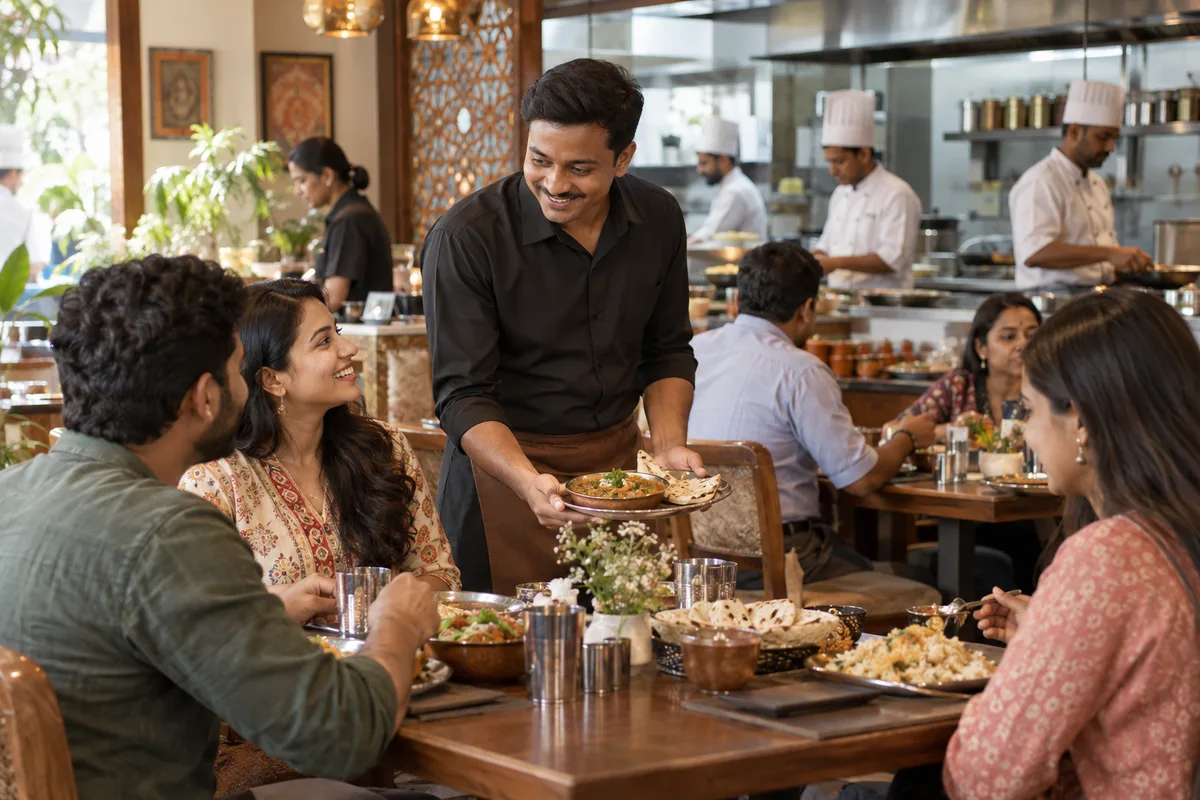
A buyer persona is a plain description of the kind of customer who actually buys from you. It includes what they search, what worries them and who else they ask before deciding. GullySales builds this from real enquiries and past sales rather than a generic template, then uses it to write every page and advert.
Last updated 14 Nov 2026.
For family restaurants
Where it usually goes wrong, and what we would do.
“The planner carries the whole list”
One adult holds the details for everyone at the table: the elder's diet, the child's fussiness, the uncle's dislike of waiting. Their question is whether the restaurant will cope, and every line on the listing is read against it.
“The elder judges comfort, not novelty”
A grandparent decides on steps, seats with backs, noise and the washroom. If the elder is uneasy at the door, the rest of the family leaves with them. Words about comfort reach this person better than words about a new dish.
“The celebration host wants nothing to go wrong”
The parent of a birthday child or the couple marking an anniversary is thinking about guests, cake and photographs. They ask who will manage the table and whether they may bring decorations, and they want one name to call.
“The organiser speaks for a group”
A society secretary or a temple committee member chooses for others, so they need a menu for a group, a contact and an easy answer if someone complains. This person recommends the restaurant again if the event goes smoothly.
What we do
What we deliver for family restaurants.
The work available for this need. We agree the deliverables and responsibilities for your engagement in writing.
Four short persona sheets
One page each for the planner, the elder, the celebration host and the organiser: what they check, what worries them and what they ask first.
Result: The whole team reads the same description of the buyer.
The questions each persona asks
A list of the questions heard on the phone and at the door, sorted by who asks them.
Result: Staff know which question belongs to which buyer.
Wording tested against the personas
The listing, the menu text and the booking replies rewritten using the words each persona uses.
Result: Descriptions use the household's vocabulary.
A map of who is on the table
A simple note of how many tables are elders, children, couples and mixed groups, from the booking records.
Result: The restaurant sees its own mix of guests.
A review of the floor routine
A walk through of the greeting, the seating and the first minutes for an elder and for a child.
Result: The owner has a list of small changes to try.
How the result is measured
- Enquiry match to persona
- Conversion rate by persona
- Content aligned to persona
Recorded as a baseline before work starts, so every later report has an honest comparison.
Who is asking
These are the people who ask a family restaurant for a table, and what each wants first.
- The planner of the Sunday lunch
- The planner wants a table for everyone, a plain dish for the children and a quiet corner for the elders. Seating is asked about before price.
- A grandparent choosing a quiet weekday lunch
- They want easy steps, soft seating and food that is not too oily. They arrive with a friend, and a long wait is the first thing they mention.
- The host of a child's birthday
- They want to know the cake rule, the decoration allowed and the set menu for the little guests. They compare you with the nearest party hall.
- The residents' welfare association secretary
- They want one quote for forty people, a fixed time and a clear way to split the bill. A written menu in one message wins them.
- A traveller on the highway with the family
- They want clean toilets, parking for a large car and food served fast. They decide at the roadside, so the board and the map listing do the work.
Who it is for
This is written for these family restaurants.
- Neighbourhood family restaurants
- Highway family dhabas and restaurants
- Restaurants inside residential townships
- Restaurants with a play area for children
- Family restaurants in malls and on mall food floors
- Multi-generation restaurants run by one family for decades
- Restaurants near temples, hospitals and schools
- Family restaurants with banquet or party hall space
Before you decide
When this may not be the right fit.
- You have never asked your own regulars why they chose you, so any persona would be a guess
- Your floor staff cannot say who sits at which table, so the personas could not be checked against real guests
- You serve only delivery orders, so the dining-room personas would describe people who never visit
Before you decide
Agree the work. Know how to judge it.
Buyer persona for family restaurants: use these checks to prepare, choose the scope, and review what changes.
Bring the right evidence
Write the decision the research must support, such as entering a market or choosing a buyer group. Separate what you know from sales records from what the team currently assumes.
Make the scope clear
Agree which buyers to speak to, which sources to review, and what access you can provide. Include lost enquiries and people who chose another supplier, where they are willing to take part.
Check the work in use
Look for source dates, sample limitations, and evidence that disagrees with the preferred answer. A recommendation should show how it follows from the findings.
Know when to change course
Do not treat a few positive conversations as proof of demand. Test the proposed offer with an actual buying decision before committing to a wider launch.
These are discussion points, not a fixed package. GullySales confirms the deliverables, responsibilities, fee, and term in writing after reading your brief and speaking with you.
Before we start
What to have ready before the work starts.
The records, access and decisions this work needs from family restaurants. Anything missing is noted in the written scope, with who will supply it.
- Names of families willing to talk
- We need families who will speak freely, not only the friendliest regulars. Even a short list from the manager works. Without it, the personas rest on staff opinion alone and may repeat what the owner already believes. Include at least one family that stopped coming, since their reason teaches more than praise does.
- The last booking diary entries
- We read who booked, for how many people and for what occasion. A diary showing mostly office lunches would give a very different persona from one full of birthdays, so we read it before any interview.
- Time with the senior waiter
- The waiter who has worked the floor longest knows who asks for what. An hour of their attention beats any questionnaire, but the restaurant must free them from service for it.
- A rule on speaking to guests
- Tell us whether guests may be approached at the table, by phone or only through the manager. Without a rule, interviews cannot start, because we never contact a family on our own. If interviews by phone are not welcome, we limit ourselves to short conversations at the table that the manager introduces.
- The current booking reply text
- Whatever the restaurant says to a family who asks for a table, on a card or in a message. We test the personas against it, and without it we cannot show where the wording misses their worry.
How it works
How the buyer persona work runs
The work itself, in order. How an engagement starts, from your brief to a written scope, is set out on our method page.
- 1
Decide who we describe first
You tell us which guest is hardest to keep: the planner who books, the elder who approves, the host of a celebration or the society organiser. We start with that one. The decision matters because each persona needs separate interviews and a restaurant has time for only a few.
- 2
Choose regulars to talk to
From the booking diary and the WhatsApp contacts, the manager picks a handful of families who have booked more than once and a few who tried once and did not return. You approve the list. We contact them only through you or the manager, with their consent. Where the diary has no phone numbers beside a name, the manager asks the family at their next visit, and that name waits until then.
- 3
Listen to what the families say
We speak with those guests and with the waiters who serve them, asking what they checked before booking, who in the family decided and what nearly made them go elsewhere. We write down their own words, because the exact words later become the wording on the page. Where two guests describe the same worry differently, we keep both phrasings, because the host of a birthday and a society organiser rarely use the same words for the same concern.
- 4
Check the sheets against the floor
The manager and senior waiter read each draft persona and mark what is wrong. A statement that the staff have never seen is removed. This stops a sheet drifting into a description of a person nobody serves.
- 5
Write the four sheets in plain words
From the interviews we write one short sheet for each persona: who they are, what they check, what worries them and the words that reassure. We keep the guests' own phrases. The sheets avoid invented ages or incomes, which we cannot know.
- 6
Use the sheets on one real task
We apply the personas to one live piece of work, perhaps the booking reply or a table card, and then compare how guests respond with the baseline we noted. You decide which other pages should be reviewed against the sheets.
Where this fits
Three pieces of sales work, in this order.
This work sits inside sales process design, at stage 0, foundation. The audit comes before it, and sales management keeps it running.
Step 1
Sales audit
Find where deals are being lost and what to fix first.
Start here if you cannot say where orders are lost.
Step 2 · you are here
Sales process design
One written way to sell, from first enquiry to repeat order.
Start here if every salesperson sells differently.
Step 3
Sales management
A target, a review routine and someone who owns the number.
Start here if the team has targets and no routine.
FAQ
Questions owners ask before they call.
Not here? More answers, or ask on WhatsApp.
Are these personas invented?
Why separate the elder from the planner?
Do we need a persona for the delivery customer?
How do we check the personas against real guests?
Can one person be two personas at once?
Do we share the personas with the waiters?
How much does it cost?
How long is the contract?
How soon will we see results?
Who will actually do the work?
More for family restaurants
Related work to consider.
Closest to this: strategy and research
Also for family restaurants
Or start from the overview: sales and marketing for family restaurants.
Your next practical step
Tell us what you are trying to grow, and we will read it before we call.
Eight short steps, mostly taps. Skip anything you would rather answer on the call.