Non-vegetarian restaurants · Buyer persona
Know which of your diners orders at midnight and which one books for twenty.
A buyer persona for a non-vegetarian restaurant is a written description of the distinct types of diner who choose you, and why each one does. GullySales works on building those descriptions from your own orders, reviews and counter conversations.
Scope, fee, reporting and term are agreed in writing after we have read your brief and spoken to you.
What buyer persona means
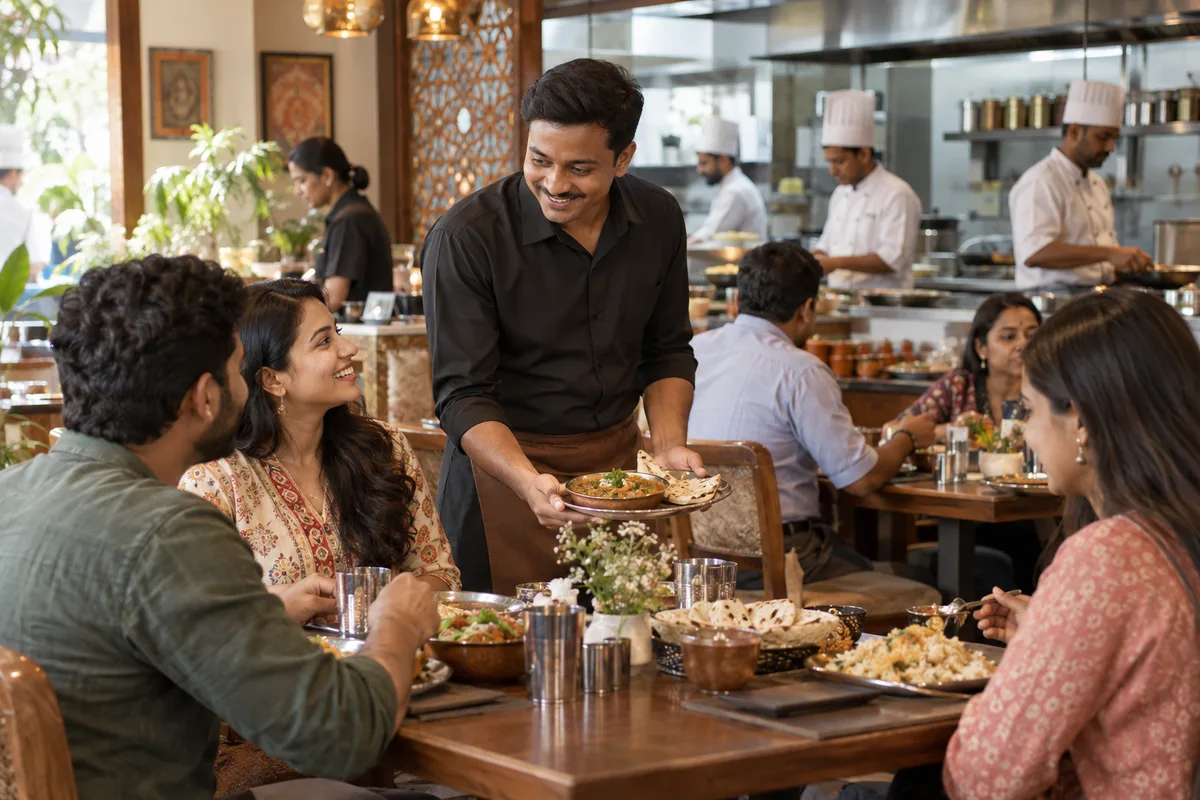
A buyer persona is a plain description of the kind of customer who actually buys from you. It includes what they search, what worries them and who else they ask before deciding. GullySales builds this from real enquiries and past sales rather than a generic template, then uses it to write every page and advert.
Also for non-vegetarian restaurants
Sales and marketing for non-vegetarian restaurants, the overview.
Last updated 14 Nov 2026.
For non-vegetarian restaurants
Where it usually goes wrong, and what we would do.
“The family on Sunday and the student at midnight are different buyers”
The family wants a table, a children's portion and parking. The student wants a delivery in good time and a price that fits a pocket. A single message addressed to both speaks to neither. Counting each type from your billing shows who truly pays the bills.
“The party organiser buys for a group”
The office manager or society secretary is accountable for the choice. They want a menu, a per-plate figure, a delivery time and one name to call, and they will not gamble on an unknown kitchen without proof it works.
“The cautious diner checks the meat first”
Some diners ask about halal, jhatka and freshness before they look at the price. They read the sourcing page and the reviews that mention the meat, and a restaurant that answers plainly gets the booking.
“The festival diner buys once a year and remembers”
The family that comes for Iftar, Eid or a Christmas lunch carries a lasting impression. The restaurant that kept their name and wrote to them the next year gets them back. A yearly note to last year's guests is the cheapest follow-up there is.
What we do
What we deliver for non-vegetarian restaurants.
The work available for this need. We agree the deliverables and responsibilities for your engagement in writing.
Four to five written personas
One page for each type of diner, with what they order, when, how they find you and what worries them.
Result: The owner can read a persona and recognise a regular.
A persona built from your own orders
The mix of dishes, order sizes and times pulled from your billing and app reports, not from guesses.
Result: Each persona points to the records it came from.
A message for each persona
A short opening line for the family, the student, the planner and the cautious diner, matched to their worry.
Result: Each type of diner hears the line that answers their question.
A list of questions to ask at the counter
Three questions staff can ask a regular to learn why they come and what would bring them back sooner.
Result: Staff have a prompt, and the answers are written down.
A map of where each persona looks
A note on whether each type of diner searches Maps, scrolls the apps, asks on WhatsApp or follows a creator.
Result: Spend is pointed at the places each diner uses.
How the result is measured
- Enquiry match to persona
- Conversion rate by persona
- Content aligned to persona
Recorded as a baseline before work starts, so every later report has an honest comparison.
Who is asking
Each non-veg diner asks something different before they choose where to eat.
- The family at Sunday lunch
- They want a table for eight, a dish for the child who dislikes spice and a bill that does not surprise.
- The student ordering at midnight
- They want to know whether the kitchen is open, what the delivery fee is and how long the biryani is held hot.
- The party organiser for forty
- They want handi sizes, the price per plate, a delivery time they can plan around and a person to ring.
- The cautious diner
- They want to know where the meat comes from and how the kitchen keeps it, before they order for a child or elder.
- The festival diner
- They want to know whether the restaurant is open on the day and what the special menu is, a week before.
- The office lunch buyer
- They want a single invoice, a fixed delivery slot and a menu that includes a vegetarian dish for a colleague.
Who it is for
This is written for these non-vegetarian restaurants.
- Biryani restaurants
- Kebab and tandoor restaurants
- Seafood and coastal non-veg restaurants
- Dum and Mughlai restaurants
- Chicken and fried chicken specialists
- Mutton and goat meat specialists
- Late-night non-veg joints and highway restaurants
- Military hotels and regional meat restaurants
Before you decide
When this may not be the right fit.
- You have no order or booking record, and personas would be guessed until the counter keeps one.
- One dish and one kind of diner fill the restaurant already, and the work is to keep them returning.
- No one will adjust a message or an offer for each persona, so the sheets would go unread.
Before you decide
Agree the work. Know how to judge it.
Buyer personas for non-veg restaurants: use these checks to prepare, choose the scope, and review what changes.
Bring the right evidence
Write the decision the research must support, such as entering a market or choosing a buyer group. Separate what you know from sales records from what the team currently assumes.
Make the scope clear
Agree which buyers to speak to, which sources to review, and what access you can provide. Include lost enquiries and people who chose another supplier, where they are willing to take part.
Check the work in use
Look for source dates, sample limitations, and evidence that disagrees with the preferred answer. A recommendation should show how it follows from the findings.
Know when to change course
Do not treat a few positive conversations as proof of demand. Test the proposed offer with an actual buying decision before committing to a wider launch.
These are discussion points, not a fixed package. GullySales confirms the deliverables, responsibilities, fee, and term in writing after reading your brief and speaking with you.
Before we start
What to have ready before the work starts.
The records, access and decisions this work needs from non-vegetarian restaurants. Anything missing is noted in the written scope, with who will supply it.
- A week of bills and delivery summaries
- The sheets are drawn from real orders. A sample with names covered is enough. Without it, the sheets rest on staff memory and are marked provisional.
- Time with the cashier and two waiters
- They hear who diners are. Half an hour each, away from the rush, is enough. Without it, the sheets miss the regulars.
- Your list of diners you want more of
- A restaurant that serves everyone has no focus. Tell us which tables you want to fill and which you can leave. Without it, every sheet gets equal weight.
- Permission to speak to diners at the counter
- We ask only with your agreement and the cashier's help. Say who may be asked and who may not. Without permission, the sheets rely on reviews.
- A reader for the finished sheets
- One person must say if a sheet rings true. Name the manager or owner. Without one, the sheets stay in draft.
How it works
How the buyer persona work runs
The work itself, in order. How an engagement starts, from your brief to a written scope, is set out on our method page.
- 1
Sort a week of bills by table
We take a sample of bills and delivery orders and sort them by type of table: a family on Sunday, a student late at night, a party of ten, an office order. You help us mark what each ordered and when. What exists afterwards is a rough set of diner types drawn from your own sales.
- 2
Ask staff why regulars return
The waiters and the cashier know the regulars by dish and by name. We ask the same questions of each: who comes back, who complains, who orders for others. You tell us who to speak to. We write down their words as they are.
- 3
Speak to five diners at the counter
With your agreement, we ask five diners a few questions as they pay: why this restaurant, what nearly made them go elsewhere, what they check about the meat. The questions are the same for each. Diners who prefer not to answer are thanked and left alone.
- 4
Write the persona sheets from the evidence
We write four or five sheets: the family, the late-night diner, the party organiser, the cautious diner and the festival buyer. Each says what the person wants, what they check first and what makes them leave. You read each and strike the ones you do not recognise. We also note on every sheet the dish that person orders first and the day of the week they come, because the head cook can then check whether the sheet matches what the kitchen sees.
- 5
Turn each sheet into a message and a place
For each persona we write the line that suits them and the place they look: the map, the menu page, the chat, the festival post. You say which lines the kitchen can honestly stand behind. The sheet becomes the guide your team uses when writing a reply or a post.
- 6
Test the sheets against the next month of orders
Staff mark which persona each large order or enquiry fits. We compare this with the baseline of bills sorted at the start and see which type orders more. We revise a sheet that does not match, and we drop a sheet that no order has fitted. We do not promise a count of orders from any type of diner.
Where this fits
Three pieces of sales work, in this order.
This work sits inside sales process design, at stage 0, foundation. The audit comes before it, and sales management keeps it running.
Step 1
Sales audit
Find where deals are being lost and what to fix first.
Start here if you cannot say where orders are lost.
Step 2 · you are here
Sales process design
One written way to sell, from first enquiry to repeat order.
Start here if every salesperson sells differently.
Step 3
Sales management
A target, a review routine and someone who owns the number.
Start here if the team has targets and no routine.
FAQ
Questions owners ask before they call.
Not here? More answers, or ask on WhatsApp.
We serve everyone. Do we need personas?
Where does the information come from?
When should personas change?
How do we learn what the cautious diner wants to know?
How many personas are enough for one restaurant?
Do personas mean we refuse some diners?
How much does it cost?
How long is the contract?
How soon will we see results?
Who will actually do the work?
More for non-vegetarian restaurants
Related work to consider.
Closest to this: strategy and research
Also for non-vegetarian restaurants
Or start from the overview: sales and marketing for non-vegetarian restaurants.
Your next practical step
Tell us what you are trying to grow, and we will read it before we call.
Eight short steps, mostly taps. Skip anything you would rather answer on the call.