Cold-chain logistics providers · Local SEO
Be the reefer operator a shipper finds when they search near the cold store or port.
Local SEO for a cold-chain provider means appearing in map and local results for the towns where your vehicles are based and loaded. GullySales sets up your business profile, base-town pages and the local signals that match a shipper searching close to your yard.
Scope, fee, reporting and term are agreed in writing after we have read your brief and spoken to you.
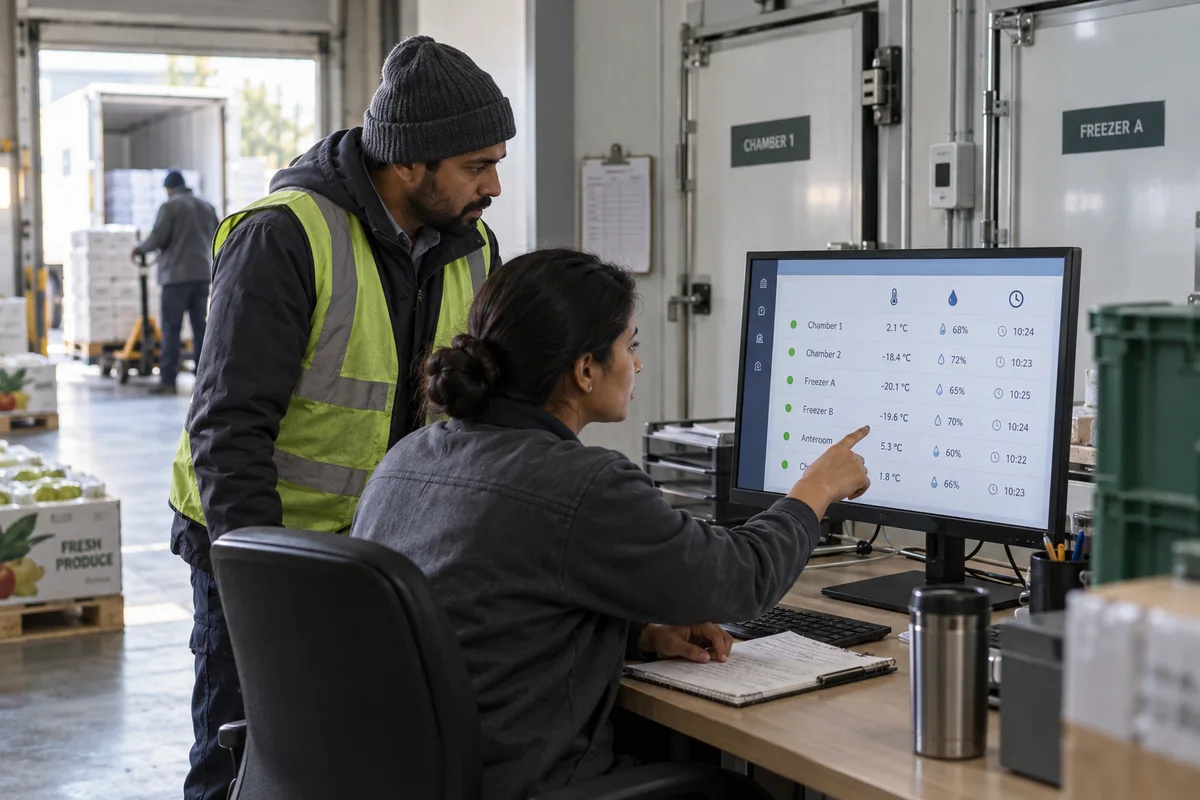
What local SEO means
Local SEO is the work of making your business show up for searches that name your town or locality, such as a service plus an area name. GullySales sets up locality pages, local citations and map listings so nearby customers find you before a competitor across town.
Also for cold-chain logistics providers
- SEO for cold-chain logistics providers
- Website for cold-chain logistics providers
- Lead generation for cold-chain logistics providers
- Social media marketing for cold-chain logistics providers
- Content marketing for cold-chain logistics providers
- Buyer personas for cold-chain logistics providers
- CRM for cold-chain logistics providers
- Follow-up systems for cold-chain logistics providers
Sales and marketing for cold-chain logistics providers, the overview.
Last updated 18 Oct 2026.
For cold-chain logistics providers
Where it usually goes wrong, and what we would do.
“The yard and the loading point are what a shipper searches near”
A dairy or processor looking for a reefer wants a vehicle that can reach the plant in time for loading. A map listing that shows your yard, vehicles and phone line close to their location is the first thing they see.
“A business profile with no vehicle detail looks empty”
A listing that gives only a name and a phone line tells a shipper nothing about temperature bands or fleet. Services, vehicle types and photos of the reefers with the cooling unit visible let the shipper judge fit before calling.
“Cold store neighbours are a local source of introductions”
A cold store or a port-side freezer facility sees every tenant's transport trouble. Being named on their lists and linked from their pages places you where shippers already look when a vehicle fails.
“Reviews from shippers need a careful ask”
A quality head is unlikely to write a public review about cargo handling. A short request to the logistics contact, after a clean trip, is more likely to be answered and keeps the shipper's data out of the post.
What we do
What we deliver for cold-chain logistics providers.
Every deliverable, what it covers for you, and the result it is there to produce. Nothing here is an extra.
Business profile set up for a transport operator
Correct business type selection, service area, vehicle types, base address and hours for dispatch, with photos of the fleet.
Result: A profile that tells a shipper what you run before they call.
Base-town and depot pages
One page for each town where you load, naming the yard, nearby industrial areas and the routes leaving from there.
Result: A shipper searching that town finds a page for it.
Listings kept consistent
Name, address and phone line matched across trade directories and map listings.
Result: The same details appear on every listing.
Cold store and port partner links
A list of cold stores, terminals and packers near your yards, and a short note asking for a mention where it suits them.
Result: A set of local partners who can name you when asked.
A review request after a clean trip
A short message sent to the logistics contact after a delivery, with the profile link.
Result: A repeatable way to ask for a review after a good trip.
How the result is measured
- Map pack ranking
- Local search visibility
- Enquiries by locality
Recorded as a baseline before work starts, so every later report has an honest comparison.
Who it is for
This is written for these cold-chain logistics providers.
- Reefer truck operators for dairy, ice cream and frozen foods
- Temperature-controlled transport for pharma and healthcare distributors
- Seafood and meat transport from ports and processing units
- Fruit, vegetable and flower carriers on long routes
- Multi-temperature vehicle and shared reefer load operators
- Insulated box and last-mile cold delivery services
- Cold chain providers serving retail and QSR chains
- Reefer container haulage near ports and inland depots
How it works
From your first message to the first report.
No open-ended retainer. Every step gives you something in writing.
First
Your brief
You tell us what you need in a few short steps: your business, what you want, where enquiries come from and how they are handled.
After the brief
A conversation and a written scope
We read it, then talk with whoever handles your enquiries. If you want our help, the scope, the fee and the reporting come in writing, and nothing starts before you have read them.
Before work starts
Baseline recorded
The numbers this work is meant to move, such as enquiries, quotations, orders, visits or renewals, written down so every later report has an honest comparison.
After the baseline
The first fix goes live
The fix we agreed to start with is put in place and measured against the baseline, whether that is a reply, a follow-up, a page, a listing or the handover between marketing and sales.
As agreed
Report against the baseline
What moved, what did not, and what changes next, in plain words. How often you get it is set in writing before work starts.
At renewal
Renew on the numbers
The term ends and you decide whether to continue from the results. The length is agreed in writing before anything starts.
How the local SEO work runs
- 1
Audit every listing
We check the Google Business Profile and directory listings for every branch against what should actually be shown.
- 2
Complete and correct
Profiles are filled in fully and inconsistent details are corrected across every directory found.
- 3
Build location pages
Each branch gets a page written for its own area, not a copy of the head office page with the address changed.
- 4
Set up review handling
A simple process for requesting and responding to reviews is put in place with whoever is closest to the customer.
- 5
Report and adjust
Map actions and enquiries per branch are reported, and branches falling behind are prioritised the next month.
Why us
Why owners pick GullySales over an agency.
Marketing and sales, as one job
Most agencies stop at the enquiry. We also fix what happens after it: the reply, the follow-up, the quote and the CRM.
The person on the first call does the work
No account managers in between. You are never handed to someone you have not met.
A baseline before anything starts
Your numbers are written down on day one, so every later report compares against something honest.
The fee in writing, split three ways
Our time, your media spend and production on separate lines. You always see what goes to us.
No guarantees we cannot keep
The term is agreed in writing and never a default twelve months. We never promise a ranking or a lead count, because nobody controls those.
One office, and we say so
Nagarbhavi, Bengaluru. We work across India by call and WhatsApp and travel when a session needs to be in person.
#257, 3rd floor, Sri Nanjundeshwara Complex, Nagarbhavi 8th Block, Outer Ring Road. How we work.
Your brief
Tell us what you need, and we will read it before we call.
Eight short steps about your business, what you want and who decides. Most questions are a tap, and you can skip any you would rather answer on the call.
FAQ
Questions owners ask before they call.
Not here? More answers, or ask on WhatsApp.
We serve many cities. Which base do we list?
Do shippers really search on maps?
What photos should we upload?
How much does it cost?
How long is the contract?
How soon will we see results?
Who will actually do the work?
What do you need from us?
What if we are not happy with the work?
More for cold-chain logistics providers
Everything else we would do for you.
Closest to this: search and visibility
Also for cold-chain logistics providers
Or start from the overview: sales and marketing for cold-chain logistics providers.
Your next practical step
Tell us what you are trying to grow, and we will read it before we call.
Eight short steps, mostly taps. Skip anything you would rather answer on the call.