Institutional food suppliers · Social media
Show kitchens a supplier who is awake at five and packs the order right.
Social media for an institutional food supplier means posting the proof a purchase manager wants to see: the godown, the packing, the van and the grade. GullySales plans what is posted, where, and how an enquiry from a post reaches your phone and your record.
Scope, fee, reporting and term are agreed in writing after we have read your brief and spoken to you.
What social media means
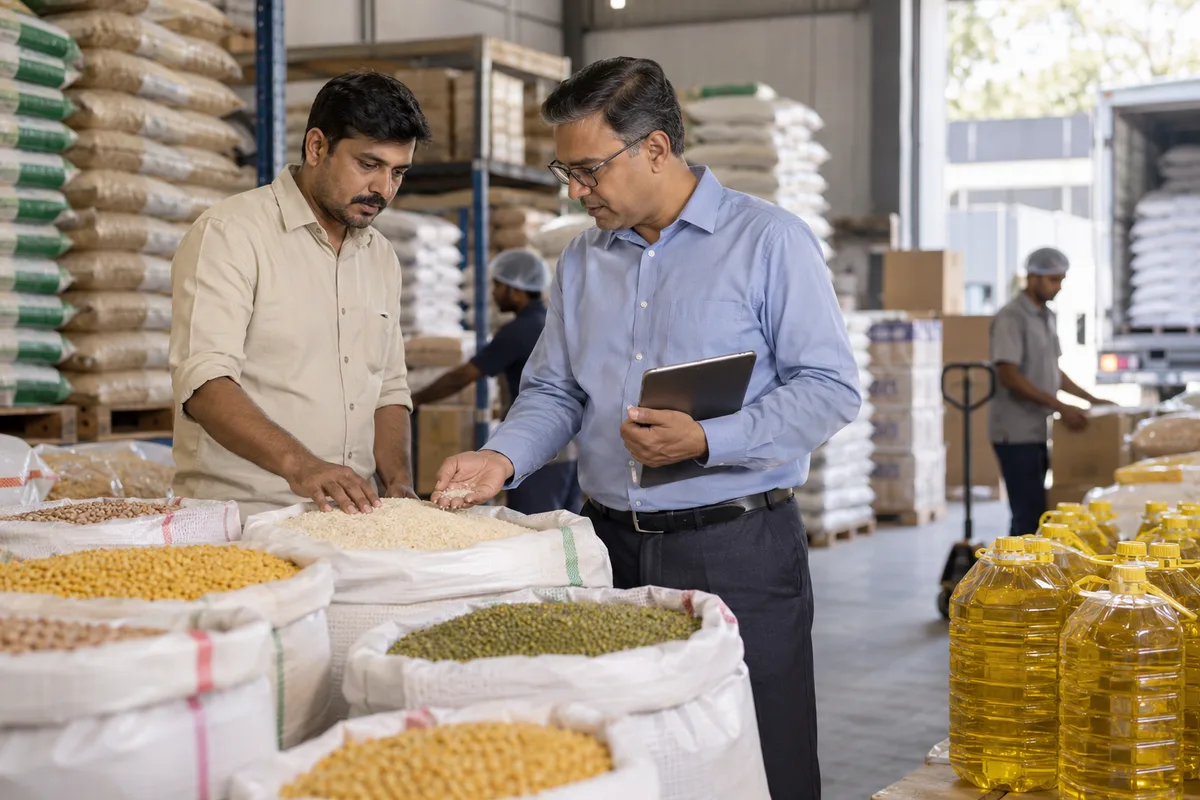
Social media is the ongoing posting your business does on platforms such as Instagram, Facebook and LinkedIn to stay visible to customers and prospects between purchases. GullySales plans a posting calendar, writes captions and designs the images so the page looks active and answers what a visitor would ask.
Also for institutional food suppliers
- Content marketing for institutional food suppliers
- SEO for institutional food suppliers
- Lead generation for institutional food suppliers
- Email marketing for institutional food suppliers
- CRM for institutional food suppliers
- WhatsApp marketing for institutional food suppliers
- Sales process for institutional food suppliers
- Sales management for institutional food suppliers
Sales and marketing for institutional food suppliers, the overview.
Last updated 6 Oct 2026.
For institutional food suppliers
Where it usually goes wrong, and what we would do.
“The buyer is a person in a kitchen, so post for that person”
A hostel warden or hotel chef does not follow a food supplier to be entertained. They look at the profile to see whether the operation is real. A clean photo of graded onions in crates, labelled and loaded, answers the question better than a festival greeting.
“A posted rate goes stale before the van reaches the road”
Tomato and onion rates move, and a rate in a post is quoted back after it has changed. Post the item, the grade, the pack and the delivery slot. Keep rates for the dated sheet sent to the kitchen that asks.
“Photographing a client's kitchen needs their consent”
A picture of a hostel mess or a hospital kitchen can show staff, residents or patients. Ask the institution in writing before any post that shows its premises or people, and name no client without their agreement. Food advertising rules differ, so check with your own adviser.
“A post that brings a message needs somewhere to land”
A caterer sees a post and sends a WhatsApp message asking for toor dal. If nobody answers until evening, that caterer has bought elsewhere. The post is only worth the reply routine behind it.
What we do
What we deliver for institutional food suppliers.
Every deliverable, what it covers for you, and the result it is there to produce. Nothing here is an extra.
Profile set-up on the platforms that fit
A business profile on Instagram, Facebook and LinkedIn with your supply lines, delivery area, licence number as printed and a way to message you.
Result: A buyer who finds you on any platform sees the same business.
Plan of post types for a supplier
A set of repeatable post types: godown and packing, a sample set, a delivery van loaded, a grade explained, a new item added.
Result: You know what to photograph on a normal morning.
Photo and caption guide for your team
A short guide telling the packing and van staff what to capture, from which angle, and what to leave out, such as customer premises and faces.
Result: Posts come from the floor without anyone staging them.
LinkedIn outreach to purchase heads and facility firms
Profile and message wording for reaching canteen contractors, facility management firms and hospital stores in-charges.
Result: Contractors who run several kitchens can find and check you.
Message-to-record routine
Every enquiry that arrives from a post is noted with the source, the item asked and the kitchen type, then answered from a fixed reply.
Result: Social enquiries are counted and answered, not lost in a chat.
How the result is measured
- Posts published
- Engagement rate
- Enquiries from social profiles
Recorded as a baseline before work starts, so every later report has an honest comparison.
Who it is for
This is written for these institutional food suppliers.
- Rice, dal and grain suppliers for hostels and canteens
- Fresh vegetable and fruit suppliers
- Dairy, paneer and egg suppliers
- Meat, poultry and fish suppliers
- Edible oil, spice and grocery wholesalers
- Frozen and processed food suppliers for hotels and restaurants
- Suppliers to school meal and government hostel kitchens
- One-stop suppliers who deliver a kitchen's full list
How it works
From your first message to the first report.
No open-ended retainer. Every step gives you something in writing.
First
Your brief
You tell us what you need in a few short steps: your business, what you want, where enquiries come from and how they are handled.
After the brief
A conversation and a written scope
We read it, then talk with whoever handles your enquiries. If you want our help, the scope, the fee and the reporting come in writing, and nothing starts before you have read them.
Before work starts
Baseline recorded
The numbers this work is meant to move, such as enquiries, quotations, orders, visits or renewals, written down so every later report has an honest comparison.
After the baseline
The first fix goes live
The fix we agreed to start with is put in place and measured against the baseline, whether that is a reply, a follow-up, a page, a listing or the handover between marketing and sales.
As agreed
Report against the baseline
What moved, what did not, and what changes next, in plain words. How often you get it is set in writing before work starts.
At renewal
Renew on the numbers
The term ends and you decide whether to continue from the results. The length is agreed in writing before anything starts.
How the social media work runs
- 1
Understand your audience and platforms
We identify which platforms your specific buyers actually use and what kind of content they respond to.
- 2
Audit current presence
We review existing pages, past content performance and any gaps in consistency.
- 3
Build the content calendar
A plan is created, balancing genuine value with occasional direct offers.
- 4
Implement and post
Content is created and published consistently on the agreed schedule.
- 5
Measure and optimise
We track enquiries alongside engagement and adjust the content mix based on what actually performs.
Why us
Why owners pick GullySales over an agency.
Marketing and sales, as one job
Most agencies stop at the enquiry. We also fix what happens after it: the reply, the follow-up, the quote and the CRM.
The person on the first call does the work
No account managers in between. You are never handed to someone you have not met.
A baseline before anything starts
Your numbers are written down on day one, so every later report compares against something honest.
The fee in writing, split three ways
Our time, your media spend and production on separate lines. You always see what goes to us.
No guarantees we cannot keep
The term is agreed in writing and never a default twelve months. We never promise a ranking or a lead count, because nobody controls those.
One office, and we say so
Nagarbhavi, Bengaluru. We work across India by call and WhatsApp and travel when a session needs to be in person.
#257, 3rd floor, Sri Nanjundeshwara Complex, Nagarbhavi 8th Block, Outer Ring Road. How we work.
Your brief
Tell us what you need, and we will read it before we call.
Eight short steps about your business, what you want and who decides. Most questions are a tap, and you can skip any you would rather answer on the call.
FAQ
Questions owners ask before they call.
Not here? More answers, or ask on WhatsApp.
Which platform should come first for a food supplier?
Can we boost posts to reach new kitchens?
Should the owner appear in the posts?
How much does it cost?
How long is the contract?
How soon will we see results?
Who will actually do the work?
What do you need from us?
What if we are not happy with the work?
From the blog
Further reading for institutional food suppliers.
 6 min read · 6 Oct 2026How suppliers win a standing order after a trialA kitchen watches the first few mornings of a trial delivery before it gives a standing order. This is what the kitchen manager, the purchase head and the signing authority each check.
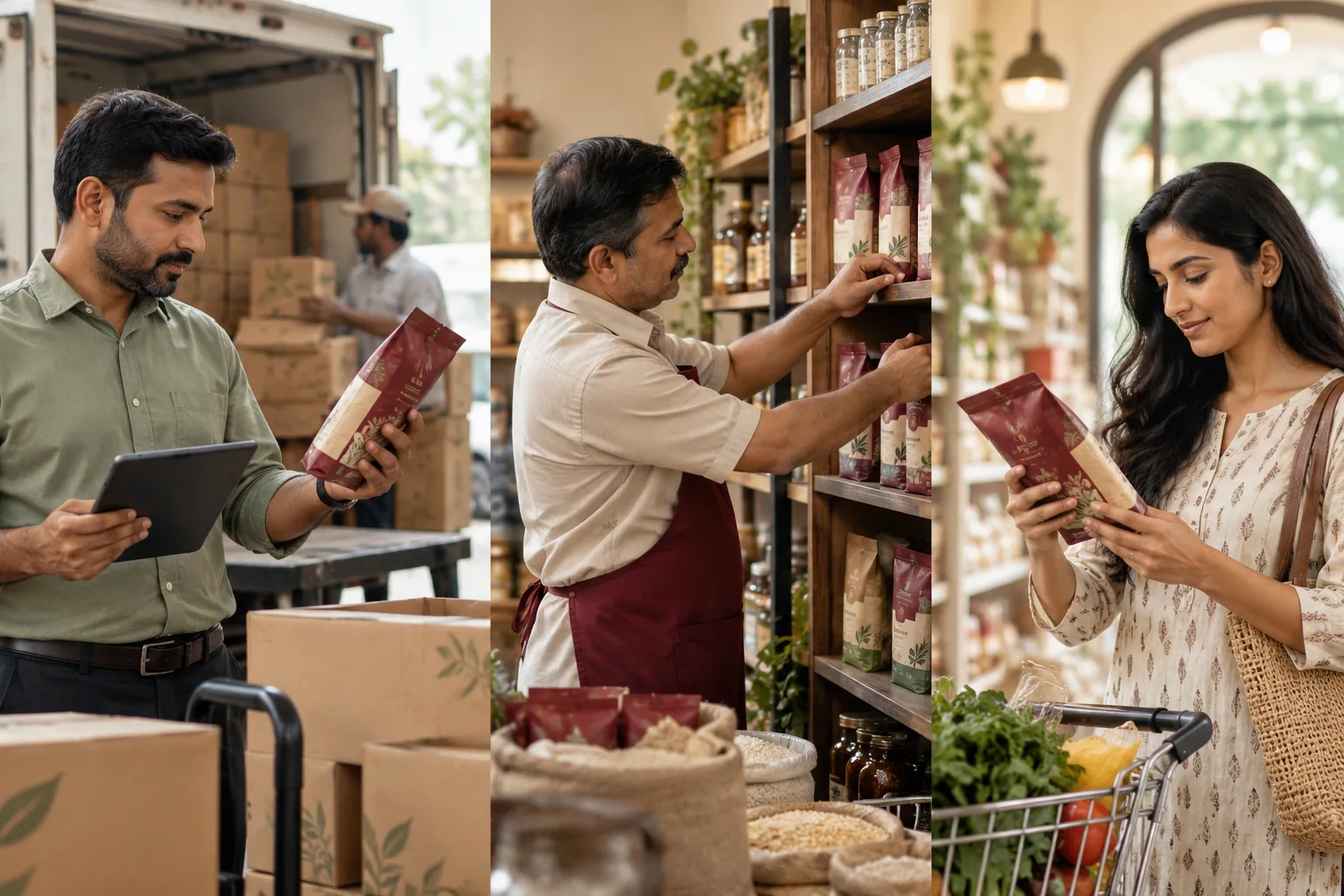 5 min read · 6 Oct 2026How food brands win the trade and the shopperA packed food or household brand is chosen twice: by the distributor, retailer or kitchen that stocks it, then by the shopper who picks it up. Here is what each buyer checks and where brands lose both.
More for institutional food suppliers
Everything else we would do for you.
Closest to this: content and social
Also for institutional food suppliers
Or start from the overview: sales and marketing for institutional food suppliers.
Your next practical step
Tell us what you are trying to grow, and we will read it before we call.
Eight short steps, mostly taps. Skip anything you would rather answer on the call.