Material handling equipment manufacturers · Lead generation
Reach the plant engineer while the bay is still being measured.
Lead generation for a material handling maker means finding the factories, warehouses and consultants that have a load to move and no supplier yet. GullySales works on the pages, estate visit lists and consultant introductions that bring those enquiries in, each one noted by equipment type and load.
Scope, fee, reporting and term are agreed in writing after we have read your brief and spoken to you.
What lead generation means
Lead generation is the combined work of every channel that brings in a new enquiry, whether from search, adverts, referrals or a stall at an exhibition. GullySales runs these channels together and reports the number of enquiries each one produced, not the activity behind it.
Also for material handling equipment manufacturers
- CRM for material handling equipment makers
- Follow-up systems for material handling makers
- SEO for material handling equipment makers
- Social media for material handling makers
- Content marketing for material handling makers
- Buyer personas for material handling makers
- WhatsApp marketing for material handling makers
- Digital marketing for material handling makers
Sales and marketing for material handling equipment manufacturers, the overview.
Last updated 18 Oct 2026.
For material handling equipment manufacturers
Where it usually goes wrong, and what we would do.
“An enquiry names a problem, not a product”
A stores head does not type the word hoist. The search describes lifting a casting without a forklift, or stacking drums in a narrow aisle. Pages written around the problem and the load meet the buyer earlier than a product list does.
“New plants are specified before they are built”
Layout designers and project consultants choose the lifting gear while the shed is still a drawing. A maker missing from their shortlist meets the plant after the equipment is decided. Reaching them is separate work from reaching the maintenance head.
“Repeat customers hide a thin pipeline”
Orders from the same factories keep the workshop busy and cover the fact that no new site has asked in a long while. Counting enquiries by source shows how much of the work rests on a few customers.
“A visit is an investment, so qualify first”
Sending an engineer to measure a bay costs a working day. Asking for the load, span, lift height and the name of whoever approves the purchase, before anyone travels, separates a live requirement from a price check.
What we do
What we deliver for material handling equipment manufacturers.
Every deliverable, what it covers for you, and the result it is there to produce. Nothing here is an extra.
Equipment and load enquiry pages
One page for each equipment type, with a short form that asks for the load, span or lift height.
Result: Each enquiry arrives with the figures an engineer needs to quote.
Estate visit lists
Industrial estates near each works, listed with the factory types that use your equipment.
Result: A visit plan names the factories and the person to ask for.
Consultant and developer pack
A short pack of installations, loads and drawings for layout designers and warehouse developers.
Result: A specifier has something to forward to the client.
Pre-visit questions
A checklist of load, span, duty and decision-maker, asked before an engineer travels.
Result: Visits are booked against a named buyer.
Enquiry source log
A sheet that records where each enquiry came from, by equipment type.
Result: The owner sees which source brings new sites rather than repeat ones.
How the result is measured
- Enquiries generated
- Cost per enquiry
- Enquiries by source
Recorded as a baseline before work starts, so every later report has an honest comparison.
Who it is for
This is written for these material handling equipment manufacturers.
- EOT crane, gantry and jib crane makers
- Hoist and winch makers
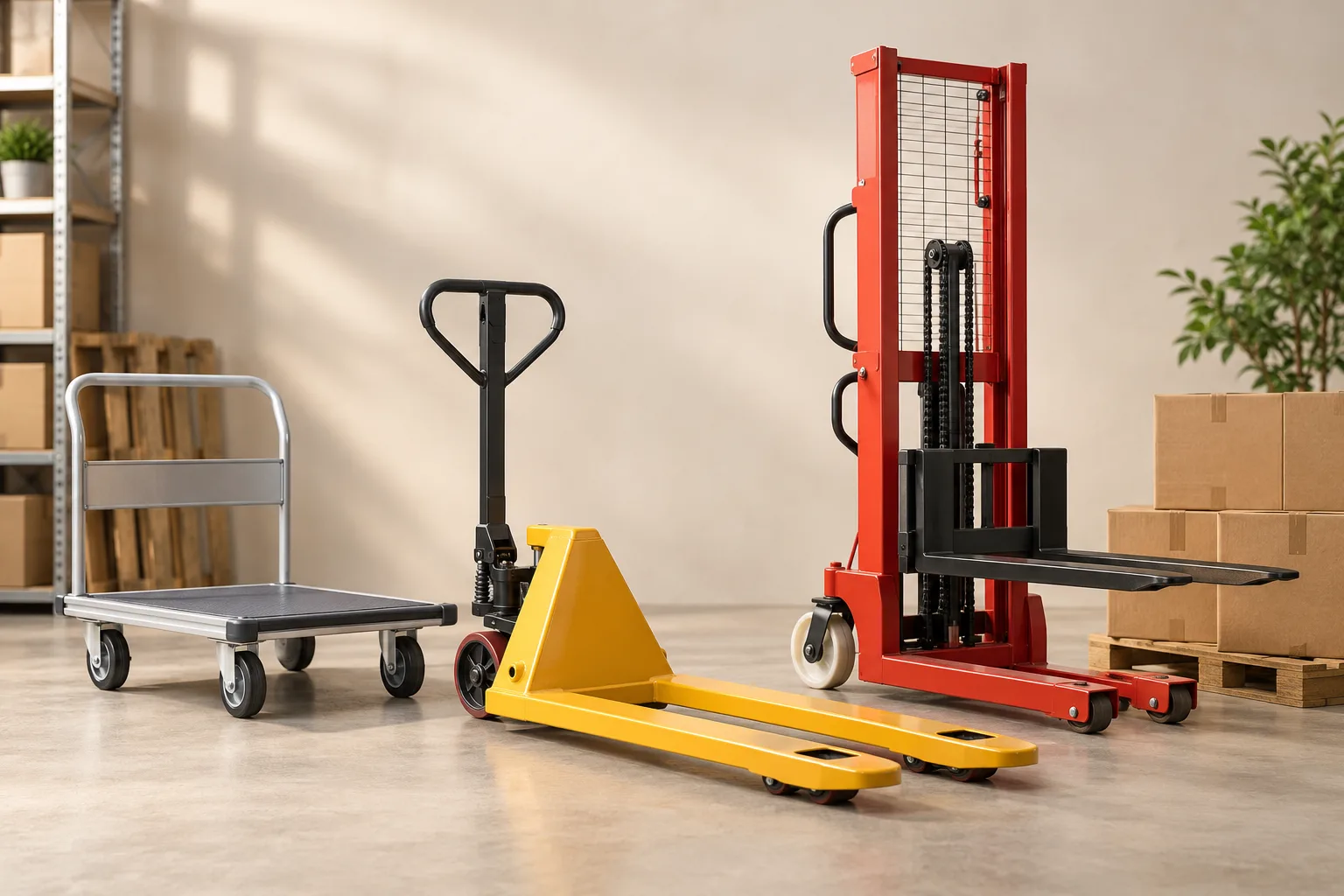
- Stacker, pallet truck and trolley manufacturers
- Conveyor and roller track makers for factory lines
- Racking, platform and storage equipment makers
- Forklift attachment and special lifting tackle makers
- Dock leveller, lift table and tail-lift makers
- Makers who combine new supply with crane inspection and AMC
How it works
From your first message to the first report.
No open-ended retainer. Every step gives you something in writing.
First
Your brief
You tell us what you need in a few short steps: your business, what you want, where enquiries come from and how they are handled.
After the brief
A conversation and a written scope
We read it, then talk with whoever handles your enquiries. If you want our help, the scope, the fee and the reporting come in writing, and nothing starts before you have read them.
Before work starts
Baseline recorded
The numbers this work is meant to move, such as enquiries, quotations, orders, visits or renewals, written down so every later report has an honest comparison.
After the baseline
The first fix goes live
The fix we agreed to start with is put in place and measured against the baseline, whether that is a reply, a follow-up, a page, a listing or the handover between marketing and sales.
As agreed
Report against the baseline
What moved, what did not, and what changes next, in plain words. How often you get it is set in writing before work starts.
At renewal
Renew on the numbers
The term ends and you decide whether to continue from the results. The length is agreed in writing before anything starts.
How the lead generation work runs
- 1
Understand your capacity
We agree how many enquiries your sales team can actually handle well, so the system is not built to overwhelm it.
- 2
Audit current sources
We check what already brings in enquiries today, even informally, before adding anything new.
- 3
Strategise the channel mix
Content, search and paid channels are chosen based on where your buyers already look.
- 4
Implement capture and follow-up
Pages, forms and a follow-up process are built and connected end to end.
- 5
Measure and optimise
We track enquiry volume and quality and adjust the channel mix to match.
Why us
Why owners pick GullySales over an agency.
Marketing and sales, as one job
Most agencies stop at the enquiry. We also fix what happens after it: the reply, the follow-up, the quote and the CRM.
The person on the first call does the work
No account managers in between. You are never handed to someone you have not met.
A baseline before anything starts
Your numbers are written down on day one, so every later report compares against something honest.
The fee in writing, split three ways
Our time, your media spend and production on separate lines. You always see what goes to us.
No guarantees we cannot keep
The term is agreed in writing and never a default twelve months. We never promise a ranking or a lead count, because nobody controls those.
One office, and we say so
Nagarbhavi, Bengaluru. We work across India by call and WhatsApp and travel when a session needs to be in person.
#257, 3rd floor, Sri Nanjundeshwara Complex, Nagarbhavi 8th Block, Outer Ring Road. How we work.
Your brief
Tell us what you need, and we will read it before we call.
Eight short steps about your business, what you want and who decides. Most questions are a tap, and you can skip any you would rather answer on the call.
FAQ
Questions owners ask before they call.
Not here? More answers, or ask on WhatsApp.
Should we pay for ads or build pages first?
How do we tell a real enquiry from a price check?
How long is the contract?
How soon will we see results?
Who will actually do the work?
What do you need from us?
What if we are not happy with the work?
More for material handling equipment manufacturers
Everything else we would do for you.
Closest to this: leads and follow-up
Also for material handling equipment manufacturers
Or start from the overview: sales and marketing for material handling equipment manufacturers.
Your next practical step
Tell us what you are trying to grow, and we will read it before we call.
Eight short steps, mostly taps. Skip anything you would rather answer on the call.