Auto parts manufacturers · CRM
Keep every part enquiry, quote and reorder in one record, whichever channel it came by.
A CRM for an auto parts manufacturer is the shared record of each buyer, the parts they asked about, the quotes sent and the orders placed. GullySales sets up the record and the stages around your real sales steps, so an enquiry from a marketplace, a trade fair or WhatsApp lands in the same place.
Scope, fee, reporting and term are agreed in writing after we have read your brief and spoken to you.
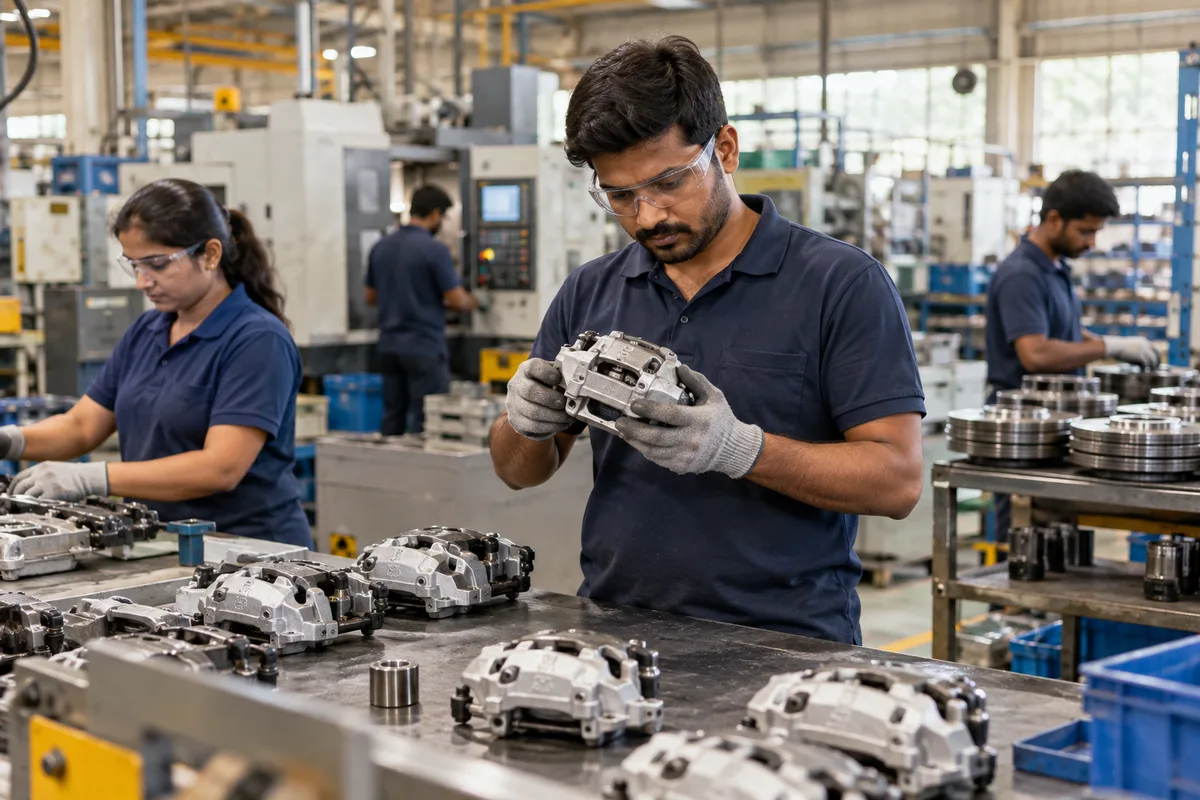
What CRM means
A CRM is the record where every enquiry, call and quote is kept against a customer, replacing separate notebooks, spreadsheets and memory. GullySales sets up or cleans an existing CRM and reports from it by enquiry outcome rather than by activity logged.
Also for auto parts manufacturers
- Lead generation for auto parts manufacturers
- Follow-up systems for auto parts manufacturers
- Answer engine optimisation for auto parts manufacturers
- Branding and identity for auto parts manufacturers
- Content marketing for auto parts manufacturers
- Digital marketing for auto parts manufacturers
- Email marketing for auto parts manufacturers
- Google Business Profile for auto parts manufacturers
Sales and marketing for auto parts manufacturers, the overview.
Last updated 5 Oct 2026.
For auto parts manufacturers
Where it usually goes wrong, and what we would do.
“The same distributor appears in four inboxes”
One distributor emails a drawing, messages on WhatsApp, calls the stores desk and shows up in a marketplace enquiry. Without a single record, four people answer four versions of the same question at four different prices.
“A part-level history is worth more than a contact list”
The useful note is which part numbers a buyer asked for, which quote they saw and what they ordered last. A name and phone number alone tell the representative nothing to open the call with.
“Trial orders need a flag, not a memory”
A first small order from a new distributor is the start of a stock line or the end of the relationship. If nobody marked it as a trial, nobody calls before the next order goes elsewhere.
“OEM and export accounts run on documents”
A long approval carries sample reports, audit dates and certificate versions. Kept in personal folders, they vanish when the person who handled the account is away.
What we do
What we deliver for auto parts manufacturers.
Every deliverable, what it covers for you, and the result it is there to produce. Nothing here is an extra.
Pipeline stages built on your sales steps
Stages such as enquiry, drawing check, quote, sample, trial order and stock line, set up to match how your team really sells.
Result: Anyone can open an account and see where it stands.
Capture from every channel
Marketplace enquiries, website forms, WhatsApp messages, email and trade fair cards routed into the same record with the source noted.
Result: No enquiry lives only in one person's inbox.
Part and vehicle fields on each record
Fields for part numbers, vehicle models, quantities and the price quoted, so history is searchable by component.
Result: A representative can pull up everything a buyer has asked about a part.
Trial-order and lapsed-account flags
Marks for new trial orders and for dealers whose reorders have stopped, with an owner named against each.
Result: A quiet account shows up on a list instead of going unnoticed.
Document links for OEM and export accounts
Certificates, sample reports and audit notes linked to the account record, kept in one agreed location.
Result: The paperwork for an audit or a sample request can be found without a search.
A short training session for the sales team
A practical walkthrough of logging an enquiry, updating a stage and reading the pipeline, using your own live accounts.
Result: The team can enter and read records without the CRM owner beside them.
How the result is measured
- Enquiries logged in the CRM
- Data completeness
- Reports generated from CRM data
Recorded as a baseline before work starts, so every later report has an honest comparison.
Fields worth keeping
Keep these fields against each buyer and part number.
- Part numbers asked about
- The rep records them after each enquiry, so the next call opens with what the buyer actually wanted.
- Vehicle model and fitment
- Entered with the part number. It lets the stores desk and sales confirm a fit without opening drawings again.
- Quote version and date
- Filled by whoever sends the quote, so four people do not answer one distributor with four prices.
- Trial order flag
- Set when a new buyer places a first small order. It reminds the owner to call before the next order goes elsewhere.
- Certificate and sample report links
- Attached by the quality team on OEM and export accounts, so the documents stay when the account owner is away.
Who it is for
This is written for these auto parts manufacturers.
- Component manufacturers supplying OEMs
- Aftermarket spare parts manufacturers
- Export-focused parts manufacturers
- Tier 2 and Tier 3 component suppliers
- Two-wheeler parts manufacturers
- Commercial vehicle parts manufacturers
- Casting and forging units supplying parts
- Manufacturers with an in-house aftermarket brand
Not for
It is not the right fit if.
- Your enquiries come through one person who remembers every buyer, and a shared record would add effort without anyone else reading it.
- The stores desk and sales do not agree on part numbering, so records would hold two names for one part.
How it works
How the CRM work runs
The work itself, in order. How an engagement starts, from your brief to a written scope, is set out on our method page.
- 1
Map the sales process
We sit with the people who sell and write down how a deal moves from enquiry to payment, including where it stalls.
- 2
Agree stages, fields and owners
Each stage gets a name your team already uses and a proof that the deal has left it. We agree which fields are required at which stage, and who may change what.
- 3
Build on a copy
Pipeline, fields and views are built on a trial copy where the CRM offers one, or in a separate pipeline where the plan allows. Live work stays untouched.
- 4
Connect channels, then switch on automations
Channels are connected first. Each automation is then switched on separately, so a misfiring rule is easy to find.
- 5
Test with real deals
The people who will use the CRM run open deals through it. Gaps are fixed before the whole team switches over.
- 6
Switch over and trim
Once real use shows which fields stay empty and which stages nobody uses, those are cut and the handover record is updated.
Where this fits
Three pieces of sales work, in this order.
This work sits inside sales management. A target, a review routine and someone who owns the number.
Step 1
Sales audit
Find where deals are being lost and what to fix first.
Start here if you cannot say where orders are lost.
Step 2
Sales process design
One written way to sell, from first enquiry to repeat order.
Start here if every salesperson sells differently.
Step 3 · you are here
Sales management
A target, a review routine and someone who owns the number.
Start here if the team has targets and no routine.
FAQ
Questions owners ask before they call.
Not here? More answers, or ask on WhatsApp.
Our team already uses spreadsheets. Why move to a CRM?
Does the CRM connect to IndiaMART and TradeIndia?
Who should own the CRM inside a manufacturing company?
How do we keep OEM and distributor accounts apart in one record?
How much does it cost?
How long is the contract?
How soon will we see results?
Who will actually do the work?
What do you need from us?
What if we are not happy with the work?
From the blog
Further reading for auto parts manufacturers.
 6 min read · 14 May 2026Setting up a CRM for a factory: the fields that matterWhich CRM fields a factory needs so one record holds the drawing, quantity, material and deadline of each enquiry, the stages that match how a part is won, and what to leave out.
 6 min read · 10 Oct 2026How manufacturers can generate enquiries from relevant business buyersRelevant RFQs come from buyers who can verify you: product pages with real specifications, listings that match what you make, and a way to screen requests quickly.
 6 min read · 6 Oct 2026How buyers choose a showroom, workshop or parts counterCar, bike, repair and parts buyers send one enquiry to several sellers and pick the first clear answer. This post lists what each buyer checks, and where a dealer or workshop quietly loses them.
More for auto parts manufacturers
Everything else we would do for you.
Closest to this: leads and follow-up
Also for auto parts manufacturers
Or start from the overview: sales and marketing for auto parts manufacturers.
Your next practical step
Tell us what you are trying to grow, and we will read it before we call.
Eight short steps, mostly taps. Skip anything you would rather answer on the call.