Bakery product manufacturers · Product packaging and box design
Design the bread bag, the rusk pack and the cake carton for shelf and van.
Product packaging design for a bakery manufacturer is the artwork on the bread bag, the bun pack, the rusk sleeve, the cake carton and the outer tray that travels on the delivery van. GullySales draws the range as one system from your supplier's outline, places the text you supply and reserves space for every mandatory declaration.
Scope, fee, reporting and term are agreed in writing after we have read your brief and spoken to you.
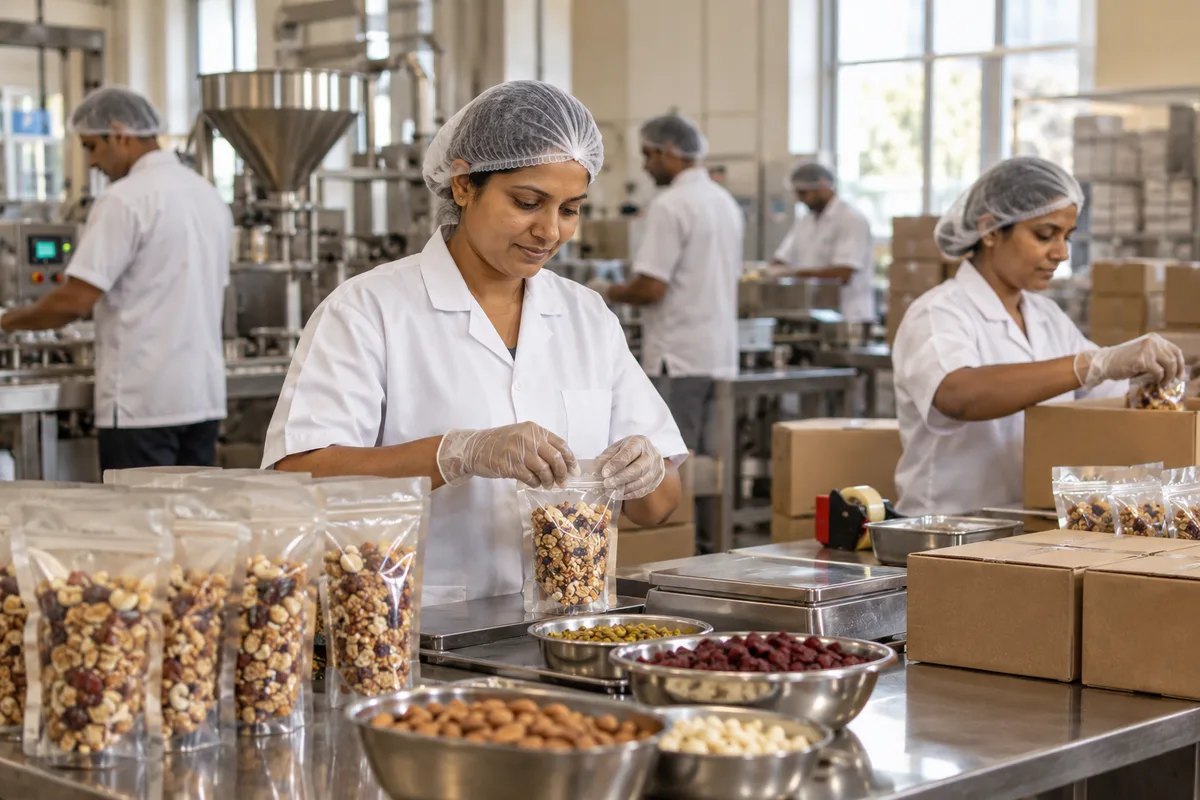
What product packaging and box design means
Product packaging and box design is the artwork for a pack, carton or box: the front panel, the sides, the structure's printed surfaces and the file the printer works from. GullySales designs the artwork from your brand and your supplied words, then hands over layered files and a specification sheet your printer can check before anything is made.
Also for bakery product manufacturers
- Product label design for bakery product manufacturers
- Lead generation for bakery manufacturers
- SEO for bakery manufacturers
- Local SEO for bakery manufacturers
- Social media marketing for bakery manufacturers
- Content marketing for bakery manufacturers
- Buyer personas for bakery manufacturers
- CRM for bakery manufacturers
Sales and marketing for bakery product manufacturers, the overview.
Last updated 14 Nov 2026.
For bakery product manufacturers
Where it usually goes wrong, and what we would do.
“The pack is chosen on a crowded general-store shelf”
A shopkeeper stacks bread, buns and rusks from several suppliers on the same rack, and a buyer picks by what is seen in a second. If every pack is a pale bag with a small logo, none stands out and the shopkeeper chooses on margin alone. We study the real shelf, then design the front of the pack so the product, the name and the variant are clear at the distance a shopper stands from the rack.
“A route sales person has to pick the right pack in a hurry”
Loading a van before the morning round, the packer must tell milk bread from brown bread, and a sliced loaf from an unsliced one, without reading small print. When variants look alike, wrong products reach shops and returns follow. We build the range as a system with one fixed part and one changing part, using a clear colour or band for each variant, so the loader and the shopkeeper tell them apart at a glance.
“Printing on flexible film and on cartons has its own limits”
A bread bag is printed on film and a cake carton on board, and each process limits the number of colours, the fine lines and the way an image reproduces. Artwork that looks good on screen can print muddy on film. We work from your supplier's specification and dieline, keep fine detail out of the places that distort, and flag any conflict before artwork reaches the printing cylinder or plate.
“Hotels and caterers see the outer tray, not the bag”
A kitchen head receiving a delivery sees the crate, the tray and the case label first, and counts cases against the invoice. A pack that looks good in a shop but has an unreadable outer label slows the receiving staff and invites disputes. We design the outer cases and trays as part of the system, with product name, count and the space for date and batch reserved where a hand scanner or a person can find it.
What we do
What we deliver for bakery product manufacturers.
The work available for this need. We agree the deliverables and responsibilities for your engagement in writing.
Pack brief agreed in writing
A short brief recording each product, the buyer, the rack or counter it sells from, the packs it must stand apart from and what the front must say at first glance. You approve the direction before drawing begins, so the artwork starts from a decision about your range.
Result: The brief names each pack in the range and the buyer it is aimed at.
Front panel directions
A small set of directions for the front of the main product, each showing the product name, image or illustration, colour and hierarchy at shelf size. You choose or combine, so the full range is built on one agreed idea and not on a guess.
Result: The chosen front is readable from the distance of a shopper standing at the rack.
Full artwork for each pack
The chosen direction is carried across every face of the bag, sleeve, carton and tray. Each face has a job, and the reading order works as the shopper turns, lifts or opens the pack. Colour references and finishing notes are added as the layout settles.
Result: Every face of each pack has a defined job and a place on the printer's outline.
Placement map for declarations and codes
A map that sets the text you supply into the right panels and reserves marked space for ingredient and allergen declarations, the maker's details, the barcode and the date and batch area. The wording of mandatory lines is decided by your adviser and regulator.
Result: Each reserved area is the size your adviser and printer confirmed.
Range and variant system
The design is built so each flavour, size or type is a controlled change of one part: a band, a colour or a name. Adding a new product means filling a template and not starting a new design. Hotel case and tray versions follow the same system.
Result: A new variant can be added without redrawing the range, and every pack stays in one family.
Print-ready files for your supplier
Artwork supplied in the format, colour mode and separations your supplier specifies, with type outlined and marks included. We check the first proof against the approved artwork and list any difference for you and the printer to resolve.
Result: The first printed proof matches the approved artwork, and every difference is listed.
How the result is measured
- Enquiries from dealers that ask which carton is which
- Boxes or cartons returned or reprinted for artwork errors
- Printer queries raised after the files were sent
Recorded as a baseline before work starts, so every later report has an honest comparison.
Who it is for
This is written for these bakery product manufacturers.
- Bread, bun and pav manufacturers supplying general stores and supermarkets
- Cake and pastry makers supplying cafes, hotels and retail counters
- Rusk, toast and tea-time bakery manufacturers
- Plum cake and festival cake specialists
- Bakery makers supplying QSR chains and burger buns
- Biscuit and cookie bakeries linked to bakery retail
- Frozen dough and par-baked product suppliers
- Bakeries that run their own outlets and also supply wholesale
Before you decide
Agree the work. Know how to judge it.
Product packaging and box design for bakery product manufacturers: use these checks to prepare, choose the scope, and review what changes.
Bring the right evidence
Identify the product, process, or buyer question the images or film must explain. Gather reference material and confirm permission for people, premises, and client work that may appear.
Make the scope clear
Agree the shot list, formats, usage rights, and approval stages before production. Separate filming or photography from editing, animation, and later adaptations.
Check the work in use
Check the finished asset in the place it will be used: a mobile page, presentation, advert, or product listing. Look at crop, captions, sound, and whether the important detail remains clear.
Know when to change course
Do not present an illustration or generated scene as evidence of client work. If a claim needs a real product demonstration, obtain that evidence before using the asset to support it.
These are discussion points, not a fixed package. GullySales confirms the deliverables, responsibilities, fee, and term in writing after reading your brief and speaking with you.
Before we start
What to have ready before the work starts.
The records, access and decisions this work needs from bakery product manufacturers. Anything missing is noted in the written scope, with who will supply it.
- The supplier's dieline or film specification
- Every pack starts from its outline: the fold, the seal, the print area and the colour limits. Without it, artwork is drawn on a guess, and the printer returns it with changes after time has been spent on the wrong shape.
- Product list with sizes and variants
- We need every product, weight or count and variant that the pack must carry now and soon. If the list is incomplete, the system is built too tight, and the next product forces the whole range to be redrawn.
- Mandatory declarations and their wording
- Your adviser sets what a bakery pack must declare in your market, and the lines take space. We need the wording and the size, or at least the adviser's confirmation of the area. Missing, the legal text is squeezed into the smallest corner at the last minute.
- Photographs or reference of the products
- If the front shows the product, the image must be sharp, honest and yours to use. We need photographs or a decision to use illustration. Without either, the front carries a placeholder, and the first printed proof will show it.
- Names of the people who approve
- Someone at the plant, your adviser and your printer each approve a part. Name them at the start. If approval is unclear, artwork waits in someone's inbox and a pack goes to print with one sign-off missing.
How it works
How the product packaging and box design work runs
The work itself, in order. How an engagement starts, from your brief to a written scope, is set out on our method page.
- 1
Read the brief and your supplier's outline
We start from your product list, your brand files and the dieline or film specification from your packaging supplier. If no outline exists for a new product, the structure is settled with the supplier first, because the artwork depends on it and cannot be drawn on a guess.
- 2
Study the shelf, the rack and the van
We study the pack in its real settings: a general-store rack beside rival loaves, a hotel kitchen's receiving table, the van loader's tray. This sets what the front must say and what can move to the back, the sides and the outer case.
- 3
Draw front directions for the lead product
A few directions are drawn for the front of the main product only, so the choice is about the idea and not about small details. You and your team choose or combine, and the decision is recorded in the brief before the rest of the range is drawn.
- 4
Build the range as one system
The chosen front is carried across every face and every variant. Bread, buns, rusks and cakes keep the same fixed elements while the changing part tells them apart. Outer trays and case labels follow, with the name, count and reserved date area.
- 5
Review with your plant, adviser and printer
Your production head checks that the pack suits the line, your adviser reads the declarations and your printer checks the artwork against the process. Changes are handled as the agreed scope states, and each approval is kept in writing.
- 6
Compare the result with the earlier record
Before the new packs are used, we record the picking errors on the van, the queries from receiving staff and what shopkeepers say about finding your products. After the packs are in use, the same record is read again, so the design is judged on your own figures.
Where this fits
Three pieces of sales work, in this order.
This work sits inside sales process design, at stage 1, prospecting and lead generation. The audit comes before it, and sales management keeps it running.
Step 1
Sales audit
Find where deals are being lost and what to fix first.
Start here if you cannot say where orders are lost.
Step 2 · you are here
Sales process design
One written way to sell, from first enquiry to repeat order.
Start here if every salesperson sells differently.
Step 3
Sales management
A target, a review routine and someone who owns the number.
Start here if the team has targets and no routine.
FAQ
Questions owners ask before they call.
Not here? More answers, or ask on WhatsApp.
Do you write the text that goes on the pack?
Can one design cover bread, buns and rusks?
Do you design for flexible film as well as cartons?
What about the outer trays and cases for hotels?
Who prints the packs and checks the proof?
How will we know the packaging helped?
How much does it cost?
How long is the contract?
How soon will we see results?
Who will actually do the work?
More for bakery product manufacturers
Related work to consider.
Closest to this: brand and design
Also for bakery product manufacturers
Or start from the overview: sales and marketing for bakery product manufacturers.
Your next practical step
Tell us what you are trying to grow, and we will read it before we call.
Eight short steps, mostly taps. Skip anything you would rather answer on the call.