Bakery product manufacturers · Website
Build a site where a purchase head checks your range before picking up the phone.
A website for a bakery manufacturer is the page a hotel, caterer, institution or gifting buyer reads to check range, sizes, delivery area and how to order. GullySales works on the structure, wording and order routes of that site, so it supports your sales team rather than sitting as a brochure.
Scope, fee, reporting and term are agreed in writing after we have read your brief and spoken to you.
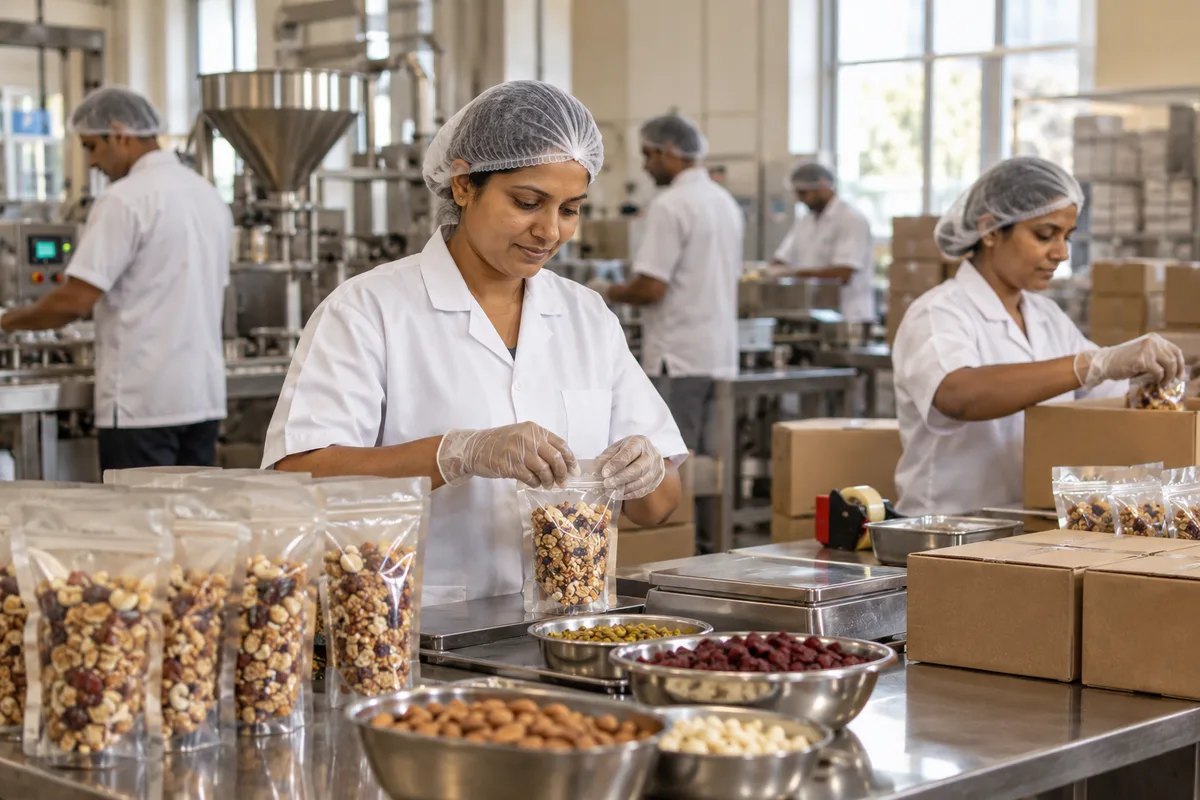
What website means
A website is the page a customer lands on after searching, clicking an advert or scanning a code, and it decides whether they call or leave. GullySales builds and maintains sites that load quickly, explain the offer plainly and make the enquiry form or phone number easy to find.
Also for bakery product manufacturers
- SEO for bakery manufacturers
- Local SEO for bakery manufacturers
- Lead generation for bakery manufacturers
- Social media marketing for bakery manufacturers
- Content marketing for bakery manufacturers
- Buyer personas for bakery manufacturers
- CRM for bakery manufacturers
- Follow-up systems for bakery manufacturers
Sales and marketing for bakery product manufacturers, the overview.
Last updated 14 Nov 2026.
For bakery product manufacturers
Where it usually goes wrong, and what we would do.
“The buyer wants specifics”
Sizes, weights, slicing, pack counts, minimum order and delivery area decide whether a kitchen proceeds. A site with only a gallery of cakes forces the buyer to phone for the basics.
“Two audiences share one address”
A household wanting a birthday cake and a hotel wanting buns arrive at the same web address. Two clear doors, one to order a cake and one for wholesale and food service, keep each visitor on the right path.
“Forms must reach a person”
An enquiry form that lands in an inbox nobody opens is worse than none. Route each one into the enquiry log and the WhatsApp desk, and show the buyer a confirmation.
“Real photographs say who you are”
Stock images of bread mark a trader. Photographs of your line, your packs and your van tell a buyer they are dealing with the maker.
What we do
What we deliver for bakery product manufacturers.
The work available for this need. We agree the deliverables and responsibilities for your engagement in writing.
A site map
The pages a buyer needs, laid out so cake buyers and wholesale buyers each find their path.
Result: The map lists every page and who it serves.
A wholesale and food service page
Range, sizes, slicing, pack counts, minimum order, delivery area and a downloadable range sheet.
Result: A purchase head finds the specifics without calling.
Festival booking pages
Cake and gift box pages with a booking form and closing date, reusable from one season to the next.
Result: The booking form feeds the production sheet.
Order and enquiry routes
Forms, WhatsApp buttons and a call link, all leading to the same enquiry log.
Result: Each route is tested and lands in the log.
A phone-first build
Pages that load and read well on the phone a shopkeeper or kitchen head uses.
Result: The site is checked on common phone screens before it goes live.
How the result is measured
- Page load time
- Bounce rate
- Enquiries from the website
Recorded as a baseline before work starts, so every later report has an honest comparison.
Searches your buyers type
Searches your site should answer for a buyer who has not yet called.
- Bakery wholesale rate for cafes
- A food service page with pack sizes and a form asking outlet type and daily need.
- Festival cake booking in the city
- A dated booking page with cake types, cut-off, pickup or delivery and a number that is answered.
- Bread supplier for institutions
- A page for canteens and hostels explaining how a bulk order is placed and who confirms it.
- Do bakeries deliver to my area
- A delivery area list built from the real routes, with the localities named.
- Bakery factory visit for buyers
- A page that explains how a purchase head may arrange a visit, with whom to contact and what to bring.
Who it is for
This is written for these bakery product manufacturers.
- Bread, bun and pav manufacturers supplying general stores and supermarkets
- Cake and pastry makers supplying cafes, hotels and retail counters
- Rusk, toast and tea-time bakery manufacturers
- Plum cake and festival cake specialists
- Bakery makers supplying QSR chains and burger buns
- Biscuit and cookie bakeries linked to bakery retail
- Frozen dough and par-baked product suppliers
- Bakeries that run their own outlets and also supply wholesale
Before you decide
When this may not be the right fit.
- Nobody can answer a form submitted after the cut-off hour, so a site would hold orders no one reads.
- You have not fixed your route area, and a delivery list on the site would soon be wrong.
- You want online ordering with payment, but your orders are settled by credit and the route driver.
Before you decide
Agree the work. Know how to judge it.
Website for bakery manufacturers: use these checks to prepare, choose the scope, and review what changes.
Bring the right evidence
List the pages that support a buying decision and the actions visitors must complete. Keep examples of failed forms, unclear product information, and questions your team answers repeatedly.
Make the scope clear
Agree the page list, content ownership, integrations, and who controls the domain and hosting. Include redirects and existing search traffic in a redesign brief, before changing addresses.
Check the work in use
Complete a real enquiry journey on a phone and a laptop. Check that the confirmation appears, the enquiry reaches the right person, and tracking records the action once.
Know when to change course
If visitors can enquire but the team does not follow up, start with the sales handover. A larger website will not resolve that delay.
These are discussion points, not a fixed package. GullySales confirms the deliverables, responsibilities, fee, and term in writing after reading your brief and speaking with you.
Before we start
What to have ready before the work starts.
The records, access and decisions this work needs from bakery product manufacturers. Anything missing is noted in the written scope, with who will supply it.
- Domain and hosting accounts
- The site needs a place to live, and the domain and hosting must be in your control. Come with the logins, or with the contact who has them. If a relative bought the domain, transfer comes first, and the new site waits until it is settled. A second person who can recover the account is a sensible addition.
- The range sheet with pack details
- Pages are written from your own sheet of products, sizes and order quantities. Bring the current one. Without it, the pages stay general, and a buyer who cannot find a pack size or a minimum order simply phones another supplier. Mark the lines that are sold only in season, with the months they are available.
- A person to read every enquiry
- Forms and messages land with someone. Name that person and their hours. A form that reaches nobody loses the buyer, and a buyer who has asked once and heard nothing seldom asks the same plant again. A form that arrives in the middle of the night is read before the first dispatch of the morning.
- Permission to show the plant
- Pictures of the factory need your permission and a rule on what stays off camera. Bring your decision on recipes, labels and staff. Without it, we photograph the outside only, and the site says little about how the bread is made. Mention rooms or areas that must never appear on camera.
- Ingredient lists for each product line
- Buyers ask what is in a product. Bring ingredient lists for each line, as they appear on the label. For allergen wording, your own adviser or your licence conditions decide what must appear, and we copy that wording into the pages as given. Also bring the label as printed, since the pages must agree with it.
How it works
How the website work runs
The work itself, in order. How an engagement starts, from your brief to a written scope, is set out on our method page.
- 1
Draw the site map with the sales head
We begin by sitting with the person who sells, drawing in order the pages that a hotel, caterer, institution or gifting buyer needs. You tell us the questions they ask on calls. The map has few pages, each with one job, so that a buyer is never lost. The map is drawn on paper first and approved before any page is built.
- 2
Write the wholesale and food service page
We write the page that speaks to trade buyers: the range, pack sizes, minimum order, delivery area and how to set up an account. You check every figure. Language aimed at household shoppers is kept to a separate page, so the trade buyer does not feel misplaced. A buyer should reach the minimum order within one screen.
- 3
Prepare the festival booking pages
For cakes and gifting lines, we write pages that state the products, the last date for orders and the dispatch dates. You confirm what the plant can supply. The pages go live before buyers begin planning, and come down when the booking window closes. Pages carry the dates by town where vans leave on different days.
- 4
Choose the routes for enquiries and orders
We decide how a buyer reaches you: a call button, a message link or a short form. You name the person who reads each one. Forms that do not reach a person are not built, since an unread form is worse than none. The routes are tested by calling the numbers and sending a test form from a buyer's phone.
- 5
Photograph the plant and the products
Real pictures of the factory, the packing and the products in pack replace stock images. You or a supervisor walks the plant with us and says what may be shown. Staff who prefer not to appear are left out of every frame. Pictures are named and filed, so they can be reused on the pages and in the messages.
- 6
Build for the phone, then read the results
Trade buyers open the site on a phone between other jobs, so we build and test it there first. After launch, we compare enquiries and calls from the site with the figures from before the work began. You tell us what buyers say about it, and we revise. Pages are kept short enough to read standing at a loading bay.
Where this fits
Three pieces of sales work, in this order.
This work sits inside sales process design, at stage 1, prospecting and lead generation. The audit comes before it, and sales management keeps it running.
Step 1
Sales audit
Find where deals are being lost and what to fix first.
Start here if you cannot say where orders are lost.
Step 2 · you are here
Sales process design
One written way to sell, from first enquiry to repeat order.
Start here if every salesperson sells differently.
Step 3
Sales management
A target, a review routine and someone who owns the number.
Start here if the team has targets and no routine.
FAQ
Questions owners ask before they call.
Not here? More answers, or ask on WhatsApp.
Do we need online ordering?
Can we edit the site ourselves?
What should the site say about allergens?
Do we put the factory photographs on the site?
Should the site carry a login for trade buyers?
What should the contact page say for a buyer outside the delivery area?
How much does it cost?
How long is the contract?
How soon will we see results?
Who will actually do the work?
More for bakery product manufacturers
Related work to consider.
Closest to this: search and visibility
Also for bakery product manufacturers
Or start from the overview: sales and marketing for bakery product manufacturers.
Your next practical step
Tell us what you are trying to grow, and we will read it before we call.
Eight short steps, mostly taps. Skip anything you would rather answer on the call.