Battery manufacturers · Follow up systems
Follow up every dealer, sample and quotation until it becomes an order or a clear no.
A follow-up system for a battery manufacturer is the set of rules and reminders that decide who contacts a dealer, OEM or fleet buyer next, and what they say. GullySales works on the rules by stage, the reminders and the messages your team sends.
Scope, fee, reporting and term are agreed in writing after we have read your brief and spoken to you.
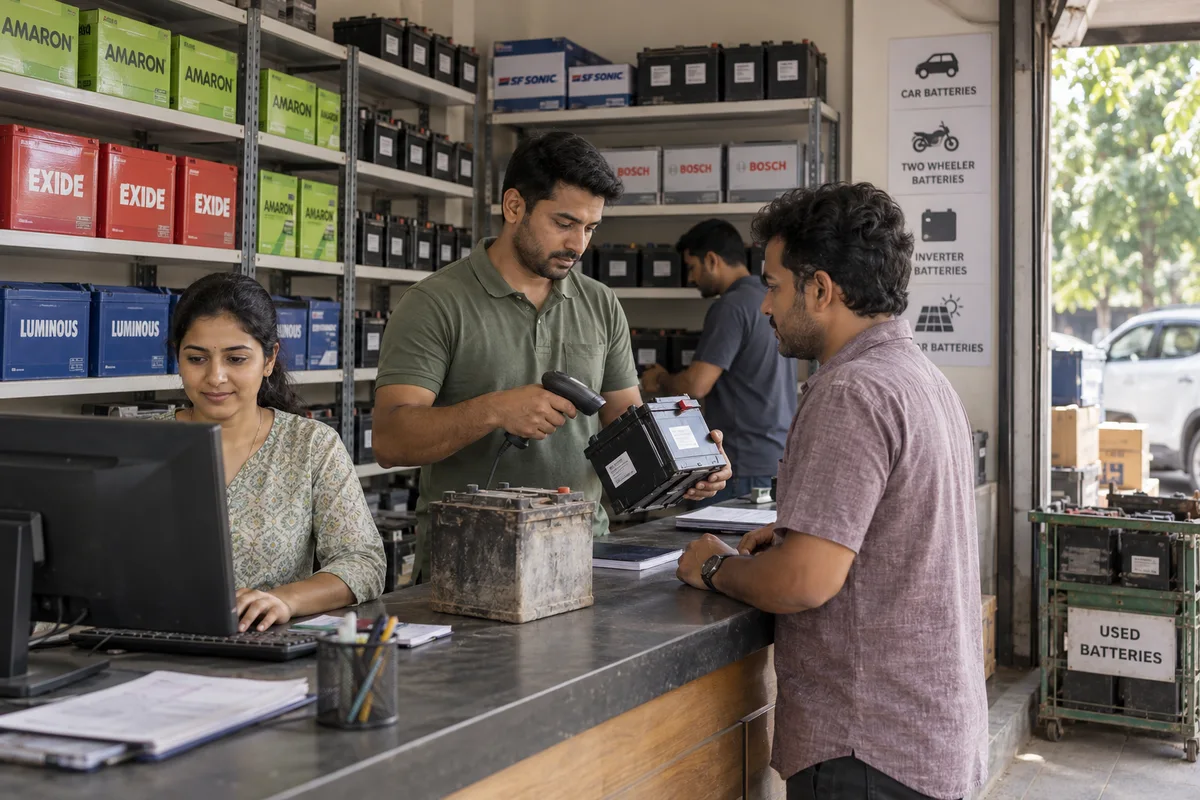
What follow up systems means
A follow-up system is the set routine for calling, messaging or emailing an enquiry more than once, since most buyers do not decide on the first conversation. GullySales sets the number and timing of follow-ups so an undecided buyer keeps hearing from you until they decide either way.
Also for battery manufacturers
- Lead generation for battery manufacturers
- CRM for battery manufacturers
- SEO for battery manufacturers
- Social media marketing for battery manufacturers
- Content marketing for battery manufacturers
- Buyer personas for battery manufacturers
- WhatsApp marketing for battery manufacturers
- Digital marketing for battery manufacturers
Sales and marketing for battery manufacturers, the overview.
Last updated 18 Oct 2026.
For battery manufacturers
Where it usually goes wrong, and what we would do.
“A sample sent is not a sample followed”
An OEM receives a sample pack and then silence settles in, because no one owns the next call. A reminder tied to the sample, with the engineer named, turns the dispatch into a conversation.
“A fleet quotation goes cold at the buyer's desk”
A warehouse or telecom buyer compares approved vendors over time. A follow-up that adds something, such as a service coverage note or a site visit offer, keeps your quotation open where a bare reminder does not.
“Dealers need contact before the season, not during it”
A dealer who hears from you only when stock is late has no reason to push your brand. Contact before the buying months, with the scheme and stock position, earns the counter space.
“A customer with an open claim needs updates”
Someone waiting for a warranty replacement tells the dealer and the neighbours how it went. A status message at each step of the claim makes the process visible and the dealer's job easier.
What we do
What we deliver for battery manufacturers.
The work available for this need. We agree the deliverables and responsibilities for your engagement in writing.
Follow-up rules by route
Written rules for what happens after a dealer enquiry, a sample, a quotation and a claim, set by stage and not by calendar.
Result: Each stage has a rule that names who acts next.
Reminder set-up
Reminders in your CRM or sheet tied to samples, quotations, scheme enrolments and open claims.
Result: An open sample or quotation raises a reminder for its owner.
Message templates
Short messages for dealers, OEM engineers, fleet buyers and claim customers, written in your team's own voice.
Result: A salesperson can pick a template and send it with edits.
Claim status messages
A set of messages that tell the dealer and customer where a claim stands at each step.
Result: Dealers see claim status without phoning the plant.
Lost-order reason log
A short list of reasons an order was lost, filled when a deal closes as a no.
Result: Lost orders are grouped by reason and route.
How the result is measured
- Follow-up completion rate
- Average number of follow-ups before close
- Enquiries closed after repeat follow-up
Recorded as a baseline before work starts, so every later report has an honest comparison.
What to capture or send
Messages and moments that keep a dealer, sample or quotation alive.
- Call after a sample is fitted
- Ask whether the OEM engineer has tested it and who reads the result. Record the person and the date.
- Quotation check to a fleet buyer
- A message restating the models, quantity and service terms. Ask if the approval is with finance or the owner.
- Pre-season call to a dealer
- Ask about stock before the hot or rainy season begins, and offer to review the scheme with the dealer.
- Claim status message
- Tell the dealer or the user where the claim stands and who is handling it, whenever it moves.
- Reason an order was lost
- Record the brand chosen and the stated reason, so price, claim record and delivery gaps are told apart.
Who it is for
This is written for these battery manufacturers.
- Automotive and two-wheeler battery makers selling through dealers
- Inverter and home UPS battery makers
- Tubular and industrial battery makers for telecom, forklifts and power backup
- E-rickshaw and low-speed EV battery makers
- Lithium-ion pack assemblers for EVs and energy storage
- Solar storage battery makers
- Battery makers supplying OEMs under their brand name
- Small battery and cell makers for consumer devices
Not for
It is not the right fit if.
- Nobody is assigned to each sample, and a follow-up would not know whom to call at the OEM.
- Your claim handling is slow and disorganised, so a status message would only show the delay.
- You plan to chase every quotation in the same way, when a fleet buyer and a dealer need different calls.
Before you decide
Agree the work. Know how to judge it.
Follow-up systems for battery manufacturers: use these checks to prepare, choose the scope, and review what changes.
Bring the right evidence
Trace recent enquiries from arrival to the last recorded action. Include a won enquiry, an unsuitable one, and one that went quiet, with personal details removed for the initial discussion.
Make the scope clear
Agree who accepts each enquiry, what makes it qualified, and how ownership changes. Include a rule for missed replies and a clear reason for closing an enquiry.
Check the work in use
Pick an enquiry at random and ask the team to find its owner, latest conversation, and next action. Check that the record agrees with what actually happened.
Know when to change course
If no one has capacity to respond, assign that responsibility before buying more leads. Automation can support the owner, but it cannot replace an unresolved handover.
These are discussion points, not a fixed package. GullySales confirms the deliverables, responsibilities, fee, and term in writing after reading your brief and speaking with you.
How it works
How the follow up systems work runs
The work itself, in order. How an engagement starts, from your brief to a written scope, is set out on our method page.
- 1
Record access and baseline agreement
You provide recent enquiry records and nominate the person responsible for sales. We compare arrival times with replies and agree which records are reliable enough for the baseline.
- 2
Response and closure decisions
Your sales lead approves response targets and follow-up gaps against available capacity. We also agree when to close an enquiry, pause contact, or refer a question to someone else.
- 3
Message and question approval
Your team reviews the reply library and first-call questions before use. Any technical answer or commercial promise needs approval from the person authorised to give it.
- 4
Task testing and team handover
We set up the agreed records and reminders, then test an incoming enquiry through to its next action. Your team checks ownership, including what happens when the assigned person is absent.
- 5
Results review and routine changes
We compare results with the baseline and identify missed steps. Changes to targets or messages are agreed with your sales lead; reporting frequency is agreed in writing.
Where this fits
Three pieces of sales work, in this order.
This work sits inside sales process design, at stage 2, qualification. The audit comes before it, and sales management keeps it running.
Step 1
Sales audit
Find where deals are being lost and what to fix first.
Start here if you cannot say where orders are lost.
Step 2 · you are here
Sales process design
One written way to sell, from first enquiry to repeat order.
Start here if every salesperson sells differently.
Step 3
Sales management
A target, a review routine and someone who owns the number.
Start here if the team has targets and no routine.
FAQ
Questions owners ask before they call.
Not here? More answers, or ask on WhatsApp.
What is the right number of follow-ups for a quotation?
Can follow-up be automated?
When should we stop following up a quotation?
Can follow-up for dealers be automated?
How much does it cost?
How long is the contract?
How soon will we see results?
Who will actually do the work?
What do you need from us?
More for battery manufacturers
Related work to consider.
Closest to this: leads and follow-up
Also for battery manufacturers
Or start from the overview: sales and marketing for battery manufacturers.
Your next practical step
Tell us what you are trying to grow, and we will read it before we call.
Eight short steps, mostly taps. Skip anything you would rather answer on the call.