Battery manufacturers · Digital marketing
Put one plan across search, social, WhatsApp and the website, route by route.
Digital marketing for a battery manufacturer is a plan that decides which channel serves which buyer: dealers, OEMs, fleet users or installers. GullySales works on the channel mix, the pages behind each advertisement and the tracking that joins online activity to dealer sales.
Scope, fee, reporting and term are agreed in writing after we have read your brief and spoken to you.
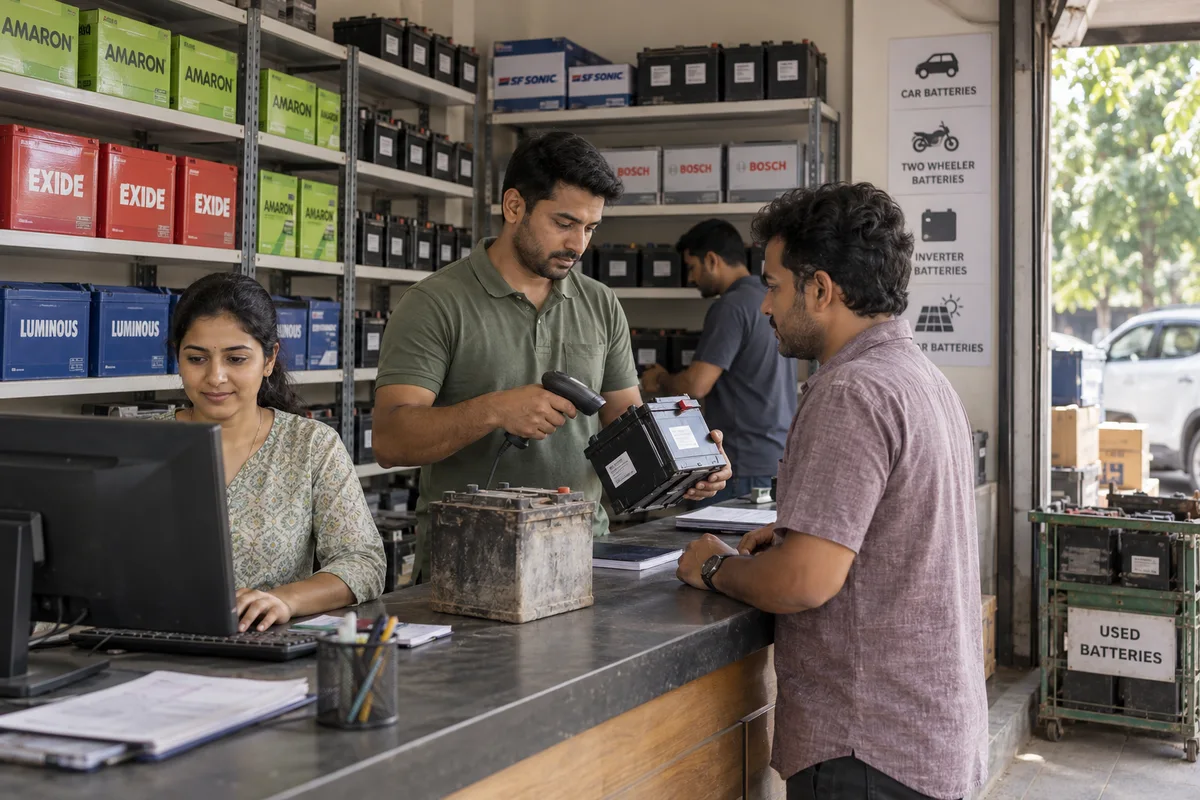
What digital marketing means
Digital marketing is the combined work of search, social media, advertising and website channels running together rather than as separate projects with separate people. GullySales runs these as one connected system so a change in one channel, such as a new offer, is reflected everywhere at once.
Also for battery manufacturers
- Buyer personas for battery manufacturers
- Lead generation for battery manufacturers
- SEO for battery manufacturers
- Social media marketing for battery manufacturers
- Content marketing for battery manufacturers
- CRM for battery manufacturers
- Follow-up systems for battery manufacturers
- WhatsApp marketing for battery manufacturers
Sales and marketing for battery manufacturers, the overview.
Last updated 18 Oct 2026.
For battery manufacturers
Where it usually goes wrong, and what we would do.
“Spend should follow the route you want to grow”
A budget spread across every channel serves no buyer well. A maker pushing dealer sales needs WhatsApp and dealer pages, while one chasing OEM supply needs LinkedIn outreach and technical content.
“The season sets the calendar”
Inverter demand rises before summer and monsoon, and vehicle battery demand moves with the weather. Advertising booked after the rush begins pays for attention that dealers have already given to others.
“The sale closes at a counter, offline”
A customer sees an advertisement and then buys at a dealer. If nothing links the two, the advertisement looks as if it did nothing and the budget is cut by mistake.
“Brand and enquiry advertising do different jobs”
An advertisement that builds the name asks nothing of the viewer. One that finds a fleet buyer needs a requirement form behind it. Mixing the two in one campaign blurs both.
What we do
What we deliver for battery manufacturers.
The work available for this need. We agree the deliverables and responsibilities for your engagement in writing.
Route-wise channel plan
A written plan that names the channels, the audience and the page behind each, for dealer, OEM, fleet and installer routes.
Result: Every channel is tied to a route and a landing page.
Search advertising for fleet and installer buyers
Advertisements built around use terms such as forklift, telecom backup and solar storage, leading to requirement forms.
Result: Each advertisement leads to a form that records its source.
Season spend calendar
A calendar that sets advertising, dealer schemes and WhatsApp messages against the buying months.
Result: Spend and messages are laid out against the season, not scattered.
Counter-to-online tracking
A simple way to record which dealer sales followed an advertisement, using dealer codes, coupon references or a question at the counter.
Result: A dealer sale can be tied to the activity that preceded it.
One-sheet performance view
A sheet that shows enquiries, samples, claims and secondary sales by route and channel in the same place.
Result: Online activity and dealer sales sit in one view.
How the result is measured
- Enquiries across channels
- Cost per enquiry overall
- Channel mix by contribution
Recorded as a baseline before work starts, so every later report has an honest comparison.
Searches your buyers type
Searches that show where to place the first effort.
- battery dealership with a known brand
- Answered by a dealer page and form. This is the route to grow when dealer count is the gap.
- inverter battery price and brand
- Answered by buyer guides and a dealer locator. The sale still closes at a counter.
- battery for e-rickshaw fleet
- Answered by an application page and a bulk enquiry route for fleet buyers.
- telecom battery supplier
- Answered by an industrial page with datasheets, suited to search ads aimed at purchase engineers.
- genuine battery check
- Answered by a genuine-product page, which protects the label and serves a user at the counter.
Who it is for
This is written for these battery manufacturers.
- Automotive and two-wheeler battery makers selling through dealers
- Inverter and home UPS battery makers
- Tubular and industrial battery makers for telecom, forklifts and power backup
- E-rickshaw and low-speed EV battery makers
- Lithium-ion pack assemblers for EVs and energy storage
- Solar storage battery makers
- Battery makers supplying OEMs under their brand name
- Small battery and cell makers for consumer devices
Not for
It is not the right fit if.
- You do not know which route you want to grow, so spending across all of them would trace to nothing.
- Your dealers have not been told about the campaign, and a user who clicks would be sent to a counter without stock.
- You hope online ads will replace the dealer visit, when the sale still closes at a counter.
Before you decide
Agree the work. Know how to judge it.
Digital marketing for battery manufacturers: use these checks to prepare, choose the scope, and review what changes.
Bring the right evidence
Bring a recent won order and an enquiry that went nowhere. Trace how each buyer found you, what they asked, and who handled the next step. A channel list alone will not explain the difference.
Make the scope clear
Choose one offer and one buyer group first. Agree which part needs attention: being found, getting a useful enquiry, or turning an enquiry into an order. Separate recommendations from the work required to carry them out.
Check the work in use
A useful plan names the first change, its owner, the evidence behind it, and the number that will show whether it worked. Ask what has deliberately been left out and why.
Know when to change course
If your team cannot answer the enquiries it already receives, improve that handover before buying more traffic. If the offer itself is unclear, test it with buyers before adding channels.
These are discussion points, not a fixed package. GullySales confirms the deliverables, responsibilities, fee, and term in writing after reading your brief and speaking with you.
How it works
How the digital marketing work runs
The work itself, in order. How an engagement starts, from your brief to a written scope, is set out on our method page.
- 1
Campaign decision
You confirm the business objective and offer with GullySales. We agree which channels belong in this campaign and which requests need separate work.
- 2
Readiness and ownership
Channel owners confirm access, available material, and production responsibilities. Your sales lead confirms who receives responses, and we record the baseline before work starts.
- 3
Message approval
Your nominated approver signs off the campaign idea and message sheet. Questions about product claims or commercial terms go back to your team before production proceeds.
- 4
Production handoff
Each agency, freelancer, or in-house owner receives the approved reference and calendar. Material is checked for format suitability and agreement with the offer.
- 5
Release approval
The response route is tested and outstanding approvals are checked before release. If the offer changes, the revised message goes to every affected channel owner for replacement.
- 6
Sales reconciliation
Campaign responses are compared with the enquiry and order records your team provides. The review identifies missing source information and channel decisions for the next campaign.
Where this fits
Three pieces of sales work, in this order.
This work sits inside sales process design, at stage 0, foundation. The audit comes before it, and sales management keeps it running.
Step 1
Sales audit
Find where deals are being lost and what to fix first.
Start here if you cannot say where orders are lost.
Step 2 · you are here
Sales process design
One written way to sell, from first enquiry to repeat order.
Start here if every salesperson sells differently.
Step 3
Sales management
A target, a review routine and someone who owns the number.
Start here if the team has targets and no routine.
FAQ
Questions owners ask before they call.
Not here? More answers, or ask on WhatsApp.
Where should a battery maker spend first?
Do we need paid advertising at all?
How do we link online enquiries to counter sales?
Where should a battery maker spend first?
How much does it cost?
How long is the contract?
How soon will we see results?
Who will actually do the work?
What do you need from us?
What if we are not happy with the work?
More for battery manufacturers
Related work to consider.
Closest to this: strategy and research
Also for battery manufacturers
Or start from the overview: sales and marketing for battery manufacturers.
Your next practical step
Tell us what you are trying to grow, and we will read it before we call.
Eight short steps, mostly taps. Skip anything you would rather answer on the call.