Bedsheet manufacturers · CRM
Keep every buyer, sample set and rate quote in one place instead of in memory.
A CRM for a bedsheet maker holds buyers, designs asked about, samples sent, quotes given and orders placed in one record. GullySales sets up a simple version your team will use, on a sheet or a tool you already own.
Scope, fee, reporting and term are agreed in writing after we have read your brief and spoken to you.
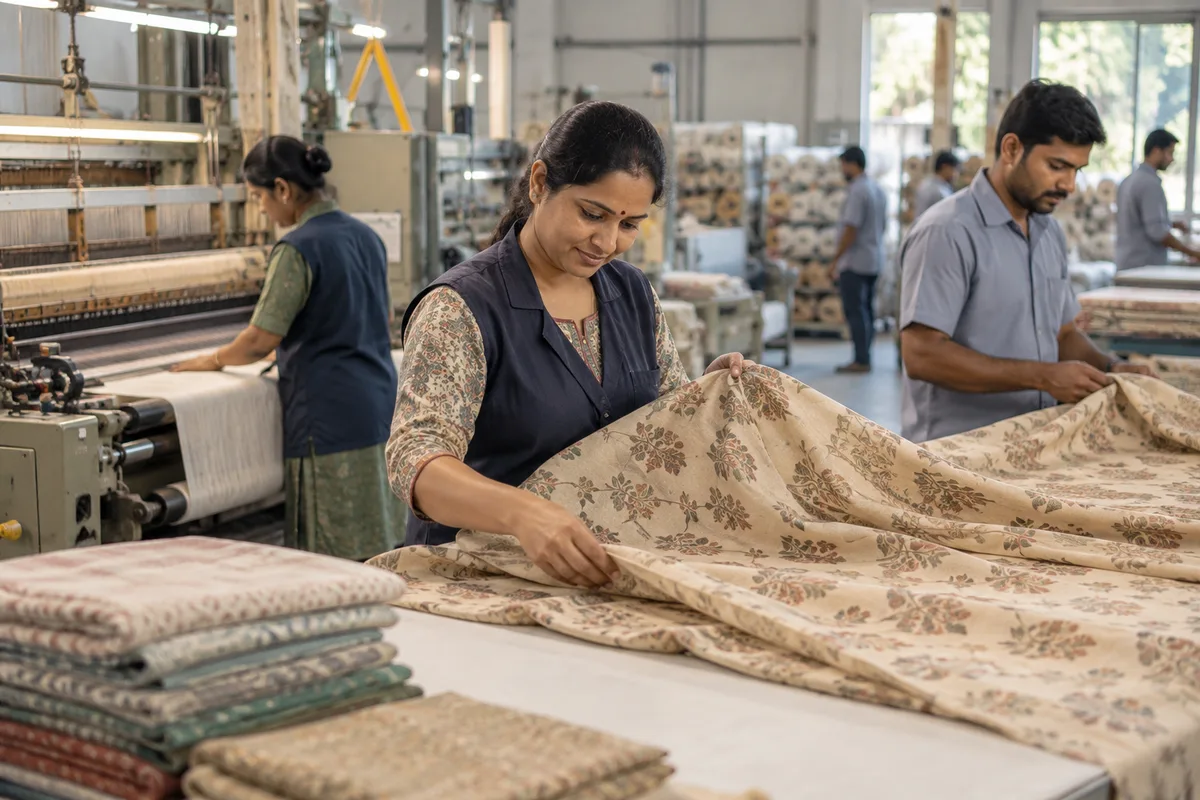
What CRM means
A CRM is the record where every enquiry, call and quote is kept against a customer, replacing separate notebooks, spreadsheets and memory. GullySales sets up or cleans an existing CRM and reports from it by enquiry outcome rather than by activity logged.
Also for bedsheet manufacturers
- Lead generation for bedsheet manufacturers
- Follow-up systems for bedsheet manufacturers
- SEO for bedsheet manufacturers
- Social media marketing for bedsheet manufacturers
- Content marketing for bedsheet manufacturers
- Buyer personas for bedsheet manufacturers
- WhatsApp marketing for bedsheet manufacturers
- Digital marketing for bedsheet manufacturers
Sales and marketing for bedsheet manufacturers, the overview.
Last updated 13 Nov 2026.
For bedsheet manufacturers
Where it usually goes wrong, and what we would do.
“A sample goes out and the record stays in a head”
A set is couriered to a buyer in another city, and the only trace is a salesperson's memory. When that person is away, nobody knows whom to call or what was said.
“Rate lists differ by buyer”
One wholesaler gets a carton rate, another a set rate, and a private label account has its own terms. Without a record, quotes drift and arguments start at the order stage.
“Repeat buyers go unnoticed”
The wholesaler who ordered a printed range last season may not be reminded until a competitor calls. A record of last order date and design lets you reach them before the stocking period.
What we do
What we deliver for bedsheet manufacturers.
The work available for this need. We agree the deliverables and responsibilities for your engagement in writing.
A buyer record layout
Fields for business type, town, fabrics of interest, usual quantity and last order.
Result: Every buyer has the same fields filled in.
A sample tracker
Entries for sample set, date sent, courier proof and the buyer's reply.
Result: You can see which samples are still waiting for an answer.
A quote register
Each quotation with rate, validity date and status.
Result: An old quote is marked expired, not left to be quoted again.
A repeat order list
Buyers sorted by last order date and design.
Result: The list shows who is due a call before the next stocking period.
Team habits for updating the record
A short routine for logging calls and messages the same day.
Result: A colleague can pick up any buyer without asking the last person.
How the result is measured
- Enquiries logged in the CRM
- Data completeness
- Reports generated from CRM data
Recorded as a baseline before work starts, so every later report has an honest comparison.
Fields worth keeping
Fields worth keeping against each buyer.
- Buyer group and city
- Filled at the first call. Lets you offer a new design only to buyers who do not overlap in the same market.
- Fabric, size and quantity asked
- Filled from the enquiry. Shows what the buyer really wants and compares it with what they later order.
- Sample set sent and date
- Filled by dispatch. Prompts the call after the courier delivers, and shows which designs were shown.
- Rate sheet version quoted
- Filled by the sales owner. Prevents two buyers in one market quoting different rates for the same design.
- Last order and reorder due
- Filled from billing. Gives the owner a list of repeat buyers who have not ordered this season.
Who it is for
This is written for these bedsheet manufacturers.
- Pure cotton bedsheet makers
- Polycotton and microfibre bedsheet units
- Printed and block-print bedsheet manufacturers
- Double, king and single bedsheet specialists
- Bedding set and comforter cover makers
- Hotel, hostel and hospital linen suppliers
- Private label units for online sellers
- Wholesale suppliers to textile market traders
Not for
It is not the right fit if.
- Nobody on the team will update a record, and a half-kept list is worse than a sheet one person keeps well.
- You have only a few buyers, and a simple notebook already holds all their details.
- Your rate list changes with every call, so a field for the quoted rate would never match the truth.
Before you decide
Agree the work. Know how to judge it.
CRM for bedsheet manufacturers: use these checks to prepare, choose the scope, and review what changes.
Bring the right evidence
List the records your team uses and show how an enquiry becomes an order today. Bring examples of duplicate entries, missing owners, and reports that require manual correction.
Make the scope clear
Agree the stages, required fields, access roles, and integrations before configuring the system. Separate software subscriptions from setup, data work, and training.
Check the work in use
Ask the people who will use the CRM to complete a real handover and find the next action without help. Check that the management report can be traced back to individual records.
Know when to change course
If the process is unclear, buying a more complex CRM adds more places for confusion. Start with the minimum fields and rules the team can use consistently.
These are discussion points, not a fixed package. GullySales confirms the deliverables, responsibilities, fee, and term in writing after reading your brief and speaking with you.
Before we start
What to have ready before the work starts.
The records, access and decisions this work needs from bedsheet manufacturers. Anything missing is noted in the written scope, with who will supply it.
- Your quote book and sample register
- A buyer record needs the history of what was quoted and sent. A bound book, a sheet or photographs of pages will do. If samples were never recorded, we start the register now and say that older sample history cannot be traced. Pages that show rates should be copied with care, and you decide who may see them.
- A current list of buyers and contacts
- We need names, cities, phone numbers and the salesperson who handles each. A phone's contacts export is enough. Without it, the system starts with the last year's invoices, and buyers who ordered earlier are absent until someone adds them. Add the salesperson's name beside each contact, because the record needs to show who owns the account.
- The tool your team already uses
- If your staff keep records on a spreadsheet, an accounting package or a free tool, say which. We build on it where we can. A tool that no one opens will fail, so we prefer to fit yours before suggesting a new one. If the tool is a free one, tell us where the data is stored and who can export it.
- A decision on who may edit and delete
- Records suffer when several people change them freely. Decide who can add buyers, who can change a quote and who can delete. A simple list is enough. Without it, we set the strictest rule and ask you to relax it. A short written rule is better than a verbal one, since the next new joiner will read it.
- A rule for quotes from two salespeople
- When two staff quote the same buyer, the record must show who owns the account. Tell us how you decide: by city, by group or by first contact. We write it into the record. Without a rule, quotes will conflict and the buyer notices. The rule should also say who decides when two salespeople disagree about who first reached the buyer.
How it works
How the CRM work runs
The work itself, in order. How an engagement starts, from your brief to a written scope, is set out on our method page.
- 1
Follow one buyer from first call to reorder
We trace a single account through your records, from the first enquiry and the sample sent to the quote, the order, the dispatch and the reorder, noting each place the details lived: a diary, a phone, a bill book or a sheet. You show us where something was lost. The trace sets the stages the record must hold. We also ask who in the team writes the quote and who chases the payment, because the record must tell both of them the same story.
- 2
Draw the buyer record on one page
We sketch the record: business name, city, contact, buyer group, designs asked about, samples sent, quotes given, orders placed and notes. You remove any field your team will not fill in. A record with fewer fields filled accurately is better than a long one that is left blank. For each buyer group we note the one fact a salesperson needs before a call, such as the last fabric ordered or the design a buyer rejected.
- 3
Move past quotes and samples into the sheet
We enter or import quotes, samples and orders from the past year into the chosen sheet or tool, merging duplicates such as the same shop under two names. You review a sample of merged records. Unclear cases are held in a separate list instead of being merged wrongly. Phone numbers are checked for the same buyer saved under a shop name, a person's name and a city, which is the commonest cause of duplicates.
- 4
Set stages, reminders and the repeat list
We define the stages from the trace, set a reminder against each sample sent and each quote given, and build the list of buyers who ordered before and have not reordered. You confirm the reminders suit your trade. A reminder nobody acts on is removed. A sample reminder starts from the courier date, and a quote reminder starts from the date on the quote, so each reminder rests on a real event.
- 5
Sit with the team while they use it
We stay with your salespeople as they enter live enquiries, quotes and samples, showing the three moments when a record must be touched. You decide whose job it is to check that the records are kept. That person's name goes on the handover note. We watch the first week of live use and write down every place a person hesitates, since those become the next changes to the layout.
- 6
Check the records against the register
After the team has used the record, we compare it with your order register and sample book, noting where entries are missing or late. Quotes and repeat orders are counted and set beside the counts taken beforehand. Together we simplify the fields that do not get filled. The missing entries are shown to the team without blame, with the reason each was skipped, so the fields can be simplified.
Where this fits
Three pieces of sales work, in this order.
This work sits inside sales management. A target, a review routine and someone who owns the number.
Step 1
Sales audit
Find where deals are being lost and what to fix first.
Start here if you cannot say where orders are lost.
Step 2
Sales process design
One written way to sell, from first enquiry to repeat order.
Start here if every salesperson sells differently.
Step 3 · you are here
Sales management
A target, a review routine and someone who owns the number.
Start here if the team has targets and no routine.
FAQ
Questions owners ask before they call.
Not here? More answers, or ask on WhatsApp.
Do we need paid software?
Will the team actually use it?
What if two salespeople quote the same buyer?
Do we need paid software for a bedsheet business?
Can the record connect to our accounting software?
What if the owner keeps buyer details only in a phone?
How much does it cost?
How long is the contract?
How soon will we see results?
Who will actually do the work?
More for bedsheet manufacturers
Related work to consider.
Closest to this: leads and follow-up
Also for bedsheet manufacturers
Or start from the overview: sales and marketing for bedsheet manufacturers.
Your next practical step
Tell us what you are trying to grow, and we will read it before we call.
Eight short steps, mostly taps. Skip anything you would rather answer on the call.