Bedsheet manufacturers · Buyer persona
Know the four people who buy bedsheets from you, and what each one checks first.
A buyer persona for a bedsheet maker describes who orders, what they compare and what makes them reorder. GullySales builds one for each group you sell to, using your own order history.
Scope, fee, reporting and term are agreed in writing after we have read your brief and spoken to you.
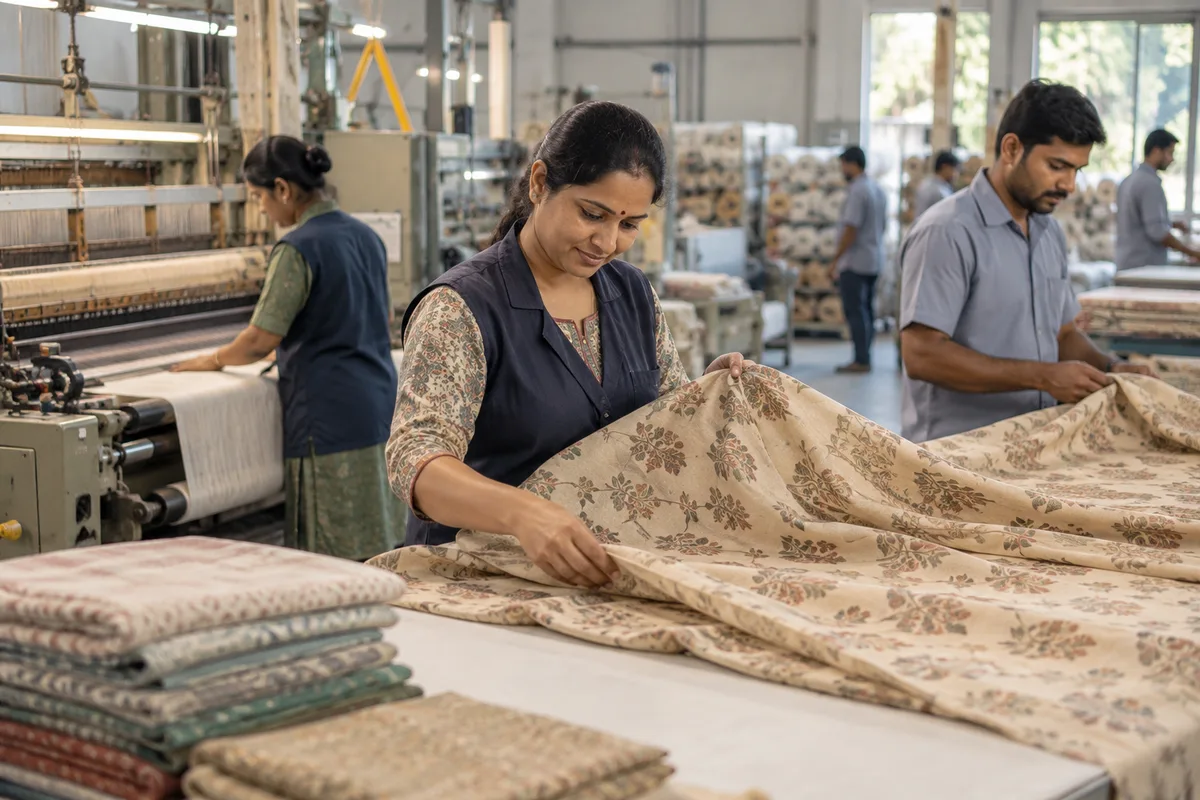
What buyer persona means
A buyer persona is a plain description of the kind of customer who actually buys from you. It includes what they search, what worries them and who else they ask before deciding. GullySales builds this from real enquiries and past sales rather than a generic template, then uses it to write every page and advert.
Also for bedsheet manufacturers
- Digital marketing for bedsheet manufacturers
- Lead generation for bedsheet manufacturers
- SEO for bedsheet manufacturers
- Social media marketing for bedsheet manufacturers
- Content marketing for bedsheet manufacturers
- CRM for bedsheet manufacturers
- Follow-up systems for bedsheet manufacturers
- WhatsApp marketing for bedsheet manufacturers
Sales and marketing for bedsheet manufacturers, the overview.
Last updated 13 Nov 2026.
For bedsheet manufacturers
Where it usually goes wrong, and what we would do.
“The wholesaler checks design and rate in one glance”
A textile market trader scrolls through photographs, looking for a fresh print at a rate that leaves margin. A message without a pack size loses to one that has it.
“The purchase head of a chain checks supply”
A regional home store buyer wants to know the range will arrive on schedule and match the sample. A reliable delivery record weighs on the decision as much as the print.
“The online seller checks consistency”
A seller building a brand wants the same colour and feel each time, and replies from a maker who answers questions. One mismatched lot can end the account.
“The institutional buyer checks paperwork”
A hostel or hospital officer asks for specification, quality documents and past supply before discussing rate. The price decision comes after the file is complete.
What we do
What we deliver for bedsheet manufacturers.
The work available for this need. We agree the deliverables and responsibilities for your engagement in writing.
A one-page persona per buyer group
For each group, who they are, what they ask first, what they fear and what makes them reorder.
Result: Your team can read a page and know how to open a conversation with that buyer.
An order history review
Your past orders sorted by buyer type, quantity and design.
Result: You can see which group gave the repeat orders.
Questions for each group
The first questions your sales team asks a wholesaler, a seller or an officer.
Result: Each conversation starts with questions matched to the buyer.
Messages written for each persona
Opening messages and follow-ups in the language each group uses.
Result: A seller and a trader no longer get the same message.
A persona-to-page map
Which page or file each persona should be sent to.
Result: A purchase officer is sent the supply file, not the festival catalogue.
How the result is measured
- Enquiry match to persona
- Conversion rate by persona
- Content aligned to persona
Recorded as a baseline before work starts, so every later report has an honest comparison.
Who is asking
The people who buy bedsheets by the carton.
- Wholesaler in a textile market
- Judges design and rate in one glance and wants a sample set before a carton order.
- Retail chain purchase head
- Wants a steady supply across seasons, consistent size and a pack that suits the shelf.
- Online seller with a private label
- Wants every lot to match the sample and a pack ready for a courier.
- Hotel or hostel purchase officer
- Wants the paperwork, durable fabric and a supplier who can repeat the same lot.
- Trader reselling in a small town
- Wants a low trial lot, clear rates and a design the next shop does not have.
Who it is for
This is written for these bedsheet manufacturers.
- Pure cotton bedsheet makers
- Polycotton and microfibre bedsheet units
- Printed and block-print bedsheet manufacturers
- Double, king and single bedsheet specialists
- Bedding set and comforter cover makers
- Hotel, hostel and hospital linen suppliers
- Private label units for online sellers
- Wholesale suppliers to textile market traders
Not for
It is not the right fit if.
- You have not looked at your last year's orders by buyer type, so a persona would be written from memory.
- You sell to one wholesaler only and have no view of who buys from them.
- Your team believes the buyers are all alike, and you have not tested that belief against the order book.
Before you decide
Agree the work. Know how to judge it.
Buyer personas for bedsheet manufacturers: use these checks to prepare, choose the scope, and review what changes.
Bring the right evidence
Write the decision the research must support, such as entering a market or choosing a buyer group. Separate what you know from sales records from what the team currently assumes.
Make the scope clear
Agree which buyers to speak to, which sources to review, and what access you can provide. Include lost enquiries and people who chose another supplier, where they are willing to take part.
Check the work in use
Look for source dates, sample limitations, and evidence that disagrees with the preferred answer. A recommendation should show how it follows from the findings.
Know when to change course
Do not treat a few positive conversations as proof of demand. Test the proposed offer with an actual buying decision before committing to a wider launch.
These are discussion points, not a fixed package. GullySales confirms the deliverables, responsibilities, fee, and term in writing after reading your brief and speaking with you.
Before we start
What to have ready before the work starts.
The records, access and decisions this work needs from bedsheet manufacturers. Anything missing is noted in the written scope, with who will supply it.
- The order register for two years
- Personas come from who actually bought what. A register, a billing export or a ledger will do, even if untidy. Without two years we describe what we can see and say plainly which buyer groups are too thinly recorded to profile. Write the buyer group beside each order if you can, and tell us where you are unsure.
- Introductions to buyers from each group
- A small number of buyers must agree to a short conversation. You know them, so you ask. If none is available, we build from the record and from your sales staff, and each sheet carries a note that it has not been checked with a buyer. A short call of the kind buyers expect, and not a survey, gets the best answers.
- Your sales team's time
- The salespeople hear things that never reach a ledger, such as why a wholesaler asked for a different fold or why a purchaser disliked a carton. Give us a session with each. Without them, the sheets reflect the books alone and miss the reasons. Their examples are valued for the detail they hold, so bring cases and not opinions.
- Complaint and return notes
- Complaints show what each group cannot tolerate: colour bleeding, a short length, a mislabelled size. Share the notes or the messages. If these are unrecorded, we ask your staff to recall the last few cases and mark the sheets as based on memory. Even a few lines from memory make the sheet more honest.
- A decision on groups you want to leave out
- You may not wish to serve small shops or sell on a certain platform. Tell us. We will leave those groups out of the work, and the messages written afterwards will not appeal to them. We then write the sheets only for the groups you choose to serve.
How it works
How the buyer persona work runs
The work itself, in order. How an engagement starts, from your brief to a written scope, is set out on our method page.
- 1
Sort your buyers into groups from the books
We take your order register and invoices and sort buyers into wholesalers, chain or department store buyers, online sellers and institutional purchasers, adding any group you sell to that we have missed. You tell us which have grown and which have stalled. The sorted list is the base for every persona. Buyers who fit two groups, such as a wholesaler who also sells online, are marked so they are not counted twice.
- 2
Read what each group has bought
For each group we look at the sizes, fabrics, lot sizes, repeat gaps and complaints recorded in your books, and note what differs between them. You explain the odd cases from your memory. The findings are tied to specific orders, so nobody can later argue them away. We also note which buyers pay late, since that changes how a persona should be approached.
- 3
Choose who to speak with
We pick a few buyers from each group to talk to, covering a loyal one, a lapsed one and a recent one. You make the introductions, since the relationship is yours. Nobody is contacted without your word, and a buyer who declines is not pressed. A mix of near and distant buyers is preferred, since a market-town trader and a metro chain behave differently.
- 4
Ask the buyers what they compare
In each conversation we ask how they found you, who else they considered, what they check on a sample, what makes them place a second order and what makes them leave. We write down their words. Where two buyers in a group disagree, we note it rather than average it. The questions are the same for every buyer in a group, which lets us compare their answers fairly.
- 5
Write the sheets and test them on your team
Each sheet states who the buyer is, what they look at first, what they fear and what they do next. Your salespeople read them and strike out whatever does not match the buyers they meet. We revise until the people who sell to these buyers recognise them. Statements that no salesperson recognises are removed, however neat they sound.
- 6
Put the sheets to work and record the baseline
We agree where the personas are used first: a catalogue page, a rate message, a sample pack, a call opening. For each use, we record the current counts of enquiries, samples and orders, and revisit them after the sheets have been in use to see what moved. Each use is given a person on your side who will look at the figures afterwards.
Where this fits
Three pieces of sales work, in this order.
This work sits inside sales process design, at stage 0, foundation. The audit comes before it, and sales management keeps it running.
Step 1
Sales audit
Find where deals are being lost and what to fix first.
Start here if you cannot say where orders are lost.
Step 2 · you are here
Sales process design
One written way to sell, from first enquiry to repeat order.
Start here if every salesperson sells differently.
Step 3
Sales management
A target, a review routine and someone who owns the number.
Start here if the team has targets and no routine.
FAQ
Questions owners ask before they call.
Not here? More answers, or ask on WhatsApp.
We already know our buyers. Why write this down?
How many personas do we need?
What does an institutional buyer ask that a trader does not?
How many personas does a bedsheet maker need?
Can one persona cover a wholesaler and a retailer?
How often do the sheets need updating?
How much does it cost?
How long is the contract?
How soon will we see results?
Who will actually do the work?
More for bedsheet manufacturers
Related work to consider.
Closest to this: strategy and research
Also for bedsheet manufacturers
Or start from the overview: sales and marketing for bedsheet manufacturers.
Your next practical step
Tell us what you are trying to grow, and we will read it before we call.
Eight short steps, mostly taps. Skip anything you would rather answer on the call.