Cleaning chemical manufacturers · Website
Build the site a purchase head can forward to the contractor without explaining it.
A website for a cleaning chemical maker is the place where a buyer checks your range, finds a data sheet and asks for a trial. GullySales works on the structure, the product pages, the downloads and the enquiry form so that each serves a buyer's actual question.
Scope, fee, reporting and term are agreed in writing after we have read your brief and spoken to you.
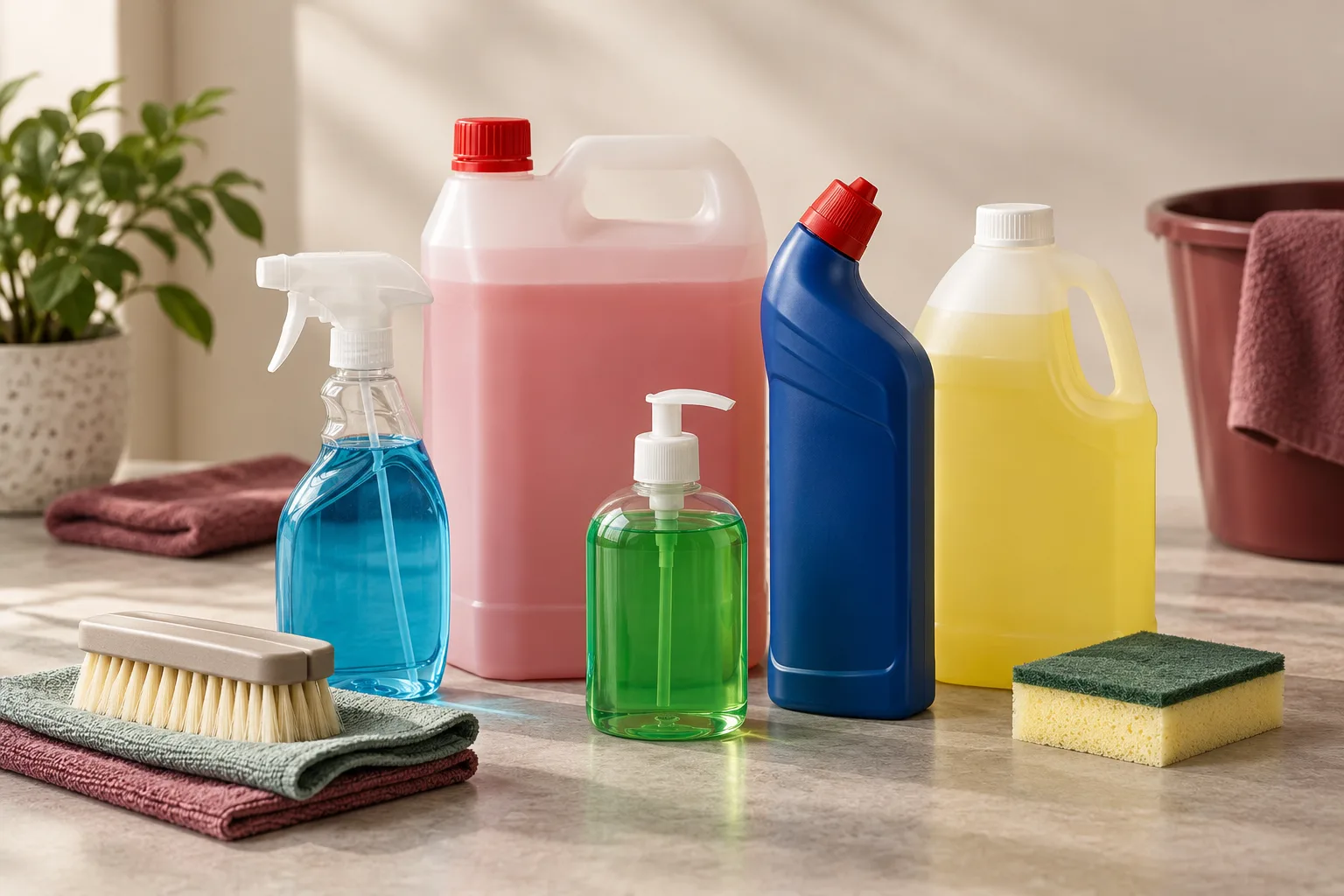
What website means
A website is the page a customer lands on after searching, clicking an advert or scanning a code, and it decides whether they call or leave. GullySales builds and maintains sites that load quickly, explain the offer plainly and make the enquiry form or phone number easy to find.
Also for cleaning chemical manufacturers
- SEO for cleaning chemical manufacturers
- Local SEO for cleaning chemical manufacturers
- Lead generation for cleaning chemical manufacturers
- Social media marketing for cleaning chemical manufacturers
- Content marketing for cleaning chemical manufacturers
- Buyer persona for cleaning chemical manufacturers
- CRM for cleaning chemical manufacturers
- Follow-up systems for cleaning chemical manufacturers
Sales and marketing for cleaning chemical manufacturers, the overview.
Last updated 14 Nov 2026.
For cleaning chemical manufacturers
Where it usually goes wrong, and what we would do.
“The site is read on a phone in a corridor”
A supervisor checks your range between rounds on a mobile. Pages that load slowly, hide the pack sizes or bury the data sheet lose that reader, who then asks the next supplier instead.
“Product codes mean nothing to the buyer”
A catalogue organised by internal codes forces the buyer to guess. A site organised by surface and use, with the product and its cautions on the same page, answers the question that was asked.
“Private label buyers need a different door”
A retailer weighing a supplier wants minimum quantities, pack options and a sample route. Mixing that with a household range page confuses both visitors, so give private label its own page and form.
What we do
What we deliver for cleaning chemical manufacturers.
The work available for this need. We agree the deliverables and responsibilities for your engagement in writing.
Site structure by use and surface
A page plan with sections for institutions, laundries, kitchens, retail range and private label.
Result: A visitor reaches the right section in one step from the home page.
Product pages with downloads
Each product with its use, dilution, pack sizes, cautions and a data sheet to download.
Result: Every product page carries a data sheet and the pack sizes.
Trial and quote request forms
Short forms for a demonstration request, a distributor enquiry and a private label enquiry, each asking different things.
Result: Each form asks only what that type of buyer can answer.
Phone-first design check
The site checked on ordinary Android phones and slow connections, with the call and WhatsApp buttons easy to reach.
Result: Pages work on an ordinary phone and the enquiry buttons are in reach.
Content you can edit
A set-up where your team can add a product, a data sheet or a city page without calling a developer.
Result: Your team can publish a new product page on their own.
How the result is measured
- Page load time
- Bounce rate
- Enquiries from the website
Recorded as a baseline before work starts, so every later report has an honest comparison.
Searches your buyers type
The site answers what a purchase head and a supervisor look up.
- what product for marble floor cleaning
- A surface page naming the product, the dilution and the cautions. Each surface page links to the product and the trial form.
- floor cleaner data sheet download
- A product page with a data sheet download and the pack sizes. Keep the sheet current and date the page.
- request trial of cleaning chemical
- A short form asking site type, surface, city and contact. It goes to the representative for that region.
- cleaning chemical price per litre for institution
- A quote page that invites an enquiry. Show pack sizes, and state that the price follows volume and city.
- private label cleaner minimum order
- A separate page for private label buyers stating the minimum batch, the formula choice and the labelling steps.
Who it is for
This is written for these cleaning chemical manufacturers.
- Floor cleaner, disinfectant and toilet cleaner makers selling to institutions
- Kitchen degreaser and dishwash chemical makers for hotels and canteens
- Laundry chemical makers supplying laundries and hospitals
- Hospital and healthcare-use surface cleaner makers
- Car wash and vehicle cleaning chemical makers
- Household cleaner makers selling in retail packs
- Private label cleaning chemical makers
- Industrial degreaser and workshop cleaner makers
Before you decide
When this may not be the right fit.
- Product claims are not yet matched to test reports, and pages would carry statements no one has checked.
- There is no one to answer a trial request, so the form would collect names that go cold.
- The plan is a full online shop, but the business sells drums by quotation.
Before you decide
Agree the work. Know how to judge it.
Website for cleaning chemical manufacturers: use these checks to prepare, choose the scope, and review what changes.
Bring the right evidence
List the pages that support a buying decision and the actions visitors must complete. Keep examples of failed forms, unclear product information, and questions your team answers repeatedly.
Make the scope clear
Agree the page list, content ownership, integrations, and who controls the domain and hosting. Include redirects and existing search traffic in a redesign brief, before changing addresses.
Check the work in use
Complete a real enquiry journey on a phone and a laptop. Check that the confirmation appears, the enquiry reaches the right person, and tracking records the action once.
Know when to change course
If visitors can enquire but the team does not follow up, start with the sales handover. A larger website will not resolve that delay.
These are discussion points, not a fixed package. GullySales confirms the deliverables, responsibilities, fee, and term in writing after reading your brief and speaking with you.
Before we start
What to have ready before the work starts.
The records, access and decisions this work needs from cleaning chemical manufacturers. Anything missing is noted in the written scope, with who will supply it.
- Domain, hosting and email logins
- Bring the domain registrar login and the details of the current host and email. Without them we cannot move the site or protect the company mail. If an old vendor holds them, you ask for them back before we begin, since everything else waits on that.
- Sheets and labels for every product
- Provide the latest technical and safety data sheets and a clear photograph of each label. Mark which are public. Missing sheets mean product pages cannot be completed, and the site launches with fewer products, which we prefer to an inaccurate page, and the missing products are added the day your sheet arrives.
- Photographs of the plant and products
- Take photographs of the plant gate, the filling line, the packed drums and each pack in daylight. A phone is enough. Without photographs the site looks like a trader's, and the buyer's first question, whether you really manufacture, goes unanswered, and a buyer who cannot tell leaves for a directory that shows a plant.
- Your decision on pricing and quotations
- Decide whether the site shows any price, a price on request or none. Institutional buyers want a quotation. We never print a price ourselves. If the decision is left open, the site carries a quotation form and the sales head answers each request.
- A named person to receive form requests
- Name who gets trial and quotation requests, and who stands in. A form that sends enquiries to an inbox nobody reads wastes the whole build. If no person is named, we set the route to the sales head's address for you to confirm.
How it works
How the website work runs
The work itself, in order. How an engagement starts, from your brief to a written scope, is set out on our method page.
- 1
List the uses and surfaces the site must show
We start with the owner and your technical person, writing down every surface and use your products serve: kitchens, washrooms, floors, laundries, vehicles. The site's structure follows that list, not your product codes. You decide which products appear on the public site and which are shown only to a buyer who asks, because a few formulations are better discussed with the representative present.
- 2
Collect data sheets, labels and photographs
We gather the current technical sheets, safety data sheets, product photographs, pack labels and plant photographs. You mark what may be downloaded freely. Anything out of date is flagged to the technical person for correction. We do not write a technical statement that is not already in your own sheets, and we ask the technical person to approve each photograph that shows a label.
- 3
Approve the page plan on a phone-size sketch
We draw the key pages as a supervisor would see them on a phone in a corridor: the use list, one product page, the trial form. You approve the plan before design. Private label buyers get their own entrance, so a retail buyer and a contractor do not meet the same page, and a distributor finds the terms page without searching for it.
- 4
Build the product pages with downloads
Each product page names the surface and use, the dilution as your sheet states it, the pack sizes and the sheet to download. Photographs are chosen by you. The technical person reads every page for accuracy before it goes onto the test site, and we correct anything they mark before the sales head sees the page, so the second reading is about buyers rather than facts.
- 5
Test the forms on real phones
We try the trial request and quotation forms on several phones, including an old one on a weak signal, and send test enquiries to the sales head. The form must reach the right person and be recorded by source. A form that fails on a basic handset is reworked before launch, and the test is repeated on the same handset after the change.
- 6
Launch, hand over and read early enquiries
On the day you approve, we move the domain to the new site, redirect old pages and check mail. You receive the logins and a short guide to editing a page. Later we compare enquiries with the numbers recorded before the work began, and you decide what to add or change.
Where this fits
Three pieces of sales work, in this order.
This work sits inside sales process design, at stage 1, prospecting and lead generation. The audit comes before it, and sales management keeps it running.
Step 1
Sales audit
Find where deals are being lost and what to fix first.
Start here if you cannot say where orders are lost.
Step 2 · you are here
Sales process design
One written way to sell, from first enquiry to repeat order.
Start here if every salesperson sells differently.
Step 3
Sales management
A target, a review routine and someone who owns the number.
Start here if the team has targets and no routine.
FAQ
Questions owners ask before they call.
Not here? More answers, or ask on WhatsApp.
Do we need an online shop?
What should be on the home page?
Who owns the site?
How do we keep the site editable after launch?
Should the site show customer names or logos?
Does the site need pages in other languages?
How much does it cost?
How long is the contract?
How soon will we see results?
Who will actually do the work?
More for cleaning chemical manufacturers
Related work to consider.
Closest to this: search and visibility
Also for cleaning chemical manufacturers
- Lead generation for cleaning chemical manufacturers
- Social media marketing for cleaning chemical manufacturers
- Content marketing for cleaning chemical manufacturers
- Buyer persona for cleaning chemical manufacturers
- CRM for cleaning chemical manufacturers
- Follow-up systems for cleaning chemical manufacturers
Or start from the overview: sales and marketing for cleaning chemical manufacturers.
Your next practical step
Tell us what you are trying to grow, and we will read it before we call.
Eight short steps, mostly taps. Skip anything you would rather answer on the call.