Cleaning chemical manufacturers · Manufacturing
A housekeeping supervisor judges your chemical on the floor, long after the quote is signed.
A housekeeping manager at a hospital in Mangaluru has a floor that smells after the last mopping round and a supplier whose cleaner is diluted wrong by the night staff.
Scope, fee, reporting and term are agreed in writing after we have read your brief and spoken to you.
In one paragraph
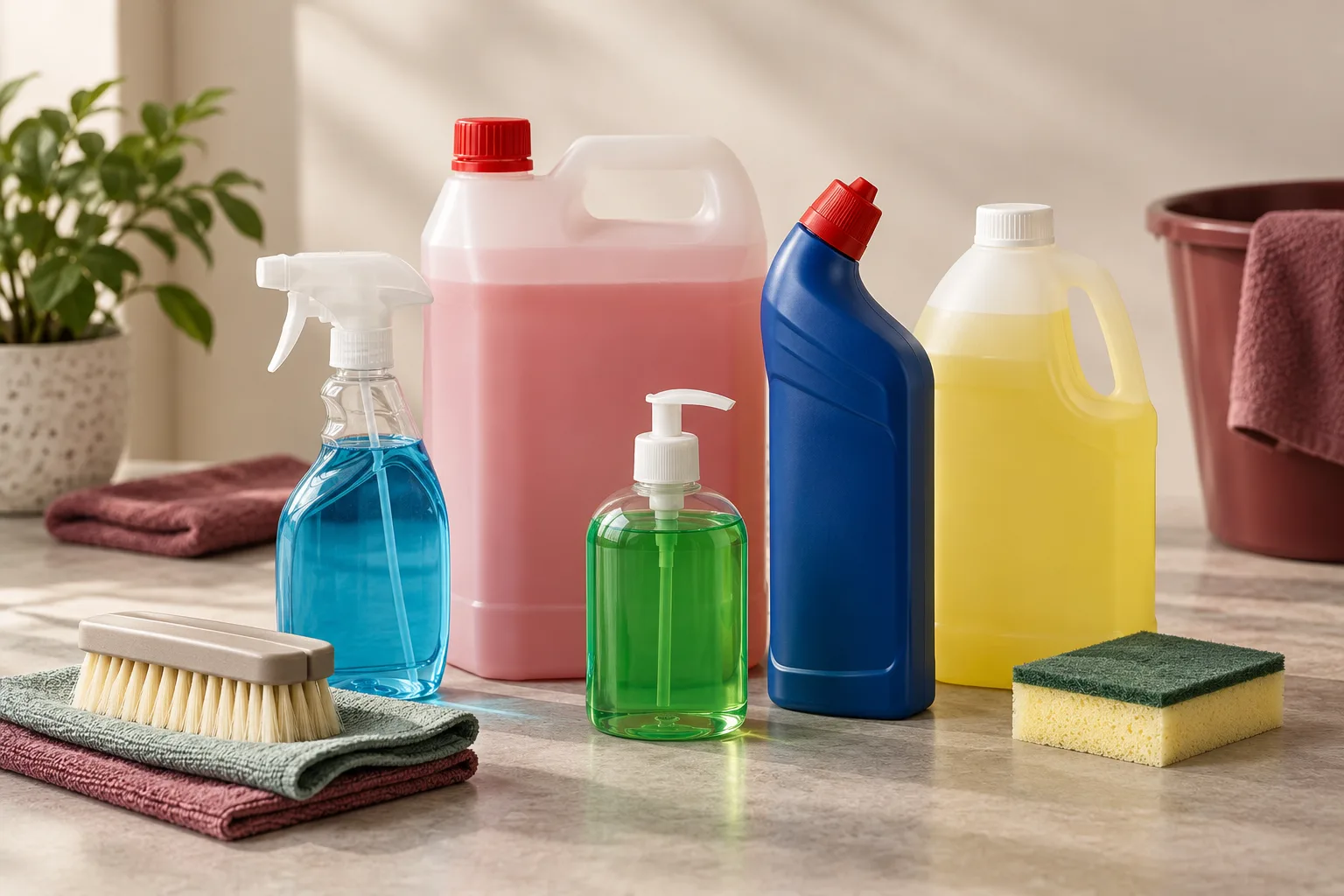
A cleaning chemical manufacturer makes floor cleaners, disinfectants, glass cleaners, dishwash liquids, degreasers and laundry chemicals, sold in cans and drums to institutions and in packs to homes. Marketing gets the product trialled by housekeeping teams. Sales wins the contract, the distributor and the repeat can. GullySales builds the demonstration route and the follow-up.
The manager tries a new product only because a supplier's representative came to the ward, showed the dilution on a bucket and left a labelled sprayer. After that the team asks for it by name.
Cleaning chemicals are bought by people who do not use them and used by people who do not buy them. The purchase head sees a rate per litre. The supervisor sees whether the floor is clean and the staff can mix it correctly. A manufacturer who talks only to purchase wins on price and loses on results, while one who talks only to the floor wins praise and no order.
Last updated 14 Nov 2026.
How buyers decide
How cleaning chemical manufacturers are chosen.
Institutional buyers such as hotels, hospitals, schools, offices and factories buy through a housekeeping contractor, a facility management company or a distributor. The contractor chooses the chemical for the job, because the contract margin depends on how much is used and how well the floor comes out. A product that is easy to dilute and works with the staff's habits is kept.
Home cleaning products go through kirana shops, supermarkets and online marketplaces, where packaging, fragrance and shelf position matter. Private label work is a third route: a retailer or a facility company puts its own name on a product you make, and judges you on consistency and delivery.
The problem
What usually goes wrong for cleaning chemical manufacturers.
Common situations to check against your own enquiry records.
“The contractor buys from whoever delivered last”
Housekeeping contractors change supplier on a call from another distributor, and we find out only when the orders stop.
“Staff misuse the product and we get blamed”
Cleaners over-dilute or mix the wrong chemicals, the floor looks bad and the complaint comes to us.
“Distributors sell the brand that pays them more”
A distributor's margin decides what is pushed at a customer, and our product competes against the distributor's own preference.
“Private label enquiries drag on”
Retailers and facility companies ask for samples, a formulation tweak and a price, then go back to haggle over a rate per litre.
“We cannot show a result before the contract”
A buyer wants evidence the product works on their floor, but we have no organised way to run a demonstration and record it.
“Our home range is invisible on the shelf”
Retail packs are lost among large brands, and we have no way to find the shops that would stock a regional name.
What we do
What we do for cleaning chemical manufacturers.
Possible deliverables for cleaning chemical manufacturers. Your written scope confirms what is included.
On-site demonstration kit
A trolley set with sample cans, a measuring jug, a dilution card and a result sheet that a representative can use on a ward floor, a kitchen or a washroom.
Dilution and use guide
A one-page picture guide for supervisors and cleaners, printed and sent on WhatsApp, in the language the staff speak.
Use-case product pages
Pages by task, such as hospital floors, hotel kitchens, laundry and washrooms, with the right products and cautions.
Distributor and contractor scheme
A simple written plan covering margin, minimum stock, territory and training, discussed with your best distributors.
Private label enquiry route
A short questionnaire covering product, pack, fragrance, volume and delivery, with sample, price and approval steps set out for the buyer.
Account visit record
A shared log for each institution with the chemicals used, the staff contact, the last visit and any complaint still open.
How the result is measured
- Floor or kitchen demonstrations done against purchase orders that followed
- Housekeeping contractor sites opened, counted by contract rather than by call
- Second and third 20-litre can orders by account
- Accounts lost with the reason given: dilution, delivery, price or distributor
- Distributor re-orders by territory
- Private label enquiries that reached a sample stage and those that reached a price
Recorded as a baseline before work starts, so every later report has an honest comparison.
Every service, written for cleaning chemical manufacturers
Each has its own page: what it involves for cleaning chemical manufacturers, what you get, and what it is measured on.
- Lead generationFind the housekeeping buyers who will trial your cleaner on their own floor.
- SEOWrite the page that answers the housekeeping manager's search for a washroom smell.
- Local SEOAppear when a hotel in your delivery city looks for a chemical supplier nearby.
- Social media marketingShow the dilution, the bucket and the floor, because that is what supervisors share.
- Content marketingTeach the housekeeping supervisor something, and the purchase order follows the trust.
- Buyer personaDescribe the supervisor, the contractor and the purchase head as three different buyers.
- CRMKeep every site, every can and every promised call in one record.
- Follow-up systemsCall after the trial, while the supervisor still remembers how the floor looked.
- WhatsApp marketingSend the dilution card to the night shift where they already read messages.
- Digital marketingPut your range where buyers look first, and send them to a trial.
- WebsiteBuild the site a purchase head can forward to the contractor without explaining it.
- Product label designPut the dilution and the hazard text where a wet-handed cleaner can read them.
Worth a page and a campaign of their own
A housekeeping demonstration routine with a dilution chart · Introductions to facility management companies and contractors · A distributor scheme that rewards pushing your range · Product pages by surface and use, not by product code · Private label enquiry steps with a clear sample and price path · Staff training sheets in Kannada, Hindi, Tamil or English as needed · Search visibility for cleaning chemical suppliers in your cities · Retail listing for small packs on marketplaces
Priority campaigns
Campaigns for what cleaning chemical manufacturers most want to sell.
Each one planned around when your buyers decide, and measured against the baseline.
Housekeeping contractor introductions
A researched list of facility management and housekeeping companies in your cities, with a call and a demonstration offer.
Hospital and hotel kitchen demonstrations
Planned visits to chosen hospitals, hotels and canteens with a demonstration and a recorded result.
Distributor activation
Visits, a stock scheme and a training evening for distributors, with a record of which accounts each one serves.
Local search for cleaning suppliers
Pages and a Business Profile for the cities you deliver to, answering searches such as housekeeping chemical supplier near me.
Private label outreach
A list of retailers, facility companies and regional brands that buy their own label cleaners, with an introduction and a sample offer.
Beyond search
Where we reach buyers of cleaning chemical manufacturers, beyond Google.
Search matters, but it is rarely the only way this industry's buyers find a supplier.
Housekeeping supervisors and managers
They use the product and see the result first. A bucket demonstration on their own ward or kitchen floor reaches them, as does an introduction through the contractor who employs them.
Facility management companies
Firms that run cleaning across a campus or a chain of buildings, listed by city. Their margin depends on litres used per square foot, so the pitch is cost of use.
Purchase heads at hotels, hospitals and schools
A commercial note with delivery points, pack sizes and references from comparable sites is what gets a signature.
Distributors and stockists
The way into small accounts that no representative can visit. Candidates are listed territory by territory, with appointment terms drawn up beside them.
Retailers and private label buyers
Supermarkets, store chains and regional brands that need a cleaner under their own name.
Why GullySales
Cleaning chemical makers need one firm that follows a floor demonstration to the second can on the order.
A cleaning chemical maker choosing a firm is choosing between someone who lists products and someone who builds the demonstration, the contractor's trial and the reorder. GullySales treats the floor demonstration and the purchase order as one piece of work.
From the floor demonstration to the order
A housekeeping contractor tries the chemical on the job before buying. We build the demonstration, the call after it and the step to a purchase order together, so the firm that arranges the introduction also looks at what follows the trial.
Starting from the contractor and the distributor
Institutions buy through a housekeeping contractor, a facility company or a distributor, and the contractor picks the chemical. Home products go through kirana shops and marketplaces. The plan starts with who picks the product in each route. A kitchen degreaser for a canteen and a disinfectant for a hospital ward are bought for different reasons, so each is shown the way its buyer tests it.
Counted by site, can and territory
Dispatch records show the opening position: demonstrations against purchase orders that followed, contractor sites opened, second and third can orders by account, accounts lost with the reason given and distributor reorders by territory. Contract sites are counted by contract, not by call, since one housekeeping agreement can open several floors. A lost account is entered with the reason given: dilution, delivery, price or distributor.
Written fee, and label wording kept with you
The fee and scope are on paper before anything begins. No contractor account, distributor listing or ranking is promised. Safety and label wording on a product is decided by your own adviser. Where a task does not suit your route to market, we tell you.
A practical starting point · Cleaning chemical manufacturers
Start with one buying journey.
Use a real enquiry to find the first useful change. You do not need to buy every service listed on this page.
- The record to review
- Start with a recent RFQ and the quotation it produced. Remove buyer identifiers, then retain the specification, quantity, delivery requirement, and reason the order moved forward or stopped.
- The buyer's question
- Check whether the buyer can establish technical fit before asking for a price. Purchasing, engineering, and the end user may need different evidence from the same product page.
- The handover to agree
- Give the technical question to someone who can answer it, and keep the commercial follow-up with a named owner. A vague request for a catalogue should not be treated as a qualified RFQ.
Who it is for
This is written for these cleaning chemical manufacturers.
- Floor cleaner, disinfectant and toilet cleaner makers selling to institutions
- Kitchen degreaser and dishwash chemical makers for hotels and canteens
- Laundry chemical makers supplying laundries and hospitals
- Hospital and healthcare-use surface cleaner makers
- Car wash and vehicle cleaning chemical makers
- Household cleaner makers selling in retail packs
- Private label cleaning chemical makers
- Industrial degreaser and workshop cleaner makers
Before you decide
When this may not be the right fit.
- You want a guaranteed Google ranking or a guaranteed number of leads. Nobody honest can promise either.
- You need enquiries by next week and have nobody to answer them.
- You want posts and reach reported, not enquiries and orders.
How it works
How the work runs for cleaning chemical manufacturers
The work itself, in order. How an engagement starts, from your brief to a written scope, is set out on our method page.
- 1
Listen on the floor
A GullySales person goes with your representative to a customer site to watch how the product is mixed, used and complained about.
- 2
Choose the accounts to chase
A short list of institution types and contractors is agreed, along with the products to lead with.
- 3
Build the demonstration and guides
The kit, the picture guides and the product pages are written and tried with a friendly customer.
- 4
Visit, demonstrate, follow up
Outreach begins, and each demonstration is recorded with the follow-up call written against it.
- 5
Check what kept and what lapsed
Accounts won, lapsed and complained about are read together, and the pitch and the distributor scheme are rewritten from them.
Proof
Published examples of our work.
Each example names the client and the work delivered. Some examples come from related industries; use them to assess the method, not to predict your results.
Burhani Hydroline
- Situation
- The website was dated. Menus were hard to follow, pages were slow, and it did not work properly on a phone, which is where a buyer looks first.
- What we did
- Research before design
- Wireframes and prototypes
- The full product catalogue
- An online checkout
- Result
- No numbers were recorded for this engagement. The work is described in full in the case study.
Also worked with
Chord Road Hospital · Curtain Label · Difesa Security Services · Felicity Inn · Hands On CSR · Implevista · Kambar Group · Kalessi · Kerur Pain Clinic · LL Trust · Lucky Deals · Natural Gases · NavaShakthi Souhardha · NewCom Logistics · Proton Technical Services · SB Engineering · Shakthi Foundation · Shakthi Group · Urbanest · Insyde Studio · Venkateshwara Laser Tech · Vivara Studios
Where this fits
Three pieces of sales work, in this order.
Start by finding where enquiries and orders are being lost. Agree the changes to your sales process, then decide who will manage the work and review the results.
Step 1
Sales audit
Find where deals are being lost and what to fix first.
Start here if you cannot say where orders are lost.
Step 2
Sales process design
One written way to sell, from first enquiry to repeat order.
Start here if every salesperson sells differently.
Step 3
Sales management
A target, a review routine and someone who owns the number.
Start here if the team has targets and no routine.
FAQ
Questions cleaning chemical manufacturers ask before they call.
Not here? More answers, or ask on WhatsApp.
How do cleaning chemical makers win institutional customers?
Should we work with housekeeping contractors or go direct?
Can small cleaning brands sell in retail?
How should disinfectant claims be handled in marketing?
What does private label work require from us?
How much does it cost?
How soon will we see results?
Who will actually do the work?
What do you need from us?
What if we are not happy with the work?
Part of Manufacturing. See the other industries in the sector.
Your next practical step
Tell us what you are trying to grow, and we will read it before we call.
Eight short steps, mostly taps. Skip anything you would rather answer on the call.