Cleaning chemical manufacturers · Product label design
Put the dilution and the hazard text where a wet-handed cleaner can read them.
Product label design for a cleaning chemical maker is the artwork for the label on a can, drum, trigger bottle or refill pouch, drawn for a container that is handled wet and read at arm's length. GullySales draws the label around the dilution panel, the colour system and the space your adviser reserves for hazard wording, then hands your label printer files with a specification sheet.
Scope, fee, reporting and term are agreed in writing after we have read your brief and spoken to you.
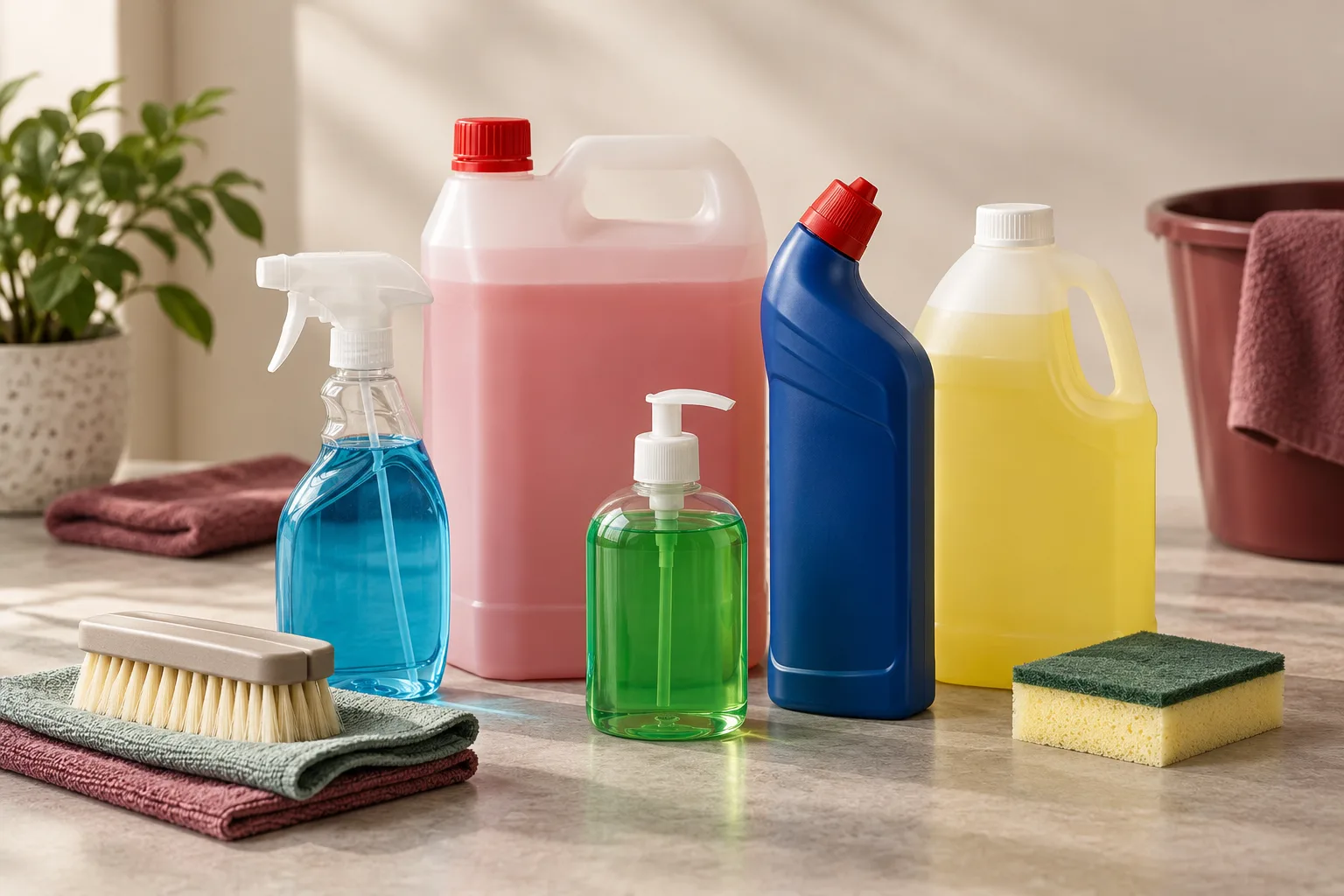
What product label design means
Product label design is the artwork for the printed label, sticker, wrap or sleeve that goes on a bottle, jar, tin, tube, bag or machine. GullySales draws the label for the surface it sits on, places the words you supply, reserves space for mandatory text and hands your label printer files with a specification sheet.
Also for cleaning chemical manufacturers
- Lead generation for cleaning chemical manufacturers
- SEO for cleaning chemical manufacturers
- Local SEO for cleaning chemical manufacturers
- Social media marketing for cleaning chemical manufacturers
- Content marketing for cleaning chemical manufacturers
- Buyer persona for cleaning chemical manufacturers
- CRM for cleaning chemical manufacturers
- Follow-up systems for cleaning chemical manufacturers
Sales and marketing for cleaning chemical manufacturers, the overview.
Last updated 14 Nov 2026.
For cleaning chemical manufacturers
Where it usually goes wrong, and what we would do.
“The label is read by a cleaner, not by the buyer”
The purchase head approves the product, but the person who reads the label is a housekeeping supervisor or a cleaner standing at a mop bucket with wet gloves. That reader wants the product name, the dilution and the surface it is meant for, in that order. A label drawn like a retail pack hides all three behind a fragrance name and a splash of colour, and the supervisor guesses.
“Hazard text and brand fight for the same small area”
A drum label carries the product name, the contents, the hazard pictograms, the signal wording, the first aid lines, the supplier details and the batch panel. A designer who treats that text as an afterthought squeezes it into a corner at a size nobody can read. The panel has to be planned first, so the brand takes what is left on purpose, not by accident.
“Colour is the only warning a hurried cleaner sees”
Hotels, hospitals and schools keep floor cleaner, toilet cleaner, glass cleaner and disinfectant on the same trolley. When every label is a different blue, a tired night-shift cleaner picks the wrong bottle. A consistent colour and shape system across the range lets the contractor train staff once, and lets a supervisor spot a mix-up from across the store room.
“Variants and private label runs multiply the artwork”
One floor cleaner becomes four fragrances, three pack sizes and a private label version for a facility company. If each is drawn separately, a revised hazard line gets updated on some and missed on others. A single label system with one changing element keeps every size and every customer's version in step and makes a correction a single change.
What we do
What we deliver for cleaning chemical manufacturers.
The work available for this need. We agree the deliverables and responsibilities for your engagement in writing.
A label brief signed off before drawing
A short brief records each container, the material it is made of, the label material, the place it is used and stored, the reading distance and the text your adviser says must appear. You approve it first, so a later change is visible as a change.
Result: You hold one signed page that lists every container, label size and required panel.
Layout drawn on the real container
The front, back and any wrap label are drawn on the shape of your actual can, drum or bottle, including the handle, the neck and the seam. The curve of a trigger bottle and the flat of a drum face call for different hierarchies, and each is drawn separately.
Result: You can see the label on a mock-up of each container shape before anything is printed.
A dilution and use panel
A plain panel shows the mixing ratio, the surface it suits and the order of use, with a small drawing where a picture is clearer than a sentence. The figures are the ones your technical team supplies; the panel gives them a place a cleaner can find in a glance.
Result: A supervisor who has never met your sales team can read the dilution from one metre away.
A reserved hazard and regulatory area
A marked region is held for pictograms, signal wording, precaution lines, supplier details, batch and date marking and the barcode. The wording and any panel format required come from your adviser and your safety data sheet. Nothing in it is invented by the designer.
Result: Your adviser can see the exact area, its size and its position before approving the artwork.
A colour and shape system for the range
One system separates floor cleaner from toilet cleaner, glass cleaner from degreaser and disinfectant from laundry liquid, using colour bands, name placement and icon. It is drawn so the tint survives the printer's material and a damp store room.
Result: A trainer can describe your range to a new cleaner in one sentence, using colour and shape alone.
Print-ready files and a printer specification sheet
Final artwork is prepared to your label printer's die line, material, finish and colour references, with variants and sizes kept in one organised folder. A specification sheet lists the fonts, the spot colours and the areas that must not be altered at the press.
Result: Your printer can load the files without asking for fixes, and the next reorder uses the same folder.
How the result is measured
- Printer rejections or file queries on label jobs
- Labels reprinted for artwork errors
- Wrong-variant packing mistakes found at dispatch
Recorded as a baseline before work starts, so every later report has an honest comparison.
Who it is for
This is written for these cleaning chemical manufacturers.
- Floor cleaner, disinfectant and toilet cleaner makers selling to institutions
- Kitchen degreaser and dishwash chemical makers for hotels and canteens
- Laundry chemical makers supplying laundries and hospitals
- Hospital and healthcare-use surface cleaner makers
- Car wash and vehicle cleaning chemical makers
- Household cleaner makers selling in retail packs
- Private label cleaning chemical makers
- Industrial degreaser and workshop cleaner makers
Before you decide
Agree the work. Know how to judge it.
Product label design for cleaning chemical manufacturers: use these checks to prepare, choose the scope, and review what changes.
Bring the right evidence
Collect the sales presentation, website, quotations, and other material buyers actually see. Mark where the description of the business changes or where a claim has no supporting evidence.
Make the scope clear
Agree whether the work concerns the offer, the words, the visual identity, or all of them. List the formats that need updating and who owns the final approval.
Check the work in use
Test the proposed direction on a real sales page or proposal. A buyer should be able to tell who the offer is for, what is different, and what evidence supports it.
Know when to change course
A new identity will not fix an unresolved service problem. Put the delivery issue right before making a stronger public promise about it.
These are discussion points, not a fixed package. GullySales confirms the deliverables, responsibilities, fee, and term in writing after reading your brief and speaking with you.
Before we start
What to have ready before the work starts.
The records, access and decisions this work needs from cleaning chemical manufacturers. Anything missing is noted in the written scope, with who will supply it.
- Safety data sheets for every product
- The sheet holds the hazard wording and the composition details your adviser works from. Without it, the reserved area on the label has no source, and artwork is held until the sheet arrives, because guessing at mandatory text is not our job.
- Photographs of each container
- A photograph of the can, drum, bottle or pouch from front, side and top shows the real curves, handles and seams. A drawing made from a catalogue image misses a ridge that cuts a line of text in half once the label is applied.
- Your label printer's specification
- The die line, label material, finish, colour limits and minimum text size come from your printer. Artwork drawn without them is redrawn after the first proof, which costs time at the press and a second approval from your adviser.
- A named person who approves wording
- One person in your company, or your own adviser, signs off every claim, dilution figure and hazard line. If several people approve in turn, the label moves backwards. A single name gives us one answer to every question about what the label may say.
- The list of variants and private label customers
- Tell us every size, fragrance and strength you sell, and which customers carry their own name on your product. We draw them as one system. A variant that appears after approval is a second job, and may need its own review.
How it works
How the product label design work runs
The work itself, in order. How an engagement starts, from your brief to a written scope, is set out on our method page.
- 1
Gather the safety data sheets and the old labels
We begin with the safety data sheet for each product, the labels currently in use and a photograph of every container in your range. These show what your adviser has already approved and what the new artwork must carry. A product without a sheet waits until the sheet exists.
- 2
Visit the places the label lives
We ask for photographs of the store room, the trolley and the place where the product is poured or diluted. They set the reading distance, the lighting and the wear the label has to survive. A label for a hotel laundry differs from one for a workshop wash bay.
- 3
Draw directions on the hardest container first
We draw a few front-label directions on the container that is hardest to get right, the curved trigger bottle or the narrow drum face. If the idea works there, it carries to the easier shapes. You choose one, and the choice is written into the brief.
- 4
Build the system across sizes and variants
The chosen direction is carried to every can, drum, pouch and refill, with the changing element, such as fragrance name or strength, set clear. Private label versions are drawn as a separate branch so another company's name never sits near your own.
- 5
Review with your adviser and your label printer
Your adviser checks the reserved area against the sheet and the rules for your product. Your printer checks the die line, material and colours. We change the artwork only for reasons either of them gives, and record each change next to the version it applies to.
- 6
Test on a printed proof and read it against the record
A proof is printed on the real material, wetted and rubbed. Then the result is read against what you noted before the work: calls asking for the dilution, mix-up complaints from customers and artwork a printer sent back. You see whether the label removed those causes.
Where this fits
Three pieces of sales work, in this order.
This work sits inside sales process design, at stage 1, prospecting and lead generation. The audit comes before it, and sales management keeps it running.
Step 1
Sales audit
Find where deals are being lost and what to fix first.
Start here if you cannot say where orders are lost.
Step 2 · you are here
Sales process design
One written way to sell, from first enquiry to repeat order.
Start here if every salesperson sells differently.
Step 3
Sales management
A target, a review routine and someone who owns the number.
Start here if the team has targets and no routine.
FAQ
Questions owners ask before they call.
Not here? More answers, or ask on WhatsApp.
Do you write the hazard wording on the label?
Can the label say that a product disinfects or kills germs?
Will the label survive a wet store room or a spill?
Can you design the label for a private label customer?
Do you design the drum, the box or the carton as well?
What if we only have an old label to work from?
How much does it cost?
How long is the contract?
How soon will we see results?
Who will actually do the work?
More for cleaning chemical manufacturers
Related work to consider.
Or start from the overview: sales and marketing for cleaning chemical manufacturers.
Your next practical step
Tell us what you are trying to grow, and we will read it before we call.
Eight short steps, mostly taps. Skip anything you would rather answer on the call.