Cleaning chemical manufacturers · WhatsApp marketing
Send the dilution card to the night shift where they already read messages.
WhatsApp marketing for a cleaning chemical maker is using the app for the conversations your buyers already have there: enquiries, dilution guides, reorders and delivery news. GullySales works on setting up WhatsApp Business, organising the messages and keeping them useful.
Scope, fee, reporting and term are agreed in writing after we have read your brief and spoken to you.
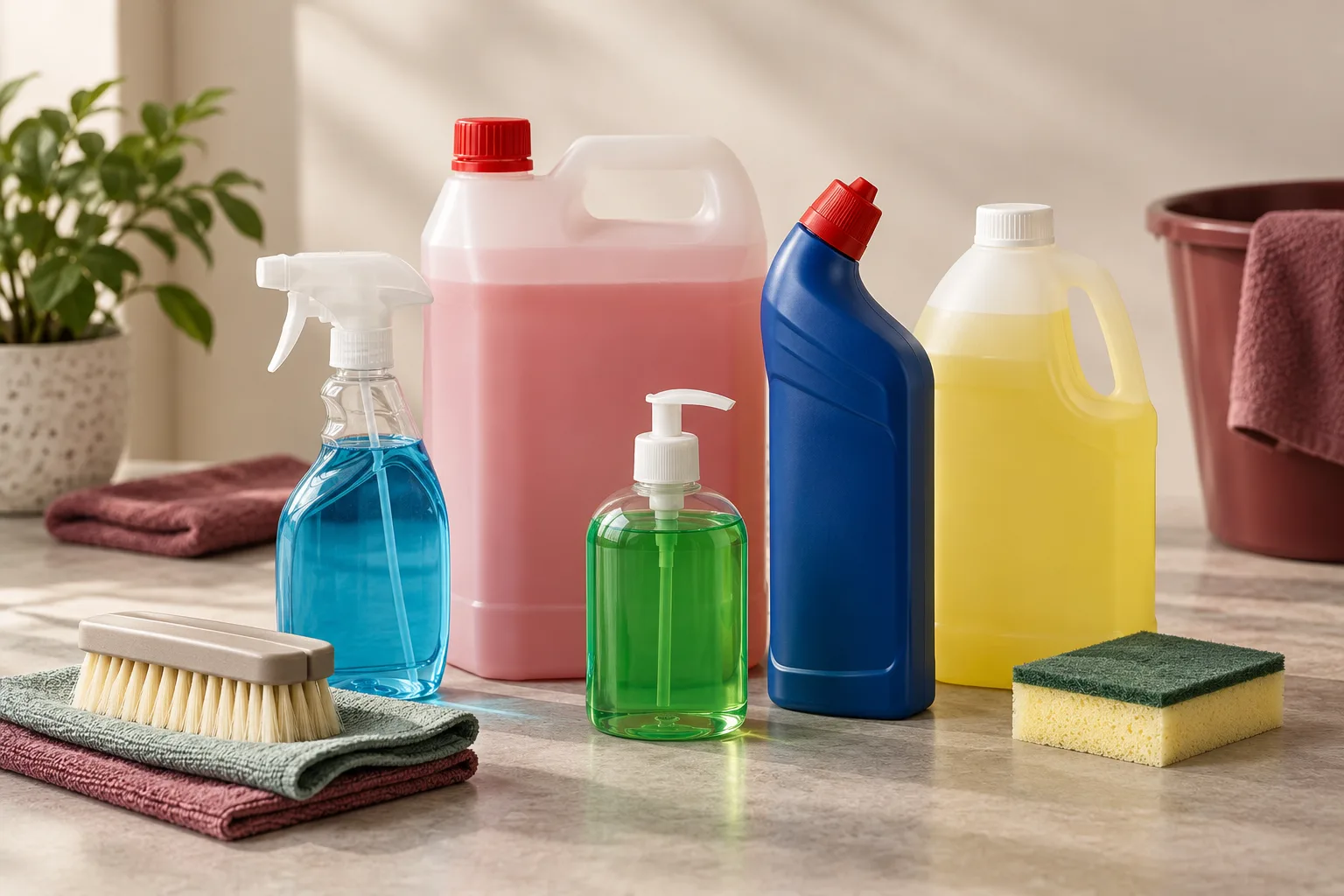
What WhatsApp marketing means
WhatsApp marketing is sending updates, offers and reminders to customers on the app most Indian buyers already check daily. GullySales sets up business WhatsApp, writes the message templates and keeps the list consented and current.
Also for cleaning chemical manufacturers
- Lead generation for cleaning chemical manufacturers
- SEO for cleaning chemical manufacturers
- Local SEO for cleaning chemical manufacturers
- Social media marketing for cleaning chemical manufacturers
- Content marketing for cleaning chemical manufacturers
- Buyer persona for cleaning chemical manufacturers
- CRM for cleaning chemical manufacturers
- Follow-up systems for cleaning chemical manufacturers
Sales and marketing for cleaning chemical manufacturers, the overview.
Last updated 14 Nov 2026.
For cleaning chemical manufacturers
Where it usually goes wrong, and what we would do.
“Supervisors and distributors already live on WhatsApp”
A housekeeping supervisor asks about a product by sending a photograph of the can. A distributor places a reorder with a voice note. Meeting buyers there takes less effort than moving them to email.
“A guide sent as a picture gets used”
A dilution card shared as an image or short video can be forwarded to the whole shift. A PDF attached to an email stays with one person. The format decides whether the instruction reaches the bucket.
“Unwanted messages cost goodwill”
A broadcast to every contact on a list irritates buyers who asked for nothing. Messages should go to people who asked or who have an account, and the platform's current rules on business messaging should be checked.
What we do
What we deliver for cleaning chemical manufacturers.
The work available for this need. We agree the deliverables and responsibilities for your engagement in writing.
WhatsApp Business profile and catalogue
A set-up with your business details, a product list by use and a greeting that asks which surface the buyer has.
Result: A buyer who messages gets a profile that explains what you make.
Quick replies for common questions
Saved replies for dilution, pack sizes, data sheets, delivery areas and trial requests.
Result: The team replies to common questions with agreed wording.
Dilution guides built for sharing
Picture and short-video guides sized for a phone, in the staff's language.
Result: A guide arrives readable on a small screen and can be forwarded.
Lists by buyer type
Separate groups or lists for contractors, distributors and retail buyers, each with its own kinds of message.
Result: Each message goes only to the people it is useful to.
Enquiry logging
A routine for copying each WhatsApp enquiry into the CRM or sheet with the surface and the site.
Result: An enquiry received on a chat is also found in your records.
How the result is measured
- Messages delivered
- Reply rate
- Enquiries from WhatsApp
Recorded as a baseline before work starts, so every later report has an honest comparison.
What to capture or send
Supervisors and distributors want cards, prices and dispatch notes on chat.
- Dilution card as a picture
- Send the card as an image the supervisor can forward to the night shift. Include the product name, ratio and a safety line.
- Quote for a drum size
- A saved reply that asks for the product, the pack and the delivery city, then returns the price the office confirms.
- Dispatch note with vehicle details
- Send the date, the vehicle number and the contact at the gate. The receiving staff can then be ready.
- Trial follow-up message
- A short message asking how the floor turned out. The reply goes straight to the record for the representative.
- Distributor price update
- A message to distributors who agreed to receive it, stating a change in price list. Keep it factual and keep a copy.
Who it is for
This is written for these cleaning chemical manufacturers.
- Floor cleaner, disinfectant and toilet cleaner makers selling to institutions
- Kitchen degreaser and dishwash chemical makers for hotels and canteens
- Laundry chemical makers supplying laundries and hospitals
- Hospital and healthcare-use surface cleaner makers
- Car wash and vehicle cleaning chemical makers
- Household cleaner makers selling in retail packs
- Private label cleaning chemical makers
- Industrial degreaser and workshop cleaner makers
Before you decide
When this may not be the right fit.
- The representatives use their own numbers, and the relationship would leave with each person.
- No contact has agreed to receive messages, so a broadcast would reach buyers who may report the number.
- The site buys by tender and a chat message would sit outside the buying process.
Before you decide
Agree the work. Know how to judge it.
WhatsApp marketing for cleaning chemical manufacturers: use these checks to prepare, choose the scope, and review what changes.
Bring the right evidence
Describe how the contact list was collected, what people asked to receive, and which messages are currently sent. Include opt-outs and replies when reviewing campaign performance.
Make the scope clear
Agree the audience, message purpose, sending system, and response owner. Separate promotional communication from order or service updates, and check current platform requirements before launch.
Check the work in use
Test the message with a small appropriate audience before wider use. Check links, reply handling, opt-outs, and whether the response leads to a relevant conversation or order.
Know when to change course
Do not use an unexplained contact list as a shortcut to demand. If recipients do not expect the message, resolve the permission and relevance questions before sending.
These are discussion points, not a fixed package. GullySales confirms the deliverables, responsibilities, fee, and term in writing after reading your brief and speaking with you.
Before we start
What to have ready before the work starts.
The records, access and decisions this work needs from cleaning chemical manufacturers. Anything missing is noted in the written scope, with who will supply it.
- A company number and a spare device
- Provide a SIM registered in the company's name and a handset that stays in the office. The business account is tied to this number. Without a company number, chats sit on a representative's personal phone and leave with them, and we advise getting one before anything else, since the profile, the catalogue and the saved replies all attach to that number.
- A list of current WhatsApp groups
- Write down every group the company or its representatives run with distributors, contractors and customers, with the members. Some will be useful, others messy. We cannot sort them without seeing them, and the plan for lists depends on which groups you keep.
- Product photographs and pack labels
- Collect clear photographs of each pack, the label and the drum, taken in daylight. These go into the catalogue. Without them the catalogue is a list of names, and a buyer cannot tell your can from a competitor's, or see which pack size and label they will receive at the site.
- Your rule on who may be messaged
- State plainly who the company may message: existing customers, people who asked for a quotation, distributors who agreed. Everyone else is out. Check the platform's current rules. If the rule is unclear, we default to the narrow group and widen it only on your instruction.
- Dilution cards already in use
- Bring any dilution chart, label or card that supervisors already use, in every language. We build from what works. If none exists, the technical person drafts the instructions in plain words, and we turn them into images, which adds a step to the plan and delays the guides by as long as the technical person needs to settle the wording.
How it works
How the whatsapp marketing work runs
The work itself, in order. How an engagement starts, from your brief to a written scope, is set out on our method page.
- 1
Read the chats your representatives already have
We ask representatives and the office, with customer names covered, to show how buyers and distributors already message them: what they ask, what they send and what gets lost. We note which numbers are personal. You tell us what hurts you, whether it is price questions at night, lost photographs or orders placed by voice note.
- 2
Choose the app and the number
For a small manufacturer the business app on a company number is enough for a long while. We explain what the paid interface adds and what it obliges you to do, and you decide. The number is registered to the company, and a second device lets the office see what representatives see.
- 3
Write the profile, catalogue and saved replies
We write the business profile, the greeting and the product catalogue, using the names buyers say. Saved replies are written for the questions buyers raise again and again: product for a surface, pack sizes, how to ask for a trial, where to find a data sheet. Your technical person checks any reply about use or safety.
- 4
Prepare dilution guides built for sharing
We turn the picture cards into images that open clearly on a small screen and in the language of the person who receives them. Each carries the product name and a way to ask you for more. The technical person approves every image. A guide that is hard to read on a phone is redrawn.
- 5
Sort contacts into lists by buyer type
We help the office sort contacts into distributors, contractors, institutions and retail buyers, and agree how each person came to be on the list. Only people who have asked to hear from you, or who are existing customers, go on a list. Anyone else receives nothing until they have agreed.
- 6
Test the flow, then read the enquiries it brought
We message the number as a buyer would, with a photograph of a stained floor and a voice note, and watch what the office does. Each enquiry is logged with its source. Later we compare enquiries and trials from WhatsApp with the numbers recorded before the work began, and you decide what to change.
Where this fits
Three pieces of sales work, in this order.
This work sits inside sales process design, at stage 0, foundation. The audit comes before it, and sales management keeps it running.
Step 1
Sales audit
Find where deals are being lost and what to fix first.
Start here if you cannot say where orders are lost.
Step 2 · you are here
Sales process design
One written way to sell, from first enquiry to repeat order.
Start here if every salesperson sells differently.
Step 3
Sales management
A target, a review routine and someone who owns the number.
Start here if the team has targets and no routine.
FAQ
Questions owners ask before they call.
Not here? More answers, or ask on WhatsApp.
Is WhatsApp enough to run our sales?
Is it fine to broadcast an offer to everyone in the phone book?
Should representatives use their own numbers?
May we send a safety data sheet over chat?
Can we take orders through the catalogue on the app?
What happens to chats when a representative leaves?
How much does it cost?
How long is the contract?
How soon will we see results?
Who will actually do the work?
More for cleaning chemical manufacturers
Related work to consider.
Or start from the overview: sales and marketing for cleaning chemical manufacturers.
Your next practical step
Tell us what you are trying to grow, and we will read it before we call.
Eight short steps, mostly taps. Skip anything you would rather answer on the call.