CNC machining companies · Branding
Look like a plant a new buyer would trust with a first order.
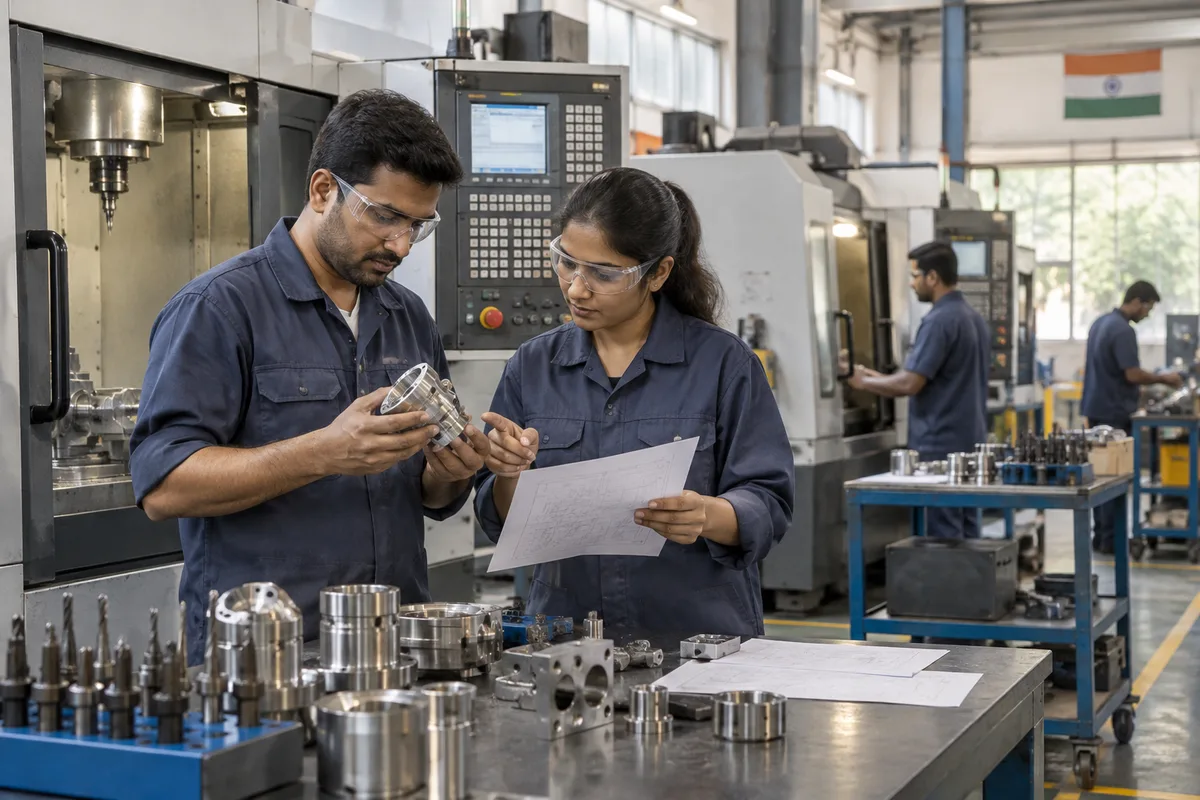
Branding for a CNC machining company is the name, the visual identity and the plant photography. Together they tell a new buyer this is a serious, capable operation before a single quote is exchanged. GullySales builds this around real photographs of your machines and your work, not stock imagery.
Scope, fee, reporting and term are agreed in writing after we have read your brief and spoken to you.
What branding means
Branding is what a customer remembers about your business beyond the product, including your name, colours, tone of voice and what you are known for locally. GullySales sets or corrects this once and applies it consistently across your website, signage and adverts so the business looks like one company everywhere.
Also for CNC machining companies
- AEO for CNC machining companies
- Content marketing for CNC machining companies
- Digital marketing for CNC machining companies
- Email campaigns for CNC machining companies
- Google Business Profile for CNC machining companies
- Influencer marketing for CNC machining companies
- Lead generation for CNC machining companies
- Marketing strategy for CNC machining companies
Sales and marketing for CNC machining companies, the overview.
Last updated 13 Nov 2026.
For CNC machining companies
Where it usually goes wrong, and what we would do.
“Real machine photographs outperform any stock image”
A buyer checking a shop's capability trusts a photograph of the actual CNC machines and a finished component far more than a generic factory stock photo.
“Certifications belong in the identity, not buried in a PDF”
An ISO or industry-specific certification shown clearly across the website and quotes does more for a first-time buyer's confidence than design polish.
“Consistency across IndiaMART, the website and quotations”
A shop whose logo, name and photographs differ across its IndiaMART listing and its own website reads as less established to a careful buyer.
What we do
What we deliver for CNC machining companies.
The work available for this need. We agree the deliverables and responsibilities for your engagement in writing.
Plant photography of your actual machines
A shoot list covering the CNC machines, the shop floor and finished components, replacing stock factory images on the website and IndiaMART.
Result: A buyer sees the real plant before sending a drawing.
Certification badges shown on every listing
Your ISO or industry certification displayed the same way on the website, IndiaMART, quotations and the plant gate signage.
Result: A first-time buyer sees proof of capability before asking for it.
One identity across the website and directories
Logo, name and photographs matched across the website, IndiaMART, TradeIndia and printed letterheads, so nothing reads as two different companies.
Result: A buyer cross-checking listings does not doubt you are established.
Quotation template carrying your identity and credentials
A quotation format that carries your certification, machine list and contact details consistently, sent by whoever prepares the quote.
Result: Every quote looks like it came from a serious operation.
Identity refresh triggered by new machinery
A checklist to update photographs and certification claims across the website and directories whenever a new machine or certification arrives.
Result: Your listings never lag behind what the plant can actually do.
How the result is measured
- Recognition in customer feedback
- Consistency across channels
- Repeat enquiries by name
Recorded as a baseline before work starts, so every later report has an honest comparison.
Positioning in one sentence
The sentence a machining company fills in so a purchase engineer trusts it with a first order.
We machine [parts, materials] on [machines] for [sector buyers], and an engineer who sends a drawing gets [one thing] that a job shop with the same machines does not offer.
- Who it is for
- Name the buyer: an OEM sourcing manager, a Tier 1 supplier, a prototype engineer. Name the sector, such as automotive, aerospace or medical, because each reads different approvals.
- What you do
- State your machines, envelope and materials: VMC and turning centres, the largest part you can hold, aluminium to stainless steel. A buyer matches the list against the drawing, so be specific.
- What a buyer gets that another shop with the same machines does not
- Pick one habit: a drawing review with tolerance queries before quoting, a first-article inspection report with each first lot, an engineer who answers questions.
- The proof you can show
- Show the gauge room, CMM or inspection setup, past inspection reports with the customer's name removed unless allowed, and certificates such as ISO 9001. Check your NDAs before showing any customer part.
- Words shops overuse and buyers skip
- Strike 'precision engineering', 'state-of-the-art' and 'quality assured'. Replace them with the machines, the tolerances you hold and the instruments that check them.
- The name and tagline test
- A name ending in 'Engineering' or 'Machining' with the place tells a buyer the trade. Say it with the tagline to a purchase engineer. Print the same name on quote, challan and inspection report.
Who it is for
This is written for these CNC machining companies.
- Job shops doing contract machining
- Precision component manufacturers
- Auto ancillary machining suppliers
- Aerospace and defence component machinists
- Machine shops serving medical device makers
- Prototype and low-volume machining shops
- Sheet metal and fabrication shops with CNC capability
- Export-focused precision machining units
Not for
It is not the right fit if.
- You have no photographs of your own machines and parts yet, so a new identity would rest on stock images a buyer can spot
- Your certificates have lapsed or are mid-renewal, and the new look would advertise an approval you cannot currently show
Before you decide
Agree the work. Know how to judge it.
Branding for CNC machining companies: use these checks to prepare, choose the scope, and review what changes.
Bring the right evidence
Collect the sales presentation, website, quotations, and other material buyers actually see. Mark where the description of the business changes or where a claim has no supporting evidence.
Make the scope clear
Agree whether the work concerns the offer, the words, the visual identity, or all of them. List the formats that need updating and who owns the final approval.
Check the work in use
Test the proposed direction on a real sales page or proposal. A buyer should be able to tell who the offer is for, what is different, and what evidence supports it.
Know when to change course
A new identity will not fix an unresolved service problem. Put the delivery issue right before making a stronger public promise about it.
These are discussion points, not a fixed package. GullySales confirms the deliverables, responsibilities, fee, and term in writing after reading your brief and speaking with you.
Before we start
What to have ready before the work starts.
The records, access and decisions this work needs from CNC machining companies. Anything missing is noted in the written scope, with who will supply it.
- One quotation and one purchase order acknowledgement
- These are the documents buyers keep, so they decide what the identity must fix. Recent samples with customer details covered are fine. Without them we design from the website alone and miss the mismatches a buyer meets on the first order.
- Copies of every current certificate
- The badges depend on what each certificate says and when it expires. Scans from the quality head will do. If a certificate has lapsed or is pending, it stays off the identity until the owner decides otherwise.
- Permission to photograph named areas
- Photographs of machines and the inspection room need the owner's clearance and any customer restriction listed. A short written note is enough. Where customer parts cannot appear, we shoot machines empty or with a plain sample.
- The existing logo in an editable file
- A refresh starts from the original artwork. A vector file or the designer's contact is best. If only a low-quality image exists, we redraw it and you approve the redrawn version before it spreads.
- The owner's decision on company and plant names
- Some plants carry two names across documents. The owner must choose which leads. One line in writing is enough. Until chosen, every document stays as it is and the mismatch remains.
How it works
How the branding work runs
The work itself, in order. How an engagement starts, from your brief to a written scope, is set out on our method page.
- 1
Collect every document that carries your name
We gather a quotation, a purchase order acknowledgement, a visiting card, a gate pass, the IndiaMART listing and the website, and lay them side by side. You see for yourself where the name, the logo and the claims differ. What exists afterwards is a sheet of mismatches in the order a buyer meets them.
- 2
Walk the plant with a camera and the foreman
We photograph the machines at work with the foreman telling us which are run for which jobs and what must not appear in frame. You decide which customer parts are cleared for the camera. The set covers the shop floor, the inspection room and the dispatch bay, not a posed office.
- 3
Gather the certificates and their scope wording
ISO and other certificates carry exact scope lines, and a badge that claims more than the certificate is a risk. We read each certificate with the quality head and note its scope, validity and issuing body. You supply the originals. The identity shows only what each paper supports.
- 4
Settle the name, logo and plant description
We agree with you whether the plant keeps the company name or carries a separate brand, and fix one short line describing the work. The owner decides. That line goes onto every document and listing, so a buyer sees the same shop whether they find it through search or a referral.
- 5
Rebuild the quotation template with credentials
The quotation is the document a buyer keeps, so we redesign it with your identity, certification badges and a clear space for the drawing number and revision. The estimator tries it on a live quote. You approve the final layout before any buyer sees it.
- 6
Check new enquiries against the recorded mismatches
We read the first quotations and listings sent in the new identity against the mismatch sheet from the start, and ask the sales head whether any buyer remarked on the plant's look or paperwork. You tell us what was awkward in practice. We note what to refresh when machinery is added.
Where this fits
Three pieces of sales work, in this order.
This work sits inside sales process design, at stage 1, prospecting and lead generation. The audit comes before it, and sales management keeps it running.
Step 1
Sales audit
Find where deals are being lost and what to fix first.
Start here if you cannot say where orders are lost.
Step 2 · you are here
Sales process design
One written way to sell, from first enquiry to repeat order.
Start here if every salesperson sells differently.
Step 3
Sales management
A target, a review routine and someone who owns the number.
Start here if the team has targets and no routine.
FAQ
Questions owners ask before they call.
Not here? More answers, or ask on WhatsApp.
Do we need a professional photoshoot of the plant?
How often should this be refreshed?
Can we show our customers' logos on the website?
Should the plant have a brand name different from the company name?
Do our customers need to be told about the new look?
Can the identity change if we add a new machine?
How much does it cost?
How long is the contract?
How soon will we see results?
Who will actually do the work?
From the blog
Further reading for CNC machining companies.
 6 min read · 6 Oct 2026How industrial buyers decide which unit gets the RFQWhat industrial buyers check before sending an RFQ, across nine manufacturing trades, and where a unit drops off the shortlist.
 5 min read · 26 Sept 2026Certifications buyers ask for: ISO, test reports and what to show on the websiteShow each certificate with its number, scope, issuing body and validity date, and link the PDF, so a buyer's quality team can check you before they ring.
 6 min read · 5 Sept 2026Price negotiation with industrial buyers: what to give and what to holdWhy industrial buyers ask every supplier for a reduction, what to trade a price cut for, what to hold however hard they push, and a call script.
More for CNC machining companies
Related work to consider.
Or start from the overview: sales and marketing for CNC machining companies.
Your next practical step
Tell us what you are trying to grow, and we will read it before we call.
Eight short steps, mostly taps. Skip anything you would rather answer on the call.