CNC machining companies · Influencer marketing
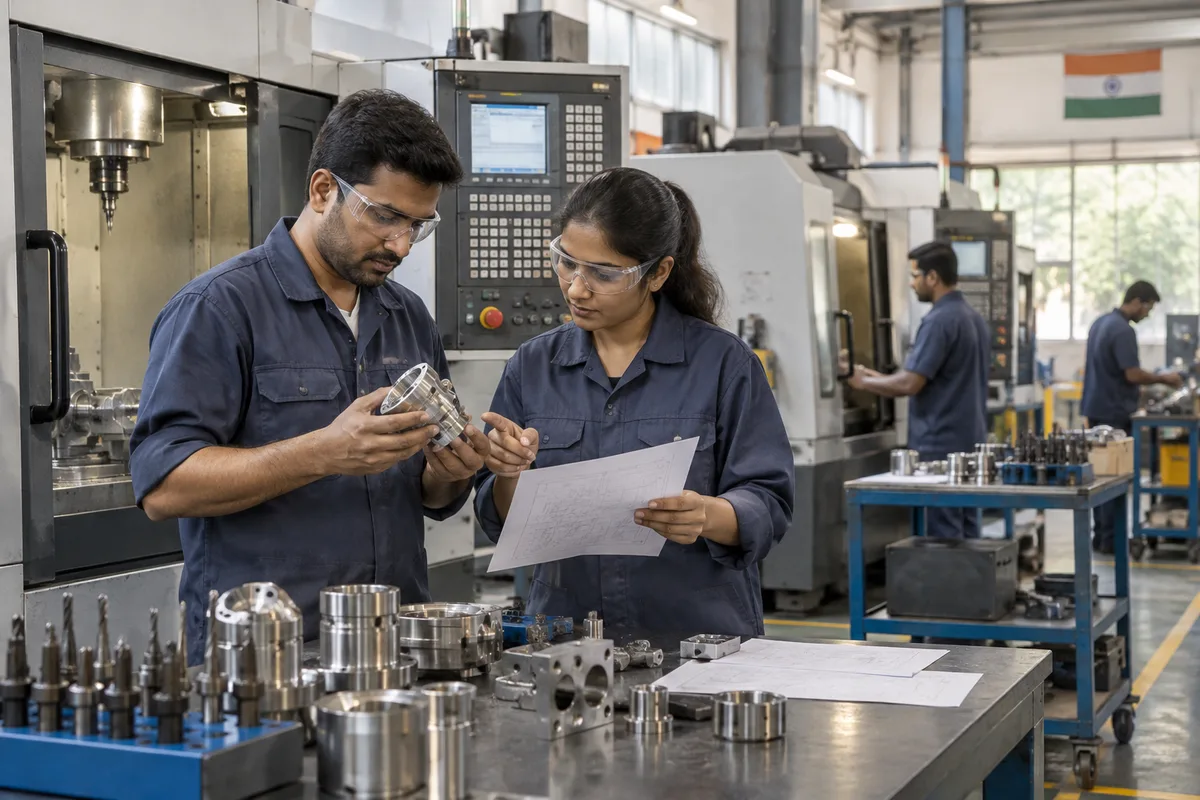
Get a manufacturing YouTuber to film your five-axis machine at work.
Influencer marketing for a CNC machining company means working with manufacturing-focused YouTubers or LinkedIn creators who cover machine shop tours and processes. These channels reach design engineers who watch this content for real work. GullySales identifies and briefs these creators around a specific machine or process.
Scope, fee, reporting and term are agreed in writing after we have read your brief and spoken to you.
What influencer marketing means
Influencer marketing means paying or partnering with local personalities and creators to talk about your business to their own audience. It works well where trust is built by a familiar face rather than an advert. GullySales finds creators whose audience matches your buyers and manages the brief and payment terms.
Also for CNC machining companies
- Content marketing for CNC machining companies
- Social media for CNC machining companies
- AEO for CNC machining companies
- Branding for CNC machining companies
- Digital marketing for CNC machining companies
- Email campaigns for CNC machining companies
- Google Business Profile for CNC machining companies
- Lead generation for CNC machining companies
Sales and marketing for CNC machining companies, the overview.
Last updated 13 Nov 2026.
For CNC machining companies
Where it usually goes wrong, and what we would do.
“Manufacturing content creators reach engineers, not consumers”
A channel covering machine shop walkthroughs is watched by exactly the design and procurement engineers a machining business is trying to reach.
“A process video earns more trust than a paid post”
Footage of an actual five-axis job running start to finish convinces a technical audience faster than a written testimonial ever could.
“LinkedIn creators matter as much as YouTube here”
A LinkedIn post from a respected manufacturing voice sharing your plant tour reaches procurement decision-makers scrolling during work hours.
What we do
What we deliver for CNC machining companies.
The work available for this need. We agree the deliverables and responsibilities for your engagement in writing.
Shortlist of manufacturing creators reaching your buyer
A researched list of YouTube and LinkedIn voices who cover Indian machine shop tours and processes, matched to your buyer segment.
Result: The collaboration reaches procurement engineers, not a general audience.
Briefed plant walkthrough for a chosen creator
A plan for a filmed visit covering one machine or process, agreed with the creator and your shop floor in advance.
Result: The video shows real capability instead of a generic factory tour.
LinkedIn post drafted for a manufacturing voice
A post written for a respected LinkedIn manufacturing figure to share, covering your plant or a recent job.
Result: Procurement decision-makers see your work through a voice they trust.
Process footage repurposed across channels
The filmed walkthrough cut into shorter clips for your website, social media and email follow-up, instead of used once.
Result: One collaboration keeps producing proof of capability well after the visit.
Written agreement on what a creator can show
A simple written brief setting out what the creator films and what stays confidential, agreed before the visit.
Result: Nothing sensitive about a client's job ends up on camera.
How the result is measured
- Reach per creator
- Engagement rate
- Enquiries traced to a creator
Recorded as a baseline before work starts, so every later report has an honest comparison.
Who to work with
Work with the voices a design engineer already follows for machine shop content.
- Machine shop tour channels
- Look for YouTube channels that film shop floors and part families, and check that their comments come from engineers and buyers rather than hobbyists.
- LinkedIn manufacturing voices
- A plant head or sourcing professional with an active LinkedIn following can post about your capability. Ask what they would need to see: machines, materials and inspection.
- The brief for the plant visit
- List the machines to film, such as VMC and turning centres, the materials you cut and the inspection room. Fix a time when the shop floor is not mid-shift on a customer job.
- Customer drawings and NDAs
- Check every job on show against the customer's confidentiality terms. Film a sample part or a part with permission, never a drawing or a part number that belongs to a customer.
- Credit for the right part
- Ask the creator to name the part family, material and tolerance class honestly, and to say what they saw rather than what you can do.
- Who not to use
- Skip consumer tech and hobby channels about 3D printing or home workshops. Their viewers do not send RFQs for a batch of precision components.
Who it is for
This is written for these CNC machining companies.
- Job shops doing contract machining
- Precision component manufacturers
- Auto ancillary machining suppliers
- Aerospace and defence component machinists
- Machine shops serving medical device makers
- Prototype and low-volume machining shops
- Sheet metal and fabrication shops with CNC capability
- Export-focused precision machining units
Not for
It is not the right fit if.
- Your customers' drawings are under NDA and you cannot film any machine running without showing a protected part
- You are not ready to let a creator ask hard questions about your process, and a film that avoids them will not convince an engineer
Before you decide
Agree the work. Know how to judge it.
Influencer marketing for CNC machining companies: use these checks to prepare, choose the scope, and review what changes.
Bring the right evidence
Define whose attention matters and what they need to understand about the offer. Review the creator's relevant work and audience fit rather than choosing from follower counts alone.
Make the scope clear
Agree the deliverables, approval rights, usage period, and any paid reuse of the material. Record who supplies product information and checks disclosure requirements before publication.
Check the work in use
Check the published work against the brief and trace the response through a distinct link or enquiry route where possible. Separate distribution figures from actual buying interest.
Know when to change course
If the audience does not fit the offer, a lower fee does not make the placement useful. Do not ask a creator to describe an experience they have not had.
These are discussion points, not a fixed package. GullySales confirms the deliverables, responsibilities, fee, and term in writing after reading your brief and speaking with you.
Before we start
What to have ready before the work starts.
The records, access and decisions this work needs from CNC machining companies. Anything missing is noted in the written scope, with who will supply it.
- A short list of creators your buyers trust
- The estimator and owner know whom engineers actually follow. Names on a page are enough. Without them, our search may favour reach over relevance and the approach lands with the wrong audience.
- A written list of what may be filmed
- The foreman and owner must mark open and closed areas and any customer parts. A one-page sheet will do. Without it, the agreement with a creator cannot be written. It should also say where the creator may stand and which doors stay shut.
- A programmer or setup lead present for the shoot
- A creator needs someone who can explain the process on camera and correct a slip. A half day of that person's time is enough. If nobody is free, the film risks mistakes. The programmer should know in advance which tolerances can be said aloud.
- Cleared photographs and process notes
- We need the facts the creator may state, such as the machine type and the material. A single sheet is acceptable. If missing, the brief stays general and the film shows less of what the shop does. Where a machine is leased or customer-owned, the sheet says so.
- The owner's rule on payment and free visits
- Some creators charge and others visit for the content. The owner must decide what the shop will offer. A line in writing settles it. Until then no approach is made.
How it works
How the influencer marketing work runs
The work itself, in order. How an engagement starts, from your brief to a written scope, is set out on our method page.
- 1
List the channels your buyers already watch
We ask the estimator and the owner which videos or LinkedIn voices design engineers and sourcing managers mention, and add what our own search shows. You tell us which creators the shop respects. What exists afterwards is a short list of manufacturing voices, not a general list of followers, and it shows who among them an engineer would trust enough to act on a recommendation.
- 2
Read a sample of each creator's past plant films
Before any approach we watch the creators' earlier plant visits for accuracy, tone and what they were careful to leave out. The production head watches too. You and the production head strike off anyone who got a process wrong or who spoke carelessly about another shop. We also note whether the creator discloses paid work, since the platform's current rules on disclosure apply to the shop as well.
- 3
Agree what may be filmed on the floor
Before inviting anyone, you and the foreman list what may be shown: which machines, which customer parts, which areas stay closed. We write it into a one-page agreement the creator signs. That page also says who owns the footage and what happens if a statement is wrong.
- 4
Brief the creator on one process to show
We give the chosen creator a short note on the process that suits the shop, such as five-axis finishing, with the facts the production head will stand behind. The programmer is present at the shoot. You decide which tolerances may be stated. The brief names the one process to be shown and the questions the creator is free to ask the programmer on camera.
- 5
Check the film for technical errors before release
The production head watches the cut with us and marks any wrong term, tolerance or certificate. The creator corrects it before release. The film is cut into shorter clips and a LinkedIn post, each in the shop's own words.
- 6
Read RFQs and views against the starting record
We compare RFQs that mention the film, visits to the capability pages and profile views with the figures recorded before the shoot. The sales head tells us who asked. We report what the film drew and what it did not, and promise no enquiries.
Where this fits
Three pieces of sales work, in this order.
This work sits inside sales process design, at stage 0, foundation. The audit comes before it, and sales management keeps it running.
Step 1
Sales audit
Find where deals are being lost and what to fix first.
Start here if you cannot say where orders are lost.
Step 2 · you are here
Sales process design
One written way to sell, from first enquiry to repeat order.
Start here if every salesperson sells differently.
Step 3
Sales management
A target, a review routine and someone who owns the number.
Start here if the team has targets and no routine.
FAQ
Questions owners ask before they call.
Not here? More answers, or ask on WhatsApp.
Are there manufacturing creators active in India?
What does a typical collaboration involve?
Who owns the footage of my shop floor after the shoot?
What if the creator says something incorrect about our tolerances or certifications?
Should we pay a creator or offer a free plant visit?
What if a competitor's customer sees the film?
How much does it cost?
How long is the contract?
How soon will we see results?
Who will actually do the work?
From the blog
Further reading for CNC machining companies.
 6 min read · 6 Oct 2026How industrial buyers decide which unit gets the RFQWhat industrial buyers check before sending an RFQ, across nine manufacturing trades, and where a unit drops off the shortlist.
 5 min read · 26 Sept 2026Certifications buyers ask for: ISO, test reports and what to show on the websiteShow each certificate with its number, scope, issuing body and validity date, and link the PDF, so a buyer's quality team can check you before they ring.
 6 min read · 5 Sept 2026Price negotiation with industrial buyers: what to give and what to holdWhy industrial buyers ask every supplier for a reduction, what to trade a price cut for, what to hold however hard they push, and a call script.
More for CNC machining companies
Related work to consider.
Closest to this: content and social
Also for CNC machining companies
Or start from the overview: sales and marketing for CNC machining companies.
Your next practical step
Tell us what you are trying to grow, and we will read it before we call.
Eight short steps, mostly taps. Skip anything you would rather answer on the call.