CNC machining companies · Social media
Post the part that came off the machine this morning.
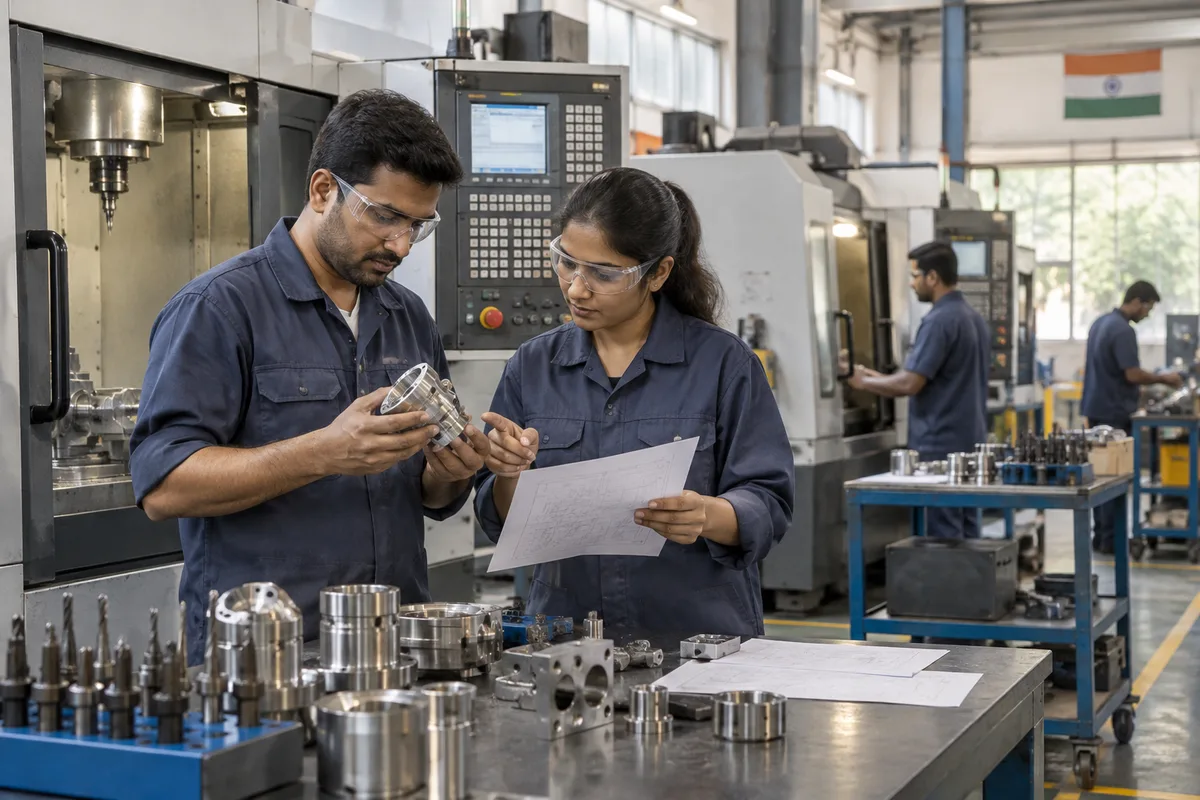
For a CNC machining company, social media is the part that came off the machine this morning, photographed with the material and the tolerance written beside it. GullySales collects a month of those photographs on one visit to your shop and posts them on LinkedIn, where a procurement engineer scrolls between meetings.
Scope, fee, reporting and term are agreed in writing after we have read your brief and spoken to you.
What social media means
Social media is the ongoing posting your business does on platforms such as Instagram, Facebook and LinkedIn to stay visible to customers and prospects between purchases. GullySales plans a posting calendar, writes captions and designs the images so the page looks active and answers what a visitor would ask.
Also for CNC machining companies
- Content marketing for CNC machining companies
- Influencer marketing for CNC machining companies
- AEO for CNC machining companies
- Branding for CNC machining companies
- Digital marketing for CNC machining companies
- Email campaigns for CNC machining companies
- Google Business Profile for CNC machining companies
- Lead generation for CNC machining companies
Sales and marketing for CNC machining companies, the overview.
Last updated 13 Nov 2026.
For CNC machining companies
Where it usually goes wrong, and what we would do.
“The argument about a tolerance is the post”
A drawing arrives with a tolerance in microns that the part does not need, you ring the customer, and the price comes down. Written up without naming anyone, that is the post a design head stops on.
“The job you turned down says more than the ones you won”
A shop that explains why it refused a thin-wall aluminium run at that quantity sounds like a shop that knows its own machines. The buyer remembers it when a job does fit.
“A phone held against the enclosure window beats a film crew”
Thirty seconds of a five-axis cutter working, coolant on the glass, says more about your capability than a drone shot of the building. Nobody in this trade watches the drone shot twice.
What we do
What we deliver for CNC machining companies.
The work available for this need. We agree the deliverables and responsibilities for your engagement in writing.
One photograph a week, taken at the machine
A person on the floor is shown what to shoot and when: the finished part on the bed, the setup, the first article on the inspection table.
Result: The account runs on your own work instead of stock pictures.
Captions written by someone who can read a drawing
Each post names the material, the process and the tolerance held, so a buyer can judge in seconds whether you machine what they buy.
Result: The engineer who matters stops scrolling.
The enquiry you did not quote, once a month
A short post about a job that went elsewhere and why, written plainly and without a complaint about price.
Result: Fewer wrong enquiries arrive, and the right ones arrive better briefed.
A page that matches your vendor registration form
Machine list, inspection capability and certificates kept current on LinkedIn, checked against what your quality documents already state.
Result: A buyer comparing the two finds the same shop in both.
RFQs traced back to the post that brought them
Every enquiry that mentions LinkedIn recorded in your CRM and reported against the baseline taken before the work started.
Result: You know whether an hour of posting is worth the hour.
How the result is measured
- Posts published
- Engagement rate
- Enquiries from social profiles
Recorded as a baseline before work starts, so every later report has an honest comparison.
Platform for this buyer
Where a procurement engineer or a design team checks a machine shop, and what to post.
- LinkedIn, for procurement engineers
- Post a new machine, a new inspection capability or a certificate renewal, with the part families you can make. Mask the dimensions. The action wanted is a message to your sales head with the drawing and volume.
- YouTube, for a part in cycle
- Film a 5-axis or VMC cycle with no voice, the tool path visible and the material named in the title. A buyer judges the finish and rigidity in the first moments. The action is to send the drawing for a quote.
- WhatsApp groups of your industrial estate
- Where the group rules allow, tell fellow units when you have capacity free on a machine type, and what you cannot run. The action is a reply with the drawing and the quantity.
- Instagram, for hardware startups
- Show a prototype going from CAD to part for founders who need a few pieces. The action is to send the CAD file and the material for a quote.
- What not to post
- A customer's drawing, part number or logo, any part for a defence or aerospace customer without written clearance, machine settings, or a rejected batch. Check the NDA before photographing a job.
Who it is for
This is written for these CNC machining companies.
- Job shops doing contract machining
- Precision component manufacturers
- Auto ancillary machining suppliers
- Aerospace and defence component machinists
- Machine shops serving medical device makers
- Prototype and low-volume machining shops
- Sheet metal and fabrication shops with CNC capability
- Export-focused precision machining units
Not for
It is not the right fit if.
- Every part you make is under NDA and nobody in the plant is allowed to photograph the floor, so there would be nothing real to post
- No one has the time to answer a comment from a procurement engineer, and an unanswered question in public looks worse than silence
Before you decide
Agree the work. Know how to judge it.
Social media for CNC machining companies: use these checks to prepare, choose the scope, and review what changes.
Bring the right evidence
Review the posts that produced useful conversations, not only the ones with the most views. Gather buyer questions and decide which team member can contribute credible material.
Make the scope clear
Choose the audience and channel before setting a posting volume. Agree who supplies material, approves posts, and handles messages, including complaints or questions the agency cannot answer.
Check the work in use
Follow a post through to the profile, website, and response. A useful report explains the quality of conversations and enquiries, alongside reach and engagement.
Know when to change course
If publishing takes time away from unanswered buyer messages, fix the response routine first. Do not expand to another channel without a clear reason for being there.
These are discussion points, not a fixed package. GullySales confirms the deliverables, responsibilities, fee, and term in writing after reading your brief and speaking with you.
Before we start
What to have ready before the work starts.
The records, access and decisions this work needs from CNC machining companies. Anything missing is noted in the written scope, with who will supply it.
- A list of parts cleared for photographs
- Customer restrictions vary part by part. The owner or sales head can mark them. Without a list, we photograph machines and tools only. Customer restrictions on shop floor photographs differ from part to part and from buyer to buyer.
- The vendor registration form buyers hold
- It shows the name and details a buyer expects. A copy is enough. Without it, the page may disagree with the form. It also shows the address and registration wording that the profile must copy.
- A phone and an operator willing to be photographed
- The posts need a person at the machine. Consent from the operator is needed. If nobody agrees, we show the machine only. The operator should agree in front of the owner, so the consent is clear.
- A reviewer who can read a drawing
- Captions must be technically right. The programmer or production head will do. Without one, we publish only captions already approved. A written line from the reviewer on each caption is kept with the post record.
How it works
How the social media work runs
The work itself, in order. How an engagement starts, from your brief to a written scope, is set out on our method page.
- 1
Photograph the part as it leaves the machine
We start on the floor with the operator, taking phone photographs of a finished part beside the drawing and the gauge, with the customer's name kept out of frame. You choose the parts cleared for sharing. What exists afterwards is a first set of honest pictures from the shop's own work. We also take a plain photograph of the gauge reading beside the part, because an engineer trusts a measurement shown more than one described.
- 2
Find the caption in the operator's own words
We ask the programmer or operator what was hard about the part, the fixture, the tool or the tolerance, and write the caption from that. Someone who can read a drawing checks it. The post says what happened, not a slogan. The caption names the material, the process and the tolerance asked, and leaves out the customer and the quantity.
- 3
Write the post about the job you turned down
A post explaining why the shop declined an enquiry shows judgment, so we draft one with the owner about a job that did not fit, with no buyer named. The owner approves. It tells buyers what the shop is not for and saves both sides time. The page name, address and description are also checked against the vendor registration form buyers hold, so nothing disagrees.
- 4
Agree who posts and who checks the facts
We name the person who takes the photograph and the person who checks the caption, and the owner decides what must be cleared first. A short routine says who posts on the platform. Nothing goes out unchecked by someone who knows the part. A short routine says who takes the photograph, who checks the caption and who presses post, with a substitute for each role.
- 5
Trace RFQs back to the posts that brought them
We compare RFQs that mention a post, profile views and messages with the count recorded before posting began. The estimator tells us who asked. We report which posts led to a drawing, and promise no followers or leads. We also read which posts brought a profile visit from a buyer's company, since that shows the right people are looking.
Where this fits
Three pieces of sales work, in this order.
This work sits inside sales process design, at stage 0, foundation. The audit comes before it, and sales management keeps it running.
Step 1
Sales audit
Find where deals are being lost and what to fix first.
Start here if you cannot say where orders are lost.
Step 2 · you are here
Sales process design
One written way to sell, from first enquiry to repeat order.
Start here if every salesperson sells differently.
Step 3
Sales management
A target, a review routine and someone who owns the number.
Start here if the team has targets and no routine.
FAQ
Questions owners ask before they call.
Not here? More answers, or ask on WhatsApp.
How often should a machining shop post?
Nobody here wants to be on camera. Does that stop us?
Can we post a part we made if we remove the customer's name?
Should we list our machines by make and model on LinkedIn?
Is it safe to show a machine's control screen in a photograph?
What if a customer asks us to take a post down?
How much does it cost?
How long is the contract?
How soon will we see results?
Who will actually do the work?
From the blog
Further reading for CNC machining companies.
 6 min read · 6 Oct 2026How industrial buyers decide which unit gets the RFQWhat industrial buyers check before sending an RFQ, across nine manufacturing trades, and where a unit drops off the shortlist.
 5 min read · 26 Sept 2026Certifications buyers ask for: ISO, test reports and what to show on the websiteShow each certificate with its number, scope, issuing body and validity date, and link the PDF, so a buyer's quality team can check you before they ring.
 6 min read · 5 Sept 2026Price negotiation with industrial buyers: what to give and what to holdWhy industrial buyers ask every supplier for a reduction, what to trade a price cut for, what to hold however hard they push, and a call script.
More for CNC machining companies
Related work to consider.
Closest to this: content and social
Also for CNC machining companies
Or start from the overview: sales and marketing for CNC machining companies.
Your next practical step
Tell us what you are trying to grow, and we will read it before we call.
Eight short steps, mostly taps. Skip anything you would rather answer on the call.