Electrical equipment manufacturers · Dealer co-funded lead generation programmes
Pay for the search once, and let the right electrical dealer answer the buyer.
A co-funded lead generation programme for an electrical equipment maker is a campaign that the brand and its dealers pay for by a written split, with each buyer enquiry routed to the dealer who holds that area. GullySales writes the funding and routing rules, builds the campaign, and reads each dealer's records at the end.
Scope, fee, reporting and term are agreed in writing after we have read your brief and spoken to you.
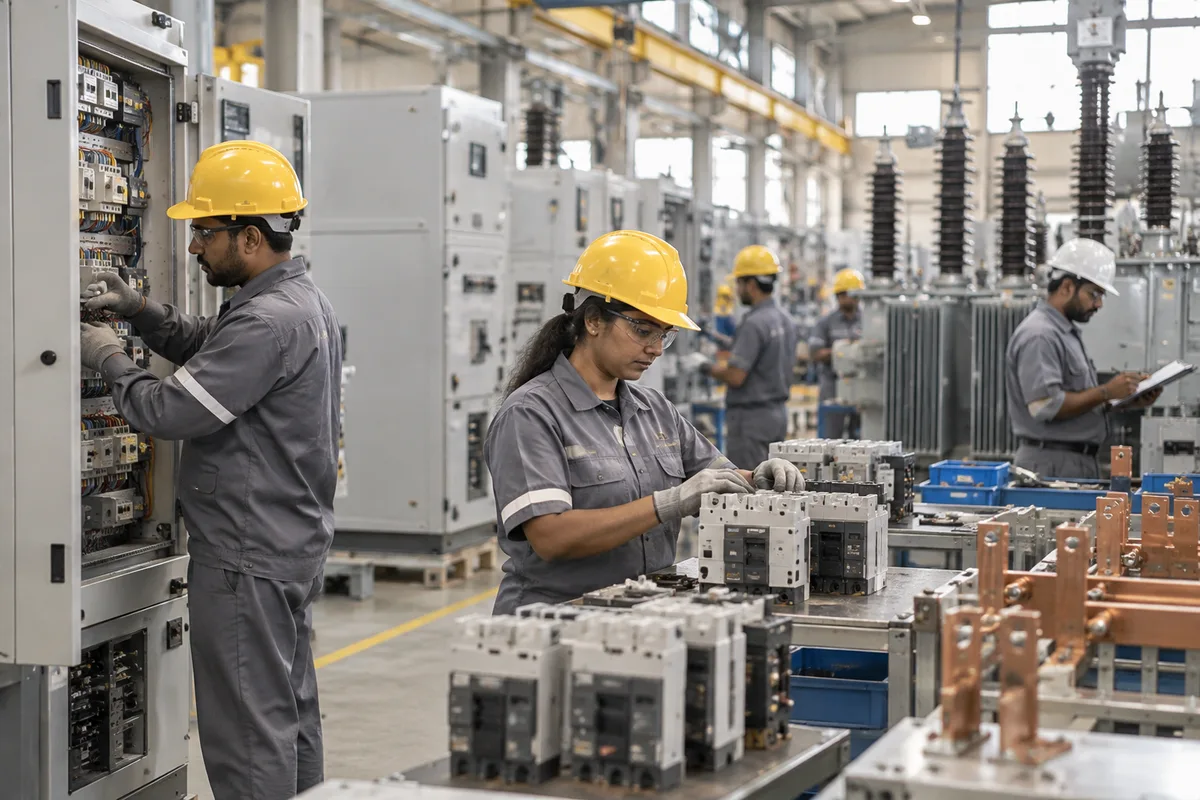
What dealer co-funded lead generation programmes means
A dealer co-funded lead generation programme is one where the brand and its dealers each pay a stated share of a campaign that produces buyer enquiries for those dealers. GullySales writes the funding and assignment rules, builds the campaign, hands each enquiry to the right dealer, and reports every dealer's outcome from the records.
Also for electrical equipment manufacturers
- Outsourced dealer sales support for electrical equipment manufacturers
- Channel partner engagement campaigns for electrical equipment manufacturers
- Retailer marketing for electrical equipment manufacturers
- Dealer network brand visibility for electrical equipment manufacturers
- SEO for electrical equipment manufacturers
- PPC ads for electrical equipment manufacturers
- Lead generation for electrical equipment manufacturers
- Digital marketing for electrical equipment manufacturers
Sales and marketing for electrical equipment manufacturers, the overview.
Last updated 14 Nov 2026.
For electrical equipment manufacturers
Where it usually goes wrong, and what we would do.
“The dealer stocks you but sends the buyer to the cheaper brand”
A dealer's shelf holds several makes of switches, breakers and cable. When an electrician or a small builder walks in, the dealer sells whichever make pays the better margin or carries the better scheme that season. A campaign paid for by you alone sends footfall to a shop that may not push your make. A co-funded campaign gives the dealer a stake, so the enquiry is worth answering.
“Two dealers in one town both claim the same enquiry”
Electrical dealers cluster around the same market lanes and trade areas. A buyer who types a product name and a town into a search box can land on a form that could belong to any of them. Without a written assignment rule, two dealers ring the same buyer, a third hears nothing, and the quarrel reaches your sales head. The rule must exist before the first payment to the platform is made.
“The enquiry arrives but nobody at the shop picks up”
A dealer's counter is busy at the hours the buyer calls, and the owner may be away at a site or at the godown. An enquiry that waits goes cold, and the dealer then says the campaign brought no real buyers. The handover record shows who received the enquiry, who called and what was said, so the brand and the dealer read the same facts.
“Project buyers and counter buyers need different handling”
A contractor wanting a panel board for a building and an electrician wanting a box of switches are different enquiries. One needs a technical reply and perhaps a visit from your sales engineer; the other needs stock and a price at the counter. A single form that treats them alike sends project enquiries to a counter that cannot quote them. The campaign separates the two at the first question.
What we do
What we deliver for electrical equipment manufacturers.
The work available for this need. We agree the deliverables and responsibilities for your engagement in writing.
Funding agreement sheet
A written record of what the brand pays, what each dealer pays, what the money buys and who holds it. Both sides' finance contacts approve it before spend is committed. The sheet also states what the dealer receives for the contribution, such as enquiries in the dealer's own area and a share of the campaign reports.
Result: Every participating dealer has signed the sheet, and the brand's finance contact holds a copy.
Area and product assignment rules
The test that decides which dealer receives an enquiry: pin area, district, product line or the buyer's own pick from a list of nearby shops. The rule also covers an enquiry from between two dealers' areas, and one from an area that no dealer holds. Your channel owner approves it before any form goes live.
Result: A sample enquiry from every area reaches exactly one named dealer, and the test log shows it.
Dealer-branded advertisements and forms
Advertisements and enquiry forms that carry your make and the dealer's own name, address and contact, in artwork both sides have approved. The brand controls the logo and the claims; the dealer controls the shop details and any local offer. Each version is checked against the platform's current advertising rules before it runs.
Result: Each dealer has signed off a version of its own advertisement, with your brand sign-off recorded beside it.
Enquiry handover log
A shared sheet or tool listing each enquiry, the type of buyer, the dealer it went to, who received it and the next action taken. A dealer sees only its own rows, and your brand sees the whole log. The log is the record that settles a dispute about whether an enquiry arrived.
Result: Any enquiry can be traced from the form to the dealer's call and its outcome, with no gaps left unexplained.
Unanswered-enquiry rule
A written rule for an enquiry that a dealer does not act on: who is reminded, what the buyer is sent in the meantime and whether the enquiry passes to another dealer or to your own sales engineer. The dealer agrees to the rule before launch, so the passing-on is never a surprise.
Result: A test enquiry left unanswered follows the rule exactly as written, and the log shows each step.
Dealer outcome sheet
One page for each dealer: the contribution paid, the enquiries received, the calls made, the quotations sent and the orders recorded. Where a dealer did not record an outcome, the sheet shows a gap rather than an estimate. The brand and the dealers read the sheets together before the next campaign is planned.
Result: Each dealer can set its contribution against its own recorded enquiries and orders, line by line.
How the result is measured
- Contribution paid by the brand and by each dealer, against the agreed split
- Enquiries routed to each dealer and enquiries that fell outside every territory
- Enquiries a dealer called back, recorded by the dealer
Recorded as a baseline before work starts, so every later report has an honest comparison.
Who it is for
This is written for these electrical equipment manufacturers.
- LT and control panel builders
- Switchgear, MCB and distribution board manufacturers
- Wire and cable manufacturers
- Switch, socket and modular accessory makers
- LED luminaire manufacturers for industrial and commercial use
- Architectural, façade and decorative lighting makers
- Street and area lighting manufacturers supplying municipal tenders
- Transformer, stabiliser and power equipment makers
- Fan, motor and small electrical appliance manufacturers
Before you decide
Agree the work. Know how to judge it.
Dealer co-funded lead generation programmes for electrical equipment manufacturers: use these checks to prepare, choose the scope, and review what changes.
Bring the right evidence
Map existing partners, their territories, and the customers they serve. Review active selling and repeat orders separately from the number of partners signed up.
Make the scope clear
Agree partner fit, territory rules, onboarding, and support responsibilities. Clarify how direct enquiries and partner enquiries are assigned before starting recruitment.
Check the work in use
Follow a partner enquiry through to an order and the next purchase. Check whether the partner has the product knowledge and material needed to sell without repeated intervention.
Know when to change course
If current partners cannot sell because supply or support is weak, resolve that before recruiting more. A bigger network can spread the same problem further.
These are discussion points, not a fixed package. GullySales confirms the deliverables, responsibilities, fee, and term in writing after reading your brief and speaking with you.
Before we start
What to have ready before the work starts.
The records, access and decisions this work needs from electrical equipment manufacturers. Anything missing is noted in the written scope, with who will supply it.
- Dealer list with the areas each holds
- Routing needs to know which dealer holds which area and where areas meet. A current list is enough, even with open disputes marked on it. Without it, enquiries cannot be sent to the right shop, and the first quarrel over an enquiry arrives soon after launch.
- A contribution each dealer will sign
- The split must be accepted by the dealers in writing before a campaign is built. Your channel owner leads that conversation. Where a dealer will not commit, that dealer's area stays out of the campaign, and the funding sheet says so plainly.
- A named recipient at each dealer
- Every participating dealer needs a person who will receive and answer enquiries, plus a back-up. Counter staff who are busy at peak hours cannot also chase leads. If no one is named, the enquiry sits unanswered and the dealer later reports the campaign as poor.
- Your current dealer scheme documents
- Gather the price lists, loyalty rules, credit terms and display support that dealers already work with. The campaign must not contradict them. A dealer who sees an offer on an advertisement that differs from the scheme on paper will stop trusting both.
- Consent wording for buyer enquiries
- Buyers who send an enquiry are agreeing to be contacted by the dealer and the brand. Prepare the wording with your own adviser so the form states who will use the details and why. Without it, enquiries cannot be shared between the brand and the dealer and the campaign pauses.
How it works
How the dealer co-funded lead generation programmes work runs
The work itself, in order. How an engagement starts, from your brief to a written scope, is set out on our method page.
- 1
Read the dealer list and current schemes
You share the dealer list, the areas each dealer holds and any scheme or advertising support already running: loyalty points for electricians, display support, price protection. We read them for overlaps and for dealers with no recorded contact, so the campaign does not cut across a scheme the dealers already understand.
- 2
Draft the split and the assignment rules
We write the funding sheet and the rules that route an enquiry to a dealer, and your channel owner takes them to the dealers. Points that a dealer contests come back to us for a rewrite. Nothing is built until the participating dealers have each agreed the split in writing.
- 3
Build the advertisements, forms and routing
GullySales builds the dealer-branded advertisements, the enquiry forms and the routing that carries each enquiry to the right contact. Each route is tested with sample enquiries from every area. The forms ask the buyer whether the need is for a project or for the counter, and route accordingly.
- 4
Brief the dealers and set the contacts
Each dealer receives the rules, the form of the handover log and the way to record an outcome. The campaign starts only when every dealer has named a person who will answer, with a back-up for the hours that person is at a site. A dealer with no named recipient waits.
- 5
Hand over enquiries and follow the unanswered
Enquiries pass to dealers by the agreed rule, and an enquiry left alone follows the written rule. Dealers record each call, quotation and order in the shared log. Where the buyer needs a technical reply, the enquiry goes to your sales engineer with the log entry attached.
- 6
Read the outcome sheets against the contributions
Before launch we recorded each dealer's enquiries from existing sources and the share of the counter's trade the dealer reported for your make. Afterwards we set each dealer's sheet beside its contribution and beside those figures. The brand and the dealers then decide whether to keep, change or drop the split.
Where this fits
Three pieces of sales work, in this order.
This work sits inside sales process design, at stage 1, prospecting and lead generation. The audit comes before it, and sales management keeps it running.
Step 1
Sales audit
Find where deals are being lost and what to fix first.
Start here if you cannot say where orders are lost.
Step 2 · you are here
Sales process design
One written way to sell, from first enquiry to repeat order.
Start here if every salesperson sells differently.
Step 3
Sales management
A target, a review routine and someone who owns the number.
Start here if the team has targets and no routine.
FAQ
Questions owners ask before they call.
Not here? More answers, or ask on WhatsApp.
Who pays for what in a co-funded campaign?
How do you stop two dealers claiming one enquiry?
Can dealers see each other's enquiries?
Does the platform allow dealer names in advertisements?
What if a dealer will not record outcomes?
Will this bring more orders for my dealers?
How much does it cost?
How long is the contract?
How soon will we see results?
Who will actually do the work?
From the blog
Further reading for electrical equipment manufacturers.
 6 min read · 6 Oct 2026How industrial buyers decide which unit gets the RFQWhat industrial buyers check before sending an RFQ, across nine manufacturing trades, and where a unit drops off the shortlist.
 6 min read · 14 Apr 2026Vendor registration with large buyers: a document pack for manufacturersOne master folder with matching names and an expiry sheet keeps vendor approval from stalling on paperwork. A pack layout and register.
 6 min read · 31 Jan 2026Writing a product catalogue a purchase engineer will keepA purchase engineer keeps a catalogue that can be searched and checked against a drawing. Specifications first, findable part numbers, a layout to copy.
More for electrical equipment manufacturers
Related work to consider.
Closest to this: channels and partners
Also for electrical equipment manufacturers
- SEO for electrical equipment manufacturers
- PPC ads for electrical equipment manufacturers
- Lead generation for electrical equipment manufacturers
- Digital marketing for electrical equipment manufacturers
- Reputation management for electrical equipment manufacturers
- Local SEO for electrical equipment manufacturers
Or start from the overview: sales and marketing for electrical equipment manufacturers.
Your next practical step
Tell us what you are trying to grow, and we will read it before we call.
Eight short steps, mostly taps. Skip anything you would rather answer on the call.